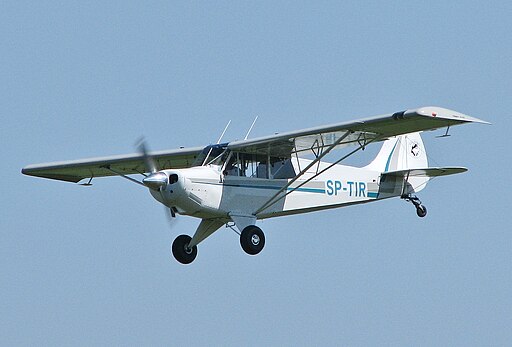
The Aviat Husky is a rugged, high-performance light utility aircraft renowned for its versatility and exceptional short takeoff and landing (STOL) capabilities. Designed and manufactured by Aviat Aircraft, the Husky has earned a strong reputation among bush pilots, flight schools, and recreational aviators worldwide. With a combination of classic tube-and-fabric construction, modern design improvements, and powerful engine options, the Husky stands as a benchmark in the light utility category. This article delves into the detailed technical aspects, design evolution, structural features, performance parameters, and variants of the Aviat Husky.
Development and Design Origins
Historical background
The Aviat Husky traces its roots back to the mid-1980s as a modern evolution of the classic Aeronca Champ and Citabria lineage. The original design intent was to create a light, rugged, and versatile aircraft capable of operating from unimproved airstrips with minimal runway length, while maintaining excellent handling and safety characteristics. The Husky prototype first flew in 1987, with production continuing since then under Aviat Aircraft, based in Afton, Wyoming.
Design philosophy
The design philosophy behind the Husky focused on merging proven tube-and-fabric construction techniques with contemporary aerodynamic refinements and more powerful, reliable engines. The result was an aircraft able to operate effectively in diverse environments—ranging from alpine valleys to coastal strips—offering strong STOL performance, precise control, and reliable utility use.
Airframe and Construction
Fuselage and structural components
The Husky features a welded 4130 chromoly steel tube fuselage structure covered with durable doped fabric, providing a balance of light weight, structural strength, and ease of maintenance. The fuselage design emphasizes pilot safety with a reinforced cockpit cage and energy-absorbing features. The steel framework extends into the tailboom, supporting the empennage and control surfaces.
Wing configuration and design
The wings are fabric-covered, high-mounted, and designed with a constant chord to optimize lift and stall characteristics. They incorporate aluminum ribs and spars, covered with Ceconite or equivalent synthetic fabric treated for durability and weather resistance. The wing employs leading-edge slats and full-span Fowler flaps to enhance lift at low speeds and improve STOL performance. The ailerons are conventional, offering crisp roll control.
Landing gear and undercarriage
The Husky is equipped with fixed conventional (tailwheel) or tricycle landing gear configurations, depending on customer preference. The main gear legs are made from spring steel, providing excellent shock absorption during rough-field operations. The tailwheel is steerable, while the nosewheel option features a steerable nose strut with oleo shock absorption. Large tundra tires are often fitted for off-airport operations, further enhancing ground handling on rough surfaces.
Cockpit and ergonomics
The two-seat side-by-side cockpit features large windows, providing excellent all-around visibility, crucial for backcountry flying. Controls include dual yokes, rudder pedals, and push-pull cables for control surfaces. The interior is utilitarian but ergonomic, with provisions for modern avionics and instruments, as well as sufficient cargo space behind the seats.
Powerplant and Propulsion
Engine options
The Husky series has been offered with a variety of powerplants, primarily focusing on reliable, air-cooled horizontally opposed engines from Lycoming. Commonly installed engines include the Lycoming O-320 producing 160 horsepower, Lycoming O-360 with 180 horsepower, and Lycoming IO-390 with 210 horsepower. The higher horsepower options provide improved climb rates and payload capabilities, particularly valuable in high-density altitude environments.
Propeller configurations
Typically, the Husky is equipped with a two- or three-blade constant-speed propeller, optimized for climb performance and cruise efficiency. Propellers are usually made of aluminum or composite materials, with ground-adjustable or in-flight adjustable pitch options depending on model and customer requirements.
Performance and Flight Characteristics
Takeoff and landing performance
The Aviat Husky is widely praised for its STOL capabilities. Takeoff roll distances are as short as approximately 300 feet (91 meters) under standard conditions, with landing rolls similarly short, enabling operation from unimproved and constrained fields. The combination of leading-edge slats and large flaps contributes significantly to low-speed lift and controllability.
Cruise and maximum speeds
Cruising speed varies based on engine choice and configuration but generally ranges from 110 to 125 knots (204 to 232 km/h). Maximum speeds approach 130 knots (241 km/h) for higher-powered variants. The aircraft maintains stable handling across its speed envelope, providing confident control in both low and cruise speeds.
Climb rate and service ceiling
Depending on engine installed, climb rates range from approximately 1,000 feet per minute (5.08 m/s) to over 1,200 feet per minute (6.1 m/s). Service ceiling generally exceeds 14,000 feet (4,267 meters), enabling operations in mountainous terrain and other challenging environments.
Range and endurance
Typical fuel capacity of 37 gallons (140 liters) allows for a range of about 500 nautical miles (926 km) at economy cruise settings. Endurance varies but generally ranges from 4 to 5 hours, depending on power setting and fuel consumption. Auxiliary fuel tanks can be installed for extended missions.
Handling qualities
The Husky is renowned for stable and responsive handling, particularly at low speeds. The combination of leading-edge slats and Fowler flaps provides excellent control during slow flight and approach. The side-by-side seating arrangement offers intuitive coordination for training or dual control operations. The aircraft exhibits benign stall characteristics, with a relatively gentle nose drop and excellent control response.
Dimensions and Technical Specifications
General dimensions
-
Wingspan: 35 feet 0 inches (10.67 meters)
-
Wing area: 175 square feet (16.26 square meters)
-
Length overall: 23 feet 4 inches (7.11 meters)
-
Height overall: 7 feet 7 inches (2.31 meters)
Weight and loading
-
Empty weight: Approximately 1,200 pounds (544 kilograms)
-
Maximum takeoff weight (MTOW): 2,200 pounds (998 kilograms)
-
Useful load: Approximately 1,000 pounds (454 kilograms)
-
Wing loading: Approximately 12.6 pounds per square foot (61.6 kg/m²)
-
Power loading (with 180 hp engine): Approx. 12.2 pounds per horsepower (5.5 kg/hp)
Performance summary
-
Maximum speed (Vne): 140 knots (259 km/h)
-
Cruise speed: 115–125 knots (213–232 km/h)
-
Stall speed (flaps down): 38 knots (70 km/h)
-
Rate of climb: 1,000 to 1,200 feet per minute (5.1 to 6.1 m/s)
-
Takeoff distance (ground roll): Approximately 300 feet (91 meters)
-
Landing distance (ground roll): Approximately 350 feet (107 meters)
-
Service ceiling: 14,000 feet (4,267 meters)
-
Range: Approximately 500 nautical miles (926 kilometers)
Variants and Model Evolution
Aviat Husky A-1A
The initial production version, powered typically by the Lycoming O-320 (160 hp), featuring conventional tailwheel landing gear and basic instrumentation suited for utility and training roles.
Aviat Husky A-1B
Introduced with the more powerful Lycoming O-360 engine (180 hp), enhancing climb rate, payload, and cruise speed. This version also saw improvements in avionics options and optional tricycle landing gear.
Aviat Husky A-1C
The most advanced factory model, offering the Lycoming IO-390 engine (210 hp), which delivers superior high-altitude and heavy-load performance. Additional improvements include structural reinforcements, modern avionics packages, and expanded STOL capabilities.
Special configurations
Many operators customize their Huskies with tundra tires, floats, skis, and other mission-specific equipment, enabling versatile operation in remote and extreme environments. Floatplane conversions are popular in regions with abundant lakes and waterways.
Operational Use and Legacy
Roles and applications
The Husky is widely used in roles ranging from flight training, bush flying, aerial surveying, pipeline patrol, and recreational flying. Its robustness, ease of maintenance, and adaptability make it popular with individual pilots, flying schools, and commercial operators alike.
Global presence
Operators span the globe, particularly in North America, Australia, and Europe. The Husky has gained a devoted following among backcountry pilots and has become synonymous with rugged, reliable short-field performance.
Awards and recognition
The Husky’s combination of classic construction and modern performance has earned it accolades within the general aviation community. Its ongoing production and continual improvements underscore its enduring popularity.
Technical Strengths and Considerations
Strengths
-
Exceptional STOL capability, enabling access to remote, unimproved airstrips
-
Robust, proven tube-and-fabric construction for durability and easy repairs
-
Multiple engine options for tailored performance
-
Side-by-side seating offering excellent pilot/passenger communication and training environment
-
Versatility with optional floats, skis, and tundra tires
Considerations
-
Fixed landing gear creates some drag, limiting top speed compared to retractable designs
-
Fabric covering requires periodic inspection and maintenance
-
Tailwheel version requires proficient pilot skill for ground handling; tricycle gear available for easier operation
-
Modest cabin noise typical of tube-and-fabric aircraft, mitigated by good insulation and headset use
Summary
The Aviat Husky stands as a premier example of a light utility aircraft combining classic construction with modern performance enhancements. Its strength lies in versatility, ruggedness, and excellent STOL capabilities, making it a favored aircraft for pilots needing reliable operation in challenging environments. From flight training to bush flying, the Husky continues to meet and exceed expectations nearly four decades after its introduction, supported by ongoing production and a loyal community of users. For anyone seeking a robust, capable, and proven light aircraft, the Aviat Husky offers an outstanding blend of performance and utility.
.jpg)