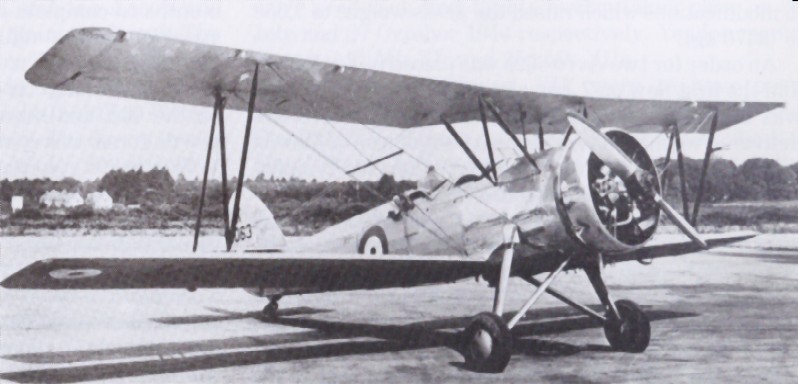
The Avro 626, also known as the Avro Prefect in some configurations, was a British multi-role biplane trainer developed in the early 1930s as a more capable extension of the Avro Tutor series. Designed to provide comprehensive military training—including pilot instruction, navigation, radio operation, aerial gunnery, and bombing practice—the Avro 626 became a popular export aircraft among air forces seeking a versatile yet affordable training platform. Its adaptable cockpit layout, robust structural design, and predictable flying qualities made it a dependable aircraft during a period when many nations were expanding their air arms but lacked the infrastructure or budget for complex training fleets. The 626 embodied Avro’s commitment to standardized production and incremental refinement while maintaining operational flexibility for both primary and advanced instructional roles.
Design and Construction
Structurally, the Avro 626 was developed from the Avro Tutor’s basic airframe but with additional provisions to support a broader training syllabus. Its fuselage employed a welded steel-tube framework that offered durability and resistance to repeated training stresses. This rigid internal structure was covered with a combination of wooden fairings and doped fabric, producing a clean aerodynamic profile while allowing easy field repairs. The fuselage design included three cockpits in tandem: two conventional open cockpits for student and instructor, plus a third cockpit behind them for specialized training tasks such as wireless operation or navigation. This third station was one of the most distinctive features of the aircraft and demonstrated its multi-purpose role.
The biplane wings used wooden spars and ribs, fabric covering, and steel-wire bracing typical of the era. Equal-span wings with slight stagger improved visibility and stability. Ailerons were usually placed on the lower wings, providing sufficient control authority without overwhelming student pilots. The interplane struts and bracing wires created a rigid structure capable of withstanding aerobatic maneuvers, an important requirement for advanced training programs. The tail surfaces were similarly constructed from a blend of steel tubing and wooden components, covered with doped fabric, and designed for straightforward adjustments and repairs.
The undercarriage was fixed and robust, featuring a cross-axle design supported by V-struts fitted with bungee-cord suspension. This arrangement allowed the aircraft to withstand hard landings common in training environments. A tailskid was standard on most units, although some later models were fitted with tailwheels depending on user preference and airfield conditions. The landing gear’s simplicity reduced maintenance time and made the 626 suitable for austere or unpaved airfields.
Powerplant and Performance
The Avro 626 was typically powered by the Armstrong Siddeley Lynx IVC radial engine, a proven air-cooled design delivering around 215 horsepower. This engine provided a balance of reliability, low maintenance needs, and adequate performance for training missions. Its seven-cylinder radial configuration offered effective cooling even during prolonged low-speed maneuvering or ground training sessions. The engine’s smooth power delivery contributed to predictable control response, especially important for novice pilots.
Performance characteristics of the 626 were modest but well-suited to its role. Maximum speed typically reached about 125 miles per hour, depending on equipment and loaded weight. The aircraft cruised comfortably around 105 miles per hour, enabling efficient cross-country navigation exercises. The climb rate allowed students to reach operational training altitudes quickly, and the service ceiling commonly exceeded 15,000 feet. Fuel endurance usually ranged between two and three hours, sufficient for standard training sorties without placing excessive loads on the airframe.
Flight Characteristics
Pilots and instructors appreciated the Avro 626 for its steady handling, clear aerodynamic feedback, and forgiving stall characteristics. The aircraft exhibited the gentle and predictable behavior typical of well-designed biplane trainers. Its low wing loading contributed to stable low-speed flight, making takeoffs, landings, and slow-flight instruction manageable for inexperienced aviators. Stalls usually developed gradually, with ample warning and straightforward recovery procedures.
The control layout provided good harmony across all axes. The ailerons offered moderate roll authority appropriate for training environments, while the rudder and elevator were responsive without being overly sensitive. These qualities allowed instructors to demonstrate advanced techniques such as coordinated turns, spins, sideslips, and aerobatic maneuvers safely. The cockpit arrangement gave instructors direct supervision over students, while the third cockpit enabled air forces to train additional crew specialties beyond piloting.
The open-cockpit design enhanced visibility, an important factor for formation flying, observation exercises, and navigation training. Instrumentation remained simple and functional, reflecting the aircraft’s training purpose. Depending on configuration, the third cockpit could be fitted with navigation tables, wireless equipment, or even a flexible machine-gun mount, making the aircraft capable of replicating frontline crew duties.
Operational History
The Avro 626 achieved significant export success, with more than 200 aircraft delivered to over a dozen countries. Air forces in Latin America, the Middle East, Europe, Africa, and Asia adopted the aircraft, often using it as their standardized trainer during early modernization efforts. Its ability to perform pilot training, reconnaissance practice, gunnery instruction, and radio-operator schooling made it ideal for militaries with limited budgets or small training fleets.
Although the Royal Air Force did not adopt the 626 in large numbers—preferring the Tutor for most of its instruction—the aircraft served in various colonial and auxiliary units. Many foreign operators employed the 626 well into the Second World War, sometimes as a communications or liaison aircraft in addition to its training role. Its rugged design allowed it to remain operational in harsh climates and remote bases where logistical support was minimal.
After retiring from frontline military use, numerous Avro 626s continued to fly in civilian roles, including club training, instructional airframes for technical schools, and private ownership. The aircraft’s reliability and simplicity ensured a long operational life, and several examples eventually found their way into museums or restoration projects.
Technical Specifications (Typical Avro 626)
- Crew: Two or three, depending on training configuration
- Length: Approximately 25 ft
- Wingspan: Approximately 34 ft
- Height: Approximately 9 ft
- Empty Weight: Around 2,000 lb
- Maximum Takeoff Weight: Around 3,000 lb
- Powerplant: Armstrong Siddeley Lynx IVC radial engine, about 215 hp
- Maximum Speed: Approximately 125 mph
- Cruise Speed: Approximately 105 mph
- Range: Around 300 miles
- Service Ceiling: Approximately 16,000 ft
Legacy
The Avro 626 occupies an important position in the evolution of international military training aircraft. Its flexibility allowed smaller air forces to develop complete aircrew training pipelines without investing in multiple specialized aircraft. By offering navigation, radio, gunnery, and flying instruction in a single platform, the 626 provided a cost-effective bridge between basic trainers and operational aircraft.
