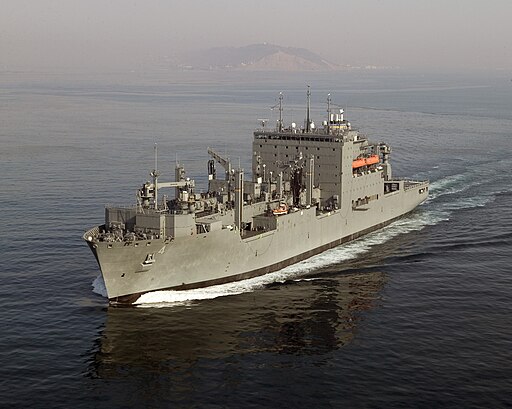
The USNS Richard E. Byrd (T-AKE-4) is a key asset in the United States Navy’s Military Sealift Command, designed to provide vital logistics support through underway replenishment. As the fourth ship in the Lewis and Clark-class dry cargo/ammunition ships, the Richard E. Byrd is tasked with delivering ammunition, provisions, spare parts, potable water, and petroleum products to U.S. Navy combat ships operating around the world. This vessel enhances the Navy’s ability to maintain sustained operations without returning to port, ensuring operational readiness and strategic reach. The ship is named after Rear Admiral Richard E. Byrd, an influential American naval officer and explorer.
Design and Construction
Built by the National Steel and Shipbuilding Company (NASSCO) in San Diego, California, the USNS Richard E. Byrd was laid down in the mid-2000s and entered service shortly thereafter. The Lewis and Clark-class ships are designed with an emphasis on multi-product replenishment capability, combining fuel, dry cargo, and ammunition transfer capabilities into a single hull. This design allows the Richard E. Byrd to operate efficiently alongside aircraft carriers, cruisers, destroyers, and other naval vessels during underway replenishment operations. The ship features a hull and superstructure constructed with steel, designed for stability and endurance during extended deployments in a variety of sea conditions.
Dimensions and Displacement
The USNS Richard E. Byrd measures approximately 210 meters (689 feet) in length overall, with a beam of 32.2 meters (106 feet). The ship’s fully loaded displacement is around 41,000 tons, reflecting the significant volume of cargo it can carry. The draft of the vessel, which varies depending on its load condition, typically sits around 11 meters (36 feet). These dimensions are optimized to provide a balance between cargo capacity and operational maneuverability, allowing the ship to efficiently navigate alongside other vessels during replenishment while maintaining a stable platform for cargo operations.
Propulsion and Performance
The Richard E. Byrd is powered by a pair of MAN medium-speed diesel engines, generating a combined output of approximately 25,000 shaft horsepower. These engines drive two fixed-pitch propellers, enabling the ship to reach a maximum speed of around 20 knots. The propulsion system is designed to provide a reliable, fuel-efficient means of maintaining pace with the combatant ships it services, ensuring seamless replenishment operations at sea. The ship’s range extends beyond 9,000 nautical miles at cruising speed, supporting global deployments without the need for frequent refueling. Additionally, the ship is equipped with bow thrusters that enhance maneuverability during close-quarter operations such as alongside replenishment and port docking.
Cargo Capacity and Replenishment Systems
One of the defining features of the USNS Richard E. Byrd is its versatile cargo handling capability. The ship can carry approximately 6,675 tons of dry cargo, including ammunition, food, repair parts, and other supplies. It also carries around 10,000 tons of fuel, including both diesel and aviation fuel. The cargo spaces are organized into specialized storage areas to accommodate sensitive and hazardous materials safely. For transferring cargo at sea, the Richard E. Byrd is equipped with multiple replenishment stations capable of delivering fuel and dry cargo simultaneously to one or more receiving ships. Its sophisticated underway replenishment system includes high-capacity transfer rigs, elevators, and cargo handling equipment designed for rapid and secure transfer of goods, even in challenging sea conditions.
Crew and Operational Role
The USNS Richard E. Byrd operates primarily with a civilian crew under the Military Sealift Command, typically numbering around 120 personnel. This crew is responsible for navigation, engineering, cargo handling, and ship maintenance. The ship is often accompanied by a small contingent of Navy personnel who coordinate replenishment operations and communications with fleet units. The Richard E. Byrd’s operational role is critical in sustaining fleet readiness, allowing combat vessels to remain at sea for extended periods without returning to port for resupply. It supports a wide array of naval missions, including combat operations, training exercises, and humanitarian assistance, reinforcing the logistical backbone of the U.S. Navy.
Defensive and Support Systems
While not a frontline combat vessel, the USNS Richard E. Byrd is equipped with defensive systems aimed at self-protection. These include electronic warfare suites, radar surveillance systems, and the capacity to mount small arms or light weapon systems if required for force protection. The ship’s communication and command infrastructure are built to maintain secure and reliable links with naval task groups and shore-based command centers. Safety and damage control systems are integrated throughout the vessel, focusing on fire suppression, flood control, and hazardous material containment, essential for the safe handling of ammunition and fuels during underway replenishment.
Conclusion
The USNS Richard E. Byrd (T-AKE-4) represents a modern, efficient, and capable component of the United States Navy’s logistical support fleet. Its technical specifications—from robust propulsion and extensive cargo capacity to sophisticated replenishment systems—highlight its role as a force multiplier that enables sustained naval operations globally. By providing timely delivery of fuel, ammunition, and supplies, the Richard E. Byrd ensures that combat vessels can maintain their operational tempo and readiness, reinforcing the strategic reach and effectiveness of the U.S. Navy across the world’s oceans.
