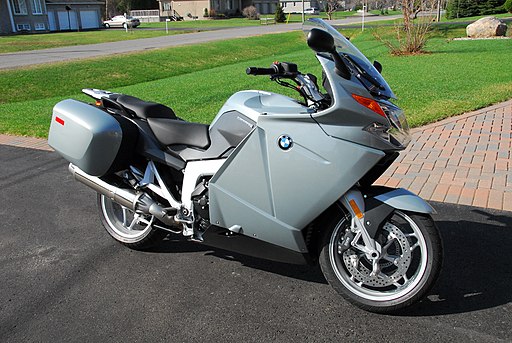
The BMW K1200GT was engineered to answer a very specific question: what happens when you take the speed and mechanical sophistication of a high-performance sport machine and blend it with the comfort, wind protection, and luggage capacity of a long-range touring motorcycle? BMW’s answer was not a compromise in the usual sense. Instead, the K1200GT became a motorcycle that feels like a fast executive express, built for riders who want serious horsepower, effortless highway pace, and premium touring equipment without stepping into the heavier full-dress touring category. It sits in the sweet spot between a pure sportbike and a luxury tourer, delivering the kind of long-distance speed that feels almost unfair on open roads.
The K1200GT is also an example of BMW’s design philosophy during the era when electronics, advanced chassis engineering, and rider comfort were becoming equally important. Rather than relying purely on displacement or styling, BMW leaned heavily into sophisticated mechanical solutions, such as a longitudinal inline-four layout, shaft drive, advanced suspension options, and integrated touring ergonomics. The result is a motorcycle that feels distinctly BMW: stable at high speed, engineered for durability, and loaded with features that make real-world riding easier, especially when the ride stretches into hundreds of kilometers per day.
Engine Design and Performance Specifications
At the heart of the BMW K1200GT is a liquid-cooled 1,157cc inline-four engine, mounted longitudinally in the frame. This configuration is a BMW signature for the K-series and is paired naturally with shaft drive. The engine uses a DOHC cylinder head with four valves per cylinder, allowing efficient breathing at higher rpm while still producing strong midrange torque for passing power and two-up touring. In typical K1200GT trim, the engine produces approximately 152 horsepower at around 9,500 rpm, with peak torque in the range of 130 Nm at roughly 7,750 rpm. Those numbers translate into a motorcycle that accelerates with authority even when loaded with luggage and a passenger, and the power delivery remains smooth enough to feel refined rather than aggressive.
Fueling is managed through electronic fuel injection with a ride-by-wire style precision in throttle response, even though early versions still feel mechanically direct. The K1200GT’s engine is tuned to feel flexible rather than peaky. You can ride it lazily in a tall gear and still get strong acceleration, or you can push it higher in the rev range where it becomes surprisingly sporty. The motor’s character is defined by a dense, turbine-like pull and a mechanical smoothness that suits long-distance travel, while still offering enough top-end performance to keep up with far more focused sport machines.
The transmission is a six-speed unit, chosen specifically to balance acceleration with relaxed high-speed cruising. Top gear is tall, allowing the bike to sit at highway speeds with low engine stress, which contributes to comfort and fuel efficiency. The shaft drive system reduces maintenance demands and eliminates the mess and wear associated with chains, making the K1200GT a very practical high-mileage motorcycle.
Chassis Engineering and Structural Layout
The K1200GT’s chassis design reflects BMW’s obsession with stability, especially at high speeds. Instead of a traditional tubular steel frame, the K1200GT uses an aluminum bridge frame that integrates the engine as a stressed member. This approach increases rigidity without excessive weight, giving the motorcycle a planted feel even when the speed climbs into territory where many touring bikes start to feel vague. The frame geometry is tuned for stability first, but BMW also ensured the bike retains enough responsiveness to feel engaging on twisty roads, especially for a machine in this category.
Wet weight is substantial, typically in the 280 kg range depending on equipment and model year, but the bike carries its mass intelligently. The engine is mounted low enough to reduce the center of gravity, and the long wheelbase improves straight-line stability. The K1200GT does not feel like a lightweight sportbike, but it also avoids the heavy, slow steering feel of full touring rigs. Its chassis is designed to handle long, fast sweepers and sustained high-speed cruising with minimal rider fatigue, and that becomes obvious the moment you ride it on open highways.
Another important aspect of the chassis is how it supports load. The K1200GT was built to be used with panniers, passenger weight, and long-distance gear. The rear subframe and mounting points are engineered for touring loads, and the bike remains stable even when fully equipped. That load-handling confidence is a huge part of why the K1200GT earned such a strong reputation among long-distance riders.
Suspension Technology and Road Behavior
One of the most distinctive engineering features of the K1200GT is BMW’s alternative suspension approach. Rather than using a conventional telescopic fork, the K1200GT typically employs BMW’s Duolever front suspension system, depending on model generation, which separates steering forces from suspension travel. This design reduces front-end dive under braking and improves stability, especially during aggressive deceleration. The benefit is not subtle on a heavy, powerful touring bike. When you brake hard, the bike stays composed and level, maintaining geometry and tire contact in a way that feels extremely controlled.
At the rear, the bike uses BMW’s Paralever system integrated into the shaft-drive swingarm, designed to minimize shaft jacking effects during acceleration and deceleration. This makes throttle transitions smoother and helps the bike feel more neutral when riding quickly. Rear suspension is typically a monoshock setup with adjustable preload and damping, allowing the rider to tune the bike for solo riding, passenger use, or full touring load.
Many K1200GT models are equipped with ESA, BMW’s Electronic Suspension Adjustment system, which allows on-the-fly changes to damping and load settings. This transforms the touring experience because the rider can shift the bike from a comfort-oriented setup to a sportier, firmer setting without stopping. It also makes the bike far more adaptable across different roads, weather, and riding styles, which is a major advantage for a motorcycle designed to cross countries and handle everything from smooth highways to rough backroads.
Braking System and High-Speed Control
The K1200GT’s braking system was built to match its performance and weight, meaning it needs to deliver strong stopping power repeatedly without fading. The front setup typically consists of dual large-diameter discs with multi-piston calipers, and the rear uses a single disc with a matching touring-oriented brake feel. Braking performance is further supported by BMW’s advanced ABS system, which on many models includes a more refined, sport-capable calibration compared to older touring ABS systems.
On the road, the K1200GT brakes with a confident, controlled feel. It is not a bike that feels nervous under hard braking, and the chassis remains stable thanks to the suspension design that resists dive. This matters in real-world riding because a fully loaded sport-tourer can become unpredictable if the front end compresses too much. BMW engineered the K1200GT specifically to avoid that behavior, giving the rider the kind of braking stability that encourages confidence rather than caution.
For touring riders, the combination of strong brakes and ABS is especially valuable in poor weather, when a heavy motorcycle needs extra security. Even in wet conditions, the K1200GT can be ridden quickly and safely because the braking system supports predictable control rather than demanding constant restraint.
Aerodynamics, Wind Protection, and Touring Comfort
The K1200GT is a motorcycle designed to cover distance quickly, which makes aerodynamics and rider comfort a major engineering priority. The fairing is shaped to reduce turbulence around the rider, and wind protection is enhanced by an electrically adjustable windscreen. This allows the rider to tune airflow depending on speed, weather, and preference. At low speeds or in hot conditions, lowering the screen increases airflow for cooling. At high speeds or in cold weather, raising the screen creates a calm pocket that reduces fatigue and noise.
Rider ergonomics are also designed around long hours in the saddle. The seating position is slightly forward compared to a pure touring bike, but far more relaxed than a sportbike. Handlebars are positioned to reduce wrist strain, and the seat is shaped for sustained comfort. Many models also include heated grips and heated seats, which dramatically extend the riding season and make cold-weather touring far more practical.
Passenger accommodations are also a core part of the K1200GT’s identity. The rear seat is large, the footpeg placement is sensible, and the bike remains stable with two riders. Combined with the luggage system, this makes the K1200GT one of the most capable two-up high-speed touring machines of its era.
Electronics, Instrumentation, and Rider Features
BMW positioned the K1200GT as a premium motorcycle, and that is reflected in its electronics and rider features. Depending on model year and options, the bike can include cruise control, on-board computer functions, heated equipment, ESA suspension adjustment, and advanced ABS. The instrument cluster typically blends analog and digital information, providing speed, rpm, fuel level, range, ambient temperature, and trip data in a layout that is easy to read while riding.
The K1200GT’s electronics are designed to support touring convenience rather than distract from riding. Features like cruise control reduce fatigue on long highway runs, and the on-board computer gives the rider practical information that helps with route planning. Lighting systems are also designed for real-world travel, offering strong nighttime visibility and a stable beam pattern.
While the K1200GT predates the modern era of full IMU-based traction control and cornering ABS in many versions, it still feels advanced because BMW engineered the bike with a strong systems approach. It is not simply a powerful engine in a touring chassis. It is an integrated platform where drivetrain, suspension, braking, and ergonomics are designed to work together.
Wheels, Tires, and Stability Under Load
The K1200GT typically uses 17-inch wheels front and rear, a common sport-touring configuration that supports modern tire availability and balanced handling. Tire sizes are chosen to provide a blend of grip, longevity, and stability, with a wider rear tire supporting the bike’s torque output and load capacity. The wheel and tire setup also plays a major role in the K1200GT’s cornering behavior. Despite its weight, the bike can be leaned confidently, and it holds a line with impressive stability once settled into a corner.
Because the K1200GT is designed for high-speed touring, tire choice becomes a key factor in performance. Sport-touring tires with strong carcass construction and predictable wet grip tend to suit the bike best. Under load, the chassis remains composed, and the bike does not develop the vague rear-end sensation that some heavy touring motorcycles can exhibit when pushed. BMW’s combination of chassis rigidity, suspension geometry, and tire selection creates a machine that feels stable even when fully equipped for travel.
Practical Touring Specifications and Ownership Reality
From a practical standpoint, the K1200GT is designed to be used hard and often. Fuel capacity is touring-friendly, offering good range, and the engine’s efficiency is reasonable for a 1,157cc four-cylinder producing over 150 horsepower. The bike’s maintenance requirements are also consistent with BMW’s high-mileage intent. Shaft drive reduces routine maintenance, and the engine is built to handle sustained high-speed operation without stress.
Luggage capacity is a major advantage. Factory panniers integrate cleanly with the bodywork, maintaining aerodynamic efficiency and keeping weight balanced. Many riders also add a top case, turning the bike into a true long-range transport platform. The K1200GT’s alternator output and electrical design are also strong enough to support touring accessories such as GPS units, heated clothing, and auxiliary lighting, which is a critical feature for riders who travel long distances in variable conditions.
Ownership reality includes the fact that the K1200GT is a sophisticated motorcycle, and sophisticated machines require good servicing. When maintained properly, it is extremely durable and capable of very high mileage. When neglected, repairs can be expensive due to the complexity of the drivetrain, electronics, and integrated systems. This is a motorcycle that rewards owners who treat it like a premium engineering product rather than a disposable commuter.
Core Technical Specifications Summary
The BMW K1200GT is typically defined by a 1,157cc liquid-cooled longitudinal inline-four engine with DOHC and 16 valves, producing around 152 horsepower and approximately 130 Nm of torque. It uses a six-speed transmission and a low-maintenance shaft final drive. The chassis is based on an aluminum bridge frame with advanced suspension design, commonly featuring Duolever front suspension and Paralever rear suspension, often paired with ESA electronic adjustment. Braking is handled by dual front discs and a rear disc, supported by BMW ABS. Weight is substantial, generally around the high 270 kg to low 280 kg range wet, but the mass is balanced for stability and load-carrying ability. Touring equipment typically includes an electrically adjustable windscreen, integrated luggage options, and premium rider comfort features.
Conclusion: Why the K1200GT Still Matters
The BMW K1200GT is one of those motorcycles that makes sense the moment you understand its mission. It is not a sportbike pretending to tour, and it is not a touring bike pretending to be sporty. It is a high-speed, high-comfort machine built for riders who want to cross large distances quickly while still enjoying powerful acceleration, stable cornering, and premium engineering. Its engine delivers effortless performance, its chassis remains calm at speed, and its suspension and braking systems were designed to keep the bike controlled even when ridden aggressively or loaded for travel.
Even years after its peak production era, the K1200GT remains a benchmark for sport-touring design because it captures a very BMW approach to motorcycling: build a machine that feels engineered, durable, and purpose-driven, then add the performance necessary to make it exciting. For riders who value long-distance speed, stability, and refinement, the K1200GT continues to stand as one of the most distinctive and capable sport-tourers BMW has ever built.
