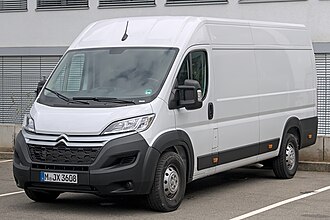
When it comes to commercial vans, the used market is rich with options that vary widely in capability, cost of ownership, reliability, and practicality. Among these, the Citroën Jumper stands out not because it is glamorous or exciting, but because it serves a very clear purpose exceptionally well: it is a hardworking transporter meant to do a job without fuss, and in the used car world that kind of simplicity often proves to be a major advantage. Used vans are evaluated differently from passenger cars. Buyers focus less on luxury features and more on load capacity, maintenance history, fuel economy, availability of spares, and how well the vehicle has been cared for. In these areas, the Jumper often competes strongly with its peers. It shares roots with its mechanically similar siblings — the Peugeot Boxer and the Fiat Ducato — meaning that many parts are interchangeable and servicing knowledge is widespread among independent garages.
The Citroën Jumper’s appeal in the used sector lies in its capacity to blend robust mechanicals with a flexible platform that works for business owners, delivery fleets, tradespeople, or anyone needing serious cargo space. For many buyers, a used Jumper represents better value than a brand‑new model because depreciation is steep in the first few years, meaning a three‑ or five‑year‑old example is often significantly cheaper yet mechanically sound. But with choice comes complexity: there are different generations, multiple wheelbase and roof height combinations, various engine choices, and a raft of trim levels or optional packages that can dramatically influence ownership experience. Choosing wisely requires understanding not just what you want from a van, but what the Jumper is capable of giving you.
This article will take you deep into everything you need to know about the Citroën Jumper as a used car: its history and evolution, design and practicality, engine and drivetrain options, handling and driving experience, interior usability, safety and technology options, common reliability considerations, maintenance and ownership costs, what to inspect when buying used, how it compares with rivals, and ultimately whether it suits your specific needs. Along the way, you’ll gain clarity on the strengths and weaknesses of this dependable commercial vehicle.
A Brief History: Evolution of the Citroën Jumper
The Citroën Jumper first appeared in the early 1990s as Citroën’s entrant into the large van segment. It was developed in collaboration with Peugeot and Fiat, forming a trio of closely related vehicles with different badges — Citroën Jumper, Peugeot Boxer, and Fiat Ducato. This strategic partnership allowed the companies to spread development costs over a larger production volume, while still each retaining brand identity in sales and marketing. Though they share many mechanical and structural components, each has its own unique design language and interior trim styling.
Over successive generations, the Jumper has evolved to meet changing emissions regulations, payload expectations, driver comfort demands, and technology trends. The first generation focused primarily on basic commercial capability — big cargo area, rugged chassis, and a workmanlike interior. Later generations introduced more refined interiors, improved environmental performance with cleaner engines, more comfort‑oriented driving dynamics, and additional safety technology. As stricter European emission standards emerged, diesel engines were refined with common‑rail fuel systems, exhaust treatment systems, and other advancements to reduce harmful emissions without sacrificing torque and load‑pulling ability.
For a used‑car buyer, generational differences matter. Older models may lack modern electronics but are often simpler and potentially cheaper to maintain. Newer used examples might offer better fuel economy, improved comfort features like air conditioning and navigation systems, and enhanced safety features such as stability control or lane assist. Knowing which generation you’re considering — and what that generation’s strengths and common issues are — is essential before making a purchase.
Exterior Design and Load‑Carrying Practicality
Viewed from outside, the Citroën Jumper doesn’t try to be exciting — instead it focuses on maximising usable space and functional design cues that make loading, driving, and daily usage easier. Long wheelbase versions stretch the body forward and back, creating a substantial cargo area that can swallow pallets, long building materials, or bulky furniture with ease. Roof heights vary from low roof models that fit comfortably in standard garage entries to high‑roof variants that let a tall adult stand upright in the back when the cargo area is empty or configured for utility access.
The front end of the Jumper tends to be upright, with large headlamp clusters and a short bonnet. This design minimizes overall length while preserving maximum internal length for cargo capacity. Sliding side doors are often available on at least one side — many examples have dual sliding doors — which makes loading in tight urban spaces far more convenient than relying solely on rear doors. These rear doors are typically split 60/40 or 50/50 and open wide, sometimes up to 180° or beyond, which allows unimpeded access to the cargo bay.
For business use, the exterior design’s simplicity is an asset. The large panels are easy to decal or brand with company graphics, and repair costs tend to be moderate because of the straightforward body shapes. Roof rails and optional ladder racks on high‑roof models further enhance utility for tradespeople who frequently carry longer items such as pipes, ladders, or timber. From a used‑car perspective, van owners often customise these features according to their specific trade needs — and when inspecting a used Jumper, understanding what has been added or modified is a key part of assessing value and future maintenance needs.
Engine Options and Drivetrain Configurations
One of the decisive factors in evaluating a used Citroën Jumper is understanding its engine and drivetrain variations over the years. Diesel engines have dominated this segment because of their superior torque delivery and better fuel economy — especially important in a van that is frequently loaded with heavy cargo. Petrol engines have been less common in large vans because they tend to consume more fuel under load and offer less torque at low revs, which is where commercial vehicles spend most of their operating time.
Diesel engines used in the Jumper influence how it feels on the road. Torque figures are often generous — essential when climbing hills with a full load or accelerating onto highways from a standstill. Fuel delivery systems have typically been common‑rail or electronically controlled direct injection in later models, offering improvements in fuel economy, smoother idle, and cleaner emissions. Power outputs vary by engine size and tune, but the real character of a Jumper diesel lies in how early torque becomes available, which helps reduce gear shifting and keeps engines relaxed even under load. Transmissions are usually five‑ or six‑speed manuals, with optional automatics available in some recent generations. Automated gearboxes have become more popular in the used market because they simplify driving in busy urban areas and reduce driver fatigue when making frequent stop‑start deliveries.
Front‑wheel drive is the most common layout in the Jumper range, and for most users this makes sense: it provides better traction when lightly loaded, improves fuel economy over heavier rear‑wheel drive configurations, and typically costs less to build and maintain. Some markets and model years have offered rear‑wheel‑drive or even 4×4 variants, but these are rarer and often command a premium. Rear‑wheel drive can be advantageous when maximum payload and towing capacity are priorities, as it tends to handle heavier weights more stably, but most used buyers find the standard front‑wheel‑drive models more than adequate.
Understanding how different engine options affect running costs, fuel consumption, and long‑term reliability is essential before purchasing a used Jumper. Diesel engines that have been maintained regularly — with timely oil changes, fresh fuel filters, and proper service intervals — tend to be long‑lived and robust. The trade‑off is that poorly maintained diesel engines are often expensive to repair if fuel system components wear prematurely or if emission systems like diesel particulate filters (DPFs) fail due to neglect.
Suspension, Handling, and Driving Experience
Large vans often get a bad reputation for being unwieldy or unpleasant to drive compared with passenger cars. While it’s true that the Citroën Jumper is not designed to offer sports‑car dynamics, its driving experience typically surprises many drivers in a positive way once they understand its purpose and scale. Suspension design in the Jumper prioritises load‑carrying stability and comfort — crucial when you are transporting heavy loads or driving long distances with cargo.
At lower speeds, particularly in urban settings, the suspension soaks up bumps and potholes without jarring the cabin harshly, which tends to reduce driver fatigue over an extended workday. On open roads and highways, the Jumper remains composed — its long wheelbase helps it resist pitching and pitching, and the van tracks straight even in moderate crosswinds, which are more noticeable at higher speeds due to the tall body profile. Steering is usually light at low speed, aiding manoeuvrability in tight parking lots or around loading docks, and it firms up progressively at higher speeds to give the driver confidence.
Van drivers who spend many hours a week behind the wheel often remark that the Jumper drives more like a large estate car than a truck — at least in terms of predictability and road manners. The trade‑off is that body roll in corners is noticeable and acceleration is measured rather than brisk; this is exactly as intended, because the vehicle’s mission is utility and stability, not athletic performance. Larger diesel engines paired with manual gearboxes offer the best balance of control and efficiency, whereas automatic transmissions can add convenience, especially in congested city environments.
Braking systems in used Jumper models are typically robust and designed to handle repeated heavy deceleration — an important attribute given the potential for high payloads. Drivers should check for brake fade during inspection and ensure that pads, discs, and brake fluid changes have been maintained as per service schedules.
Interior Design, Comfort, and Usability
The interior of the Citroën Jumper is deeply functional by design, with an emphasis on durability and usability rather than luxury. For business owners, the cabin environment is often where the grind of daily work begins and ends, so comfort and layout matter more than aesthetic flourishes. Early generations of Jumper have straightforward dash layouts with large, easy‑to‑read instruments, logically placed controls, and finishes that prioritise hard‑wearing materials over soft‑touch surfaces. Later generations introduced more refined plastics, better ergonomics, and optional features such as improved infotainment systems, enhanced air conditioning units, and driver‑assistance technologies.
Driver ergonomics are especially important in vans because operators often spend many hours each week behind the wheel. Seating in a used Jumper typically offers good positional adjustability, with supportive seats that help reduce fatigue. Steering wheels may tilt for preferred positioning, and mirrors provide excellent outward visibility — critical when navigating busy streets or reversing into loading docks. Storage solutions abound in the cabin: overhead shelves, large glove compartment, cup holders, and door bins allow drivers to stow paperwork, tools, mobiles, drinks, and personal items without clutter.
Noise insulation is an area where commercial vans traditionally lagged behind passenger cars, and earlier Jumper models reflect this. Wind noise at highway speeds and mechanical noise from the diesel engine can be noticeable in the cabin, especially under hard acceleration. Later versions made incremental improvements in insulation and vibration damping, making them more pleasant for long hauls or extended driving sessions.
Climbing into the load area from inside the van is usually straightforward thanks to wide sliding doors and a reasonably flat floor. Some owners choose bulkheads or partition walls to separate the cargo area from the cabin — useful for protecting driver and passenger from shifting loads. Many used examples have already been fitted with shelving, racking systems, or tie‑down points tailored to a specific trade. While these modifications can add value for your own use, it’s important to ensure they don’t compromise structural integrity or reduce cargo capacity unintentionally.
Safety Features and Driver Aids
Compared with contemporary passenger cars, a used van like the Citroën Jumper may not have every advanced safety feature you’d find in modern SUVs or sedans. However, core safety systems were present in many model years, and later generations saw the introduction of additional driver‑assistance technologies as safety regulations tightened and customer expectations rose.
Anti‑lock braking systems (ABS) are a baseline inclusion, reducing the likelihood of wheel lock‑up under heavy braking and helping maintain steering control. Electronic stability control (ESC) became more common in later models, helping prevent skids and maintain control when loaded or manoeuvring on slippery surfaces. Airbags for the driver and front passenger were introduced across model years, and some options packages added side airbags to enhance protection in the event of a side impact.
Driver aids such as parking sensors, rear‑view cameras, blind‑spot alerts, and lane‑departure warnings were not standard across all trims but became available on newer used Jumper models — often as part of higher trim levels or optional safety packs. For many used buyers, these additions are worth seeking out because they enhance everyday usability and reduce the likelihood of costly parking or lane‑change mishaps.
The structural design of the Jumper — built with reinforced door beams and energy‑absorbing crumple zones — also contributes to occupant safety. Although official crash test ratings may vary by market and body configuration, buyers should prioritise examples with documented safety features such as ESC and airbags.
Reliability and Common Issues in Used Examples
Reliability is a major consideration for anyone buying a used commercial vehicle because downtime often translates directly into lost productivity and income. The Citroën Jumper has a reputation for mechanical robustness when properly maintained, and diesel engines in particular can run for many hundreds of thousands of kilometres with careful servicing. However, like all vehicles, certain issues tend to crop up with age and mileage, and understanding these common weak points helps buyers make informed decisions.
One common area of concern — particularly in older models — relates to suspension wear. Bushes, shock absorbers, and springs can deteriorate under heavy loads and frequent use, leading to increased vibration, uneven tyre wear, or a less composed ride. Another area to inspect is the braking system; heavy use over several years increases wear on pads and discs, and uneven braking or unusual noises may indicate parts that need replacement.
Electrical gremlins also appear occasionally — intermittent failures in instrument panels, lighting circuits, or central locking systems can emerge in older cars. These issues are usually inexpensive to fix but can be annoying if they disappear and reappear unpredictably. Diesel engines may accumulate soot in particulate filters (DPFs) if the vehicle has spent too much time on short urban trips instead of long runs that heat the system adequately. Owners should verify service history related to this aspect, because ignoring DPF maintenance can result in costly regeneration failures.
Coolant hoses, turbocharger seals, and fuel injectors are other components that can show age‑related wear. Fortunately, because the Jumper shares mechanicals with other high‑volume vans like the Peugeot Boxer and Fiat Ducato, aftermarket spares are widely available and often much cheaper than dealer‑priced parts.
Ultimately, the biggest determinant of reliability in a used Jumper is how well it was maintained. Vans that have regular oil changes, documented servicing, and no history of severe overload or collision are far more likely to be trouble‑free than those with sporadic maintenance histories.
Maintenance Costs and Ownership Considerations
Maintenance and running costs are critical when evaluating used commercial vehicles because business owners need predictable expenses. The Citroën Jumper typically performs well in this regard. Servicing intervals are straightforward and well understood by independent mechanics and specialist van workshops alike, and many items such as oil filters, brake pads, and routine service components are affordable and widely stocked. Routine servicing — oil changes, brake inspections, coolant flushes — should be factored into ownership costs, and vans with documented service histories command higher resale values for that reason.
Diesel engines in the Jumper, while robust, benefit from careful maintenance because diesel fuel systems are sensitive to neglect — old fuel filters or long intervals without servicing can lead to injector wear or low‑pressure pump issues. Automatic transmissions, where fitted, also require periodic fluid changes and inspections — neglect here can lead to costly repairs. Checking maintenance records for such items matters!
Insurance costs for commercial licences vary by region, but vans can sometimes be more expensive to insure than passenger cars, simply because they are used for business purposes and often carry valuable equipment. Registration taxes and road duties vary by country, and in some jurisdictions, vans attract lower tax rates than passenger cars — an advantage for business owners.
Fuel economy is another cost centre. Diesel engines generally outperform petrol alternatives in real‑world efficiency, particularly when the van carries heavy loads or operates in mixed conditions. Part of evaluating a used Jumper is understanding how its fuel economy aligns with your operational needs. A van used primarily for short urban hops may deliver lower economy than expected, so checking usage patterns and matching engine choice to typical routes is essential.
What to Look For When Inspecting a Used Citroën Jumper
Buying a used Citroën Jumper is more than checking mileage and price. A thorough inspection is critical. Start with a detailed service history — documented oil changes, timely belt replacements, brake servicing, and any records of transmission servicing are valuable indicators of how well the vehicle was cared for. Rust inspection is also essential, particularly around wheel arches, underbody panels, and suspension mounting points. Older vans are especially prone to corrosion if used in areas with heavy road salt usage or coastal environments.
Under the bonnet, check for oil residue around seals — indications of oil leaks can point to future maintenance needs. Coolant hoses should feel firm and crack‑free, and belts should show minimal fraying. Diesel engines with DPF systems need to demonstrate signs of regular long‑distance use rather than exclusively short urban runs.
During a test drive, pay attention to transmission behaviour — gear changes should be smooth without hesitation, grinding, or juddering. Suspension should feel composed, without excessive clunking or excessive body roll. Steering should feel responsive for the van’s size, and no excessive play or wandering should be evident at highway speeds.
Inside, check all switches, the HVAC system, and infotainment functions. Electrical issues — intermittent lighting, failings of power outlets, or malfunctioning dash displays — may point to aging wiring that could require attention. If possible, have a trusted mechanic perform a diagnostic scan and a compression test on the engine — these give deeper insight into mechanical health than a casual visual inspection alone.
How the Jumper Compares With Rivals in the Used Market
In the used van segment, the Citroën Jumper competes directly with a handful of well‑established rivals. The principal competitors are its stablemates — the Peugeot Boxer and Fiat Ducato — as well as vehicles like the Ford Transit, Mercedes‑Benz Sprinter, and Renault Master in various markets. Each has strengths and weaknesses, but the Jumper often distinguishes itself on cost of ownership and parts availability because of its shared components with other high‑volume vans. Reliability, ease of maintenance by independent garages, and flexibility of configurations help it remain competitive.
Compared with the Ford Transit, the Jumper may offer a roomier cargo area at equivalent exterior length and very flexible body configurations. The Transit might have an edge in infotainment and safety features on newer used models, but this often comes with a higher used price. Mercedes‑Benz Sprinter examples are known for strong durability and long life, particularly in high‑duty usage, but they tend to cost more as used purchases and may also carry higher maintenance costs due to premium parts pricing. Renault Master vans are similar in their emphasis on practicality and cost‑effectiveness, but the Citroën’s shared parts network with the Boxer and Ducato often keeps replacement components more accessible.
Ultimately, the best choice depends on your priorities: outright lowest purchase price, lowest ongoing costs, specific payload requirements, etc. The Jumper tends to excel when balanced against value, usable space, and predictable long‑term costs.
Conclusion: Is a Used Citroën Jumper Right for You?
As a used car — or van — the Citroën Jumper offers a blend of practicality, flexibility, and mechanical simplicity that appeals to a wide range of buyers. Whether you’re a tradesperson seeking reliable cargo space, a business owner looking for a cost‑effective workhorse, or a private buyer needing serious load capacity for hobbies or travel projects, the Jumper ticks many boxes. Its diesel engines generally offer strong torque and sensible economy, its interior is tailored to heavy use, and its materials and layout reflect decades of commercial use evolution.
As with any used purchase, the key to success is careful inspection, understanding service history, and matching the individual vehicle’s configuration to your needs. When chosen wisely, a used Jumper can deliver many years of dependable service and clear value compared with new‑van pricing.
Technical Specifications Table
| Specification | Details |
|---|---|
| Model | Citroën Jumper |
| Body Type | Light commercial van (panel van, minibus, chassis cab) |
| Layout | Front‑engine, Front‑wheel drive (usual) |
| Engine Types | Turbo Diesel (various 2.0–2.3 L common‑rail diesels) |
| Power Output | Approx. 100–160 hp (varies by engine/market) |
| Torque | 260–400 Nm approx. (engine dependent) |
| Transmission | 5‑ or 6‑speed manual, optional automatic |
| Fuel Type | Diesel |
| Fuel System | Common‑rail direct injection |
| Emission Standard | Euro 3/4/5/6 depending on model year |
| Front Suspension | Independent MacPherson strut |
| Rear Suspension | Beam axle with leaf springs or coil setup |
| Steering | Power‑assisted rack and pinion |
| Brakes (Front/Rear) | Disc / Drum (varies by spec) |
| ABS/ESC | Typically standard (ESC on newer models) |
| Seats | 2–3 in cab; optional passenger seat variants |
| Payload Capacity | ~1000–2000+ kg (depends on configuration) |
| Gross Vehicle Weight (GVW) | ~2.8–4.0 tonnes (model dependent) |
| Cargo Volume | Approx. 8–17+ m³ (body style dependent) |
| Fuel Tank | ~80–90 litres |
| Length | ~4950–6300 mm (varies by wheelbase) |
| Width | ~2050 mm incl. mirrors |
| Height | ~2250–2800 mm (roof height dependent) |
| Wheelbase Options | Short / Medium / Long |
| Towing Capacity | Up to ~2.5 tonnes (varies by spec) |
| Safety Features | ABS, airbags, optional ESC, optional parking sensors/camera |
_IMG_0456.jpg)