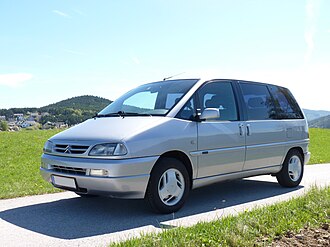
The Citroën Evasion is one of those vehicles that rarely gets the flashiest headlines or the highest price tags, but quietly embodies many of the qualities thoughtful used‑car buyers seek: practicality, flexibility, comfort, and a sense of family‑friendly purpose. Launched in the mid‑1990s and produced through the 2000s, the Evasion represents a period when large European MPVs (multi‑purpose vehicles) were at their peak, offering generous interior space, versatile seating arrangements, and driving characteristics tailored to real‑world lifestyles rather than performance benchmarks. Today, in an era dominated by crossovers and SUVs, the Evasion sometimes gets overlooked, yet it deserves attention from buyers who prioritize interior space, ease of access, and a vehicle that can adapt to many roles — from family transport to long‑distance touring, from camping trips to hauling sizeable items.
For used car buyers, particularly those on a budget or those who have outgrown smaller hatchbacks and sedans, the Evasion holds a sweet spot: it is affordable, relatively simple mechanically compared with modern vehicles, and offers a driving experience that emphasizes comfort. Unlike contemporary SUVs that often feel tall and truck‑like, the Evasion’s car‑derived design provides a sense of poise and comfort more akin to a large estate car. It is not a performance‑oriented machine by any means, but the qualities it offers are precisely what many practical owners are searching for. Furthermore, because the Evasion was shared with mechanically similar siblings such as the Peugeot 806, Fiat Ulysse, and Lancia Zeta, parts availability remains reasonable in most markets, and independent mechanics familiar with this generation of MPVs can provide competent service without exorbitant cost.
This article explores the Citroën Evasion as a used car in exhaustive detail, examining its design philosophy, engines and transmissions, interior packaging, ride and handling, safety and practicality, known weak points and reliability considerations, maintenance costs, ownership experience, comparison with contemporary rivals, and ultimately how to evaluate a used example before purchase. By the end, you should have a comprehensive understanding of whether the Evasion matches your expectations and requirements — and how to approach buying one with clarity and confidence.
Historical Context: Where the Evasion Fits in the MPV Landscape
In the 1990s and early 2000s, the automotive landscape was markedly different than today. Compact SUVs and crossovers had not yet completely dominated consumer demand. Instead, families and practical users often turned to MPVs (Multi‑Purpose Vehicles) or people carriers for their combination of passenger space, comfort, and versatile seating. Among the European MPVs, the Citroën Evasion held a respectable position. It was developed as part of a collaborative program between PSA Group (Peugeot and Citroën) and Fiat, known internally as the “Type U” project, which produced mechanically similar models across four brands. Each variant had its own styling cues and interior trim differences, but underneath they shared structural components, mechanicals, and a broadly similar driving experience.
The philosophy behind the Evasion was one of user‑centric design. Instead of emphasizing sporty handling or aggressive styling, engineers and designers focused on interior space optimization, ride comfort, ease of use, and modular seating. The name “Evasion” itself suggests escape — a car that helps families, adventurers, and everyday users get away from the ordinary and embrace journeys that matter. Whether that meant long highway trips, ferrying children and equipment to school and activities, or handling the unpredictable demands of daily life, the Evasion was engineered with flexibility in mind.
Unlike larger vans that often compromise ride quality and handling, the Evasion maintained a sense of car‑like composure. Steering was calibrated for comfortable cruising rather than sharp precision, and suspension design prioritized absorption of road imperfections. As MPVs have gradually lost ground to SUVs over the past decade, many of the qualities once sought in vehicles like the Evasion have been packaged differently in crossover forms. Yet the pure interior space and straightforward utility of an MPV remains difficult to match. This makes the Evasion an interesting option for used buyers who want maximum usable interior volume and passenger flexibility without paying modern SUV prices.
Exterior Design and Practicality: Purpose Over Styling
At first glance, the Citroën Evasion is an object lesson in functional automotive design. It doesn’t chase dynamic angles or dramatic proportions — instead, it projects a clean, wide stance that communicates space and accessibility. The front fascia is simple and unpretentious, with a broad grille and headlamps designed to provide good visibility rather than aggressive styling. The long roofline flows back to a large tailgate, which, combined with vertical rear pillars, maximizes cargo space and headroom. Sliding side doors are a key practical feature, especially useful in tight parking spaces or when loading passengers in busy urban environments.
While modern buyers might associate sliding doors with minivans or commercial vehicles, in the context of the Evasion they are one of its greatest strengths. Families quickly appreciate how easy it is to load children in seats, access the rear rows, and handle bulky luggage or equipment without struggling with outward–swinging hinged doors. This attention to practical detail extends to the size of windows — generous glass areas not only improve outward visibility from all seating positions but also create an airy, open cabin atmosphere that reduces claustrophobia on longer trips.
The exterior design also incorporates roof rails in most trims, enabling the addition of roof boxes, bike racks, and other accessories that enhance long‑distance utility. Pair that with a nearly flat load floor and rear bench seats that fold and slide independently, and the Evasion’s exterior packaging clearly prioritizes usability. While the body panels and styling cues may show their age compared with contemporary cars, they functionally support the vehicle’s purpose: maximizing practicality while minimizing stress for occupants. As a used car, this is a big part of its enduring appeal — the design behaves less like fashion, and more like thoughtful engineering.
Engine and Transmission Options: Balancing Power and Efficiency
One of the most important aspects to consider when evaluating any used vehicle is its powertrain options, and the Citroën Evasion offers a range that reflects its era and priorities. During its production life, the Evasion was offered with multiple engine configurations, primarily gasoline and diesel units, each designed to balance the vehicle’s weight, intended use, and fuel economy expectations.
Gasoline engines in the Evasion typically ranged from modestly sized four‑cylinder units that emphasized reliable everyday performance to larger displacements providing a bit more grunt for highway driving and full passenger loads. Power outputs naturally varied by market and model year, yet the overall approach was consistent: deliver enough power to move the relatively heavy MPV with composure, without encouraging sporty driving or high fuel consumption. Buyers who predominantly used their vans for urban commuting or short family journeys often found the smaller gasoline engines adequate, appreciating their simplicity and smoother idle characteristics compared to diesels.
Diesel engines, on the other hand, have historically been a strong choice in European used MPV markets because they offer better torque figures and superior real‑world fuel economy — particularly important when the vehicle is fully loaded with passengers and cargo. Turbodiesel engines in the Evasion typically offered robust low‑end torque, making highway overtaking safer and hill climbs less effortful. Additionally, diesel variants tend to hold their efficiency advantage on long trips, which makes them desirable for frequent travelers or those using the Evasion as a long‑distance transporter.
Pairing these engines were transmissions tuned more for smoothness and reliability than sporty engagement. Five‑speed manual gearboxes were the most common, offering drivers direct control over power delivery and typically being easier and less expensive to maintain with age. Automatic transmissions were also available, particularly in higher trim levels, providing added convenience for urban driving or drivers who prefer not to operate a manual gearbox. These automatics were not performance‑oriented contraptions, but rather systems that shifted smoothly and prioritized comfort.
As a used‑car buyer, it’s important to recognize that the type of engine and transmission you choose will influence running costs, fuel economy, and long‑term reliability. Diesel variants may offer better mileage but require careful attention to maintenance practices such as timely oil changes, DPF care (where fitted), and ensuring adequate driving conditions to avoid excessive soot buildup. Gasoline engines, while typically a bit thirstier, can be more tolerant of mixed driving conditions and slightly less demanding in terms of emission system upkeep.
Ride Comfort and Handling: The Evasion’s Driving Personality
The Citroën Evasion’s ride and handling characteristics are a direct reflection of its overarching mission: comfortable, unhurried transport for families, cargo, or multi‑purpose use. Unlike sport‑oriented sedans or compact hatchbacks that emphasize sharp steering and agile cornering, the Evasion is tuned for composure, predictability, and resilience when faced with uneven surfaces. Suspension components are calibrated to absorb bumps, dips, and expansion joints with minimal intrusion into the cabin — a trait that owners quickly notice during long journeys on uneven roads or pothole‑ridden urban streets.
Steering is light and confidence‑inspiring at low speeds, making parking and maneuvering in tight spaces easier than one might expect for a vehicle of its size. At highway speeds, the steering gains enough weight to feel stable, yet it never becomes overly heavy or demanding. This ease of control extends a sense of calm to the overall driving experience. While enthusiasts might bemoan the absence of crisp, direct steering, the average driver appreciates how the Evasion handles real‑world conditions without penalty.
Body roll in corners is moderate, consistent with the vehicle’s size and center of gravity, yet it is well controlled — drivers do not feel like they are in a top‑heavy juggernaut vulnerable to tipping. Instead, the suspension harmonizes with the powertrain to provide a buoyant yet composed ride that works well whether the Evasion is lightly loaded or fully occupied with passengers and luggage. Brake performance is similarly deliberate rather than aggressive, delivering smooth, progressive stopping power that passengers often find reassuring rather than abrupt.
The automatic transmissions, where fitted, contribute to this relaxed driving personality. They upshift early to conserve fuel and keep revs low, enhancing the sense of serenity in the cabin. Manual gearboxes offer more driver engagement without introducing complexity, with clear gear transitions and a light clutch action that suits urban and long‑distance driving alike. Overall, the Evasion’s driving character rewards owners who value calm, stable cruising and comfortable transport over performance thrills, a combination that remains compelling in the used market.
Interior Packaging and Practical Use: Space Designed Around People
If there is one adjective that defines the Citroën Evasion’s interior, it is spacious. The designers knew that family life, group travel, and multi‑purpose use demand interior packaging that serves many roles without compromise. From the driver’s seat to the rear row, there is a generous sense of roominess that helps lessen fatigue on longer journeys and accommodates taller adults without discomfort.
Front seats are typically wide and supportive, often with adjustable features that allow drivers and front passengers to find comfortable seating positions during extended use. The driving position itself tends to feel upright yet relaxed, providing good forward visibility and a commanding view of the road — a trait parents and long‑distance drivers appreciate. Rear seating configuration varies by model year and trim, but many Evasion examples come with three rows of seats, allowing up to seven occupants. These seats can often be removed or reconfigured independently, enabling tailored use cases — whether that means accommodating a large family, creating extra cargo space, or preparing the interior for recreational gear.
Interior storage solutions are thoughtful and numerous. Overhead compartments, door bins, glove boxes, and center console cubbies provide convenient places to stow maps, phones, snacks, paperwork, and other essentials. Cup holders abound, and in many configurations, rear passengers have access to their own ventilation controls or storage trays — details that lend a sense of practicality that goes beyond mere slogan. The large windows and high roofline contribute not only to generous headroom but also to an open, airy cabin environment that reduces feelings of confinement, especially useful on long journeys with children or claustrophobic passengers.
Cargo handling in the Evasion is similarly versatile. With rear seats folded or removed, the load floor becomes expansive and nearly flat, capable of accommodating bulky items such as bicycles, suitcases, camping gear, or even furniture pieces in a pinch. The practicality here rivals many modern crossovers, yet without the premium price tags. Roof rails further extend capability for carrying larger items like kayaks or rooftop luggage boxes, while sliding doors make loading and unloading less stressful in busy parking areas or narrow driveways.
Safety Features and Real‑World Protection
Safety is an essential consideration for any used car, and the Citroën Evasion was equipped with core safety features that reflect its era and usage profile. While it may lack the full suite of advanced driver‑assistance systems (ADAS) found on modern vehicles, it nonetheless provides a solid foundation of protection through structural design and essential safety equipment.
Multiple airbags for the driver and front passenger were common on many trims, and side impact protection beams within the doors helped mitigate intrusion during side collisions. Anti‑lock braking systems (ABS) were typically standard, reducing the likelihood of wheel lock‑up during hard braking and helping maintain steering control in emergency situations. Electronic brakeforce distribution (EBD), where fitted, further enhanced stopping stability by allocating braking force proportionally according to load and momentum distribution.
The Evasion’s body structure was engineered with crash performance in mind, often incorporating reinforced sections to better manage impact forces and protect occupants. ISOFIX anchor points — standard on many later models — facilitated secure installation of child seats, an important safety consideration for families. While features such as blind‑spot monitoring, lane‑departure warnings, or autonomous emergency braking were not standard fare on vehicles of this generation, the core passive safety systems laid a reliable groundwork for everyday driving protection.
Real‑world reports from owners and automotive testers indicate that the Evasion’s safety performance, when evaluated against its contemporaries, was competitive. Of course, modern cars with advanced safety suites and crash‑structure advancements still have an edge in absolute terms, but for buyers prioritizing practicality and comfort on a budget, the Evasion’s protection level remains respectable.
Reliability and Known Weaknesses: What Every Used Buyer Should Investigate
No used car is flawless, and the Citroën Evasion has its own set of areas prospective buyers should pay close attention to. Generally speaking, the Evasion’s mechanicals are robust if maintained properly, but age‑related wear and neglect can expose weaknesses that are typical of larger, older vehicles.
One of the most common areas of concern involves suspension components. Given the vehicle’s size and weight — particularly when regularly loaded with passengers and cargo — suspension bushes, springs, and shock absorbers can wear faster than in lighter, smaller cars. Signs of worn suspension include increased road noise, a bouncy ride, or lack of stability over uneven surfaces. These issues are visible during test drives and relatively inexpensive to remedy if caught early, but neglect can lead to more extensive repairs.
Electrical systems also demand attention. Power windows, central locking mechanisms, infotainment controls, and lighting circuits can develop intermittent faults as wiring insulation ages and connectors experience wear. These are not usually critical to the vehicle’s fundamental operation, but they can erode the ownership experience if left unaddressed. Checking all electrical functions during a pre‑purchase inspection is highly recommended.
Engines — both petrol and diesel — are generally reliable, but like all mechanical systems, they suffer if routine maintenance is ignored. Diesel variants in particular require timely oil changes, fresh fuel filters, and occasional longer runs on open roads to help keep particulate filters and turbochargers in good working order. Petrol engines are often more forgiving of mixed use, but should still receive scheduled spark plug changes, belt inspections, and fluid replacements.
Another area to be aware of is heater and HVAC system performance. Older MPVs can develop issues with air distribution flaps, blower motors, and control modules, especially if moisture has had access to interior air channels over time. While not a high‑risk safety issue, a malfunctioning HVAC system can significantly reduce comfort and may be costly to repair if ducting or control units need replacement.
Despite these potential issues, the Evasion’s overall reliability track record is solid, especially when owners stick to service schedules and address minor concerns before they escalate. Independent mechanics familiar with PSA Group and Fiat MPVs are usually comfortable diagnosing and repairing common issues, which helps keep long‑term maintenance costs reasonable.
Cost of Ownership: Running Costs, Fuel Economy, Insurance, and Taxes
A strong part of the Citroën Evasion’s appeal as a used car is its relatively low cost of ownership compared with larger SUVs or luxury people carriers. Fuel economy varies significantly with engine type, driving habits, and load, but diesel variants typically deliver better mileage in real‑world use — a factor that benefits drivers with long commutes or frequent highway use. Petrol engines, while less efficient on long trips, can still prove economical around town and during mixed use, especially when combined with smooth driving habits and regular servicing.
Insurance premiums for the Evasion tend to fall in moderate categories because the vehicle is not performance‑oriented, and its safety equipment contributes to lower risk profiles. Road taxes and registration fees depend on your region and local emissions regulations, but in many cases, smaller displacement engines and moderate emissions figures help keep these costs down relative to larger or higher‑output vehicles.
Maintenance and servicing, as noted earlier, are typically less expensive than on modern vehicles with advanced electronic systems. Routine items — oil changes, brake service, suspension checks, and coolant changes — remain straightforward for independent garages experienced with vehicles of this era. Major items such as timing belt replacements (if applicable) and transmission servicing should be planned within budget, but they are predictable events rather than frequent surprises.
Overall, the Evasion’s running costs align with its role as a sensible family transporter. It is not a cheap car to ignore, but when cared for responsibly, it does not demand excessive expenditure either.
Comparison With Contemporary Rivals: Where the Evasion Stands Today
In today’s used‑car landscape, the Citroën Evasion competes with contemporary MPVs, older SUVs, and large station wagons for buyers seeking interior space and practicality. Compared with vehicles like the Renault Espace, Volkswagen Sharan, or Ford Galaxy from similar eras, the Evasion generally offers comparable space and comfort at often lower price points — a strong consideration for value‑minded buyers. Ride comfort and interior flexibility are often cited as strengths relative to rivals, while parts and maintenance costs can be more reasonable thanks to shared components and simple mechanicals.
However, there are trade‑offs. Some rivals may offer more advanced safety technology, more powerful engine options, or slightly more modern interiors depending on year and trim. It’s also true that the MPV segment as a whole has lost ground to crossovers and SUVs, meaning that some buyers may prioritize the driving position, perceived ruggedness, or resale values associated with SUV designs. Nonetheless, for those who prioritize maximum usable interior space for people and cargo, along with a relaxed driving experience and affordability, the Evasion remains competitive.
Pre‑Purchase Inspection: What to Look for in a Used Evasion
Buying a used Citroën Evasion requires the same careful approach as any sizeable used vehicle. A thorough inspection by a trusted mechanic is invaluable, particularly to assess suspension condition, drivetrain health, and electrical system function. Engine compression tests and diagnostic scans can highlight hidden issues, especially when combined with a review of service history documents. Test drives should include highway runs, low‑speed maneuvers, and checks of brakes, steering, and HVAC system performance.
Checking for signs of rust — especially in wheel arches, underbody panels, and door sills — is another important step, particularly in regions where road salt is used in winter. Any history of structural repair, insurance claims, or unusual noises should be discussed with the seller and investigated further. Lastly, confirming that all interior features — from power windows to rear seat mechanisms — operate smoothly helps avoid surprises after purchase.
Ownership Experience and Community Insight
Owners of the Citroën Evasion often describe long periods of reliable use when maintenance is kept up to date. Many communities of MPV owners share tips on forums, highlighting best practices for servicing, parts sources, and upgrades such as modern infotainment retrofits or additional storage solutions. Shared experiences suggest that minor quirks are often easily addressed with routine care, and many owners report staying with their Evasions far longer than initially expected due to the vehicle’s adaptability and durability.
Conclusion: Is the Citroën Evasion Right for Your Needs?
In a world increasingly dominated by SUVs and crossover utility vehicles, the Citroën Evasion stands as a reminder of the virtues of the classic MPV. It offers spacious, adaptable interior room, thoughtful practical features like sliding doors and modular seating, and a comfortable, relaxed driving experience. As a used car, it is often priced attractively, and when chosen carefully with proper inspection, can reward owners with years of dependable service.
For buyers prioritizing cabin space, flexible seating, sensible running costs, and ease of maintenance, the Evasion remains a compelling choice. It represents a pragmatic, well‑engineered solution for families, frequent travelers, and anyone who values utility over trend. While it may lack some of the modern technology found in new vehicles, its core strengths — space, comfort, and purpose‑built design — continue to resonate in the used marketplace.
Technical Specifications Table
| Specification | Detail |
|---|---|
| Model | Citroën Evasion |
| Body Style | 5‑door MPV |
| Production Years | Mid‑1990s to mid‑2000s (varies by market) |
| Layout | Front‑engine, front‑wheel drive (some markets offered AWD) |
| Petrol Engines | Various 4‑cyl units (approx. 1.8–2.0 L) |
| Diesel Engines | 1.9 TD / 2.0 HDi diesel options (region dependent) |
| Transmission | 5‑speed manual / automatic optional |
| Power Output (Petrol) | ~100–135 hp (varies by engine) |
| Torque (Petrol) | ~150–185 Nm (approximate) |
| Power Output (Diesel) | ~90–110 hp (varies by version) |
| Torque (Diesel) | ~190–240 Nm (approximate) |
| Fuel System | Multi‑point injection / common rail for diesel |
| Fuel Type | Petrol or Diesel |
| Fuel Tank Capacity | ~60–70 liters |
| Length | ~4,580–4,650 mm |
| Width | ~1,820–1,840 mm |
| Height | ~1,640–1,680 mm |
| Wheelbase | ~2,850 mm |
| Curb Weight | ~1,450–1,750 kg (depending on spec) |
| Seating Capacity | 5–7 (varies by seating configuration) |
| Cargo Volume | Large flexible load space with folding/removable seats |
| Suspension Front | MacPherson strut |
| Suspension Rear | Independent suspension |
| Brakes Front/Rear | Ventilated discs / solid discs |
| Steering | Power assisted |
| Safety Features (Era‑appropriate) | ABS, airbags (driver/passenger), reinforced body structure |
