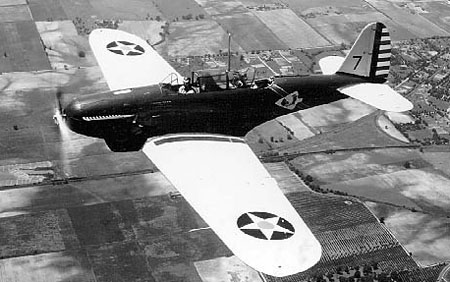
The Consolidated P-30 represents a fascinating and often overlooked chapter in the evolution of American military aviation. Emerging during the interwar period—a time marked by rapid technological experimentation and doctrinal uncertainty—the P-30 was among the first U.S. Army Air Corps fighters to incorporate features that would later become standard in World War II aircraft. It combined biplane-era thinking with emerging monoplane concepts, resulting in a hybrid design that reflected both ambition and transitional limitations.
Developed by Consolidated Aircraft, the P-30 was originally designated the XP-30 and later evolved into the production YP-30 and PB-2A variants. While it never achieved widespread operational fame, its significance lies in its technical innovations, including an enclosed cockpit, retractable landing gear, and high-altitude performance enhancements such as turbo-supercharging. These features placed it ahead of many contemporaries and demonstrated the direction fighter aircraft design would take in the coming decade.
The P-30 served as a stepping stone between the open-cockpit biplanes of the early 1930s and the high-performance monoplanes that would dominate the skies during World War II. Its story is one of experimentation, adaptation, and the gradual refinement of fighter aircraft design principles.
Historical Context and Development Background
To understand the importance of the P-30, it is essential to consider the broader aviation environment of the early 1930s. The United States Army Air Corps was undergoing a period of modernization, seeking to replace aging aircraft with more capable and technologically advanced designs. At the time, most fighters were still biplanes with fixed landing gear and open cockpits, limiting their speed, altitude, and overall performance.
The introduction of monoplane fighters marked a significant shift in design philosophy. Engineers began to prioritize aerodynamic efficiency, structural strength, and pilot protection. The P-30 emerged as part of this transition, incorporating several cutting-edge features while still retaining some characteristics of earlier aircraft.
The XP-30 prototype first flew in 1932, showcasing a streamlined fuselage, a parasol wing configuration, and a two-seat arrangement. The inclusion of a rear gunner reflected contemporary concerns about bomber interception and defensive capabilities, as fighters were often expected to engage in both offensive and defensive roles.
As the design evolved, the aircraft underwent several modifications to improve performance and address operational requirements. These changes culminated in the production YP-30 and PB-2A variants, which were delivered to the Army Air Corps for evaluation and limited service.
Airframe Design and Structural Characteristics
The P-30’s airframe was a product of its time, blending traditional construction techniques with emerging innovations. The aircraft featured a parasol wing configuration, where the wing was mounted above the fuselage on struts. This design provided excellent visibility for the pilot and improved lift characteristics, particularly at lower speeds.
The fuselage was constructed using a semi-monocoque structure, combining internal framing with a stressed skin to achieve a balance between strength and weight. This approach represented a significant advancement over earlier designs, which relied heavily on external bracing and fabric coverings.
One of the most notable features of the P-30 was its enclosed cockpit, a relatively new concept at the time. This innovation improved pilot comfort and reduced aerodynamic drag, contributing to higher speeds and better overall performance. The cockpit was designed to accommodate both the pilot and a rear gunner, with separate compartments and communication systems.
The aircraft also featured retractable landing gear, another groundbreaking feature in the early 1930s. By retracting the landing gear into the fuselage during flight, the P-30 reduced drag and improved aerodynamic efficiency. This design element would later become standard in virtually all high-performance aircraft.
Aerodynamic Performance and Flight Characteristics
Aerodynamically, the P-30 represented a significant step forward compared to earlier fighters. Its streamlined fuselage and parasol wing configuration allowed for improved airflow and reduced drag, enabling higher speeds and better fuel efficiency.
The aircraft’s handling characteristics were generally stable and predictable, making it suitable for the training and operational needs of the Army Air Corps. However, the presence of a second crew member and additional equipment added weight, which affected overall agility and maneuverability.
The P-30 was designed with high-altitude performance in mind, reflecting the growing importance of altitude in aerial combat. Its turbo-supercharged engine allowed it to maintain power at higher altitudes, giving it an advantage over many contemporaries that struggled in thin air.
Despite these advancements, the aircraft’s performance was quickly overshadowed by newer designs. The rapid pace of aviation development in the 1930s meant that even innovative aircraft like the P-30 had relatively short operational lifespans.
Propulsion System and Engine Technology
At the heart of the P-30 was the Curtiss V-1570 Conqueror engine, a liquid-cooled V12 powerplant that represented the cutting edge of engine technology at the time. This engine was capable of producing approximately 600 horsepower, providing the aircraft with respectable performance for its era.
One of the most significant features of the P-30’s propulsion system was its use of a turbo-supercharger. This technology allowed the engine to maintain power output at high altitudes by compressing incoming air, compensating for the reduced oxygen levels found at higher elevations. The inclusion of a turbo-supercharger was a major innovation, setting the stage for its widespread use in later aircraft.
The engine drove a two-blade propeller, optimized for efficiency and performance. Cooling was achieved through a radiator system integrated into the aircraft’s design, ensuring reliable operation under various conditions.
While the engine was advanced for its time, it also presented challenges. Maintenance requirements were relatively high, and the complexity of the turbo-supercharging system added to the aircraft’s overall operational demands. Nevertheless, the experience gained from the P-30’s propulsion system contributed to the development of more reliable and efficient engines in the years that followed.
Armament and Combat Capabilities
The P-30 was designed as a fighter-interceptor, equipped with a combination of forward-firing and defensive armament. Its primary offensive weapon consisted of machine guns mounted in the fuselage, synchronized to fire through the propeller arc.
In addition to its forward armament, the aircraft featured a rear-mounted machine gun operated by the second crew member. This defensive capability reflected the tactical thinking of the time, which emphasized the need for protection against enemy fighters during bomber escort and interception missions.
The inclusion of a rear gunner was both an advantage and a limitation. While it provided additional firepower and defensive coverage, it also increased the aircraft’s weight and reduced its overall performance. As fighter design evolved, the trend shifted toward single-seat aircraft with greater speed and maneuverability, rendering the two-seat configuration obsolete.
Despite these limitations, the P-30’s armament was considered adequate for its intended role. It demonstrated the importance of integrating offensive and defensive capabilities into a single platform, a concept that would continue to influence aircraft design in the years to come.
Operational Service and Deployment
The P-30 saw limited service with the U.S. Army Air Corps during the mid-1930s. It was primarily used for evaluation and training purposes, allowing pilots and engineers to gain experience with new technologies such as enclosed cockpits and retractable landing gear.
Although it was not widely deployed in combat, the aircraft played a valuable role in shaping the development of future fighters. The lessons learned from its design and operation informed the creation of more advanced aircraft, including those that would serve during World War II.
The P-30’s service life was relatively short, as it was quickly replaced by more capable designs. However, its contributions to aviation technology and pilot training should not be underestimated. It served as a testbed for innovations that would become standard in later aircraft.
Comparison with Contemporary Aircraft
When compared to other fighters of its era, the P-30 stands out for its advanced features. Many contemporaries still relied on biplane configurations and lacked the aerodynamic refinements found in the P-30.
However, the aircraft also faced stiff competition from newer monoplane designs that offered superior performance. Aircraft such as the Boeing P-26 Peashooter and later the Seversky P-35 represented the next generation of fighters, with higher speeds, better maneuverability, and more efficient designs.
The P-30’s two-seat configuration and relatively heavy structure limited its competitiveness in this rapidly evolving landscape. Nevertheless, it served as an important transitional aircraft, bridging the gap between older and newer design philosophies.
Technological Legacy and Influence
The legacy of the P-30 lies in its role as a technological pioneer. Its use of an enclosed cockpit, retractable landing gear, and turbo-supercharging set new standards for fighter aircraft design.
These innovations were not immediately perfected, but they provided valuable insights that guided future developments. The experience gained from the P-30 contributed to the refinement of these technologies, leading to their widespread adoption in later aircraft.
The aircraft also highlighted the importance of balancing performance, complexity, and operational practicality. While advanced features can enhance capabilities, they must be integrated in a way that ensures reliability and ease of maintenance.
Engineering Challenges and Limitations
Despite its innovations, the P-30 faced several engineering challenges. The complexity of its systems, particularly the turbo-supercharger, required careful maintenance and posed reliability issues.
The aircraft’s weight and two-seat configuration also limited its performance, particularly in terms of speed and maneuverability. These limitations became increasingly apparent as newer, more efficient designs entered service.
Additionally, the rapid pace of technological advancement in the 1930s meant that the P-30 quickly became outdated. Aircraft development cycles were relatively short, and new designs often rendered existing models obsolete within a few years.
Conclusion: A Transitional Aircraft in Aviation History
The Consolidated P-30 occupies a unique place in aviation history as a transitional aircraft that bridged the gap between two eras. While it may not have achieved widespread fame or long-term service, its contributions to aircraft design and technology were significant.
By incorporating advanced features such as an enclosed cockpit, retractable landing gear, and turbo-supercharging, the P-30 helped pave the way for the high-performance fighters of World War II. It demonstrated the potential of these technologies and provided valuable lessons for future developments.
In many ways, the P-30 represents the spirit of innovation that defined the interwar period. It was an aircraft that dared to push boundaries, even if it did not fully realize its potential. Its legacy lives on in the countless aircraft that followed, each building upon the foundation it helped to establish.
Technical Parameters Table
| Parameter | Value |
|---|---|
| Manufacturer | Consolidated Aircraft |
| Role | Fighter / Interceptor |
| Crew | 2 (pilot + gunner) |
| Length | ~8.8 m |
| Wingspan | ~13.1 m |
| Height | ~3.2 m |
| Empty Weight | ~2,000 kg |
| Maximum Takeoff Weight | ~2,800 kg |
| Engine | Curtiss V-1570 Conqueror V12 |
| Power Output | ~600 hp |
| Maximum Speed | ~340 km/h |
| Cruise Speed | ~280 km/h |
| Range | ~1,000 km |
| Service Ceiling | ~8,000 m |
| Rate of Climb | ~8 m/s |
| Armament | Machine guns (forward + rear defensive) |
| Landing Gear | Retractable |
| Special Features | Enclosed cockpit, turbo-supercharger |