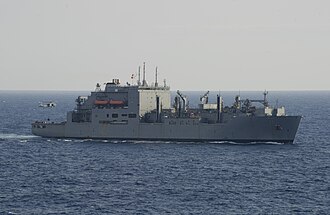
In the vast architecture of maritime power projection, logistics vessels occupy a role that is both fundamental and often overlooked. Warships may define the visible strength of a navy, but without a robust support network, their endurance and effectiveness diminish rapidly. Among the most capable and modern logistics ships in the United States fleet is the USNS Washington Chambers (T-AKE-11), a vessel that embodies efficiency, flexibility, and engineering precision within the Lewis and Clark-class dry cargo and ammunition ship program.
Named in honor of Washington Irving Chambers, often regarded as one of the founding figures of U.S. naval aviation, the ship reflects a legacy of innovation and forward-thinking strategy. Just as Chambers helped pioneer naval aviation in the early 20th century, the vessel bearing his name contributes to sustaining the modern Navy’s ability to operate globally, ensuring that frontline units remain supplied, supported, and mission-ready at all times.
The Evolution of Naval Logistics and the T-AKE Program
The development of the Lewis and Clark-class ships, including the USNS Washington Chambers (T-AKE-11), represents a pivotal shift in how the U.S. Navy approached logistics at the turn of the 21st century. Prior to this class, replenishment responsibilities were divided among several types of auxiliary vessels, each specializing in a limited cargo type such as fuel, ammunition, or general stores. While effective in their time, these ships lacked the flexibility and efficiency required for modern naval operations characterized by rapid deployment cycles and diverse mission requirements.
The T-AKE program consolidated multiple logistical functions into a single platform capable of carrying dry cargo, ammunition, and limited refrigerated goods. This integration significantly reduced the logistical footprint of naval task forces while increasing operational efficiency. Ships like Washington Chambers are therefore not just supply vessels but multi-role logistical hubs capable of adapting to a wide range of operational scenarios.
Construction, Design Philosophy, and Industrial Context
The USNS Washington Chambers (T-AKE-11) was constructed by General Dynamics National Steel and Shipbuilding Company (NASSCO) in San Diego, a shipyard with extensive experience in building both commercial and military vessels. The construction process emphasized modular shipbuilding techniques, allowing large sections of the vessel to be fabricated independently and then assembled with high precision.
The keel for the ship was laid in the late 2000s, with launching and delivery following shortly thereafter as part of a production line that ensured consistency across the class. This industrial approach not only reduced construction time and cost but also allowed for incremental improvements in each successive vessel, incorporating lessons learned from earlier ships in the class.
The design philosophy behind Washington Chambers reflects a hybrid approach, combining commercial shipbuilding standards with military-grade survivability and operational requirements. This results in a vessel that is both cost-effective and highly capable, balancing durability with efficiency.
Mission Profile: Sustaining Maritime Operations
At the heart of the USNS Washington Chambers (T-AKE-11) lies its mission to sustain naval forces operating far from shore. This involves the continuous delivery of essential supplies to ships at sea, enabling them to maintain operational readiness without returning to port.
The ship is equipped to conduct both connected replenishment (CONREP) and vertical replenishment (VERTREP) operations. During CONREP, the vessel maintains a steady course alongside another ship, transferring cargo through cables and highlines. This requires precise navigation and coordination, as even minor deviations can disrupt the operation or pose safety risks. VERTREP operations, on the other hand, involve helicopters transporting cargo between ships, providing flexibility in challenging conditions or tactical situations.
Washington Chambers can supply a wide range of materials, including ammunition, spare parts, food, and other essential goods. Its ability to handle diverse cargo types makes it a critical asset for supporting carrier strike groups, amphibious task forces, and independent deployments.
Cargo Systems and Handling Capabilities
One of the most advanced aspects of Washington Chambers is its cargo handling system, which is designed for efficiency, safety, and versatility. The ship features multiple cargo holds, each optimized for specific types of materials. These include climate-controlled spaces for perishable goods and reinforced compartments for storing ammunition.
The use of palletized cargo and automated handling equipment allows for rapid loading and unloading, minimizing turnaround time during replenishment operations. Advanced inventory management systems ensure accurate tracking of supplies, reducing the risk of shortages or logistical errors.
The ship is also capable of conducting simultaneous replenishment operations on multiple stations, significantly increasing its throughput. This capability is particularly valuable during high-tempo operations where multiple ships require resupply within a limited timeframe.
Propulsion and Engineering Systems
The propulsion system of the USNS Washington Chambers (T-AKE-11) is designed with an emphasis on reliability and efficiency. It typically consists of a single slow-speed diesel engine driving a fixed-pitch propeller, a configuration widely used in commercial shipping due to its durability and fuel economy.
This propulsion setup provides a maximum speed of approximately 20 knots, allowing the ship to keep pace with most naval formations. More importantly, it offers stable and predictable performance, which is essential during replenishment operations that require precise speed control.
The ship’s engineering systems include multiple generators that provide electrical power for onboard systems, including cargo handling equipment, navigation systems, and communication infrastructure. Redundancy is built into these systems to ensure continuous operation even in the event of equipment failure.
Hull Design, Stability, and Survivability
The hull design of Washington Chambers is based on commercial standards but incorporates several enhancements to meet military requirements. The structure is reinforced to withstand the stresses of open-ocean operations and repeated replenishment cycles.
Stability is a critical factor, particularly during replenishment operations where the ship must maintain a steady position relative to another vessel. The hull design, combined with advanced navigation and control systems, ensures that Washington Chambers can operate effectively even in challenging sea conditions.
In terms of survivability, the ship includes features such as compartmentalization, fire suppression systems, and damage control capabilities. While not heavily armed, it is equipped with basic defensive systems and operates within the protective framework of a larger naval force.
Crew Composition and Operational Life
Like other ships in its class, the USNS Washington Chambers (T-AKE-11) is operated by the Military Sealift Command, with a crew primarily composed of civilian mariners. This approach reduces operational costs while maintaining a high level of expertise and professionalism.
The crew typically includes around 120 personnel, with responsibilities ranging from navigation and engineering to cargo handling and communications. In addition, a small number of military personnel may be embarked to support specific mission requirements.
Life aboard the ship is structured around long deployments, often lasting several months. The vessel is equipped with modern accommodations and amenities designed to support crew well-being during extended periods at sea.
Strategic Importance in Modern Naval Doctrine
In contemporary naval strategy, logistics is recognized as a critical enabler of operational success. The ability to sustain forces at sea for extended periods is a key factor in maintaining global presence and responding to emerging threats.
The USNS Washington Chambers (T-AKE-11) plays a central role in this framework, providing the logistical backbone that supports a wide range of operations. From routine patrols to large-scale exercises and humanitarian missions, the ship ensures that naval forces remain supplied and ready.
Its versatility allows it to adapt to different mission profiles, including disaster relief operations where it can deliver essential supplies to affected regions. This dual-use capability highlights the broader value of logistics ships beyond purely military applications.
Technological Integration and Future Outlook
As naval technology continues to evolve, ships like Washington Chambers are being updated to integrate new systems and capabilities. These include improvements in communication networks, cybersecurity measures, and logistics management software.
The integration of advanced data systems allows for real-time tracking of supplies and coordination with other units, enhancing overall efficiency. Future developments may include greater automation and the incorporation of unmanned systems to further expand operational capabilities.
Despite these advancements, the core mission of the ship remains unchanged: to provide reliable and efficient logistical support to naval forces wherever they operate.
Naming Legacy and Historical Significance
The decision to name the ship after Washington Irving Chambers reflects the Navy’s tradition of honoring individuals who have made significant contributions to its development. Chambers was instrumental in establishing the foundations of naval aviation, advocating for the integration of aircraft into naval operations at a time when the concept was still in its infancy.
By naming a modern logistics vessel after him, the Navy draws a symbolic connection between past innovation and present capability. Just as Chambers helped expand the operational reach of the Navy through aviation, the ship bearing his name extends that reach through logistical support.
Conclusion: The Silent Force Multiplier
The USNS Washington Chambers (T-AKE-11) exemplifies the critical role of logistics in modern naval operations. While it may not engage in combat, its contribution to sustaining the fleet is indispensable.
Through its advanced design, efficient systems, and versatile capabilities, the ship ensures that naval forces can operate effectively across the globe. It stands as a testament to the importance of support vessels in maintaining maritime dominance and underscores the principle that even the most powerful fleets depend on a strong logistical foundation.
Technical Parameters of USNS Washington Chambers (T-AKE-11)
| Parameter | Specification |
|---|---|
| Class/Type | Lewis and Clark-class Dry Cargo/Ammunition Ship (T-AKE) |
| Builder | General Dynamics NASSCO, San Diego, USA |
| Keel Laid | ~2008 |
| Launched | ~2009 |
| Delivered | ~2010 |
| Displacement (Full Load) | ~41,000 tons |
| Length Overall | ~689 ft (210 m) |
| Beam | ~106 ft (32.3 m) |
| Draft | ~30 ft (9.1 m) |
| Propulsion | Single slow-speed diesel engine, 1 shaft |
| Power Output | ~24,000 hp |
| Maximum Speed | ~20 knots |
| Crew | ~120 civilian mariners + military detachment |
| Cargo Capacity | ~6,000+ tons |
| Cargo Holds | Multiple (including refrigerated and ordnance storage) |
| Replenishment Methods | CONREP and VERTREP |
| Aviation Facilities | Flight deck for helicopter operations |
| Armament (Defensive) | Light weapons, CIWS (varies) |
| Operator | Military Sealift Command (MSC) |
| Primary Role | Fleet logistics and replenishment |
_underway_in_October_2014.JPG)