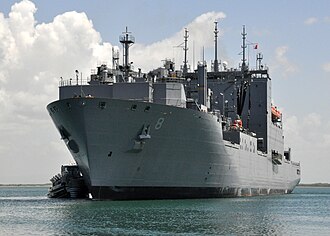
Among the vast fleet of vessels that sustain the operational reach of the United States Navy, few play a more essential yet understated role than dry cargo and ammunition ships. These ships do not dominate headlines with dramatic combat operations, but without them, the global presence of naval forces would quickly grind to a halt. One of the most capable and modern examples of this class is the USNS Wally Schirra (T-AKE-8), a vessel that represents a sophisticated blend of logistical efficiency, engineering innovation, and operational endurance.
Named after astronaut Walter M. Schirra Jr., one of the original Mercury Seven, this ship carries forward a legacy of precision, reliability, and pioneering spirit—qualities that are equally vital in space exploration and naval logistics. As part of the Lewis and Clark-class (T-AKE) program, Wally Schirra is designed to resupply U.S. Navy ships at sea, ensuring that carrier strike groups and expeditionary forces remain fully supplied with ammunition, food, fuel-related materials, and spare parts across extended deployments.
Origins of the Lewis and Clark-Class Concept
The genesis of the Lewis and Clark-class ships lies in the U.S. Navy’s recognition that older replenishment vessels were becoming increasingly inefficient, both in terms of operational capability and lifecycle cost. During the late 1990s and early 2000s, the Navy initiated a program to replace aging auxiliary ships with a new generation that could meet the demands of modern naval warfare, including higher operational tempo, improved automation, and reduced crew size.
The resulting class—named after explorers Meriwether Lewis and William Clark—introduced a modular and highly adaptable cargo system. Ships like Wally Schirra were designed to handle both dry cargo and ammunition, combining the roles of earlier supply ships into a single, more efficient platform. This consolidation significantly enhanced logistical flexibility while reducing the total number of ships required to support a fleet.
Construction and Entry Into Service
The USNS Wally Schirra (T-AKE-8) was constructed by General Dynamics National Steel and Shipbuilding Company (NASSCO) in San Diego, a shipyard well known for its expertise in building large auxiliary and commercial vessels. The keel was laid in 2007, marking the beginning of a construction process that emphasized modular assembly techniques and commercial shipbuilding standards adapted for military requirements.
The ship was launched in 2009 and subsequently delivered to the U.S. Navy later that year. Unlike commissioned warships, Wally Schirra operates under the Military Sealift Command (MSC), meaning it is crewed primarily by civilian mariners rather than active-duty Navy personnel. This approach allows for cost-effective operation while maintaining the high level of professionalism required for complex replenishment missions.
Mission Profile: Sustaining the Fleet at Sea
At its core, the mission of Wally Schirra is straightforward yet indispensable: to deliver supplies to naval forces operating far from shore. However, the complexity of this mission cannot be overstated. Replenishment at sea (RAS) is a highly coordinated operation requiring precision navigation, stable platform control, and advanced cargo handling systems.
The ship is capable of conducting both connected replenishment (CONREP) and vertical replenishment (VERTREP) operations. In CONREP, supply lines and cables are physically connected between ships, allowing cargo to be transferred via highlines while both vessels maintain parallel courses at sea. In VERTREP, helicopters transport cargo between ships, providing additional flexibility, especially in rough seas or tactical scenarios.
Wally Schirra is equipped to carry a wide range of materials, including:
- Dry provisions such as food and packaged goods
- Spare parts and maintenance equipment
- Ammunition and ordnance
- Medical supplies
- Limited fuel-related cargo (primarily aviation support materials)
This versatility allows a single ship to support multiple vessels within a task group, reducing logistical strain and improving operational endurance.
Cargo Handling and Storage Systems
One of the defining features of the Lewis and Clark-class is its advanced cargo handling system. The ship is equipped with multiple cargo holds, each designed to accommodate different types of materials, including temperature-sensitive goods and hazardous ordnance.
Automated systems play a significant role in managing cargo operations. Palletized storage, mechanized handling equipment, and digital inventory systems allow for efficient loading, storage, and transfer of supplies. This level of automation not only improves efficiency but also reduces the manpower required to operate the ship.
The cargo system is further enhanced by the ship’s ability to conduct simultaneous replenishment operations on multiple stations. This means Wally Schirra can supply more than one ship at a time, significantly increasing throughput during critical resupply missions.
Propulsion and Engineering Systems
Unlike high-speed combat vessels, Wally Schirra prioritizes efficiency, reliability, and endurance over speed. The ship is powered by a diesel engine propulsion system, typically a single slow-speed diesel engine driving a fixed-pitch propeller. This configuration is widely used in commercial shipping due to its fuel efficiency and durability.
The propulsion system allows the ship to achieve a maximum speed of approximately 20 knots, which is sufficient for keeping pace with most naval task groups. More importantly, the system provides stable and predictable performance during replenishment operations, where maintaining precise speed and heading is critical.
Electrical power is generated by multiple onboard generators, ensuring redundancy and continuous operation of mission-critical systems. These include cargo handling equipment, navigation systems, and communications infrastructure.
Hull Design and Survivability
The hull of Wally Schirra is based on commercial design principles but incorporates several enhancements for military use. The structure is reinforced to withstand the stresses of open-ocean operations and repeated replenishment cycles.
While not heavily armed, the ship includes basic defensive systems such as small-caliber weapons and electronic countermeasures. Its primary defense, however, lies in operating within the protective umbrella of a carrier strike group or other naval formation.
The ship also incorporates damage control features such as compartmentalization, fire suppression systems, and redundant critical systems. These measures ensure that the vessel can continue operating even in adverse conditions or after sustaining damage.
Crew Structure and Life Onboard
Operating under the Military Sealift Command, Wally Schirra is crewed by approximately 120 civilian mariners, supplemented by a small number of military personnel responsible for communications and coordination with fleet units.
Life aboard the ship is structured around long deployments, often lasting several months. The vessel is designed to provide a comfortable living environment compared to traditional warships, with amenities that reflect its hybrid military-commercial nature. These include private or semi-private cabins, recreational facilities, and modern galley services.
The relatively large crew size, compared to other auxiliary ships, reflects the complexity of cargo operations and the need for continuous readiness during replenishment missions.
Operational Role in Modern Naval Strategy
In today’s strategic environment, the ability to project power globally depends heavily on logistics. Aircraft carriers, destroyers, and submarines cannot operate indefinitely without resupply, making ships like Wally Schirra essential to sustaining naval operations.
The ship plays a critical role in supporting:
- Carrier Strike Groups (CSGs)
- Expeditionary Strike Groups (ESGs)
- Independent deployments of surface combatants
- Humanitarian assistance and disaster relief missions
During humanitarian missions, Wally Schirra can deliver large quantities of food, water, and medical supplies to affected regions, demonstrating the dual-use nature of naval logistics assets.
Technological Integration and Modernization
Although designed in the early 21st century, the Lewis and Clark-class incorporates technologies that remain relevant today. Digital navigation systems, satellite communications, and integrated logistics management software enable seamless coordination with other naval assets.
Ongoing modernization efforts focus on improving cybersecurity, enhancing communication bandwidth, and integrating with newer fleet management systems. These upgrades ensure that ships like Wally Schirra remain compatible with evolving naval doctrines and technological ecosystems.
Environmental Considerations and Efficiency
Modern naval design increasingly emphasizes environmental responsibility, and Wally Schirra reflects this trend. The ship’s diesel engine is designed for fuel efficiency and reduced emissions compared to older vessels.
Additionally, waste management systems onboard help minimize environmental impact during extended deployments. These include advanced sewage treatment systems and protocols for handling hazardous materials.
Legacy and Naming Significance
The naming of the ship after Walter M. Schirra Jr. adds a layer of symbolic significance. Schirra was known for his precision and calm demeanor, qualities that align closely with the mission of a logistics vessel operating in demanding conditions.
By naming the ship after a pioneering astronaut, the Navy underscores the importance of reliability, technical excellence, and support roles—whether in space exploration or maritime operations.
Conclusion: The Quiet Enabler of Naval Power
The USNS Wally Schirra (T-AKE-8) may not carry missiles or engage in direct combat, but its contribution to naval operations is indispensable. It represents the logistical backbone that enables the United States Navy to maintain a persistent global presence.
Through its advanced cargo systems, efficient propulsion, and versatile mission capabilities, Wally Schirra exemplifies the evolution of naval support vessels in the 21st century. As long as naval forces continue to operate across the world’s oceans, ships like Wally Schirra will remain essential to sustaining their reach and effectiveness.
Technical Parameters of USNS Wally Schirra (T-AKE-8)
| Parameter | Specification |
|---|---|
| Class/Type | Lewis and Clark-class Dry Cargo/Ammunition Ship (T-AKE) |
| Builder | General Dynamics NASSCO, San Diego, USA |
| Keel Laid | 2007 |
| Launched | 2009 |
| Delivered | 2009 |
| Displacement (Full Load) | ~41,000 tons |
| Length Overall | ~689 ft (210 m) |
| Beam | ~106 ft (32.3 m) |
| Draft | ~30 ft (9.1 m) |
| Propulsion | Single slow-speed diesel engine, 1 shaft |
| Power Output | ~24,000 hp |
| Maximum Speed | ~20 knots |
| Crew | ~120 civilian mariners + military detachment |
| Cargo Capacity | ~6,000+ tons of dry cargo and ammunition |
| Cargo Holds | Multiple (temperature-controlled and ordnance-capable) |
| Replenishment Methods | CONREP and VERTREP |
| Aviation Facilities | Flight deck for helicopter operations |
| Armament (Defensive) | Light weapons, CIWS (varies) |
| Operator | Military Sealift Command (MSC) |
| Role | Fleet replenishment and logistics support |
_pulls_into_port_at_Naval_Station_Guantanamo_Bay,_Cuba.jpg)