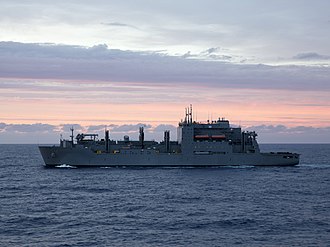
The USNS William McLean (T-AKE 12) stands as a modern embodiment of the United States Navy’s commitment to sustained global presence through advanced logistics and replenishment capabilities. As a Lewis and Clark-class dry cargo and ammunition ship, it represents the sophisticated integration of naval architecture, propulsion engineering, automated cargo systems, and strategic doctrine. While aircraft carriers and destroyers often dominate public attention, it is vessels like the William McLean that enable those warships to remain operational for extended periods, far from home ports, by delivering fuel, ammunition, food, spare parts, and critical supplies.
In this extensive technical blog-style article, we explore the ship in depth—from its conceptual origins and engineering systems to its operational roles and future relevance. The William McLean is not merely a support vessel; it is a cornerstone of modern naval logistics, enabling sustained maritime operations in an era defined by distributed fleets and global commitments.
Historical Context and Program Development
The Evolution of Naval Replenishment
Naval warfare has always depended on logistics, but the scale and complexity of modern operations have elevated replenishment ships to strategic importance. During the Cold War, the U.S. Navy refined underway replenishment techniques, allowing fleets to operate indefinitely without returning to port. However, older supply ships lacked the automation, efficiency, and environmental compliance required for 21st-century operations.
The Lewis and Clark-class program was initiated to replace aging supply ships with a new generation of vessels capable of handling diverse cargo types while operating efficiently with reduced crew sizes. These ships were designed with lessons learned from decades of naval logistics, incorporating commercial shipbuilding practices alongside military requirements.
Naming and Legacy
The USNS William McLean is named after Dr. William B. McLean, a physicist and engineer known for his contributions to missile technology, particularly the development of the Sidewinder missile. This naming reflects the ship’s connection to innovation and technological advancement, aligning with its role as a platform supporting cutting-edge naval operations.
Design Philosophy and Structural Architecture
Hybrid Commercial-Military Design
One of the defining aspects of the William McLean is its hybrid design approach. Unlike traditional warships built to withstand direct combat, T-AKE vessels emphasize efficiency, cargo capacity, and reliability. The hull design is based on commercial standards but reinforced to meet military durability requirements.
The ship features a double-hull construction, enhancing environmental protection by reducing the risk of fuel spills. This design also improves survivability by adding an extra layer of structural integrity. The internal layout is optimized for cargo segregation, ensuring safe storage of ammunition, dry goods, and refrigerated supplies.
Deck Configuration and Cargo Zones
The vessel is divided into multiple cargo zones, each tailored to specific types of materials. These include dry cargo holds, refrigerated storage areas, and ammunition magazines designed with strict safety protocols. The arrangement allows simultaneous handling of different cargo types during replenishment operations.
The deck is equipped with multiple replenishment stations, enabling the ship to transfer supplies to several vessels at once. This multi-point capability significantly enhances operational efficiency, especially during large-scale fleet operations.
Propulsion and Power Systems
Integrated Diesel-Electric Propulsion
The USNS William McLean utilizes an advanced diesel-electric propulsion system, a hallmark of the Lewis and Clark-class. In this configuration, diesel generators produce electricity that powers electric motors connected to the ship’s propellers. This system offers several advantages, including improved fuel efficiency, reduced maintenance requirements, and enhanced flexibility in power distribution.
The propulsion system allows for precise speed control, which is critical during underway replenishment operations where maintaining a steady position relative to another vessel is essential. Additionally, the system reduces vibration and noise, contributing to crew comfort and operational effectiveness.
Electrical Power Distribution
The ship’s electrical system is designed to handle significant loads, including propulsion, cargo handling equipment, and onboard facilities. Advanced power management systems ensure efficient distribution, prioritizing critical systems during peak demand.
Redundancy is built into the system, with multiple generators capable of operating independently. This ensures continued operation even in the event of equipment failure, a crucial feature for long-duration missions.
Cargo Handling and Replenishment Capabilities
Underway Replenishment (UNREP)
The primary mission of the William McLean is underway replenishment, a complex operation that involves transferring supplies between ships while at sea. This capability allows naval forces to remain deployed without returning to port, significantly enhancing operational endurance.
The ship is equipped with advanced tensioned replenishment systems, including STREAM (Standard Tensioned Replenishment Alongside Method) rigs. These systems maintain constant tension on transfer lines, compensating for ship movement and ensuring safe and efficient cargo transfer.
Vertical Replenishment (VERTREP)
In addition to alongside replenishment, the William McLean supports vertical replenishment using helicopters. This method is particularly useful for transferring cargo to ships that cannot come alongside or during operations requiring rapid delivery.
The flight deck is designed to accommodate multiple helicopter types, with support facilities for fueling and cargo handling. This capability adds a layer of flexibility, allowing the ship to adapt to various operational scenarios.
Automated Cargo Systems
Automation plays a significant role in the ship’s cargo handling operations. Computer-controlled systems track inventory, manage loading sequences, and optimize cargo distribution. This reduces manual labor and increases efficiency, allowing a smaller crew to handle large volumes of supplies.
Navigation, Communication, and Sensor Systems
Integrated Bridge Systems
The bridge of the William McLean features integrated navigation systems that combine radar, GPS, electronic charts, and autopilot functions. These systems provide comprehensive situational awareness, enabling safe operation in diverse environments.
Automation reduces the workload on the crew, allowing them to focus on strategic decision-making rather than routine tasks.
Communication Infrastructure
The ship is equipped with advanced communication systems, including satellite links and secure naval networks. These systems enable coordination with fleet units, command centers, and logistics networks, ensuring seamless integration into naval operations.
Sensor Suite
While not a combat vessel, the William McLean is equipped with sensors for navigation and situational awareness. These include radar systems for surface tracking and environmental sensors for weather monitoring.
Crew Structure and Life Onboard
Civilian Mariners and Military Personnel
The ship is operated by the Military Sealift Command, with a crew primarily composed of civilian mariners. This model allows for efficient operation while reducing the demand on active-duty personnel.
Military personnel onboard handle communications, coordination, and security functions, ensuring the ship remains integrated with naval operations.
Living Conditions and Facilities
The William McLean is designed for long deployments, with accommodations that prioritize functionality and comfort. Crew members have access to dining facilities, recreational areas, and communication systems that allow them to stay connected with family.
Operational Role and Strategic Importance
Sustaining Naval Power
The ability to sustain naval forces at sea is a cornerstone of U.S. maritime strategy. The William McLean enables this by delivering essential supplies, allowing combat ships to remain operational for extended periods.
Support for Joint Operations
The ship plays a key role in joint operations, supporting not only the Navy but also other branches of the military. Its cargo capacity and flexibility make it a valuable asset in both combat and humanitarian missions.
Humanitarian Assistance and Disaster Relief
In addition to military operations, the William McLean can support humanitarian missions, delivering food, water, and supplies to disaster-affected areas. Its large cargo capacity and logistical capabilities make it well-suited for such tasks.
Engineering Innovations and Environmental Considerations
Fuel Efficiency and Emissions
The diesel-electric propulsion system contributes to improved fuel efficiency and reduced emissions. This aligns with modern environmental standards and reduces the operational footprint of the vessel.
Waste Management Systems
The ship is equipped with advanced waste management systems, including treatment facilities for sewage and solid waste. These systems ensure compliance with international environmental regulations.
Future Outlook and Modernization
Technological Upgrades
As technology continues to evolve, the William McLean is likely to receive upgrades to its systems, including improved automation, communication technologies, and cargo handling equipment.
Continued Strategic Relevance
The need for logistics ships remains critical in modern naval operations. As fleets become more distributed, the importance of vessels like the William McLean will only increase.
Conclusion
The USNS William McLean (T-AKE 12) is a vital component of the United States Navy’s logistical infrastructure. Through its advanced design, efficient propulsion systems, and versatile cargo handling capabilities, it enables sustained naval operations across the globe. While it may not engage in combat, its role is indispensable, ensuring that the fleet remains supplied, operational, and ready to respond to any challenge.
Technical Specifications Table
| Parameter | Specification |
|---|---|
| Ship Name | USNS William McLean (T-AKE 12) |
| Class | Lewis and Clark-class |
| Type | Dry Cargo and Ammunition Ship |
| Operator | Military Sealift Command |
| Builder | National Steel and Shipbuilding Company (NASSCO) |
| Length | Approx. 210 meters |
| Beam | Approx. 32 meters |
| Draft | Approx. 9–10 meters |
| Displacement | Approx. 40,000+ tons |
| Propulsion | Diesel-electric, single shaft |
| Speed | Approx. 20 knots |
| Crew | Civilian mariners + military detachment |
| Cargo Capacity | Approx. 6,000+ tons of dry cargo and ammunition |
| Replenishment Systems | STREAM, VERTREP capable |
| Flight Deck | Yes (helicopter operations supported) |
| Power Generation | Multiple diesel generators |
| Environmental Systems | Double hull, waste treatment systems |
_underway_in_2013.JPG)