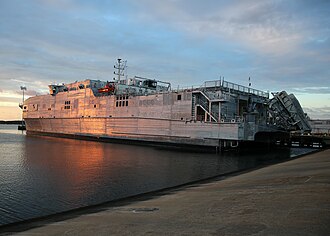
The USNS Yuma (T-EPF-8) represents a transformative approach to naval mobility, embodying speed, flexibility, and modularity in a way that challenges traditional assumptions about maritime logistics and operational reach. As part of the Spearhead-class Expeditionary Fast Transport (EPF), Yuma is designed not for heavy combat or deep-ocean endurance in the conventional sense, but for rapid intra-theater transport, agile response, and mission adaptability. In an era where operational tempo and geographic dispersion define modern military strategy, ships like Yuma provide a critical connective tissue—linking bases, supporting distributed forces, and enabling swift reaction to emerging contingencies.
This long-form technical blog explores the USNS Yuma in depth, examining its origins, design philosophy, propulsion systems, structural characteristics, mission capabilities, and strategic significance. By analyzing its engineering and operational framework, we gain insight into how modern naval forces are evolving to meet the challenges of speed, flexibility, and networked warfare.
Historical Context and Program Evolution
The Shift Toward High-Speed Sealift
Traditional naval logistics platforms have long prioritized capacity and endurance over speed. However, post-Cold War operations and especially 21st-century expeditionary warfare revealed a growing need for rapid movement of personnel and equipment within operational theaters. This requirement gave rise to the concept of high-speed sealift—vessels capable of transporting troops, vehicles, and supplies much faster than conventional cargo ships while remaining more efficient than airlift for certain mission profiles.
The Spearhead-class EPF program was developed to fulfill this need. Drawing heavily from commercial high-speed ferry technology, these vessels combine lightweight construction with powerful propulsion systems to achieve exceptional speeds. The USNS Yuma, commissioned as T-EPF-8, is one of the later ships in this class and incorporates refinements based on earlier operational experience.
Integration with Military Sealift Command
Like other EPF vessels, the Yuma is operated by the Military Sealift Command (MSC), which employs civilian mariners to crew the ship. This model allows the Navy to maximize operational efficiency while maintaining the flexibility required for diverse mission sets. The MSC framework is particularly well-suited to the EPF concept, as it emphasizes logistical support, rapid deployment, and mission adaptability rather than combat operations.
Design Philosophy and Structural Engineering
Catamaran Hull Configuration
One of the most distinctive features of the USNS Yuma is its catamaran hull design. Unlike monohull ships, the catamaran configuration consists of two parallel hulls connected by a wide deck structure. This design provides several critical advantages, including increased stability, reduced hydrodynamic resistance, and a large deck area relative to the ship’s displacement.
The twin-hull structure allows the vessel to maintain high speeds while minimizing fuel consumption. It also provides a stable platform for cargo operations and passenger transport, even in moderately rough seas. The wide beam enhances deck space, enabling the ship to carry a significant volume of vehicles and equipment despite its relatively lightweight construction.
Aluminum Construction
The Yuma is constructed primarily from aluminum rather than steel, a choice driven by the need to reduce weight and increase speed. Aluminum offers a high strength-to-weight ratio, allowing the ship to achieve speeds exceeding 35 knots. However, this material also presents challenges, including reduced resistance to fire and structural fatigue over time.
To address these challenges, the ship incorporates advanced structural engineering techniques, including reinforced framing and fire suppression systems. The use of aluminum also requires careful maintenance and inspection to ensure long-term durability.
Mission Deck and Modular Spaces
The mission deck of the USNS Yuma is designed for maximum flexibility. It can accommodate a wide range of cargo, including wheeled and tracked vehicles, containers, and mission-specific equipment. The deck is accessible via a stern ramp, allowing vehicles to be driven directly on and off the ship.
In addition to cargo space, the ship includes configurable areas that can be adapted for different missions. These may include medical facilities, command centers, or humanitarian aid staging areas. This modular approach enhances the ship’s versatility, enabling it to support a broad spectrum of operations.
Propulsion and Engineering Systems
High-Speed Diesel Propulsion
The propulsion system of the USNS Yuma is designed to deliver exceptional speed and responsiveness. It consists of multiple high-power diesel engines driving waterjets rather than traditional propellers. Waterjet propulsion offers several advantages, including improved maneuverability, reduced draft, and enhanced safety when operating in shallow waters.
The engines generate significant power, enabling the ship to reach speeds of over 35 knots under optimal conditions. This capability allows the Yuma to rapidly reposition within a theater of operations, making it an invaluable asset for time-sensitive missions.
Waterjet Technology and Maneuverability
Waterjets operate by drawing water into the vessel and expelling it at high velocity, creating thrust. This system allows for precise control of direction and speed, particularly when combined with advanced control systems. The Yuma can execute tight turns and maintain stability at high speeds, a critical feature for operations in confined or congested environments.
The shallow draft enabled by waterjet propulsion allows the ship to access ports and coastal areas that are inaccessible to deeper-draft vessels. This expands its operational reach, particularly in regions with limited infrastructure.
Auxiliary Systems and Power Distribution
In addition to propulsion, the ship’s engineering systems include generators, HVAC systems, and support equipment necessary for onboard operations. These systems are designed for efficiency and reliability, ensuring continuous operation during extended missions.
Power distribution is managed through integrated control systems that monitor load requirements and optimize energy usage. This is particularly important given the high energy demands of propulsion and onboard facilities.
Cargo and Transport Capabilities
Vehicle and Equipment Transport
The USNS Yuma is capable of transporting a variety of vehicles, including trucks, armored vehicles, and support equipment. The mission deck is reinforced to handle significant loads, and tie-down systems ensure cargo stability during transit.
The ship’s capacity is measured in terms of square footage rather than tonnage, reflecting its focus on volume and accessibility rather than sheer weight. This makes it particularly well-suited for transporting units that require rapid deployment.
Troop Transport and Accommodation
In addition to cargo, the Yuma can carry hundreds of personnel. The ship includes seating, berthing, and support facilities for embarked troops, allowing it to function as a high-speed troop transport. This capability is essential for rapid insertion and redeployment of forces.
Aviation Support
While not equipped with a full hangar, the ship includes a flight deck capable of supporting helicopter operations. This enables vertical replenishment, personnel transfer, and medical evacuation, further enhancing the ship’s operational flexibility.
Navigation, Communication, and Control Systems
Integrated Bridge and Navigation Suite
The bridge of the USNS Yuma features advanced navigation systems, including radar, GPS, and electronic chart displays. These systems provide real-time situational awareness, enabling safe operation at high speeds.
Automation plays a significant role in navigation, reducing the workload on the crew and allowing for precise control of the vessel. This is particularly important given the high-speed nature of the ship.
Communication Systems
The ship is equipped with modern communication systems, including satellite links and secure networks. These systems enable coordination with other vessels, command centers, and deployed forces.
Reliable communication is essential for the ship’s role as a transport and support platform, ensuring seamless integration into larger operational frameworks.
Operational Roles and Mission Profiles
Rapid Intra-Theater Transport
The primary mission of the USNS Yuma is rapid intra-theater transport. This involves moving personnel, vehicles, and supplies between locations within a region of operations. The ship’s speed and capacity make it ideal for this role, allowing it to respond quickly to changing operational needs.
Humanitarian Assistance and Disaster Relief
The Yuma’s flexibility makes it well-suited for humanitarian missions. It can transport aid supplies, medical teams, and equipment to disaster-affected areas, often reaching locations faster than traditional ships.
Special Operations Support
The ship can also support special operations forces by providing rapid transport and staging capabilities. Its ability to operate in shallow waters and access austere ports enhances its utility in these missions.
Crew and Life Onboard
Civilian Mariners and Operational Staff
The crew of the USNS Yuma consists primarily of civilian mariners, supported by military personnel as needed. This structure allows for efficient operation while maintaining mission flexibility.
Living Conditions and Work Environment
Life onboard the Yuma is characterized by a balance between operational demands and crew comfort. The ship includes accommodations, dining facilities, and recreational spaces designed to support extended deployments.
Strategic Importance and Future Outlook
Role in Distributed Maritime Operations
The USNS Yuma plays a critical role in distributed maritime operations, a concept that emphasizes the dispersion of forces to increase resilience and flexibility. By enabling rapid movement between nodes, the ship supports this strategy effectively.
Adaptation to Emerging Threats
As naval warfare evolves, the need for fast, flexible transport platforms will continue to grow. The Yuma’s design allows for upgrades and modifications, ensuring its continued relevance in future operations.
Conclusion
The USNS Yuma (T-EPF-8) exemplifies the evolution of naval logistics toward speed, flexibility, and adaptability. Through its advanced design, high-speed propulsion, and versatile mission capabilities, it provides a critical link in modern military operations. While it may lack the armament of traditional warships, its ability to move people and equipment بسرعة across operational theaters makes it an indispensable asset.
Technical Specifications Table
| Parameter | Specification |
|---|---|
| Ship Name | USNS Yuma (T-EPF-8) |
| Class | Spearhead-class Expeditionary Fast Transport |
| Type | High-speed transport vessel |
| Operator | Military Sealift Command |
| Builder | Austal USA |
| Length | Approx. 103 meters |
| Beam | Approx. 28.5 meters |
| Draft | Approx. 3.8 meters |
| Displacement | Approx. 2,400 tons |
| Propulsion | Diesel engines with waterjets |
| Speed | 35+ knots |
| Crew | ~40 civilian mariners |
| Troop Capacity | 300+ personnel |
| Cargo Capacity | Approx. 600+ tons / 20,000+ sq ft |
| Flight Deck | Helicopter capable |
| Hull Type | Aluminum catamaran |
| Range | Approx. 1,200 nautical miles (high speed) |
_pier-side.jpg)