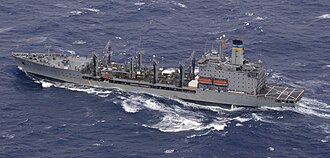
The USNS Yukon (T-AO-202) represents one of the most vital yet often underappreciated pillars of modern naval warfare: fleet replenishment. As a Henry J. Kaiser-class fleet replenishment oiler, the Yukon is engineered to sustain the operational tempo of naval forces across vast oceanic distances. In an era where naval dominance depends not only on firepower but also on endurance, logistics, and operational reach, vessels like the Yukon serve as the indispensable backbone of maritime strategy. Without them, even the most advanced warships would be tethered to ports, unable to maintain persistent presence in contested or remote regions.
This article offers a comprehensive and technically rich exploration of the USNS Yukon, delving into its historical origins, design architecture, propulsion systems, replenishment technologies, operational roles, and long-term strategic significance. Through this deep analysis, the Yukon emerges not merely as a support vessel, but as a force multiplier that enables sustained global naval operations.
Historical Background and Strategic Context
Evolution of Fleet Oilers
The concept of fleet oilers dates back to the early 20th century, when navies began to recognize the limitations imposed by coal and early fuel logistics. The transition to oil-fired propulsion created new opportunities for refueling at sea, allowing fleets to operate far from their home bases. During World War II, underway replenishment became a defining capability of the United States Navy, enabling sustained operations across the Pacific theater.
In the decades that followed, the Navy refined replenishment techniques and developed specialized vessels to support increasingly complex fleets. By the late 20th century, the need for modern, efficient, and environmentally compliant oilers led to the development of the Henry J. Kaiser-class, of which the USNS Yukon is a part.
Role Within Military Sealift Command
The USNS Yukon operates under the Military Sealift Command (MSC), a unique organization that combines civilian maritime expertise with military operational requirements. Unlike commissioned warships, MSC vessels are crewed primarily by civilian mariners, with a small contingent of Navy personnel responsible for communications and coordination.
This operational model allows the Yukon to focus on its primary mission—fuel delivery—while maintaining the flexibility and efficiency required for long-duration deployments. The ship’s designation, T-AO-202, reflects its classification as a fleet oiler within the auxiliary fleet.
Design Philosophy and Structural Engineering
Functional Design for Maximum Efficiency
The design of the USNS Yukon prioritizes functionality, efficiency, and reliability. Unlike combat vessels, which must balance offensive and defensive capabilities, the Yukon is optimized for a single critical task: the safe and efficient transport and transfer of fuel.
The hull is constructed from high-strength steel and designed to maximize cargo capacity while ensuring stability during replenishment operations. The ship’s length and beam provide a stable platform for transferring fuel to multiple vessels simultaneously, even in challenging sea conditions.
Double-Hull Construction and Environmental Safety
One of the defining features of the Henry J. Kaiser-class is its double-hull construction. This design significantly reduces the risk of environmental contamination in the event of a hull breach. The space between the inner and outer hulls acts as a protective barrier, preventing fuel from leaking into the ocean.
This feature reflects the Navy’s commitment to environmental stewardship and compliance with international maritime regulations. It also enhances the survivability of the vessel by providing additional structural integrity.
Propulsion and Engineering Systems
Diesel Propulsion System
The USNS Yukon is powered by a diesel propulsion system designed for efficiency and reliability rather than speed. The engines drive a single propeller through a reduction gear, providing steady propulsion for long-distance operations.
This configuration allows the ship to maintain a cruising speed suitable for rendezvous with other vessels while minimizing fuel consumption. The emphasis on efficiency is critical, as the ship must carry large quantities of fuel while also consuming fuel for its own operations.
Auxiliary Power and Redundancy
In addition to its main propulsion system, the Yukon is equipped with multiple auxiliary generators that provide electrical power for onboard systems. These include pumps, navigation equipment, communication systems, and crew facilities.
Redundancy is a key design principle, with backup systems ensuring continued operation in the event of equipment failure. This is particularly important for a vessel whose mission is critical to fleet operations.
Fuel Storage and Transfer Systems
Cargo Tank Configuration
The primary function of the USNS Yukon is to transport and transfer fuel. The ship is equipped with multiple cargo tanks designed to store different types of fuel, including marine diesel and aviation fuel. These tanks are carefully segregated to prevent contamination and ensure safe handling.
The internal layout includes piping systems, valves, and monitoring equipment that allow precise control of fuel flow. Sensors continuously monitor tank levels, pressure, and temperature, providing real-time data to operators.
Underway Replenishment (UNREP) Systems
The Yukon is equipped with advanced underway replenishment systems that allow it to transfer fuel to other ships while both vessels are underway. This process requires precise coordination, as the ships must maintain a steady relative position while connected by fuel hoses.
The ship features multiple replenishment stations, enabling it to refuel more than one vessel at a time. Tensioned lines and stabilization systems ensure safe transfer, even in moderate sea states.
Pumping and Flow Control Technology
High-capacity pumps are used to transfer fuel at controlled rates, ensuring efficient delivery while minimizing risk. Flow control systems regulate pressure and volume, preventing overloading or damage to receiving vessels.
These systems are integrated into a centralized control room, where operators monitor and manage all aspects of the replenishment process.
Navigation and Communication Systems
Bridge and Navigation Technology
The bridge of the USNS Yukon is equipped with modern navigation systems, including radar, GPS, and electronic chart displays. These systems provide comprehensive situational awareness, enabling safe navigation in both open ocean and congested waterways.
Automation assists with routine tasks, allowing the crew to focus on mission-critical operations such as replenishment coordination.
Communication Systems
Effective communication is essential for coordinating replenishment operations. The Yukon is equipped with secure communication systems that enable real-time coordination with receiving vessels and command centers.
These systems include satellite communications, radio networks, and data links, ensuring reliable connectivity in all operational environments.
Crew Structure and Life Onboard
Civilian Mariners and Navy Personnel
The crew of the USNS Yukon consists primarily of civilian mariners, supported by a small number of Navy personnel. This hybrid structure combines commercial maritime expertise with military operational requirements.
Crew members are highly trained in their respective roles, from navigation and engineering to cargo handling and safety procedures.
Living Conditions and Facilities
The ship is designed to support long deployments, with accommodations that include cabins, dining areas, and recreational facilities. While not luxurious, these सुविधities provide a comfortable living environment for the crew.
Operational Roles and Mission Profiles
Fleet Sustainment
The primary mission of the USNS Yukon is to sustain naval forces by providing fuel. This capability allows warships to remain at sea for extended periods, significantly enhancing operational endurance.
Support for Carrier Strike Groups
The Yukon frequently operates in support of carrier strike groups, providing fuel to aircraft carriers, destroyers, and other vessels. This role is critical for maintaining the readiness and effectiveness of these forces.
Humanitarian and Disaster Relief Operations
In addition to its military role, the Yukon can support humanitarian missions by transporting fuel and supplies to disaster-affected areas. Its ability to operate independently makes it a valuable asset in such scenarios.
Strategic Importance in Modern Naval Doctrine
Enabling Global Reach
The ability to project power globally depends on logistics. The USNS Yukon enables this by ensuring that naval forces have the fuel they need to operate far from home ports.
Force Multiplier Effect
By extending the endurance of other vessels, the Yukon acts as a force multiplier. Its presence allows fleets to operate more efficiently and respond more quickly to emerging threats.
Future Outlook and Modernization
Technological Upgrades
As technology evolves, the Yukon may receive upgrades to improve efficiency, safety, and environmental performance. These could include advanced monitoring systems, improved pumps, and enhanced communication technologies.
Continued Relevance
Despite advances in alternative energy and propulsion, the need for fuel at sea remains critical. The USNS Yukon is expected to remain a key asset for decades to come.
Conclusion
The USNS Yukon (T-AO-202) exemplifies the critical role of logistics in modern naval operations. Through its advanced design, efficient systems, and strategic importance, it enables sustained maritime presence and operational flexibility. While it may not engage in combat, its contribution to naval power is undeniable, ensuring that the fleet remains fueled, operational, and ready to meet any challenge.
Technical Specifications Table
| Parameter | Specification |
|---|---|
| Ship Name | USNS Yukon (T-AO-202) |
| Class | Henry J. Kaiser-class |
| Type | Fleet Replenishment Oiler |
| Operator | Military Sealift Command |
| Builder | Avondale Shipyards |
| Length | Approx. 206 meters |
| Beam | Approx. 29.7 meters |
| Draft | Approx. 11 meters |
| Displacement | Approx. 40,000+ tons |
| Propulsion | Diesel engine, single shaft |
| Speed | Approx. 20 knots |
| Crew | Civilian mariners + Navy personnel |
| Fuel Capacity | Approx. 180,000+ barrels |
| Replenishment Stations | Multiple UNREP stations |
| Hull Type | Double hull |
| Aviation Support | Limited (VERTREP capable) |
| Power Generation | Multiple auxiliary generators |
_oiler_USNS_Yukon_(T-A0_202)_prepares_for_a_replenishment-at-sea_(RAS)_with_USS_Kitty_Hawk_(CV_63)_in_a_turbulent_western_Pacific_Ocean_(cropped).jpg)