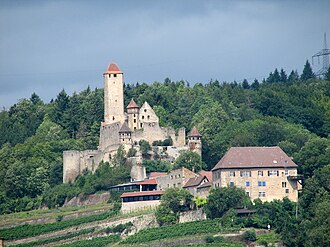
Burg Hornberg: A Living Chronicle Above the Neckar Valley
Perched high above the winding Neckar River, Burg Hornberg is more than just a medieval castle—it is a place where history, legend, and landscape intertwine in a way that feels almost cinematic. Rising from a forested hill near the small town of Neckarzimmern in southern Germany, Burg Hornberg offers not only commanding views of the valley below but also a deep sense of continuity with centuries past.
This is not a castle frozen in time behind glass cases and velvet ropes. Instead, Burg Hornberg is alive—inhabited, evolving, and still echoing with the stories of knights, soldiers, and the famed imperial knight Götz von Berlichingen, whose iron hand and rebellious spirit made him one of the most fascinating figures of the German Renaissance.
In this long-form exploration, we’ll wander through the history, architecture, legends, and present-day experience of Burg Hornberg, uncovering what makes it one of Germany’s most captivating castles.
The Setting: Where Nature Frames History
A Strategic Location Above the Neckar
Burg Hornberg stands dramatically on a steep ridge overlooking the Neckar River, a location that was chosen with military precision. In medieval times, control over river valleys meant control over trade routes, and the Neckar was a vital artery connecting regions of southern Germany.
From the castle’s terraces, the landscape unfolds in layers: dense forests, vineyards climbing the slopes, and the river glinting in the distance like a silver ribbon. This vantage point allowed the castle’s occupants to monitor movement along the river and surrounding roads—an essential advantage in an era when defense and surveillance were matters of survival.
A Landscape That Has Barely Changed
One of the most striking aspects of Burg Hornberg is how little the surrounding environment has changed. While modern towns and infrastructure exist nearby, the immediate setting retains a timeless quality. The forests still feel ancient, the vineyards still follow traditional patterns, and the river continues its steady course.
This continuity enhances the experience of visiting the castle. You are not just looking at history—you are immersed in it.
Origins of Burg Hornberg
Early Construction and Medieval Roots
The origins of Burg Hornberg date back to the 11th century, though the exact timeline remains somewhat uncertain due to limited early records. Like many castles of its era, it began as a defensive structure built by local nobility seeking to secure their territory.
Over time, the castle expanded and evolved, incorporating additional fortifications, living quarters, and defensive features. Each generation left its mark, resulting in a structure that reflects multiple architectural periods rather than a single unified style.
From Fortress to Noble Residence
Initially, Burg Hornberg functioned primarily as a military stronghold. Its thick walls, towers, and elevated position made it well-suited for defense against rival lords and invading forces.
However, as the region became more stable, the castle gradually transformed into a residence for nobility. Comfort began to matter as much as defense, and new additions reflected this shift: larger living spaces, improved interiors, and elements designed for status rather than survival.
Götz von Berlichingen: The Knight with the Iron Hand
A Legendary Resident
No discussion of Burg Hornberg is complete without delving into the life of Götz von Berlichingen. Born around 1480, Götz became one of the most colorful and controversial figures of his time.
After losing his right hand in battle, he famously replaced it with a mechanical iron prosthetic—an innovation that was both functional and symbolic. This earned him the nickname “Götz of the Iron Hand,” and it cemented his place in history as a figure of resilience and defiance.
A Life of Conflict and Independence
Götz was not a conventional knight. He operated largely independently, often clashing with both local authorities and larger political powers. His life was marked by feuds, battles, and shifting alliances.
Burg Hornberg became his refuge—a place where he could retreat, regroup, and assert his autonomy. From here, he managed his affairs and defended his interests, embodying the spirit of a free imperial knight in a time of increasing centralization.
Literary Immortality
The story of Götz von Berlichingen reached a wider audience thanks to Johann Wolfgang von Goethe, who wrote the play “Götz von Berlichingen” in 1773. The drama portrays Götz as a symbol of individual freedom and resistance against authority.
Through Goethe’s work, Burg Hornberg became not just a historical site but also a literary landmark—an embodiment of Romantic ideals and the enduring appeal of rebellious heroes.
Architecture: Layers of Time in Stone
A Complex Layout
Unlike castles built according to a single plan, Burg Hornberg developed organically over centuries. This results in a complex layout with multiple courtyards, towers, and interconnected buildings.
Visitors often find themselves navigating a maze of pathways and staircases, each turn revealing a new perspective or architectural detail. This sense of discovery is part of the castle’s charm.
Defensive Features
The castle’s defensive elements are still clearly visible. Thick stone walls, narrow windows, and strategically placed towers speak to its original purpose as a fortress.
The outer defenses were designed to slow attackers, while inner sections provided additional layers of protection. Even today, you can sense the strategic thinking that went into every aspect of the design.
Residential Spaces
As the castle transitioned into a noble residence, more comfortable living quarters were added. These include larger rooms, improved heating systems, and decorative elements that reflect the tastes of different periods.
While some areas have been modernized, many retain their historical character, offering a glimpse into the daily lives of those who once lived here.
Life at Burg Hornberg Through the Ages
Medieval Daily Life
In its early days, life at Burg Hornberg would have been structured around defense and survival. Soldiers trained, guards kept watch, and servants managed the practical needs of the household.
Food was stored carefully, water sources were secured, and every aspect of daily life was influenced by the constant possibility of conflict.
Renaissance and Beyond
By the time of Götz von Berlichingen, life at the castle had become somewhat more refined. While still a place of military significance, it also served as a center of administration and social activity.
Banquets, meetings, and negotiations would have taken place within its walls, reflecting the broader cultural shifts of the Renaissance.
Modern Era Adaptation
Today, Burg Hornberg has adapted to modern times while preserving its historical essence. Parts of the castle have been converted into a hotel, allowing guests to experience life within its ancient walls.
This blend of past and present is carefully managed to maintain authenticity while providing modern comfort.
The Experience of Visiting Burg Hornberg
Arrival and First Impressions
Approaching Burg Hornberg is an experience in itself. The road winds through forests and vineyards before revealing the castle perched above.
The first glimpse is unforgettable: a silhouette of stone against the sky, evoking centuries of history and intrigue.
Exploring the Grounds
Once inside, visitors can explore courtyards, towers, and viewpoints. Each area offers a different perspective on the castle and its surroundings.
The sense of scale becomes apparent as you move through the complex, realizing just how extensive and intricate it is.
Views That Stay With You
The panoramic views from Burg Hornberg are among its greatest attractions. Looking out over the Neckar Valley, you can see why this location was chosen centuries ago.
The combination of natural beauty and historical significance creates a powerful impression—one that lingers long after the visit ends.
Legends and Atmosphere
Stories That Echo Through the Walls
Like many ancient castles, Burg Hornberg is steeped in legend. Tales of battles, betrayals, and ghostly encounters add an element of mystery to its history.
While not all stories can be verified, they contribute to the castle’s atmosphere, making it feel alive with memory.
The Spirit of Götz
Visitors often feel a strong connection to Götz von Berlichingen, whose presence seems to linger in the castle he once called home.
Whether through historical displays or simply the atmosphere of the place, his story continues to resonate.
Burg Hornberg Today
A Living Castle
Unlike many historic sites, Burg Hornberg is not a static museum. It remains privately owned and actively used, which gives it a unique character.
Guests can stay overnight, dine within its walls, and experience a blend of history and hospitality.
Preservation and Responsibility
Maintaining a structure of this age is no small task. Continuous efforts are required to preserve the castle while accommodating modern needs.
This balance between preservation and use is what allows Burg Hornberg to remain vibrant rather than fading into obscurity.
Why Burg Hornberg Matters
A Window into the Past
Burg Hornberg offers more than just a visual experience—it provides insight into the social, political, and cultural dynamics of its time.
From medieval warfare to Renaissance individuality, the castle reflects broader historical trends.
A Symbol of Resilience
The story of Götz von Berlichingen adds a layer of human drama that makes the castle especially compelling. His life represents resilience, independence, and the complexities of history.
A Place of Inspiration
Whether you are a history enthusiast, a traveler, or simply someone seeking a unique experience, Burg Hornberg has something to offer.
Its combination of natural beauty, historical depth, and living tradition makes it a place that inspires curiosity and reflection.
Final Thoughts
Burg Hornberg is not just a destination—it is an experience that unfolds over time. From its strategic origins to its association with one of Germany’s most intriguing historical figures, the castle embodies the richness of European history.
Standing on its walls, looking out over the Neckar Valley, it is easy to feel connected to something larger—a continuum of human stories stretching across centuries.
