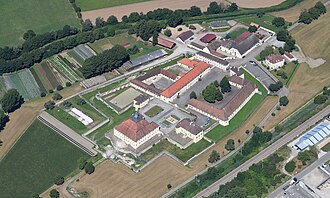
Schloss Kislau: Layers of Power, Silence, and Memory in the Upper Rhine Plain
Set amidst the quiet expanses of the Upper Rhine plain, surrounded by fields, forests, and a sense of stillness that feels almost deliberate, Schloss Kislau stands as one of those rare places where history does not simply reside—it lingers, presses, and occasionally unsettles. Unlike the romantic hilltop castles that seem designed to inspire awe and admiration, Schloss Kislau carries a more complex presence. It is beautiful, certainly, with its baroque symmetry and reflective moat, but it is also heavy with memory, shaped as much by suffering and injustice as by aristocratic ambition and architectural elegance.
In this long-form exploration, we will move slowly through the many identities of Schloss Kislau—from medieval fortification to baroque residence, from administrative center to a site of imprisonment during one of the darkest chapters of German history. This is not a place that can be reduced to a single narrative. Instead, it is a layered chronicle of power, control, transformation, and remembrance.
The Setting: A Castle Rooted in the Plains
Geography and Quiet Isolation
Schloss Kislau is located near the town of Bad Schönborn in the region of Baden-Württemberg, an area defined by its gentle landscapes rather than dramatic elevations. Unlike castles that dominate from above, Kislau sits within the land, integrated into its surroundings rather than rising above them.
This geographic context matters. The castle’s presence is not one of dominance but of quiet authority. The flat terrain allows for expansive views, yet the castle itself feels enclosed, especially with its surrounding moat and structured grounds. There is a sense of containment here—an architectural expression that would take on different meanings over the centuries.
The Role of Water and Land
The moat encircling Schloss Kislau is not merely decorative. Originally, it served as a defensive feature, reinforcing the castle’s role as a fortified site. Over time, however, it became part of the estate’s aesthetic identity, reflecting the building’s symmetrical façade and enhancing its visual harmony.
The surrounding land, historically used for agriculture and estate management, reinforces the idea of Kislau as a self-contained world—a place where authority could be exercised over both people and landscape.
Origins: From Medieval Fortress to Noble Estate
Early Beginnings
The origins of Schloss Kislau trace back to the medieval period, likely beginning as a fortified structure designed to control local territory and protect regional interests. While detailed records from its earliest phase are limited, it is clear that the site held strategic importance.
Like many castles of its era, the original structure would have been practical and defensive, built with thick walls, narrow openings, and a focus on security rather than comfort.
Transformation into a Baroque Residence
The most significant transformation of Schloss Kislau occurred in the 18th century, when it was redesigned in the baroque style. This shift reflects broader cultural changes across Europe, where fortresses were increasingly converted into residences that emphasized aesthetics, symmetry, and status.
The baroque reconstruction gave Kislau its current appearance: a structured, elegant complex with balanced proportions and refined details. The castle was no longer just a place of defense—it became a symbol of authority and refinement.
Architecture: Order, Symmetry, and Authority
The Baroque Vision
Baroque architecture is often associated with grandeur and theatricality, but at Schloss Kislau, it manifests in a more restrained form. The design emphasizes order and symmetry, creating a sense of control and balance.
The main building is flanked by additional wings, forming a cohesive complex that reflects careful planning. The façade, while not overly ornate, conveys a quiet confidence—an architectural language of authority without excess.
The Courtyard and Layout
The inner courtyard of Schloss Kislau is one of its defining features. Enclosed and structured, it creates a space that feels both open and contained. This duality is characteristic of the castle as a whole.
Walking through the courtyard, one becomes aware of how the architecture guides movement and perception. Every angle, every pathway seems intentional, reinforcing the sense of order that defines the site.
The Moat as Boundary
The moat surrounding Schloss Kislau serves as both a physical and symbolic boundary. It separates the castle from the outside world, creating a clear distinction between inside and outside, authority and subject.
Over time, this boundary would take on different meanings—sometimes protective, sometimes isolating, and at times deeply unsettling.
Schloss Kislau in the Early Modern Period
Administrative and Noble Functions
Following its transformation into a baroque residence, Schloss Kislau became an administrative center and noble estate. It was a place where decisions were made, where authority was exercised, and where the rhythms of estate life unfolded.
The castle would have hosted officials, servants, and visitors, each playing a role in the functioning of this structured environment. It was a place of hierarchy, where social roles were clearly defined and reinforced through daily life.
A Microcosm of Power
In many ways, Schloss Kislau functioned as a microcosm of broader societal structures. The architecture, the layout, and the daily routines all reflected a system of order and control.
This aspect of the castle’s history is important because it sets the stage for its later transformations. The same qualities that made it an effective administrative center would later make it suitable for very different—and far more troubling—purposes.
The 20th Century: A Dark Transformation
From Residence to Detention Site
The most significant and sobering chapter in the history of Schloss Kislau began during the era of Nazi Germany. In 1933, the castle was repurposed as a concentration camp, one of the early camps established shortly after the rise of the Nazi regime.
This transformation marked a profound shift in the meaning of the site. What had once been a place of administration and residence became a place of imprisonment and suffering.
A Camp for Political Prisoners
Schloss Kislau was used primarily to detain political prisoners—individuals who opposed or were perceived as threats to the Nazi regime. Among them were members of political parties, activists, and others who resisted the new order.
One of the most notable prisoners held at Kislau was Ludwig Marum, a prominent Social Democratic politician who was later murdered by Nazi forces. His story is emblematic of the broader tragedy that unfolded within the castle’s walls.
Conditions and Reality
While Schloss Kislau was not among the largest or most infamous concentration camps, the conditions endured by prisoners were harsh and dehumanizing. The very architecture that once symbolized order and authority became an instrument of control and oppression.
The enclosed courtyard, the surrounding moat, the structured layout—all contributed to an environment where escape was nearly impossible and surveillance was constant.
Memory and Responsibility
Confronting the Past
Today, Schloss Kislau is recognized not only for its architectural and historical significance but also as a site of memory. Efforts have been made to acknowledge and preserve the history of its use as a concentration camp.
This aspect of the castle’s identity is essential. It transforms Kislau from a mere historical monument into a place of reflection and responsibility.
The Role of Education
Educational initiatives associated with Schloss Kislau aim to inform visitors about its complex history. By presenting both the earlier periods and the darker chapters, these efforts encourage a deeper understanding of how places can change—and how they can be used for both constructive and destructive purposes.
The Atmosphere of Schloss Kislau
Beauty and Unease
One of the most striking aspects of Schloss Kislau is the contrast between its physical beauty and its historical weight. The symmetrical façade, the शांत moat, and the orderly grounds create an image of calm and elegance.
Yet beneath this surface lies a history that cannot be ignored. This tension between appearance and memory gives the castle a unique atmosphere—one that is both compelling and deeply reflective.
Silence as Presence
Visitors often remark on the silence of Schloss Kislau. It is not an empty silence but one that feels filled with echoes of the past. The absence of noise becomes a presence in itself, inviting contemplation.
Schloss Kislau Today
A Site of Reflection
In its current form, Schloss Kislau serves as a place of remembrance and education. While it is not a traditional tourist destination in the sense of offering entertainment or spectacle, it provides something far more valuable: an opportunity to engage with history in a meaningful way.
Preservation Efforts
Maintaining a site like Schloss Kislau requires careful balance. Preservation efforts must protect the physical structure while also honoring the intangible aspects of its history.
This includes maintaining the architectural integrity of the castle as well as ensuring that its historical narratives are accurately and respectfully presented.
Why Schloss Kislau Matters
A Complex Historical Narrative
Schloss Kislau is important not because it fits neatly into a single category but because it resists simplification. It is a medieval fortress, a baroque residence, an administrative center, and a site of suffering—all at once.
This complexity makes it a powerful example of how history is layered and multifaceted.
Lessons for the Present
The history of Schloss Kislau offers important lessons about power, responsibility, and the consequences of political and social choices. It reminds us that places are shaped by human actions—and that those actions leave lasting آثار.
A Place That Demands Engagement
Unlike more conventional historical sites, Schloss Kislau does not allow for passive observation. It demands engagement, reflection, and a willingness to confront uncomfortable truths.
Final Reflections
Schloss Kislau is not an easy place to write about, nor is it an easy place to visit. Its beauty draws you in, but its history holds you there, asking questions that do not have simple answers.
It is a place where architecture meets memory, where past and present coexist in a delicate balance. To walk through its grounds is to move through layers of time, each one revealing something new, something challenging, something worth remembering.
.jpg)