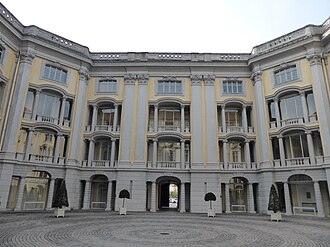
Residenz Ansbach: A Baroque Jewel in the Heart of Franconia
There are places in Germany where history feels layered so richly that every corridor, every ceiling fresco, and every carefully arranged garden seems to whisper stories of ambition, elegance, and transformation. One such place is Residenz Ansbach, a magnificent palace that stands as one of the most refined examples of Baroque architecture in Franconia. While it may not command the same global fame as Bavaria’s grander royal residences, Residenz Ansbach possesses something arguably more compelling: intimacy, authenticity, and a deeply human scale that allows visitors to truly connect with the lives once lived within its walls.
This is not merely a palace—it is a narrative carved in stone and painted in gold leaf. It tells the story of the Margraves of Brandenburg-Ansbach, of cultural aspiration in a relatively small court, of artistic excellence shaped by Italian and French influences, and of the evolution of power from medieval fortifications to enlightened absolutism. In this extensive exploration, we will walk through the origins, architecture, artistic treasures, historical transformations, and modern relevance of Residenz Ansbach, uncovering why it remains one of southern Germany’s most fascinating cultural landmarks.
The Setting: Ansbach and the Franconian Landscape
A Town Shaped by Nobility
The palace is located in the charming town of Ansbach, a place that, at first glance, might seem quiet and understated. Yet beneath its calm exterior lies a history deeply intertwined with aristocratic power and cultural development. Ansbach served as the residence of the Margraves of Brandenburg-Ansbach, a branch of the powerful House of Hohenzollern, whose influence would eventually extend to the Kingdom of Prussia.
Unlike sprawling capitals such as Munich or Berlin, Ansbach developed as a courtly town centered around its residence. This gave it a unique character: compact yet sophisticated, provincial yet culturally ambitious. The palace dominates the urban landscape, serving as both a physical and symbolic focal point.
Franconia’s Subtle Beauty
The region of Franconia is known for its rolling hills, historic towns, and understated charm. It lacks the dramatic alpine scenery of southern Bavaria but compensates with a quieter, more contemplative beauty. This environment provided an ideal backdrop for a residence that sought to embody refinement rather than grandeur alone.
Origins: From Medieval Fortress to Baroque Palace
Early Beginnings
The origins of Residenz Ansbach date back to a medieval fortress that once stood on the same site. Like many European palaces, it evolved gradually, reflecting changing needs, tastes, and political realities. The transformation from a defensive structure into a luxurious residence mirrors broader shifts in European society, where displays of power increasingly relied on culture and aesthetics rather than military might.
The Rise of the Margraves
The Margraves of Brandenburg-Ansbach played a central role in shaping the palace. As members of the House of Hohenzollern, they were part of a lineage that valued both political influence and cultural patronage. Though their territory was relatively small, they aspired to create a court that could rival those of larger states in sophistication and artistic achievement.
This ambition led to extensive renovations and expansions, particularly during the 18th century, when the palace took on its present Baroque form.
Architectural Transformation: The Baroque Vision
A Palace Reimagined
The most significant transformation of Residenz Ansbach occurred under Margrave Carl Wilhelm Friedrich in the 18th century. Determined to modernize the residence and align it with contemporary tastes, he commissioned extensive renovations that would redefine the palace’s character.
The result was a stunning example of Baroque architecture, characterized by symmetry, grandeur, and elaborate decoration. The palace was designed not merely as a residence but as a stage for power, where every detail conveyed authority, taste, and refinement.
Italian Influence and Artistic Excellence
One of the most remarkable aspects of Residenz Ansbach is its strong Italian influence, particularly in its interior design. This is largely due to the work of Carlo Carlone, a renowned fresco painter who brought a distinctly southern European flair to the palace.
Carlone’s work can be seen in the grand hall, where ceiling frescoes depict allegorical scenes filled with movement, color, and light. These paintings are not merely decorative—they are symbolic representations of power, virtue, and enlightenment, reflecting the ideals of the time.
The Interior: Rooms of Splendor
The Grand Hall
The grand hall is undoubtedly the centerpiece of the palace. Upon entering, visitors are immediately struck by the sheer scale and elegance of the space. The ceiling fresco, created by Carlo Carlone, draws the eye upward, creating an illusion of infinite height and heavenly grandeur.
The hall was designed for ceremonies, receptions, and celebrations, serving as a space where the Margrave could display his status and entertain distinguished guests.
The State Apartments
Beyond the grand hall lies a series of state apartments, each more richly decorated than the last. These rooms were used for official functions and private audiences, reflecting the hierarchical nature of court life.
The furnishings, tapestries, and decorative elements within these apartments provide insight into the tastes and lifestyles of the 18th-century aristocracy. Every detail, from the arrangement of furniture to the choice of colors, was carefully considered to create an atmosphere of elegance and order.
The Mirror Cabinet
One of the most enchanting spaces within the palace is the mirror cabinet, a room adorned with intricate mirror work and delicate ornamentation. The interplay of light and reflection creates a sense of magic, transforming the space into something almost otherworldly.
Rooms like this were not merely decorative—they were designed to impress, to captivate, and to transport visitors into a world of beauty and refinement.
Court Life: A World of Ritual and Refinement
Daily Life at the Palace
Life at Residenz Ansbach was governed by strict protocols and traditions. The court operated according to a carefully structured hierarchy, with each member playing a specific role. From grand ceremonies to intimate gatherings, every aspect of life was shaped by etiquette and expectation.
The palace was not just a home—it was a center of governance, culture, and social interaction.
Music and Culture
The Margraves were patrons of the arts, and music played a central role in court life. Performances were held regularly, featuring compositions that reflected the tastes of the time.
Interestingly, the composer Johann Sebastian Bach had indirect connections to the broader cultural milieu of Franconia, highlighting the region’s importance in the development of European music.
The Gardens: Harmony Between Nature and Design
A Baroque Landscape
The gardens of Residenz Ansbach are an extension of the palace’s architectural vision. Designed in the Baroque style, they emphasize symmetry, order, and harmony.
Paths, hedges, and fountains are arranged with precision, creating a landscape that mirrors the structured elegance of the palace itself.
A Place of Leisure
For the Margraves and their guests, the gardens provided a space for relaxation and reflection. Walking through these carefully designed grounds, one can imagine the conversations, the quiet moments, and the subtle interplay of politics and pleasure that once took place here.
Decline and Transformation
The End of Margravial Rule
The history of Residenz Ansbach took a dramatic turn at the end of the 18th century. In 1791, the last Margrave, Charles Alexander of Brandenburg-Ansbach, abdicated his rule and sold his territories to the Kingdom of Prussia.
This marked the end of Ansbach as an independent principality and transformed the palace’s role. No longer a seat of power, it became part of a larger political structure.
Changing Functions
Over the years, the palace has served various purposes, adapting to changing circumstances. From administrative offices to cultural institutions, it has continually evolved while preserving its historical essence.
Residenz Ansbach Today
A Museum of History
Today, Residenz Ansbach is open to the public as a museum, allowing visitors to explore its richly decorated rooms and learn about its history. Walking through the palace is like stepping back in time, offering a glimpse into a world that, while distant, remains vividly preserved.
Cultural Events
The palace also serves as a venue for cultural events, including concerts and exhibitions. These events bring new life to the historic spaces, ensuring that the palace remains a vibrant part of the community.
Visiting Residenz Ansbach
Practical Information
Visitors to Residenz Ansbach can explore a variety of rooms and exhibitions, each offering unique insights into the palace’s history and architecture.
Guided tours are available, providing detailed explanations and stories that enhance the experience.
Best Time to Visit
While the palace can be visited year-round, spring and summer are particularly appealing, as the gardens are in full bloom. Autumn, with its rich colors, also offers a beautiful backdrop.
Why Residenz Ansbach Matters
A Testament to Cultural Ambition
Residenz Ansbach stands as a testament to the cultural ambitions of a relatively small court. It demonstrates how art, architecture, and patronage can elevate a place beyond its size or political significance.
Preserving the Past
The preservation of the palace ensures that future generations can experience and learn from this remarkable site. It serves as a reminder of the importance of cultural heritage and the stories it holds.
Final Reflections: A Palace of Quiet Grandeur
Unlike the grand palaces that dominate postcards and travel itineraries, Residenz Ansbach offers something more subtle yet equally profound. It invites visitors to slow down, to observe, and to connect with history on a more personal level.
In its halls, one can sense the aspirations of its builders, the rhythms of court life, and the enduring beauty of artistic expression. It is a place where history is not distant but tangible, where every room tells a story, and where the past continues to resonate in the present.
.JPG)