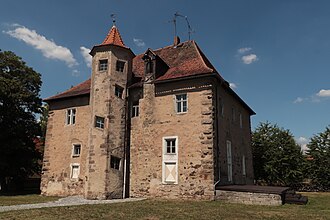
Schloss Lehrberg: The Franconian Castle Between Noble Power, Rural Memory, and Historical Continuity
Throughout Germany, countless castles rise above forests, rivers, and medieval towns, each carrying stories shaped by centuries of political change, warfare, cultural transformation, and human ambition. Some became internationally famous symbols of royal grandeur, attracting millions of visitors with dramatic towers and romantic architecture. Others remained deeply rooted in local landscapes, quietly preserving the memory of regional history without ever entering the global spotlight. Schloss Lehrberg belongs to this second category.
Located in the market town of Lehrberg in Middle Franconia, Bavaria, Schloss Lehrberg represents a remarkable example of how smaller castles and noble residences shaped everyday life across central Europe for hundreds of years. Unlike monumental royal palaces built to impress foreign courts and imperial audiences, Schloss Lehrberg emerged from a more intimate historical reality—a world of regional administration, agricultural management, local noble authority, ecclesiastical influence, and rural continuity.
The castle’s history stretches deep into the medieval period, when Franconia formed part of the fragmented political structure of the Holy Roman Empire. During that era, castles functioned not merely as residences, but as instruments of governance, military defense, and social hierarchy. Noble families used them to supervise land, control trade routes, enforce legal authority, and display status within an intensely competitive territorial landscape.
Schloss Lehrberg developed within precisely this environment.
Over the centuries, the castle evolved repeatedly. Medieval defensive structures gave way to more refined residential architecture. Political instability alternated with periods of reconstruction and renewal. Noble ownership changed hands through inheritance, marriage, and shifting territorial power. The surrounding village grew alongside the castle, creating a deeply interconnected relationship between architecture and community.
What makes Schloss Lehrberg especially fascinating today is the way it preserves these historical layers simultaneously. It is not simply a medieval fortress, nor solely a Baroque manor house. Instead, it reflects centuries of adaptation. Within its walls and surrounding landscape survive traces of feudal authority, aristocratic culture, religious transformation, economic change, and modern heritage preservation.
Yet beyond historical facts and architectural details lies something equally important: atmosphere.
Schloss Lehrberg possesses the quiet dignity characteristic of many lesser-known Franconian castles. It does not overwhelm through theatrical grandeur. Instead, it invites closer observation. The relationship between castle and countryside, between history and ordinary life, remains visible in ways increasingly rare within heavily commercialized heritage tourism.
To understand Schloss Lehrberg properly, one must therefore examine not only the building itself but also the broader world that produced it. This includes the geography of Franconia, the political structure of the Holy Roman Empire, medieval settlement patterns, noble culture, warfare, agricultural society, architectural evolution, and the modern challenges of preserving regional heritage.
This article explores Schloss Lehrberg in depth as both a historical site and a cultural symbol. It examines the castle’s origins, architectural transformation, political significance, social role, and enduring place within Franconian identity.
More importantly, it asks why such places continue to matter in an age increasingly disconnected from local historical continuity.
Franconia and the Historical Landscape of Lehrberg
To appreciate Schloss Lehrberg fully, it is essential first to understand the region in which it emerged.
Franconia occupies a distinctive place within German history and culture. Although today it forms part of Bavaria, Franconia historically developed through a political and cultural path different from the more centralized southern Bavarian territories.
During the medieval and early modern periods, Franconia consisted of a fragmented mosaic of bishoprics, noble domains, imperial cities, monasteries, knightly territories, and regional lordships. The Holy Roman Empire encouraged this decentralization because political authority depended on overlapping feudal relationships rather than unified state structures.
As a result, castles became extraordinarily common across the Franconian landscape.
Every strategically valuable hill, river crossing, trade route, or fertile agricultural zone might contain some form of fortification or noble residence.
Lehrberg itself developed in an advantageous location near important regional routes connecting larger Franconian centers. The surrounding countryside offered fertile agricultural land, access to transportation corridors, and economic opportunities linked to rural production.
Castles in such environments served multiple functions simultaneously.
They acted as defensive strongholds, administrative headquarters, symbols of authority, and centers of economic management.
Schloss Lehrberg therefore emerged not in isolation, but as part of a dense regional network of territorial power.
The relationship between castle and settlement was deeply interconnected.
Villagers depended on noble administration for protection, legal oversight, and economic organization. In turn, noble families relied heavily on peasant labor, taxation, and agricultural productivity.
This mutual dependence shaped both the physical structure and social meaning of Schloss Lehrberg.
Even today, the historical integration between castle and town remains visible.
Unlike isolated fantasy castles perched dramatically above inaccessible cliffs, Lehrberg’s castle belonged directly to everyday community life.
That intimacy gives the site much of its enduring character.
Medieval Origins of Schloss Lehrberg
The earliest history of Schloss Lehrberg reaches back into the medieval world, when castles represented essential instruments of political survival.
During the High Middle Ages, noble families across Franconia established fortified residences to secure territory, supervise agricultural production, and project authority.
The original castle at Lehrberg likely began as a defensive structure adapted to local geographical conditions.
Early medieval castles often combined stone fortifications with timber elements, enclosed courtyards, storage buildings, and towers.
The primary goal was practicality rather than comfort.
Warfare remained common throughout medieval Europe. Rival noble families, regional conflicts, banditry, and territorial disputes created constant instability.
A castle therefore functioned first and foremost as protection.
At the same time, fortifications symbolized legitimacy.
The visible presence of walls, towers, and noble residence reinforced social hierarchy. Villagers approaching the castle immediately understood who controlled the surrounding territory.
Schloss Lehrberg probably evolved gradually over generations rather than appearing through a single unified construction campaign.
Medieval architecture frequently developed incrementally. Each generation modified structures according to changing needs, available resources, and political conditions.
The earliest residents of Lehrberg Castle likely belonged to regional noble lineages serving larger territorial powers or ecclesiastical authorities.
Many Franconian noble families maintained complex relationships with bishops, emperors, and neighboring lords.
Political alliances shifted constantly.
Inheritance disputes, marriages, feudal obligations, and military conflicts all influenced territorial control.
The castle therefore existed within an intensely dynamic political environment.
Although modern visitors may see castles primarily as historical monuments, medieval inhabitants viewed them as practical centers of governance and survival.
Daily life inside Schloss Lehrberg would have revolved around administration, agriculture, defense, and household management.
The Role of Noble Families in Lehrberg
The history of Schloss Lehrberg cannot be separated from the noble families associated with the estate.
Throughout medieval and early modern Europe, aristocratic identity depended heavily on hereditary landownership and territorial continuity.
Castles served as visible expressions of family power.
Generations of nobles expanded, renovated, defended, inherited, and governed from such residences.
In Franconia, noble society was especially complex because the region contained numerous smaller lordships rather than a few centralized dynasties.
This fragmentation encouraged competition.
Families sought to strengthen influence through strategic marriages, military service, political alliances, and architectural investment.
Schloss Lehrberg likely passed through several phases of noble ownership during its long history.
Each transition introduced new priorities and alterations.
Some owners may have emphasized military preparedness, while others focused more heavily on residential comfort or administrative efficiency.
The castle functioned not only as a home but also as a center of authority.
Estate records, taxation systems, legal proceedings, and agricultural oversight all operated through noble administration.
Local populations experienced the castle directly as part of everyday life.
Peasants approached the estate to resolve disputes, pay obligations, or receive instructions related to agricultural production.
Servants, craftsmen, clergy, and laborers formed part of the broader social world surrounding the castle.
At the same time, noble families cultivated cultural identity through architecture, interior decoration, hospitality, and ceremonial life.
Even relatively modest castles reflected aristocratic aspirations.
Dining halls, chapels, family heraldry, and carefully organized interiors reinforced noble status.
Schloss Lehrberg therefore embodied both practical governance and symbolic authority.
Medieval Daily Life Around Schloss Lehrberg
To understand Schloss Lehrberg properly, one must imagine the rhythms of daily life that once animated the castle and surrounding settlement.
The medieval world was profoundly shaped by agricultural cycles.
Most people living near Lehrberg worked directly or indirectly within farming systems tied to the estate.
Fields surrounding the castle produced grain, vegetables, and fodder. Livestock provided meat, dairy products, labor, leather, and wool.
Every season carried distinct responsibilities.
Spring demanded planting and field preparation. Summer involved maintenance and harvesting. Autumn focused on storage and preservation. Winter brought scarcity, repairs, and survival planning.
Within the castle itself, servants performed countless tasks necessary for maintaining noble households.
Fires needed constant attention. Kitchens required organization. Water had to be transported or drawn from wells. Stables demanded regular labor.
The atmosphere inside medieval castles differed greatly from modern romantic imagination.
Rooms could be cold, smoky, crowded, and noisy.
Yet castles also served as spaces of ceremony and refinement.
Feasts, religious observances, legal assemblies, and diplomatic meetings formed important aspects of noble life.
Music, storytelling, and hospitality reinforced aristocratic identity.
The castle chapel likely played a central role within spiritual and social life.
Religion structured medieval existence profoundly.
Church festivals, fasting periods, and saints’ days regulated time itself.
Peasants and nobles alike understood life through deeply religious frameworks.
Schloss Lehrberg therefore existed within a world where politics, economy, and spirituality remained inseparable.
Architecture and the Transformation of the Castle
One of the most fascinating aspects of Schloss Lehrberg is the way its architecture reflects centuries of adaptation.
Like many historic Franconian castles, the site evolved gradually from defensive medieval origins toward more comfortable and representative forms.
Early fortifications emphasized security.
Thick walls, limited windows, towers, enclosed courtyards, and controlled entrances protected inhabitants against attack.
Military practicality shaped design decisions.
Over time, however, broader changes in European society transformed aristocratic architecture.
Advances in artillery reduced the effectiveness of traditional medieval fortifications.
At the same time, increasing political stability and centralized authority made purely defensive structures less necessary.
Noble culture also evolved.
By the Renaissance and Baroque periods, aristocrats increasingly valued comfort, elegance, and visual representation.
Castles became residences as much as fortresses.
Schloss Lehrberg likely experienced significant architectural modifications during these eras.
Larger windows introduced more light. Decorative interiors reflected changing aesthetic ideals. Residential spaces became more organized around comfort and social display.
Baroque influence transformed countless German castles during the seventeenth and eighteenth centuries.
Symmetry, plasterwork, ornamental details, and landscaped surroundings became increasingly important.
Even smaller regional estates adopted elements of this broader European cultural movement.
Yet Schloss Lehrberg probably retained practical features linked to agricultural estate management.
Unlike purely ceremonial palaces, rural castles remained integrated with working landscapes.
Barns, workshops, storage areas, and service buildings formed essential components of the estate.
This combination of noble elegance and practical functionality gives Franconian castles much of their distinctive character.
Religion, Reformation, and Confessional Change
The history of Schloss Lehrberg unfolded during one of the most transformative religious periods in European history.
The Protestant Reformation dramatically reshaped Franconia during the sixteenth century.
Religious identity became deeply intertwined with political authority.
Some territories adopted Lutheran Protestantism, while others remained Catholic under episcopal influence.
These confessional divisions affected not only church life but also education, administration, law, and social organization.
Noble families often determined the official religious orientation of their territories.
As a result, castles became important centers of confessional identity.
Schloss Lehrberg likely experienced the tensions and transitions associated with this broader historical transformation.
Religious change could produce both cultural renewal and violent conflict.
Monasteries were dissolved in some regions. Church property changed ownership. Theological disputes divided communities.
At the same time, religious belief remained central to everyday existence.
Whether Catholic or Protestant, local populations continued organizing life around spiritual frameworks.
Church bells structured time. Religious festivals regulated annual rhythms. Baptisms, marriages, and funerals reinforced communal identity.
The castle chapel or nearby parish church therefore remained deeply connected to the social life of Lehrberg.
War and Destruction in Franconian History
The romantic image of castles often obscures the violence that shaped their existence.
Schloss Lehrberg developed within a world repeatedly disrupted by warfare.
Regional feuds, dynastic conflicts, peasant uprisings, and continental wars affected Franconia across centuries.
One of the most significant crises occurred during the German Peasants’ War of 1525.
Peasant armies throughout southern Germany rebelled against feudal oppression, economic burdens, and social inequality.
Castles became natural targets because they symbolized aristocratic authority.
Many noble residences suffered attack, looting, or destruction.
Even if Schloss Lehrberg escaped major damage during this uprising, the broader atmosphere of instability would have affected local society profoundly.
The Thirty Years’ War later devastated Franconia during the seventeenth century.
This catastrophic conflict combined religious conflict, dynastic ambition, famine, disease, and military violence on an enormous scale.
Entire villages disappeared. Agricultural systems collapsed. Populations declined dramatically.
Armies crossing the region requisitioned food, destroyed infrastructure, and spread suffering.
Castles served alternately as military headquarters, defensive refuges, or strategic targets.
The long-term effects of the war reshaped German society profoundly.
Reconstruction efforts during the later seventeenth and eighteenth centuries helped produce the architectural renewal associated with Baroque culture.
Schloss Lehrberg likely reflects this broader historical pattern of destruction followed by adaptation and rebuilding.
Agricultural Society and Estate Management
One of the defining characteristics of Schloss Lehrberg was its integration with agricultural society.
Unlike urban palaces separated from productive landscapes, rural castles depended directly on farming systems.
The surrounding fields, forests, ponds, and meadows formed part of the estate’s economic foundation.
Agricultural productivity determined wealth and stability.
Estate administrators supervised crop production, taxation, labor obligations, and resource management.
Storage barns protected grain reserves essential for surviving winter months.
Livestock management required extensive coordination.
Forests supplied timber, fuel, and hunting grounds.
Water resources supported mills, fishing, and daily domestic needs.
The manor economy therefore operated as a complex system balancing noble privilege with practical agricultural realities.
Peasants formed the backbone of this structure.
Their labor sustained both local communities and aristocratic households.
At the same time, peasant life remained precarious.
Crop failures, disease, harsh winters, and warfare could quickly produce famine and hardship.
The castle represented both authority and dependency.
Noble families relied heavily on the productivity of surrounding villages.
This close relationship between architecture and agriculture gave Schloss Lehrberg much of its historical identity.
The Transition Into the Modern Era
Over the centuries, the social and political structures surrounding Schloss Lehrberg changed dramatically.
The gradual decline of feudal systems transformed noble authority throughout Europe.
Centralized states increasingly replaced localized aristocratic administration.
Modern bureaucracies reduced the political importance of many regional castles.
Industrialization during the nineteenth century accelerated these changes.
Railways, mechanized agriculture, urbanization, and expanding markets altered rural economies fundamentally.
Many noble estates struggled to adapt.
Some castles were abandoned. Others became administrative buildings, schools, private residences, or agricultural facilities.
Political revolutions and social reform movements further weakened aristocratic privilege.
Yet architecture often outlasted political systems.
Schloss Lehrberg remained as a physical reminder of earlier social structures even as the world around it modernized.
This continuity gives historic castles unique cultural significance.
They preserve visible traces of historical transformation.
Walking through such environments allows observers to experience the passage of time spatially rather than abstractly.
The Atmosphere of Schloss Lehrberg
Historical significance alone does not explain the enduring appeal of castles like Schloss Lehrberg.
Atmosphere matters equally.
Some places possess emotional depth created through the interaction of architecture, landscape, memory, and continuity.
Schloss Lehrberg belongs to this category.
Its appeal emerges through quietness rather than spectacle.
The relationship between the castle and surrounding countryside creates a sense of historical integration rarely preserved at heavily commercialized tourist sites.
One can imagine generations moving through the same roads, fields, courtyards, and rooms.
The scale feels human rather than imperial.
Unlike monumental royal palaces designed to overwhelm visitors, Schloss Lehrberg invites contemplation.
Seasonal change likely transforms the atmosphere significantly.
Winter may emphasize the austerity of older stone structures. Spring reconnects the castle to surrounding agricultural life. Summer softens architectural lines through greenery and light.
Even silence becomes historically meaningful in such environments.
Without excessive crowds or theatrical staging, visitors can observe subtle details more carefully.
This intimacy encourages deeper reflection on continuity and change.
Preservation and Heritage Challenges
Preserving smaller historical castles presents complex challenges.
Unlike internationally famous monuments supported by massive tourism economies, regional sites often operate with limited financial resources.
Historic buildings require constant maintenance.
Masonry deteriorates. Roofs weaken. Moisture damages interiors. Structural systems age continuously.
At the same time, modern preservation philosophy increasingly emphasizes authenticity.
Conservationists seek to balance historical integrity with practical use.
Completely freezing buildings in time is rarely possible.
Adaptive reuse often becomes necessary for survival.
Historic castles may function as residences, cultural venues, administrative spaces, or hospitality properties while preserving architectural character.
Schloss Lehrberg belongs to this broader European conversation about heritage management.
Its future depends not only on historical significance but also on contemporary recognition of regional cultural value.
Smaller castles frequently face greater vulnerability precisely because they lack global fame.
Yet they often preserve local identity more authentically than monumental tourist attractions.
Protecting such sites therefore carries importance far beyond architecture alone.
Franconian Identity and Regional Memory
Schloss Lehrberg contributes significantly to broader Franconian cultural identity.
Franconia possesses a distinctive historical consciousness shaped by centuries of political fragmentation, regional tradition, and architectural continuity.
Castles, churches, monasteries, and market towns together create a unique cultural landscape.
Even today, many Franconians maintain strong attachment to regional heritage.
Dialect, cuisine, festivals, and historical memory continue shaping local identity despite modernization and globalization.
Historic buildings anchor this continuity spatially.
Schloss Lehrberg reminds residents and visitors alike that present-day communities emerged through centuries of human activity.
The castle embodies local memory physically.
Generations lived, worked, governed, celebrated, and struggled there.
Wars passed. Political systems changed. Economic structures evolved.
Yet the relationship between settlement and landscape endured.
This continuity gives regional heritage emotional power.
Imagining Historical Life Inside the Castle
To appreciate Schloss Lehrberg fully, one must imagine the human experiences once unfolding within its walls.
Morning activity likely began early.
Servants prepared fires, fetched water, organized kitchens, and tended livestock.
Estate administrators reviewed agricultural records and financial matters.
Messengers arrived with news from neighboring territories.
Meals structured social hierarchy carefully.
Noble families dined separately from servants and laborers.
Hospitality formed an important aspect of aristocratic culture.
Visitors, clergy, officials, and travelers may have stayed temporarily within the castle.
Religious observance also shaped daily routine.
Prayers, church attendance, feast days, and seasonal celebrations reinforced communal identity.
At the same time, practical realities dominated existence.
Heating remained difficult during winter. Disease posed constant danger. Food preservation required careful planning.
The castle was not merely a symbol.
It was a working environment filled with labor, negotiation, administration, and survival.
These human dimensions transform historical architecture into lived experience.
Why Lesser-Known Castles Matter
Modern heritage culture often prioritizes internationally famous landmarks.
Yet smaller regional castles like Schloss Lehrberg may reveal more about historical reality than monumental royal residences.
Most people throughout European history lived within rural or regional communities rather than imperial capitals.
Local castles structured everyday existence.
They administered land, organized agriculture, supervised justice, and reinforced social hierarchy.
Understanding such places therefore broadens historical perspective.
Schloss Lehrberg illustrates how medieval and early modern society functioned beyond the grand narratives of kings and empires.
It reveals the localized foundations of European civilization.
Smaller heritage sites also encourage slower and more reflective engagement with history.
Without overwhelming crowds or commercial spectacle, visitors can experience architecture and landscape more intimately.
This intimacy often produces stronger emotional connections to the past.
Schloss Lehrberg in the Modern Imagination
Today Schloss Lehrberg occupies an interesting position within cultural memory.
It is historically significant yet relatively unknown outside regional circles.
This obscurity may actually preserve much of its authenticity.
In an era of overtourism and commercialization, quieter historical sites offer increasingly valuable experiences.
Visitors encounter not staged fantasy but genuine continuity.
The castle remains connected to the rhythms of ordinary life rather than transformed entirely into spectacle.
This relationship between heritage and living community gives Schloss Lehrberg particular cultural importance.
It demonstrates that historical preservation need not depend solely on mass tourism.
Some places survive precisely because they remain integrated within local landscapes and identities.
Conclusion: The Enduring Legacy of Schloss Lehrberg
Schloss Lehrberg stands as far more than an old building in a Franconian town.
It represents centuries of regional history shaped by noble authority, agricultural society, political transformation, warfare, religious change, and cultural continuity.
Within its architecture and surrounding landscape survive traces of the medieval world that once structured central Europe.
Unlike monumental royal palaces built for imperial display, Schloss Lehrberg reveals the human scale of history.
It reminds us that most historical life unfolded within villages, estates, and regional communities closely connected to land and local identity.
The castle’s endurance across centuries gives it remarkable emotional depth.
Generations adapted the site according to changing circumstances without entirely erasing its past.
Defensive medieval origins evolved into more comfortable residential forms. Agricultural systems modernized. Political authority shifted.
Yet the castle remained.
That continuity matters profoundly.
In an increasingly globalized world, places like Schloss Lehrberg preserve local distinctiveness and historical memory.
They connect contemporary communities to earlier generations through architecture, landscape, and atmosphere.
More importantly, they encourage slower and more thoughtful engagement with history.
Schloss Lehrberg teaches that cultural heritage does not depend solely on grandeur or international fame.
Sometimes the most meaningful historical places are those that remained closely intertwined with ordinary life.
Their significance lies not only in walls and buildings, but also in the continuity of human presence they preserve.
And perhaps that is the true importance of Schloss Lehrberg.
It stands as a quiet witness to the enduring relationship between people, place, memory, and time within the heart of Franconia.
