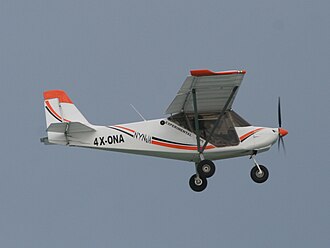
The Best Off Nynja is one of the most successful modern ultralight aircraft developed for pilots who value versatility, simplicity, and exceptional short takeoff and landing (STOL) performance. At first glance, the Nynja may appear to be a straightforward high-wing light aircraft, but beneath its fabric-covered airframe lies an impressively refined design that has earned a loyal following across Europe and beyond. Combining modern composite components with a lightweight tubular structure, economical operation, and forgiving flight characteristics, the aircraft has become a popular choice for recreational flying, flight training, touring, aerial observation, and operations from small grass airstrips.
Unlike many certified general aviation aircraft, which often prioritize speed and payload at the expense of operating costs, the Nynja embraces a philosophy centered on accessibility. It was created for pilots who want the freedom to fly regularly without the significant financial burden associated with larger airplanes. Every aspect of the design reflects this objective, from its efficient engine options and low fuel consumption to its ability to operate comfortably from short, unprepared runways.
The aircraft also represents the continuing evolution of European microlight aviation. Since the late twentieth century, advances in lightweight materials, modern engines, aerodynamic refinement, and manufacturing techniques have transformed ultralight aircraft from simple recreational machines into highly capable touring airplanes. The Best Off Nynja stands as one of the clearest examples of this progression, demonstrating that lightweight aircraft can offer comfort, reliability, and impressive cross-country capability while retaining the agility and economy traditionally associated with ultralights.
For many pilots, the Nynja serves as an introduction to aviation itself. Its straightforward handling, responsive controls, and relatively modest operating costs make it particularly attractive to new aviators, while experienced pilots appreciate its remarkable versatility and ability to access airfields that larger aircraft simply cannot use. It is an aircraft equally at home exploring rural landscapes, practicing precision STOL operations, or embarking on leisurely cross-country adventures.
The Evolution of European Microlight Aviation
To fully appreciate the significance of the Best Off Nynja, it is useful to understand the remarkable development of the European microlight sector over the past several decades.
During the early years of ultralight aviation, many aircraft were little more than powered hang gliders or extremely simple tube-and-fabric machines. They offered affordable access to flight but often sacrificed comfort, weather protection, cruise performance, and payload capacity. While these pioneering aircraft successfully introduced thousands of people to aviation, their capabilities remained relatively limited.
As technology advanced, designers began incorporating stronger aluminum alloys, lightweight composite materials, sophisticated aerodynamic analysis, and increasingly reliable four-stroke engines. These improvements fundamentally changed what could be expected from an ultralight aircraft.
Rather than being confined to short recreational flights in calm weather, modern microlights evolved into practical transportation aircraft capable of extended touring. Enclosed cabins improved comfort, sophisticated avionics enhanced navigation, and improved engines dramatically increased reliability while reducing fuel consumption.
The Nynja emerged during this period of rapid innovation, benefiting from decades of accumulated knowledge while introducing refinements that made it one of the most respected aircraft in its category.
From the Kitfox Heritage to the Nynja
The origins of the Nynja can be traced to a lineage of lightweight utility aircraft inspired by the successful American Kitfox family. These aircraft demonstrated that compact, high-wing, taildragger-inspired designs could combine excellent STOL capability with enjoyable handling and relatively simple construction.
European manufacturers adapted many of these concepts to meet local regulations governing ultralight and microlight aircraft. The resulting designs evolved considerably over time, incorporating improved structures, refined aerodynamics, larger cabins, and more efficient propulsion systems.
The Best Off company played an important role in this evolution by refining existing concepts rather than completely reinventing them. Engineers focused on improving structural integrity, simplifying maintenance, enhancing aerodynamic efficiency, and creating an aircraft that would appeal to both recreational pilots and flight schools.
The result was the Nynja—a machine that successfully balanced modern engineering with proven design principles.
Design Philosophy
The central design philosophy of the Best Off Nynja revolves around achieving maximum versatility with minimum complexity.
Instead of pursuing high cruise speeds through powerful engines and sophisticated systems, the aircraft emphasizes low operating costs, forgiving handling, excellent visibility, and the ability to operate from relatively short runways.
This philosophy recognizes that many recreational pilots value flexibility over outright performance. An aircraft capable of safely using small grass strips opens far more flying opportunities than one requiring long paved runways.
Weight reduction also plays a central role. Every unnecessary kilogram reduces useful load, increases stall speed, and decreases climb performance. Consequently, the aircraft incorporates lightweight materials wherever practical while maintaining structural strength.
Ease of maintenance further reinforces this philosophy. Routine inspections remain straightforward, replacement parts are generally accessible, and engine installations emphasize proven reliability over technological complexity.
Airframe Construction
One of the Nynja’s defining characteristics is its combination of traditional and modern construction techniques.
The primary fuselage consists of a welded steel tube framework providing excellent structural strength while remaining relatively lightweight. Steel tubing also offers significant advantages regarding crashworthiness and ease of repair, particularly for aircraft operating from rough airstrips.
The wings employ aluminum structures carefully engineered to balance stiffness with low weight.
Exterior surfaces are covered using modern synthetic fabric systems rather than traditional cotton. Contemporary covering materials offer excellent durability, UV resistance, and reduced maintenance requirements while preserving the lightweight characteristics that have long made fabric-covered aircraft attractive.
Composite materials appear in various fairings, engine cowlings, wheel pants, and aerodynamic components, allowing designers to optimize airflow while reducing manufacturing complexity.
The resulting structure combines proven engineering principles with modern materials to produce a remarkably durable airframe.
Aerodynamic Design
The aerodynamic layout of the Nynja reflects its intended mission as a practical STOL aircraft.
Its high-wing configuration provides several important advantages. Ground visibility remains excellent during taxiing, passengers enjoy panoramic views during flight, and the wing naturally contributes to lateral stability.
Large flaperons combine the functions of traditional ailerons and flaps, simplifying the control system while enhancing short-field performance.
The relatively generous wing area produces substantial lift at low speeds, allowing the aircraft to take off and land in surprisingly short distances.
Wing struts provide structural support while minimizing overall weight, enabling a lighter wing than would be practical using cantilever construction alone.
The aircraft’s tail surfaces are similarly optimized for stability rather than extreme maneuverability, contributing to predictable handling across a wide operating envelope.
STOL Performance
Perhaps the Nynja’s greatest strength is its remarkable short takeoff and landing capability.
STOL performance results from the interaction of multiple design features rather than any single innovation. The large wing generates abundant lift, the lightweight structure minimizes inertia, the powerful engine delivers excellent thrust-to-weight ratio, and effective flaperons increase lift during low-speed operations.
Under favorable conditions and with an appropriately skilled pilot, the aircraft can operate from remarkably short grass strips, making it well suited to rural airfields and recreational flying sites.
This capability expands operational flexibility considerably. Rather than being limited to large regional airports, Nynja pilots can explore hundreds of smaller airfields that might otherwise remain inaccessible.
Short-field capability also enhances safety by providing more options during cross-country flights.
Engine Options
The Best Off Nynja has been offered with several engine configurations, although the overwhelming majority of aircraft are powered by engines from Rotax.
The most popular choice is the Rotax 912 ULS, producing approximately 100 horsepower. This engine has become one of the most respected light-aircraft powerplants in the world, known for reliability, fuel efficiency, and relatively low maintenance requirements.
Some aircraft utilize lower-powered versions suitable for jurisdictions with stricter weight or performance regulations, while others employ more powerful variants depending on certification rules.
Liquid-cooled cylinder heads combined with air-cooled cylinders provide an excellent balance between durability and thermal efficiency.
Fuel consumption remains impressively low compared with larger certified aircraft, allowing economical cross-country operations.
Cabin Comfort
Although classified as a microlight in many countries, the Nynja offers a surprisingly comfortable cockpit.
The side-by-side seating arrangement encourages communication between pilot and passenger while simplifying instruction during flight training.
Large transparent doors and extensive glazing provide outstanding visibility in nearly every direction, making sightseeing one of the aircraft’s greatest pleasures.
Cabin width compares favorably with many larger general aviation aircraft, and thoughtful ergonomic design ensures that controls remain easily accessible.
Modern examples frequently feature digital flight displays, GPS navigation systems, engine monitoring instruments, radios, and transponders comparable to those found in certified airplanes.
Heating systems improve comfort during colder weather, extending the practical flying season.
Flight Characteristics
One reason for the aircraft’s popularity among both beginners and experienced pilots is its exceptionally friendly handling.
Control responses remain light without feeling overly sensitive.
The aircraft naturally returns toward stable flight following disturbances, reducing pilot workload during normal operations.
Stall characteristics are particularly forgiving. As airspeed decreases, aerodynamic warning signs develop gradually, allowing pilots ample opportunity to recover before significant loss of control occurs.
Climb performance is excellent thanks to the combination of low empty weight and efficient engine installations.
Cruise speeds prove entirely adequate for recreational touring while preserving excellent fuel economy.
The aircraft also handles turbulence reasonably well for its size, although, like all lightweight airplanes, it naturally responds more noticeably than heavier aircraft.
Training Aircraft
Flight schools increasingly appreciate the Nynja for pilot instruction.
Its straightforward systems reduce complexity during initial training.
Excellent visibility enhances situational awareness.
Responsive controls help students develop accurate handling skills.
Low operating costs permit more flying hours within limited training budgets.
The aircraft’s forgiving stall behavior provides an ideal platform for teaching slow flight and recovery techniques.
Maintenance expenses also remain relatively modest, an important consideration for organizations operating aircraft intensively.
These characteristics explain why the Nynja has become a familiar sight at numerous European microlight training organizations.
Recreational Touring
Beyond training, the Nynja excels as a recreational touring aircraft.
Pilots can comfortably cover regional distances while enjoying panoramic views unavailable from higher-performance aircraft typically cruising at much greater altitudes.
Its ability to utilize small airfields encourages exploration of rural destinations often overlooked by conventional aviation.
Weekend trips become practical thanks to reasonable baggage capacity and efficient fuel consumption.
Owners frequently describe the aircraft as encouraging relaxed flying rather than hurried transportation.
This philosophy aligns perfectly with recreational aviation, where the journey itself often proves as rewarding as the destination.
Maintenance and Ownership
Owning a lightweight aircraft differs significantly from operating larger certified airplanes.
Routine maintenance remains comparatively straightforward.
The Rotax engines have earned worldwide reputations for reliability when maintained according to manufacturer recommendations.
Fabric coverings require periodic inspection but modern materials generally provide long service lives.
Replacement parts remain widely available through established distribution networks.
Fuel consumption often falls below that of many automobiles, significantly reducing operating expenses.
Hangar space requirements also remain modest due to the aircraft’s compact dimensions.
Collectively, these factors contribute to one of the lowest ownership costs in modern recreational aviation.
Safety Features
Safety considerations influence every aspect of the Nynja’s design.
The welded steel cockpit structure offers substantial occupant protection.
Excellent visibility reduces collision risk by improving traffic awareness.
Predictable stall behavior minimizes the likelihood of loss-of-control accidents.
Reliable four-stroke engines significantly improve operational dependability compared with earlier two-stroke ultralight powerplants.
Many aircraft also incorporate ballistic recovery parachute systems, capable of lowering the entire aircraft safely to the ground during certain emergency situations.
While no aircraft can eliminate risk entirely, these features collectively enhance operational safety.
International Popularity
The Best Off Nynja has found enthusiastic operators throughout Europe and in several other regions.
Its adaptability to differing national microlight regulations has contributed significantly to international success.
Flying clubs appreciate its economical operation.
Private owners value its versatility.
Flight schools rely upon its forgiving handling.
Aerial photographers enjoy its outstanding visibility.
Recreational pilots admire its ability to access remote airfields.
This broad appeal explains why the aircraft continues to attract interest years after its introduction.
Legacy
The Best Off Nynja represents far more than another successful ultralight aircraft.
It demonstrates how thoughtful engineering can produce an aircraft that excels not through extreme performance but through balanced capability.
Rather than emphasizing maximum speed, it prioritizes accessibility.
Instead of pursuing technological complexity, it values simplicity and reliability.
Its excellent STOL performance, economical operation, comfortable cabin, modern construction, and friendly handling combine to create an aircraft that continues introducing new generations of pilots to the pleasures of personal aviation.
In many respects, the Nynja embodies the essence of recreational flying. It encourages exploration rather than haste, skill rather than automation, and freedom rather than dependence upon large airports. Whether operating from a quiet grass strip in the countryside, carrying students through their first flying lessons, or transporting owners on leisurely cross-country adventures, the Best Off Nynja has established itself as one of the most respected and capable microlight aircraft of the modern era.
Technical Specifications
| Parameter | Specification |
|---|---|
| Aircraft | Best Off Nynja |
| Role | Ultralight / Microlight STOL aircraft |
| Manufacturer | Best Off (France) |
| Country of origin | France |
| Aircraft category | High-wing ultralight / microlight |
| Crew | 1 |
| Passenger capacity | 1 |
| Seating | Side-by-side |
| Construction | Welded steel tube fuselage, aluminum wing structure, composite fairings, synthetic fabric covering |
| Landing gear | Fixed tricycle (tailwheel configuration also available on some versions) |
| Length | Approximately 6.15 m (20.2 ft) |
| Wingspan | Approximately 9.27 m (30.4 ft) |
| Height | Approximately 2.30 m (7.5 ft) |
| Wing area | Approximately 14.8 m² |
| Empty weight | Approximately 285–300 kg (configuration dependent) |
| Maximum takeoff weight | Typically 450–600 kg depending on national regulations and version |
| Engine | 1 × Rotax 912 ULS four-cylinder four-stroke engine |
| Engine power | 100 hp (74.6 kW) |
| Propeller | Three-blade composite propeller (fixed-pitch or ground-adjustable, depending on configuration) |
| Cruise speed | Approximately 145–170 km/h (90–106 mph) |
| Maximum speed | Approximately 185 km/h (115 mph) |
| Stall speed | Approximately 55–60 km/h (34–37 mph) with flaperons deployed |
| Range | Approximately 700–900 km depending on fuel capacity and power setting |
| Fuel capacity | Approximately 65–80 liters (configuration dependent) |
| Rate of climb | Approximately 5–7 m/s |
| Service ceiling | Approximately 4,500–5,000 m (14,800–16,400 ft) |
| Takeoff distance | Approximately 100–150 m under favorable conditions |
| Landing distance | Approximately 100–150 m under favorable conditions |
| Primary missions | Recreational flying, flight training, STOL operations, cross-country touring, aerial observation, photography |
