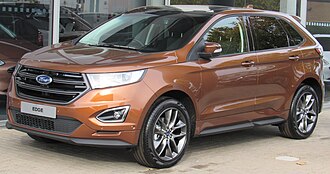
Ford Edge as a Used Car: A Complete Buyer’s Guide to Ford’s Comfortable and Capable SUV
The Ford Edge occupies an interesting position in the used-car market. It is not as rugged and adventure-focused as the Ford Bronco, not as compact and urban-oriented as smaller crossover SUVs, and not as large as traditional full-size family vehicles. Instead, the Edge was designed as a premium-feeling midsize SUV that combines comfort, technology, practicality, and strong road manners in a package that remains relatively affordable on the second-hand market.
When it first arrived, the Ford Edge represented Ford’s attempt to compete in the increasingly popular midsize crossover segment. Buyers were moving away from traditional sedans and large truck-based SUVs, looking for vehicles that offered elevated seating, spacious interiors, all-weather capability, and reasonable running costs. The Edge filled that gap by offering a smooth driving experience, available all-wheel drive, powerful engine options, and a generous list of features.
Today, a used Ford Edge can be an appealing choice for families, commuters, and drivers who want a comfortable SUV without paying the premium prices associated with luxury brands. It offers many of the features buyers expect from more expensive competitors while benefiting from Ford’s extensive service network and widely available replacement parts.
However, like every used vehicle, the Edge has certain weaknesses that buyers should understand before purchasing. Engine selection, maintenance history, transmission condition, electronic systems, and previous usage all play important roles in determining whether a particular example will provide years of dependable service or become an expensive ownership experience.
This guide explores the Ford Edge as a used car, examining its history, design, engines, reliability, driving experience, ownership costs, common problems, and what potential buyers should inspect before making a purchase.
The History of the Ford Edge
The Ford Edge was introduced for the 2007 model year as Ford entered the growing crossover SUV market. At the time, manufacturers were recognizing that many customers wanted the practicality of an SUV but preferred the comfort, fuel efficiency, and driving characteristics of a car-based platform.
Unlike traditional body-on-frame SUVs, the Edge was built on a unibody architecture shared with other Ford vehicles. This allowed engineers to create a smoother and more refined driving experience while still providing the higher seating position and cargo flexibility buyers expected.
The first-generation Edge quickly became popular, particularly among customers who wanted a stylish alternative to traditional family SUVs. Its bold design, spacious interior, and available technology helped establish it as a serious competitor in the midsize crossover segment.
The second generation arrived for the 2015 model year with a more sophisticated design, improved interior quality, stronger engines, and advanced safety technology. This generation moved the Edge closer toward the premium SUV market, competing against vehicles such as the Lexus RX, Acura MDX, Audi Q5, and BMW X3.
Production of the Edge in many markets ended in the mid-2020s as Ford shifted its focus toward electrified vehicles and newer SUV models. However, used examples remain widely available, offering strong value for buyers looking for a practical and comfortable SUV.
Exterior Design and Styling
The Ford Edge has always focused on creating a bold and confident appearance. Unlike some crossover SUVs that prioritize conservative styling, the Edge uses strong lines, a wide stance, and a prominent front grille to create a more athletic presence.
First-Generation Ford Edge (2007–2014)
The original Edge introduced Ford’s crossover design language with a tall body, rounded edges, and a distinctive front appearance. While some elements now look dated, the overall shape has aged reasonably well.
The first-generation model has a practical design with good visibility, large doors, and a spacious cabin. Higher trim levels offered attractive alloy wheels, chrome accents, panoramic roofs, and premium features that helped the vehicle feel more upscale.
Second-Generation Ford Edge (2015–2024)
The second-generation Edge adopted a more refined and European-inspired design. Sharper headlights, sculpted body panels, and a more aggressive front grille gave it a more premium appearance.
Sport versions added unique styling elements, larger wheels, sportier suspension tuning, and the powerful twin-turbocharged V6 engine.
The Edge’s styling remains appealing because it avoids excessive visual complexity. It looks modern without relying on short-lived design trends.
Interior Comfort and Practicality
One of the Ford Edge’s greatest strengths as a used vehicle is its interior space. It was designed as a family-friendly SUV, and that purpose remains clear.
The cabin provides excellent front-seat comfort, with supportive seats suitable for long-distance driving. Many models feature power adjustment, heating, ventilation, leather upholstery, and memory functions.
The dashboard layout is straightforward and user-friendly, especially in later models equipped with Ford’s SYNC infotainment system. Physical controls remain available for many important functions, making everyday operation easier than in some newer vehicles that rely almost entirely on touchscreens.
Passenger Space
The Edge offers generous passenger room compared with many competitors.
Front occupants receive excellent legroom and shoulder space, while rear passengers benefit from a wide bench seat and impressive knee room. This makes the Edge particularly suitable for families who regularly transport adults or teenagers.
The relatively flat floor design improves rear-seat comfort, especially during longer journeys.
Cargo Capacity
Practicality is another major advantage.
The rear cargo area is large enough for luggage, shopping, sports equipment, and everyday family needs. Folding the rear seats creates an even larger load area, allowing the Edge to handle bulky items with ease.
Compared with many similarly priced luxury SUVs, the Edge often provides more usable cargo space.
Engine Options and Performance
The Ford Edge has been offered with several engines depending on market and production year.
3.5-Liter V6
Early Edge models were commonly equipped with a naturally aspirated 3.5-liter V6.
This engine prioritizes smoothness and reliability rather than sporty performance. It provides adequate power for daily driving, highway cruising, and moderate towing.
Its simple design makes it relatively easy to maintain, although fuel economy is not particularly impressive compared with newer turbocharged engines.
2.0-Liter EcoBoost Turbocharged Four-Cylinder
Later models introduced Ford’s 2.0-liter EcoBoost engine.
This turbocharged four-cylinder became one of the most popular choices because it offered a strong balance between performance and efficiency.
The turbocharger provides useful low-end torque, making the Edge feel responsive during everyday driving. When properly maintained, this engine can provide reliable service, although regular oil changes are essential.
2.7-Liter EcoBoost V6
The 2.7-liter twin-turbocharged V6 was offered in sportier versions and became one of the most desirable engines.
It delivers impressive acceleration and transforms the Edge into a surprisingly quick SUV.
The engine’s strong torque output makes highway merging and overtaking effortless. However, buyers should expect higher fuel consumption and potentially higher maintenance costs.
2.0-Liter Diesel Engines in Certain Markets
Some international versions of the Edge were offered with diesel engines.
These provide strong fuel economy and excellent long-distance efficiency but may have additional maintenance considerations involving diesel particulate filters, emissions systems, and fuel quality.
Driving Experience
The Ford Edge was designed primarily as a comfortable road-going SUV rather than a serious off-road vehicle.
This philosophy is immediately noticeable behind the wheel. Steering is light and predictable, suspension tuning emphasizes comfort, and cabin noise levels remain impressively low.
The Edge feels stable on highways and relaxed during long-distance journeys. It is particularly well suited for families who spend significant time traveling.
The Sport versions offer a more engaging experience thanks to stronger engines and revised suspension tuning. While they cannot transform the Edge into a sports car, they provide considerably more excitement than standard models.
All-wheel-drive versions improve traction in rain, snow, and slippery conditions, although the Edge should not be confused with a dedicated off-road vehicle.
Fuel Economy
Fuel economy varies significantly depending on engine choice and drivetrain configuration.
The 2.0 EcoBoost models generally provide the best balance between performance and efficiency.
The naturally aspirated V6 consumes more fuel, particularly in urban driving.
The powerful 2.7 EcoBoost delivers excellent performance but requires accepting higher fuel costs.
Driving style also has a major influence. Gentle highway driving can produce reasonable results, while frequent short trips and aggressive acceleration will significantly increase consumption.
Reliability and Durability
The Ford Edge generally has a positive reliability reputation, especially when properly maintained.
Many examples have accumulated high mileage while continuing to provide dependable service.
The vehicle benefits from Ford’s widespread parts availability, making repairs easier and more affordable than some European competitors.
However, reliability depends heavily on maintenance history. Neglected oil changes, ignored transmission servicing, and delayed repairs can create expensive problems.
A well-maintained Edge is usually a strong long-term ownership proposition.
Common Problems to Check Before Buying
Transmission Issues
Transmission condition should always be evaluated during a used-car inspection.
Some Edge models have experienced transmission-related complaints, including harsh shifting, hesitation, or electronic control issues.
A smooth test drive and documented maintenance history are extremely important.
Cooling System Problems
Older vehicles may develop issues with coolant leaks, radiator components, or cooling system sensors.
Overheating can cause serious engine damage, so any signs of temperature problems should be investigated carefully.
EcoBoost Maintenance Concerns
Turbocharged engines require consistent maintenance.
Oil quality and replacement intervals are especially important because turbochargers operate under high temperatures and pressures.
Buyers should avoid vehicles without clear service records.
Electrical and Infotainment Issues
Modern Edge models contain numerous electronic systems.
Potential problems may involve touchscreen operation, cameras, sensors, power accessories, or connectivity features.
Most issues are manageable, but repairs can become expensive if multiple systems fail.
Suspension Wear
As mileage increases, suspension components such as bushings, control arms, and shock absorbers may require replacement.
A test drive over uneven roads can reveal unusual noises or poor ride quality.
Maintenance Costs
The Ford Edge generally offers reasonable ownership costs compared with premium midsize SUVs.
Routine maintenance includes standard items such as oil changes, filters, brakes, tires, and fluid services.
Parts availability is excellent because Ford components are widely distributed.
Insurance costs are typically moderate, although higher-performance versions may cost more to insure.
The most expensive repairs usually involve major drivetrain components, advanced electronics, or neglected maintenance issues.
Ford Edge as a Family Vehicle
The Edge remains a strong family choice because it combines comfort, space, and safety.
Parents appreciate the easy-access rear seats, large cargo area, and available driver assistance features.
Children benefit from generous interior room, while adults can comfortably occupy every seating position.
For families who do not require three rows of seating, the Edge provides an excellent balance between size and practicality.
Buying Advice: What to Look For
When shopping for a used Ford Edge, maintenance history should be the highest priority.
A vehicle with complete service records is significantly more attractive than a low-priced example with unknown history.
Check the following areas carefully:
- Transmission operation during cold and warm driving.
- Evidence of regular oil changes.
- Condition of tires and suspension components.
- Functionality of electronics and safety systems.
- Signs of accident damage or poor repairs.
- Condition of the all-wheel-drive system if equipped.
A professional inspection before purchase is highly recommended, especially for higher-mileage examples.
Ford Edge Compared With Its Rivals
Compared with the Toyota Highlander, the Edge offers sportier handling but less emphasis on maximum passenger capacity.
Against the Honda Passport, the Edge provides a more car-like driving experience but less off-road capability.
Compared with luxury SUVs such as the BMW X3 or Audi Q5, the Edge offers similar comfort and technology at a lower purchase price, although it lacks some premium-brand prestige.
The Edge’s strongest advantage is value. It provides many desirable features without the expensive ownership costs associated with luxury competitors.
Who Should Buy a Used Ford Edge?
The Ford Edge is ideal for buyers who want a comfortable midsize SUV with strong practicality and good road manners.
It suits families, commuters, long-distance travelers, and anyone who wants more space than a compact crossover without moving into a large SUV.
Performance-oriented drivers may prefer the Sport models with the 2.7 EcoBoost engine.
Buyers focused primarily on fuel economy may prefer newer hybrid alternatives.
Ownership Experience
Owning a Ford Edge is generally a relaxed and comfortable experience.
It does not demand the attention of a performance vehicle, nor does it feel as utilitarian as some traditional SUVs.
Instead, it provides dependable everyday transportation with enough capability for changing weather conditions, road trips, and family responsibilities.
Many owners appreciate that the Edge feels more substantial than smaller crossovers while remaining easier to drive than large SUVs.
Final Verdict
The Ford Edge is one of the most overlooked used SUVs on the market. It offers a combination of comfort, space, technology, performance, and affordability that makes it a compelling alternative to more expensive competitors.
Its biggest strengths are its roomy interior, comfortable ride, available powerful engines, attractive styling, and reasonable maintenance costs. Buyers looking for a practical family SUV with a little more personality will find much to appreciate.
The main considerations are choosing the right engine, verifying maintenance history, checking transmission condition, and avoiding poorly maintained examples.
When carefully selected, the Ford Edge can provide many years of reliable service while delivering a premium SUV experience without the premium price tag.
For used-car buyers seeking a comfortable, capable, and affordable midsize SUV, the Ford Edge deserves serious attention. It may not receive the same recognition as some competitors, but its combination of practicality and value makes it one of Ford’s most appealing crossover offerings.
Technical Specifications Summary
| Specification | Ford Edge 2.0 EcoBoost | Ford Edge 2.7 EcoBoost Sport |
|---|---|---|
| Production years | 2015–2024 | 2015–2024 |
| Body style | 5-door midsize crossover SUV | 5-door midsize crossover SUV |
| Platform | Ford CD4 unibody platform | Ford CD4 unibody platform |
| Engine | 2.0 L turbocharged inline-4 EcoBoost | 2.7 L twin-turbocharged V6 EcoBoost |
| Power output | Approx. 250 hp | Approx. 335 hp |
| Torque | Approx. 373 Nm | Approx. 515 Nm |
| Transmission | 8-speed or 6-speed automatic (depending on year) | 8-speed automatic |
| Drive system | Front-wheel drive or all-wheel drive | All-wheel drive |
| 0–100 km/h | Approx. 7.5–8.0 seconds | Approx. 5.5–6.0 seconds |
| Fuel consumption (combined) | Approx. 8.5–10 L/100 km | Approx. 11–13 L/100 km |
| Fuel tank capacity | Approx. 68 liters | Approx. 68 liters |
| Length | Approx. 4,790 mm | Approx. 4,790 mm |
| Width | Approx. 1,928 mm | Approx. 1,928 mm |
| Wheelbase | Approx. 2,850 mm | Approx. 2,850 mm |
| Cargo capacity | Approx. 1,100–2,000 liters (depending on configuration) | Approx. 1,100–2,000 liters (depending on configuration) |
| Typical strengths | Comfort, practicality, efficiency, value | Performance, refinement, strong acceleration |
| Typical weaknesses | Transmission concerns, aging electronics | Higher fuel costs, more expensive repairs |
.jpg)