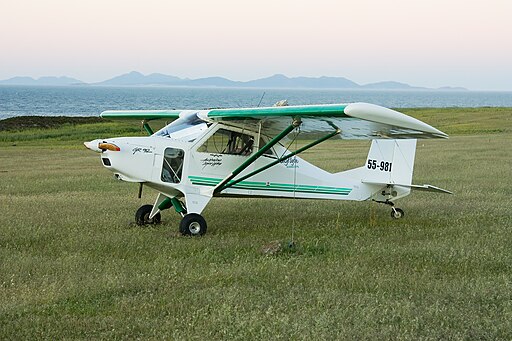
The Australian Lightwing GR 912 is a modern ultralight and light-sport aircraft designed and manufactured in Australia. It combines simplicity, safety, and performance for recreational aviation, pilot training, and short cross-country flights. Known for its ease of handling, efficient design, and reliability, the GR 912 caters to both amateur pilots and flight schools seeking a cost-effective, lightweight aircraft that meets strict regulatory standards for light sport aviation.
Development and Design
The GR 912 was developed to provide a versatile and robust aircraft suitable for Australian flying conditions, which often include remote airstrips and varying weather patterns. The airframe incorporates a high-wing monoplane configuration, providing excellent stability and unobstructed visibility for the pilot. The aircraft is primarily constructed from aluminum tubing with composite and fabric-covered control surfaces to reduce weight while maintaining structural strength.
The design emphasizes simplicity and ease of maintenance, with quick access panels for engine inspections and modular components that facilitate field repairs. The cabin accommodates two occupants in a side-by-side seating configuration, offering adequate comfort for short flights while maintaining minimal aerodynamic drag. Large windows enhance visibility and situational awareness, making it suitable for sightseeing, aerial photography, and pilot training.
Powerplant and Performance
The Australian Lightwing GR 912 is typically powered by the Rotax 912 series engine, a four-cylinder, horizontally opposed, liquid-cooled and air-cooled piston engine that produces between 80 and 100 horsepower depending on the variant. The engine is renowned for fuel efficiency, smooth operation, and low maintenance requirements, making it ideal for light sport aircraft operations.
The engine drives a two-blade fixed-pitch propeller, optimized for takeoff performance and efficient cruise. With this configuration, the GR 912 can achieve a maximum cruise speed of approximately 110 knots and a typical range of 500 nautical miles on a full fuel load. The aircraft exhibits short takeoff and landing capabilities, with a takeoff distance to clear a 50-foot obstacle of roughly 450 meters and a landing distance of approximately 400 meters. The service ceiling is rated at 13,000 feet, providing ample altitude for recreational flights and safe terrain clearance.
Airframe and Aerodynamics
The high-wing configuration of the GR 912 is supported by streamlined struts, contributing to structural integrity while reducing aerodynamic drag. The wing incorporates full-span ailerons and manually operated flaps to enhance lift at lower speeds, improving takeoff, landing, and maneuvering characteristics. The wingspan measures approximately 9.6 meters, offering a stable platform with low stall speed characteristics.
The fuselage employs a semi-monocoque construction, balancing strength and lightweight performance. The empennage features a conventional tail design with a vertical stabilizer and a horizontal tailplane, providing predictable handling and stability across all flight regimes. Control surfaces are cable-actuated, enabling precise pilot inputs without the need for complex hydraulic systems.
Avionics and Instrumentation
The GR 912 is equipped with basic but effective avionics suitable for VFR operations. Standard instrumentation includes an airspeed indicator, altimeter, vertical speed indicator, compass, and engine monitoring gauges. Optional avionics packages may include GPS navigation, VHF communication radios, transponders, and electronic flight displays suitable for enhanced situational awareness and cross-country navigation. The instrument panel layout emphasizes simplicity and ergonomics, allowing easy access to all critical flight and engine information.
Landing Gear and Ground Operations
The Australian Lightwing GR 912 features a fixed tricycle landing gear, offering excellent ground handling and stability during taxiing, takeoff, and landing. The main landing gear is equipped with shock-absorbing struts to handle operations on grass, gravel, and other unprepared airstrips. The nose wheel provides precise steering control on the ground, reducing the likelihood of ground loops that are sometimes associated with tailwheel configurations.
Operational Roles and Uses
The GR 912 is widely used for recreational flying, pilot training, and light utility missions. Its short-field performance makes it suitable for operations from small airstrips and rural environments. The aircraft is also popular among flight schools for initial pilot training due to its forgiving handling, low operating costs, and straightforward maintenance requirements. Some pilots utilize the aircraft for aerial photography, surveying, and cross-country touring, taking advantage of its efficient engine and extended range capabilities.
Dimensions and Technical Parameters
-
Length: 6.1 meters
-
Wingspan: 9.6 meters
-
Height: 2.45 meters
-
Wing area: 12.5 square meters
-
Empty weight: 290 kilograms
-
Maximum takeoff weight: 600 kilograms
-
Engine: Rotax 912 UL or ULS, 80–100 horsepower
-
Propeller: Two-blade fixed-pitch
-
Maximum speed: 120 knots
-
Cruise speed: 105–110 knots
-
Stall speed: 38 knots (with flaps deployed)
-
Range: 500 nautical miles
-
Service ceiling: 13,000 feet
-
Takeoff distance (50 ft obstacle): 450 meters
-
Landing distance (50 ft obstacle): 400 meters
Safety and Maintenance
The GR 912 has a reputation for reliability and safety due to its proven Rotax engine, lightweight structure, and simple control systems. Routine inspections can be performed quickly, and replacement parts are readily available. Safety features include low stall speeds, strong structural integrity, and excellent visibility from the cockpit, allowing pilots to operate in diverse environments with confidence.
Conclusion
The Australian Lightwing GR 912 represents a modern, efficient, and versatile light sport aircraft. Its combination of lightweight construction, robust engine performance, and STOL capabilities make it an ideal choice for recreational pilots, flight schools, and enthusiasts seeking a reliable and low-maintenance aircraft. With its practical design, cost-effective operation, and ease of handling, the GR 912 continues to be a prominent option within the Australian and international light aircraft community.
