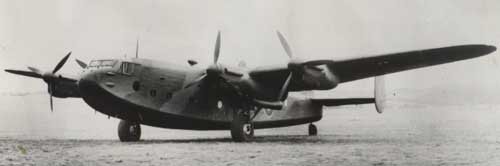
The Avro York is a British transport aircraft developed during World War II as a military and later civil transport solution. Derived from the highly successful Avro Lancaster heavy bomber, the York utilized many components of its predecessor but was adapted specifically for cargo and personnel transport. Its robust design, large internal volume, and impressive payload capacity made it an essential asset for wartime logistics and postwar commercial aviation. Although not as famous as its bomber sibling, the York played a crucial role in troop movements, supply missions, and humanitarian operations, particularly in the challenging environments of wartime theaters.
Design and Development
The genesis of the Avro York lay in the RAF’s urgent need for a reliable, long-range transport aircraft capable of supporting extensive military operations across multiple theaters during World War II. Avro’s design team capitalized on the proven Lancaster airframe by retaining the wings, tail assembly, and undercarriage, while redesigning the fuselage into a much larger, box-like structure optimized for cargo and personnel transport.
Unlike the Lancaster, which featured a narrow fuselage suited for crew and bombs, the York’s fuselage was widened and deepened, providing a spacious, pressurized cargo hold capable of accommodating vehicles, supplies, or dozens of troops. This square-section fuselage design allowed for easier loading and unloading operations, especially when equipped with large rear doors and ramp configurations in later modifications.
The aircraft retained the four Rolls-Royce Merlin engines from the Lancaster series, providing proven and reliable powerplants. However, the emphasis shifted from speed and agility to stability, range, and payload capacity. The landing gear was reinforced to accommodate heavier takeoff weights, and the York featured modifications to its control surfaces to maintain handling qualities despite the altered fuselage shape.
Technical Specifications and Performance
The Avro York is a sizable aircraft, with a wingspan measuring 102 feet (31.09 meters) and a length of 74 feet 10 inches (22.81 meters). The height at the tail stands around 19 feet 6 inches (5.94 meters), giving the York a substantial presence on any airfield. The aircraft’s large fuselage cross-section allowed it to carry oversized cargo loads while maintaining aerodynamic efficiency through careful structural design.
Powered by four Rolls-Royce Merlin 620 or 640 engines, each delivering approximately 1,620 to 1,710 horsepower, the York could cruise comfortably at around 230 miles per hour (370 kilometers per hour). Its maximum speed was slightly higher, near 298 miles per hour (480 kilometers per hour), though the aircraft was primarily optimized for economical cruising during extended missions.
Range was a critical attribute of the York, given its intended use in long-haul transport missions. The aircraft had an operational range of approximately 1,700 miles (2,740 kilometers) when fully loaded, making it suitable for intercontinental flights between theaters of operation or civilian airports. The service ceiling was around 20,000 feet (6,096 meters), adequate for safe passage over many operational environments of the time.
The maximum takeoff weight (MTOW) of the York was approximately 65,000 pounds (29,483 kilograms), significantly heavier than the Lancaster, reflecting its cargo-carrying role. The empty weight was around 41,000 pounds (18,597 kilograms), with fuel capacity sufficient for extended endurance during transoceanic flights.
Cargo and Passenger Capacity
One of the Avro York’s defining features was its enormous internal space, configured to maximize the versatility of its role. The fuselage was designed with a large cargo hold capable of carrying up to 10,000 pounds (4,536 kilograms) of freight or as many as 56 fully equipped troops, depending on mission requirements. The interior could be fitted with seating, stretchers, or configured for cargo pallets, allowing rapid adaptation between troop transport, medical evacuation, or general freight duties.
Large cargo doors, typically located at the rear of the fuselage, facilitated the loading and unloading of bulky items such as vehicles, artillery pieces, or crates. The square cross-section made it possible to carry large or awkwardly shaped loads that would have been difficult to accommodate in conventional fuselages.
In its postwar commercial role, the York was adapted as a passenger airliner, with configurations accommodating around 24 to 30 passengers in relative comfort. However, due to its military origins and boxy fuselage, the York was less efficient and less comfortable than purpose-built civilian airliners, which eventually limited its commercial appeal.
Operational History
The Avro York first entered service during World War II and quickly became a vital logistical asset for the Royal Air Force and other Allied air forces. It was heavily employed in the Middle East, India, and the Far East, where long distances and limited infrastructure made efficient air transport crucial for military success. The York was instrumental in supporting airborne operations, resupplying isolated units, and ferrying troops and equipment between dispersed bases.
One of the York’s most notable operational contributions was its involvement in the Berlin Airlift of 1948-1949. As part of the massive Allied effort to supply West Berlin during the Soviet blockade, the York demonstrated its ability to conduct frequent, heavy-lift sorties under challenging conditions, helping to sustain the city’s population during a critical Cold War standoff.
Following the war, the York transitioned to civil aviation, serving with airlines such as British South American Airways and the Argentine airline Aerolineas Argentinas. Despite being overshadowed by more modern aircraft designs, it remained in service well into the 1950s and early 1960s, particularly in less developed regions where ruggedness and payload capacity were more valuable than passenger comfort or speed.
Variants and Modifications
Several variants of the Avro York were produced, tailored to different operational requirements. The Mk I was the standard production version primarily used during the war, featuring the original cargo and troop transport design. The Mk II variant included improvements in engines and internal fittings to enhance operational efficiency and crew comfort.
There were also specialized versions adapted for VIP transport, air ambulance service, and paratroop drops. Some Yorks were converted postwar into freighters or mail carriers with modifications to optimize cargo handling capabilities. Despite these adaptations, the airframe’s basic structure remained largely unchanged, a testament to the original design’s versatility.
Legacy and Impact
The Avro York may not share the renown of the Lancaster or other contemporary bombers, but its contribution to military logistics and postwar civil aviation is significant. It helped define the concept of strategic airlift in an era when long-range transport aircraft were still a relatively new technology. Its ability to carry large payloads over great distances helped Allied forces maintain operational reach and flexibility across multiple theaters during and after World War II.
The York’s success also demonstrated the potential of adapting military aircraft designs for transport purposes, influencing the development of later dedicated military transport aircraft. Its legacy persists in the evolution of air mobility and airlift concepts that remain central to modern military and humanitarian operations.
Conclusion
The Avro York stands as a remarkable example of wartime innovation and adaptability. By repurposing the proven Lancaster airframe into a robust transport aircraft, Avro created a platform capable of meeting the complex logistical demands of global warfare and postwar reconstruction. Its technical specifications, from its powerful Merlin engines to its capacious fuselage, reflect a design focused on function, reliability, and versatility. Though eventually surpassed by more specialized aircraft, the York’s contributions to air transport history remain an important chapter in the development of military and commercial aviation.
