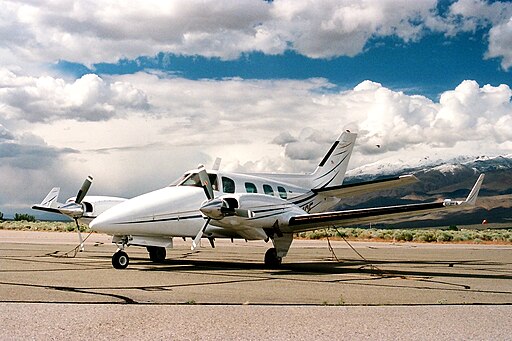
The Beechcraft Duke is widely considered one of the most ambitious and technically sophisticated piston twins ever built for the general aviation market. Developed as a high-speed, high-altitude, executive-class aircraft, it was designed to deliver near-turboprop cruise performance while retaining the operational flexibility of a twin-engine piston platform. The Duke entered service in the late 1960s and immediately stood out for its sleek aerodynamics, pressurized cabin, and strong systems engineering. Although it never achieved mass-market production numbers due to cost and complexity, the aircraft earned a long-term reputation for being exceptionally capable, particularly for owners who needed serious cross-country performance and were willing to maintain it correctly. In modern terms, the Duke occupies a unique niche between conventional light twins and entry-level turboprops, and it remains a respected aircraft among experienced operators who value speed, altitude capability, and a robust airframe.
Airframe Design and Aerodynamic Configuration
The Beechcraft Duke is an all-metal, low-wing, pressurized twin with retractable tricycle landing gear and a clean, performance-driven aerodynamic layout. The wing is designed for efficiency at higher cruise speeds rather than short-field lift, which is one reason the Duke is so fast for its class but also requires disciplined energy management on approach. The fuselage is streamlined and structurally reinforced to handle pressurization loads, with cabin sealing and pressure vessel integrity being central elements of the design. Control surfaces are conventionally actuated but tuned for a more solid, stable feel at higher speeds, and the aircraft’s overall handling characteristics reflect its executive mission profile rather than trainer-like forgiveness. The landing gear retracts fully to reduce drag, and the aircraft sits relatively low compared to some contemporaries, contributing to its sleek profile. From a design standpoint, the Duke was engineered as a serious traveling machine first, emphasizing cruise efficiency, climb performance, and high-altitude comfort over simplicity.
Dimensions and Weight Parameters
The Duke’s dimensions place it in the upper tier of piston twins, both in size and structural capability. Wingspan is approximately 39 feet 4 inches (about 12.0 meters), and overall length is about 32 feet 9 inches (roughly 10.0 meters), with a height around 12 feet 4 inches (about 3.8 meters). Wing area is approximately 222 square feet (around 20.6 square meters), supporting relatively high wing loading, which helps the aircraft achieve excellent cruise speed but also drives higher approach speeds compared with slower utility twins. Maximum takeoff weight is typically around 6,775 pounds (about 3,073 kilograms), with empty weights commonly in the 4,600 to 4,900 pound range depending on avionics, interior configuration, and modifications. Useful load generally lands around 1,800 to 2,100 pounds, but real-world payload is heavily influenced by fuel load and pressurization equipment weight, meaning careful planning is part of normal Duke operations.
Powerplant Configuration and Propeller Systems
The Beechcraft Duke was originally equipped with two Continental TSIO-520 series engines, turbocharged and fuel-injected, delivering approximately 380 horsepower each. These engines are paired with constant-speed, full-feathering propellers designed to support both high-speed cruise efficiency and engine-out safety characteristics. The turbocharging system is central to the Duke’s identity, allowing it to maintain strong power output at altitude and making the aircraft a legitimate high-flight-level performer compared to many piston twins that lose significant performance above the mid-teens. The combination of turbocharging, pressurization, and high output gives the Duke an engine management profile that is more demanding than typical light twins, requiring strict attention to cylinder head temperatures, turbocharger health, mixture control, and proper power setting techniques. Many aircraft have been upgraded through aftermarket engine modifications, most famously turbine conversions, but even in stock piston form the Duke’s power-to-weight ratio and altitude capability remain impressive.
Pressurization, Environmental, and High-Altitude Systems
A defining feature of the Duke is its pressurized cabin, which dramatically improves comfort and fatigue levels during long flights and makes high-altitude cruise practical in a piston aircraft. The pressurization system is designed to support operations in the mid-20,000-foot range, allowing the aircraft to cruise above much weather and turbulence that lower-performance twins must endure. Cabin altitude control, pressure vessel integrity, door seals, and outflow valve health are major maintenance and inspection considerations, and operators typically treat the pressurization system as a primary aircraft subsystem rather than a luxury add-on. Heating, ventilation, and defrost systems are also designed for cold, high-altitude conditions, and the aircraft’s environmental control package reflects its executive transport mission rather than the simpler cabin airflow arrangements of basic piston twins.
Performance Specifications and Flight Envelope
The Duke’s performance is what made it famous, and even decades after production ended it remains extremely competitive for a piston twin. Typical cruise speeds are in the 220 to 240 knot range depending on altitude, temperature, and power settings, with maximum cruise figures often cited in the mid-240-knot class under optimal conditions. Rate of climb is strong for the category, commonly exceeding 1,500 feet per minute at lower altitudes when light, and remaining respectable into the teens due to turbocharging. Service ceiling is generally around 30,000 feet, a figure that places the Duke among the highest-altitude-capable piston twins ever produced in series form. Range depends heavily on power setting and fuel configuration, but typical long-range planning numbers are often in the 1,000 nautical mile class with reserves at efficient cruise settings. Takeoff and landing performance is solid but not short-field oriented, with higher speeds and longer runway requirements than slower, more utility-focused twins, making runway planning and stabilized approach technique important elements of safe operation.
Fuel System, Electrical Architecture, and Redundancy
The Duke’s systems reflect its premium design goals and include robust redundancy compared with simpler piston twins. Fuel is carried in wing tanks with crossfeed capability, allowing either engine to be supplied from either side in abnormal situations, and the aircraft includes multiple fuel pumps and pressure management components to support turbocharged operation at altitude. The electrical system is designed with dual alternators and a battery system sized to support the aircraft’s pressurization controls, avionics load, and environmental systems. Because the Duke is often flown in high-altitude IFR conditions, electrical reliability is particularly important, and many modern examples have been upgraded with improved alternator control units, modern circuit protection, and advanced avionics that reduce workload. The aircraft’s systems complexity is part of what makes it such a high performer, but it also means it rewards operators who approach it with a disciplined, checklist-driven mindset.
Handling Characteristics and Pilot Workload
In flight, the Duke is generally described as stable, solid, and precise, with a heavier, more aircraft-like feel than many light twins. Control harmony is good, and the aircraft performs best when flown with deliberate technique rather than casual inputs. Because it is fast and clean aerodynamically, it does not shed speed quickly, so descent planning and approach configuration need to be managed earlier than in slower twins. Single-engine handling is respectable, but as with any high-performance twin, correct identification, feathering procedures, and airspeed discipline are critical. The aircraft’s combination of turbocharging, pressurization, and high cruise speed increases pilot workload compared with typical piston twins, particularly during climbs, descents, and engine management transitions. However, when flown correctly, it offers an exceptionally capable cross-country platform with high cruise efficiency and strong weather avoidance options.
Operational Role, Ownership Reality, and Long-Term Reputation
The Beechcraft Duke has a reputation as an aircraft that delivers performance far beyond what most piston twins can achieve, but it also carries ownership expectations closer to a turboprop than a basic light twin. Maintenance standards, engine care, pressurization upkeep, and systems inspections are not optional if the aircraft is to remain reliable and safe. Operators who treat it as a high-end machine and maintain it accordingly often describe it as one of the best traveling piston aircraft ever made, while those who underestimate its complexity may find it expensive and demanding. Its legacy is tied to this dual identity: a brilliant engineering achievement that brought pressurized, high-altitude, high-speed capability into the piston twin world, and a reminder that elite performance in aviation almost always comes with equally serious operational and maintenance requirements. Even today, the Duke remains a standout aircraft with a loyal following, especially among pilots who want a true executive piston twin that can cruise fast, climb high, and cover long distances with confidence.
