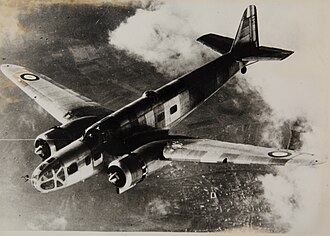
Bloch MB.131 – The French Reconnaissance Aircraft That Bridged Two Eras of Military Aviation
The history of military aviation is often dominated by legendary fighters such as the Supermarine Spitfire, Messerschmitt Bf 109, or North American P-51 Mustang. Equally famous are heavy bombers like the Boeing B-17 Flying Fortress and the Avro Lancaster. Yet between these celebrated aircraft existed another category that quietly played a vital strategic role: reconnaissance aircraft. These machines rarely attracted headlines, but without them military commanders would have lacked the intelligence necessary to make informed operational decisions. One of the more interesting examples from pre-war France was the Bloch MB.131, a twin-engine reconnaissance aircraft developed during the turbulent years immediately preceding the Second World War. Although its operational career proved relatively short and its performance quickly became outdated, the MB.131 represents a fascinating chapter in French aviation history because it illustrates the challenges faced by aircraft designers attempting to balance rapidly evolving technology with equally demanding military requirements.
The Bloch MB.131 emerged during one of the most dynamic periods in aviation history. The early and mid-1930s witnessed enormous advances in aircraft construction, engine performance, aerodynamics, navigation equipment, and military doctrine. Nations across Europe understood that air power would play a decisive role in any future conflict, prompting intense competition among manufacturers seeking to produce faster, stronger, and more capable military aircraft. Marcel Bloch’s company became one of France’s leading aircraft manufacturers during this era, developing bombers, fighters, reconnaissance aircraft, and experimental prototypes that collectively reflected the country’s determination to modernize its air force. The MB.131 stood at the intersection of innovation and urgency, serving as an important reconnaissance platform while simultaneously revealing the pace at which aviation technology could render an aircraft obsolete within only a few years.
The Strategic Importance of Reconnaissance Aircraft During the 1930s
Before examining the Bloch MB.131 itself, it is useful to understand why reconnaissance aircraft occupied such an essential position within military planning. During the interwar years, aerial reconnaissance represented one of the most valuable intelligence-gathering tools available to military commanders. Long before satellites, high-resolution imaging systems, digital communications, or remotely piloted aircraft existed, reconnaissance crews physically flew over enemy territory to observe troop movements, identify military installations, photograph infrastructure, monitor transportation networks, and report naval activity. Their missions frequently determined whether commanders possessed accurate information or relied upon dangerous assumptions.
France, bordered by several potential adversaries and maintaining overseas territories across multiple continents, required reliable aircraft capable of conducting surveillance over land and sea alike. Reconnaissance aircraft therefore needed substantial range, dependable engines, stable flight characteristics, and sufficient payload capacity to carry cameras, navigation equipment, radios, and defensive armament. While outright speed remained desirable, endurance often proved equally valuable because long patrols demanded extended flight times over designated operational areas. The MB.131 emerged precisely within this strategic context, intended to provide the French Air Force with a modern twin-engine reconnaissance platform capable of fulfilling multiple operational requirements.
The Development of the Bloch MB.131
The Bloch MB.131 originated from an ambitious French Air Ministry requirement seeking a versatile aircraft capable of performing strategic reconnaissance while retaining secondary bombing capability. Military planners increasingly preferred multi-role aircraft because financial constraints and industrial limitations encouraged designs capable of fulfilling more than one operational function. Consequently, manufacturers competed vigorously to produce aircraft combining respectable speed, acceptable defensive capability, useful bomb loads, and efficient reconnaissance equipment within a single airframe.
Marcel Bloch’s engineering team approached this challenge by emphasizing practical engineering rather than radical experimentation. Instead of introducing highly unconventional aerodynamic concepts, designers focused upon creating a robust aircraft incorporating proven technologies refined through careful engineering. This conservative philosophy reflected the realities of military procurement, where reliability frequently outweighed technical novelty. The resulting MB.131 featured an all-metal structure, retractable landing gear, enclosed crew positions, twin radial engines, and aerodynamic refinements consistent with contemporary aircraft design trends.
The Bloch Company and Its Growing Reputation
By the time development of the MB.131 commenced, Marcel Bloch had already established himself as one of France’s most respected aircraft designers. His company continuously expanded its portfolio during the 1930s, responding to increasing military demand generated by growing political instability across Europe. French aviation authorities encouraged domestic manufacturers to modernize rapidly, recognizing that future conflicts would almost certainly involve large-scale aerial warfare. Bloch’s organization consequently invested heavily in research, structural engineering, production methods, and aerodynamic testing, enabling the company to produce increasingly sophisticated military aircraft.
The MB.131 therefore formed part of a much broader industrial effort rather than existing as an isolated design. It represented one step in the company’s ongoing evolution toward more capable multi-engine aircraft, contributing valuable engineering experience that informed subsequent developments even after the aircraft itself became operationally outdated.
General Design Philosophy
The Bloch MB.131 reflected the prevailing philosophy of late interwar military aircraft design by emphasizing versatility, structural strength, and operational practicality. Its low-wing monoplane configuration represented a significant departure from earlier biplane reconnaissance aircraft, offering reduced aerodynamic drag and improved performance. The aircraft’s streamlined fuselage housed multiple crew members responsible for navigation, reconnaissance, communications, and defensive operations, illustrating the increasingly specialized nature of military aviation.
Twin radial engines provided the power necessary to achieve respectable performance while offering greater operational security than single-engine aircraft during long-distance reconnaissance missions. Should one engine fail, crews retained the possibility of returning safely rather than being forced into immediate emergency landings. Such redundancy proved especially valuable during operations over remote regions where suitable landing areas might be scarce.
Airframe Construction
The MB.131 employed an all-metal airframe, reflecting the aviation industry’s transition away from traditional wood-and-fabric construction techniques. Metal structures offered greater durability, improved resistance to weather, increased structural integrity, and simplified maintenance compared with earlier aircraft designs. Engineers carefully balanced structural strength against overall weight because excessive mass negatively affected speed, climb performance, fuel consumption, and operational range.
Particular attention focused upon wing construction because the aircraft needed to support engines, fuel tanks, reconnaissance equipment, bomb racks, and aerodynamic loads encountered throughout extended operational service. Internal structural members distributed stresses efficiently while maintaining aerodynamic smoothness across external surfaces. The resulting airframe represented contemporary engineering practice at a time when manufacturers increasingly mastered stressed-skin construction techniques.
Crew Arrangement and Internal Layout
Unlike single-seat fighters emphasizing pilot performance above all else, reconnaissance aircraft required coordinated teamwork among several specialists. The MB.131 typically accommodated a pilot alongside observers, navigators, radio operators, and defensive gunners depending upon mission requirements. Each crew member performed essential duties contributing directly to mission success. Observers operated cameras and visually searched assigned sectors, navigators calculated flight paths using maps and timing, radio operators transmitted intelligence reports, while defensive gunners remained alert for enemy aircraft.
Designers sought to maximize crew efficiency by arranging workstations logically within the fuselage. Although interior comfort remained limited compared with modern standards, practical considerations such as visibility, accessibility, communication, and equipment placement significantly influenced operational effectiveness during lengthy reconnaissance missions that often extended several hours.
Powerplant and Performance
The Bloch MB.131 utilized two air-cooled radial engines mounted on the wings, each driving a three-bladed propeller. Radial engines enjoyed widespread popularity during the period because of their mechanical simplicity, durability, and excellent cooling characteristics. These qualities proved particularly valuable in military service, where aircraft frequently operated from austere airfields under demanding environmental conditions.
Although respectable when initially designed, the MB.131’s performance soon lagged behind rapidly advancing fighter technology. Aircraft development accelerated dramatically during the late 1930s, with engine power increasing substantially while aerodynamic refinements produced faster, more maneuverable aircraft. Consequently, reconnaissance platforms originally considered modern quickly became vulnerable to interception by increasingly capable enemy fighters. This technological acceleration significantly influenced the MB.131’s operational relevance as Europe moved closer to war.
Reconnaissance Equipment
The aircraft’s principal mission centered upon intelligence gathering, making photographic equipment among its most valuable onboard systems. High-quality aerial cameras enabled crews to document enemy troop concentrations, transportation infrastructure, industrial facilities, airfields, and fortifications. Following each mission, photographic specialists carefully analyzed exposed film to identify military developments potentially affecting operational planning.
Visual observation complemented photographic reconnaissance because experienced observers frequently detected activity requiring immediate radio reports. Smoke from industrial facilities, moving vehicle columns, naval formations, or newly constructed defensive positions could all provide valuable intelligence even before photographic analysis occurred. Consequently, reconnaissance crews required exceptional observational skills alongside technical proficiency in operating cameras and communications equipment.
Communication Systems
Reliable radio equipment transformed military reconnaissance by allowing intelligence gathered during flight to reach commanders almost immediately. Rather than waiting until aircraft returned to base, crews could transmit urgent reports while still airborne, enabling rapid operational responses. The MB.131 therefore carried radio systems representing advanced communications technology for the period, although radio reliability remained subject to atmospheric conditions, equipment maintenance, and enemy interference.
Effective communication also enhanced navigational safety. Ground stations provided weather updates, operational instructions, and emergency assistance whenever necessary, reducing the risks associated with long-distance flights over unfamiliar territory. These capabilities increasingly distinguished modern reconnaissance aircraft from earlier designs relying primarily upon post-flight reporting.
Defensive Armament
Because reconnaissance aircraft frequently operated without fighter escort, self-defense formed an important aspect of overall design. The MB.131 incorporated several manually operated machine-gun positions intended to protect vulnerable sectors surrounding the aircraft. Defensive gunners coordinated their efforts to discourage pursuing fighters, forcing attackers to exercise caution during interception attempts.
Despite these defensive measures, the aircraft remained fundamentally vulnerable against modern high-speed fighters. Defensive machine guns offered limited protection once enemy aircraft achieved significant performance advantages, highlighting one of the principal weaknesses confronting reconnaissance aircraft throughout the Second World War. As fighter speeds increased dramatically, reconnaissance platforms required either greater speed themselves or dedicated fighter escorts to ensure survivability.
Bombing Capability
Although reconnaissance represented its primary mission, the MB.131 possessed limited bombing capability reflecting contemporary interest in multi-role aircraft. Carrying light bomb loads allowed reconnaissance crews to attack targets of opportunity or conduct secondary tactical missions when circumstances permitted. While incapable of replacing dedicated medium bombers, this flexibility enhanced operational usefulness during periods when available aircraft resources remained limited.
Military planners valued such versatility because operational requirements frequently evolved rapidly during wartime. Aircraft capable of adapting to changing circumstances provided commanders greater flexibility than highly specialized platforms restricted to narrow mission profiles. Nevertheless, practical experience eventually demonstrated that aircraft optimized for multiple roles often performed each individual task less effectively than purpose-built alternatives.
Operational Service
The Bloch MB.131 entered French Air Force service during a period of mounting international tension. As Germany rearmed and political crises intensified across Europe, reconnaissance missions assumed increasing importance. Crews regularly conducted surveillance flights, training exercises, navigational practice, and photographic missions intended to maintain operational readiness while gathering valuable intelligence regarding potential adversaries.
However, by the outbreak of the Second World War, the MB.131 already faced growing obsolescence. Aircraft performance advanced so rapidly during the late 1930s that designs considered modern only a few years earlier struggled to survive in contested airspace. Consequently, many MB.131 aircraft increasingly performed secondary duties or operated in environments presenting lower interception risks.
Strengths of the Design
Reliable Twin-Engine Configuration
One of the aircraft’s greatest strengths lay in its dependable twin-engine arrangement. Redundancy significantly improved operational safety, especially during extended reconnaissance flights over remote areas where emergency landing opportunities remained scarce. Maintenance personnel also appreciated the relative robustness of radial engines, which tolerated operational wear better than many liquid-cooled alternatives.
Stable Flight Characteristics
Reconnaissance photography required stable flight because excessive vibration or abrupt maneuvering reduced image quality. The MB.131 offered generally predictable handling characteristics, enabling crews to maintain precise flight paths during photographic runs while facilitating accurate navigation across long distances. Stability also reduced pilot fatigue during lengthy patrols, an important consideration for missions extending many hours.
Versatile Operational Role
The combination of reconnaissance, observation, communications, and limited bombing capability provided commanders with considerable operational flexibility. Although later doctrine increasingly favored specialized aircraft, multi-role capability represented an attractive feature during periods of constrained aircraft availability.
Weaknesses and Limitations
Despite numerous positive attributes, the MB.131 inevitably reflected technological compromises characteristic of its era. Most significantly, performance failed to keep pace with rapidly advancing fighter aircraft. Increasing enemy speeds, improved armament, and superior climb performance gradually eroded the reconnaissance aircraft’s ability to operate safely in contested airspace.
Defensive armament, while adequate against earlier aircraft, proved insufficient against determined attacks by modern monoplane fighters equipped with concentrated forward-firing weaponry. Furthermore, continued advances in engine technology quickly rendered existing powerplants comparatively underpowered. These developments collectively shortened the aircraft’s frontline operational lifespan despite its otherwise competent engineering.
Comparison with Contemporary Reconnaissance Aircraft
Compared with reconnaissance aircraft fielded by other European powers, the Bloch MB.131 occupied a middle ground. It represented a significant improvement over earlier biplane observation aircraft while falling short of newer high-performance reconnaissance platforms introduced immediately before and during the Second World War. German, British, and American manufacturers similarly confronted the challenge of balancing reconnaissance capability with survivability, leading many nations to replace slower multi-role aircraft with faster specialized designs capable of outrunning potential interceptors.
The MB.131 therefore serves as an excellent example of an aircraft caught between technological generations. It incorporated many modern design principles while simultaneously illustrating how quickly military aviation evolved during one of history’s most intense periods of aeronautical innovation.
The Aircraft’s Place in French Aviation History
Although overshadowed by more famous French aircraft such as the Dewoitine D.520 or Bloch MB.152 fighter, the MB.131 occupies an important position within the broader narrative of French aviation development. It demonstrates the country’s commitment to modernizing military aviation while highlighting the industrial and technological challenges encountered during rapid rearmament. Engineers gained valuable experience in all-metal construction, systems integration, production methods, and operational testing that informed subsequent aircraft development programs.
Furthermore, the aircraft illustrates the difficult strategic circumstances confronting France during the late 1930s. Military planners faced rapidly changing operational requirements while attempting simultaneously to expand production, introduce new technologies, and prepare for an increasingly likely major European conflict. The MB.131 consequently reflects not merely engineering achievement but also the broader political and military realities shaping pre-war aircraft development.
Historical Legacy
Today the Bloch MB.131 receives relatively little public attention compared with more famous aircraft of the Second World War. Nevertheless, historians continue studying the aircraft because it provides valuable insight into interwar military doctrine, industrial organization, and technological progress. Surviving photographs, technical manuals, factory drawings, and archival records collectively preserve the story of an aircraft representing an important transitional stage in reconnaissance aviation.
Model builders, museum researchers, aviation enthusiasts, and military historians likewise appreciate the MB.131 because it embodies many characteristics defining 1930s military aircraft. Its streamlined monoplane configuration, enclosed cockpit, retractable landing gear, twin radial engines, and multi-role philosophy collectively illustrate the remarkable transformation aviation experienced between the First and Second World Wars.
Conclusion
The Bloch MB.131 stands as an instructive example of how rapidly military aviation evolved during the 1930s. Designed to satisfy demanding reconnaissance requirements, it successfully incorporated numerous modern engineering features while remaining practical enough for operational service. Yet the extraordinary pace of technological advancement soon rendered its performance inadequate against increasingly capable fighter aircraft, demonstrating the relentless nature of aviation progress during the years immediately preceding the Second World War.
Although never achieving legendary status, the MB.131 deserves recognition as an important contributor to French military aviation history. Its development reflects the ambitions of Marcel Bloch’s engineering organization, the strategic priorities of the French Air Force, and the broader technological revolution transforming aircraft design throughout the interwar period. Today it remains a valuable historical subject, reminding us that reconnaissance aircraft often shaped military outcomes through intelligence gathering rather than dramatic aerial combat. By understanding aircraft such as the Bloch MB.131, we gain a richer appreciation of the many specialized machines whose quiet service formed an indispensable foundation for twentieth-century air power.
Technical Specifications Summary
| Specification | Details |
|---|---|
| Aircraft | Bloch MB.131 |
| Manufacturer | Société des Avions Marcel Bloch |
| Country of Origin | France |
| First Flight | 1936 |
| Aircraft Type | Twin-engine reconnaissance and light bomber aircraft |
| Primary Role | Strategic reconnaissance |
| Secondary Role | Light bombing and observation |
| Crew | 4 |
| Construction | All-metal monoplane |
| Wing Configuration | Low-wing cantilever monoplane |
| Landing Gear | Retractable tailwheel landing gear |
| Powerplant | 2 × Gnome-Rhône 14M radial engines |
| Propellers | Three-bladed variable-pitch propellers |
| Maximum Speed | Approximately 350 km/h (217 mph) |
| Cruising Speed | Approximately 300 km/h (186 mph) |
| Range | Approximately 1,300 km (808 miles) |
| Service Ceiling | Approximately 8,000 m (26,250 ft) |
| Defensive Armament | Multiple 7.5 mm MAC 1934 machine guns |
| Bomb Load | Up to approximately 400 kg (880 lb) |
| Main Equipment | Aerial cameras, radio equipment, navigation instruments |
| Operational Period | Late 1930s to early Second World War |
| Historical Significance | One of France’s principal pre-war twin-engine reconnaissance aircraft |
