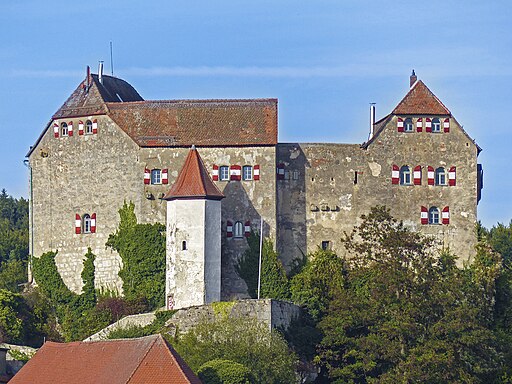
Perched dramatically on a towering rock formation above the village of Hiltpoltstein stands Burg Hiltpoltstein, one of the most striking historical landmarks of the Franconian Switzerland region. The castle dominates the skyline with a tall stone tower and remnants of fortified walls that rise directly from steep limestone cliffs. Its location alone makes it unforgettable; the structure seems almost fused with the rugged geology beneath it, giving the impression that the fortress grew naturally out of the rock rather than being constructed upon it.
The surrounding region of Upper Franconia is known for its picturesque valleys, forests, and rock formations created by ancient geological processes. Burg Hiltpoltstein’s elevated position offers sweeping views across this distinctive landscape, allowing observers to see far beyond the village below. In medieval times, such a vantage point held enormous strategic value. From this high position, defenders could monitor roads and valleys, communicate with neighboring settlements, and respond quickly to potential threats. The castle’s dramatic placement therefore reflects both defensive necessity and the symbolic display of authority.
Origins and Early History
The roots of Burg Hiltpoltstein reach back into the medieval period, when numerous small noble families established fortified residences throughout Franconia. The castle is closely associated with the Lords of Hiltpoltstein, a noble lineage that played a role in the local political landscape during the High Middle Ages. Their fortress served as both a residence and a center of regional administration, overseeing nearby lands and settlements.
During this era, castles functioned as hubs of feudal organization. From Burg Hiltpoltstein, local rulers would have supervised agricultural production, maintained alliances with neighboring powers, and enforced legal authority over surrounding territories. Life inside the castle walls involved far more than military readiness. Servants, craftsmen, guards, and administrative officials formed a community that supported the daily operations of the stronghold.
The castle’s position also placed it within the broader sphere of influence of powerful ecclesiastical territories such as the Bishopric of Bamberg. This relationship illustrates the complex political structure of medieval Franconia, where secular nobles and church authorities often shared or contested control over land and resources.
Architecture Shaped by the Rock
One of the most remarkable features of Burg Hiltpoltstein is the way its architecture integrates with the natural rock formations beneath it. The limestone cliff on which the castle stands provided both a foundation and a defensive advantage. Builders carefully adapted their construction to the irregular shape of the rock, resulting in a fortress layout that follows the contours of the terrain rather than imposing a strictly geometric plan.
The most recognizable element of the castle is its tall keep, which rises prominently above the surrounding village. This tower served multiple purposes: it functioned as a lookout point, a defensive refuge in times of siege, and a powerful symbol of noble authority. Thick stone walls and narrow openings ensured that attackers would find it extremely difficult to breach.
Around the tower once stood additional structures including residential buildings, defensive walls, and possibly a small courtyard area where everyday activities took place. Although many of these sections have not survived intact, the remaining ruins still convey the original scale and strength of the fortress. The rugged combination of masonry and natural rock gives the castle a raw, almost sculptural quality that distinguishes it from more symmetrical medieval fortresses.
Decline and Changing Functions
Like many medieval castles across Europe, Burg Hiltpoltstein eventually lost its military importance. As political structures evolved and new methods of warfare developed, hilltop fortresses were no longer essential for maintaining power. Economic changes and shifting administrative centers also contributed to the castle’s gradual decline.
Over the centuries, parts of the structure fell into ruin. Weathering, neglect, and the reuse of building materials in nearby settlements slowly altered the appearance of the fortress. Yet even in partial ruin, Burg Hiltpoltstein retained a powerful presence above the village. The towering remains of the keep continued to dominate the landscape, reminding residents of the region’s medieval past.
The romantic fascination with ruins that emerged in later centuries helped renew interest in preserving such historic sites. Rather than disappearing entirely, Burg Hiltpoltstein came to be valued for its historical significance and dramatic setting. Preservation efforts focused on stabilizing the remaining structures and ensuring that the castle’s distinctive silhouette would endure.
The Castle and the Village
The relationship between Burg Hiltpoltstein and the village below is central to the identity of the area. The settlement developed in the shadow of the fortress, and for centuries the castle influenced local life through governance, protection, and economic activity. Even after its decline as a residence, the castle remained an important visual and cultural symbol.
Today, the village of Hiltpoltstein is known for its peaceful atmosphere and scenic surroundings, with the castle forming a defining backdrop to everyday life. The narrow streets, traditional houses, and rural landscapes create a setting that feels deeply connected to history. Visitors arriving in the village immediately notice the towering rock and the castle ruins above it, a sight that evokes curiosity and admiration.
This close connection between settlement and fortress reflects a broader pattern in Franconian Switzerland, where castles often shaped the development of nearby communities. Burg Hiltpoltstein stands as a reminder of the historical structures that once governed and protected these rural regions.
A Destination for Modern Visitors
In modern times, Burg Hiltpoltstein has become an attractive destination for hikers, photographers, and history enthusiasts exploring Franconian Switzerland. The journey up to the castle offers a sense of adventure, as paths wind through rocky terrain and forested slopes before reaching the summit. The reward for the climb is a breathtaking panorama across the hills and valleys of Upper Franconia.
The ruins themselves invite exploration and imagination. Standing near the remaining tower or along the stone walls, visitors can picture what life might have been like centuries ago when the fortress was alive with activity. The wind moving across the rocky summit and the distant views of farmland and woodland create an atmosphere that blends history with the natural environment.
Beyond its historical value, the castle also contributes to regional tourism and cultural appreciation. It forms part of a network of castles and ruins scattered across Franconian Switzerland, each telling its own story about the medieval world that once shaped the landscape.
The Enduring Legacy of Burg Hiltpoltstein
Although time has transformed Burg Hiltpoltstein from a fully functioning fortress into a dramatic ruin, its significance has not faded. The castle continues to symbolize the resilience and historical depth of the Franconian region. Its towering keep, perched on a narrow rock column, remains one of the most recognizable sights in the surrounding countryside.
What makes Burg Hiltpoltstein particularly fascinating is the way it embodies the connection between human construction and natural terrain. The fortress could not exist in the same form anywhere else; its architecture is inseparable from the cliff that supports it. This relationship between stone and landscape gives the castle a unique character that distinguishes it among the many historic sites of Bavaria.
Today, Burg Hiltpoltstein stands as both a monument and a viewpoint into the past. It invites visitors to reflect on centuries of change while appreciating the beauty of the Franconian countryside that stretches in every direction from its lofty perch.
