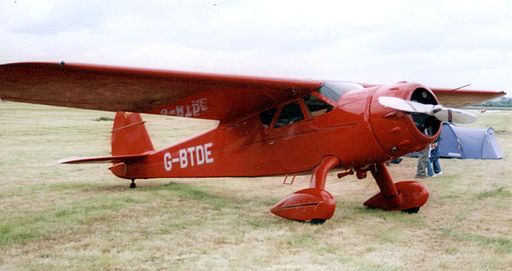
Cessna Airmaster
The Cessna Airmaster stands as an iconic symbol of aviation innovation from the Golden Age of Flight during the 1930s and 1940s. Introduced in 1935, the Airmaster exemplified Cessna’s commitment to producing reliable and versatile aircraft tailored for private and commercial aviation needs. Its distinctive high-wing monoplane design, coupled with sleek lines and streamlined features, captured the imagination of pilots and enthusiasts alike. The Airmaster series encompassed several variants, including the C-34, C-37, and C-38, each offering unique capabilities and enhancements while retaining the timeless elegance and performance synonymous with the Cessna brand.
Powered by a Continental W-670-6A seven-cylinder radial engine delivering 210 horsepower, the Cessna Airmaster boasted impressive performance metrics for its era. With a maximum speed of 190 mph and a cruising speed of 170 mph, the Airmaster swiftly traversed the skies with agility and grace. Its robust construction and rugged reliability made it well-suited for a variety of missions, including personal transportation, charter flights, and aerial photography. The Airmaster’s versatility extended to its spacious cabin, accommodating a pilot and three passengers comfortably, making it a popular choice for private owners and commercial operators seeking reliable air travel solutions.
Beyond its performance attributes, the Cessna Airmaster remains a cherished piece of aviation history, revered for its timeless design and enduring legacy. While production of the Airmaster ceased during World War II as Cessna shifted focus to military contracts, its contributions to general aviation endure through preservation efforts and enthusiast communities. Today, restored examples of the Cessna Airmaster grace the skies at airshows and fly-ins, serving as a nostalgic reminder of aviation’s pioneering spirit and Cessna’s role in shaping the landscape of modern flight.
Cessna Airmaster parameters
The Cessna Airmaster was a series of aircraft produced in the 1930s and early 1940s. There were several variants within the Airmaster series, including the C-34, C-37, and C-38. Here are the parameters for the Cessna Airmaster C-34, which was the initial model:
- General Characteristics:
- Crew: 1 pilot
- Capacity: 3 passengers
- Length: 24 ft 9 in (7.54 m)
- Wingspan: 34 ft 0 in (10.36 m)
- Height: 6 ft 10 in (2.08 m)
- Wing area: 184 sq ft (17.1 m²)
- Empty weight: 1,410 lb (640 kg)
- Gross weight: 2,400 lb (1,089 kg)
- Performance:
- Maximum speed: 190 mph (306 km/h)
- Cruise speed: 170 mph (274 km/h)
- Stall speed: 55 mph (89 km/h)
- Range: 730 miles (1,175 km)
- Service ceiling: 22,000 ft (6,705 m)
- Rate of climb: 1,200 ft/min (6.1 m/s)
- Powerplant:
- Engine: 1 × Continental W-670-6A seven-cylinder air-cooled radial piston engine
- Power output: 210 hp (157 kW) at 2,200 rpm
- Fuel Capacity:
- The Cessna Airmaster C-34 typically had a fuel capacity of around 42 US gallons (159 liters).
These parameters provide an overview of the Cessna Airmaster C-34’s specifications, showcasing its dimensions, performance capabilities, and powerplant specifications.
