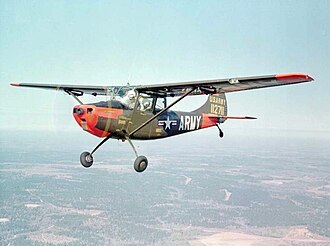
Cessna O-1 Bird Dog: The Legendary Military Observation Aircraft That Made a Difference in the Sky
The history of military aviation is filled with powerful fighter jets, sophisticated bombers, and advanced reconnaissance aircraft designed to dominate the skies. However, not every successful military aircraft needs impressive speed, heavy weapons, or complicated technology. Some of the most important contributions to aviation history have come from relatively small, simple, and versatile machines. One excellent example is the Cessna O-1 Bird Dog, a lightweight military observation and liaison aircraft that became an essential part of American military aviation during the Korean War and the Vietnam War.
Developed by the Cessna Aircraft Company, the O-1 Bird Dog was designed to perform missions that required excellent visibility, reliable communication, low-speed handling, and the ability to operate from relatively short and unimproved airfields. Unlike conventional combat aircraft, its primary purpose was not to destroy enemy aircraft or attack heavily defended installations. Instead, it provided military commanders with a valuable view of the battlefield, helped artillery units identify targets, coordinated air strikes, delivered messages, and supported troops operating far from established military facilities.
Although its appearance was relatively modest, the Bird Dog became one of the most recognizable light military aircraft of the Cold War era. Its high-mounted wings, fixed landing gear, large windows, and unmistakable single-engine configuration made it particularly suitable for observation duties. The aircraft also earned a reputation for reliability and versatility, serving with several military organizations and eventually finding a second life in civilian aviation.
The Cessna O-1 Bird Dog represents an important chapter in the development of military aviation because it demonstrated how a relatively inexpensive and uncomplicated aircraft could provide enormous operational value. Its history also illustrates the importance of aerial observation and communication in modern warfare, particularly during conflicts in which commanders needed accurate information about rapidly changing situations on the ground.
The Origins and Development of the Cessna O-1 Bird Dog
The Need for a New Military Observation Aircraft
The origins of the Cessna O-1 Bird Dog can be traced to the changing requirements of the United States military during the late 1940s. Following the Second World War, military aviation underwent enormous technological development. Jet-powered fighters, advanced radar systems, and increasingly sophisticated aircraft were transforming the way military forces operated. Nevertheless, the United States Army still needed a small and dependable aircraft capable of performing basic battlefield support missions.
During the Second World War, aircraft such as the Piper L-4 Grasshopper and Stinson L-5 Sentinel had demonstrated the usefulness of lightweight observation aircraft. These machines could operate relatively close to the front lines, identify enemy positions, direct artillery fire, transport personnel, and maintain communication between military units. Their effectiveness established that a small aircraft could provide capabilities that larger and faster aircraft could not easily reproduce.
However, military planners wanted a more modern replacement. The new aircraft needed a stronger construction, better performance, improved visibility, and sufficient flexibility to perform several different missions. It also had to be economical to operate and relatively easy to maintain in field conditions.
The Cessna Aircraft Company recognized this opportunity and developed a design based on its experience with civilian light aircraft. The resulting aircraft was derived from the company’s Model 170 family, incorporating a high-wing configuration and a practical cabin layout that could accommodate a pilot and an observer.
In 1949, the military requirement for a new observation and liaison aircraft led to the development of the design that would eventually become the L-19 Bird Dog. Following successful evaluation, the aircraft was selected in 1950 and entered production for the United States military. Its introduction marked an important step toward replacing older observation aircraft with a more modern all-metal platform.
Why Was It Called the Bird Dog?
The name Bird Dog was chosen to reflect the aircraft’s primary mission rather than its physical appearance. The nickname referred to hunting dogs that locate birds and help hunters identify their positions. In a similar way, the aircraft located enemy activity, observed battlefield movements, and helped ground forces identify targets.
This name was particularly appropriate because the aircraft was not intended to fight independently. Instead, it worked closely with soldiers, artillery crews, and other aircraft, providing information that allowed larger military units to perform their missions more effectively.
The nickname also reflected the aircraft’s relatively uncomplicated personality. It was dependable, practical, and capable of remaining over an area for extended periods while its crew searched the ground below.
Over time, the Bird Dog became more than just a military designation. It developed into a recognizable name associated with low-altitude observation, battlefield coordination, and the important role played by light aircraft in military operations.
Design and Construction of the Cessna O-1 Bird Dog
A Simple but Highly Effective Airframe
The Cessna O-1 Bird Dog was designed around practicality rather than technological sophistication. Its airframe featured an all-metal construction, a high-mounted wing, a conventional tail arrangement, and fixed landing gear. This configuration was particularly suitable for military operations because it provided good visibility, predictable handling characteristics, and relatively straightforward maintenance.
The aircraft’s high-wing design was one of its most important characteristics. By positioning the wings above the fuselage, Cessna provided the crew with a relatively unobstructed view of the surrounding terrain. This was especially valuable during observation missions, when pilots needed to identify roads, military vehicles, artillery positions, buildings, and troop movements.
The large cabin windows further improved visibility. The aircraft was designed to allow its crew to observe the ground from different angles without the restrictions commonly associated with more heavily enclosed military aircraft.
Its relatively compact dimensions also made the Bird Dog suitable for operations from small airfields. Military units did not always have access to long, paved runways, particularly when operating close to combat zones. The ability to use short and relatively primitive landing strips therefore represented an important operational advantage.
The landing gear was fixed rather than retractable, reducing mechanical complexity and making maintenance easier. Although this arrangement created additional aerodynamic drag, the aircraft was not designed to compete with high-performance fighters. Its mission required dependable handling and low-speed maneuverability rather than maximum aerodynamic efficiency.
Cockpit and Crew Arrangement
The O-1 Bird Dog normally carried two people: a pilot and an observer. The tandem seating arrangement placed one crew member behind the other, allowing both occupants to participate in the aircraft’s observation and communication duties.
The cockpit was designed to provide excellent visibility, which was particularly important when flying at relatively low altitudes over unfamiliar terrain. The large windows helped the crew maintain visual contact with the ground, while the aircraft’s relatively slow operating speed provided additional time to identify and evaluate potential targets.
The pilot was responsible for flying the aircraft, maintaining altitude, navigating, and ensuring that the mission could be completed safely. The observer could assist with identifying ground targets, recording information, operating communication equipment, and maintaining contact with military units.
The aircraft also featured dual controls in many configurations, making it suitable for training purposes. This capability helped military organizations use the same basic platform for operational duties and pilot instruction.
Communication equipment was another important part of the aircraft’s design. Depending on the variant and mission configuration, the Bird Dog could carry military radios that allowed its crew to communicate with ground forces, artillery batteries, command centers, and other aircraft.
Engine and Flight Performance
Continental O-470 Engine
The Cessna O-1 Bird Dog was powered by a Continental O-470-series six-cylinder, horizontally opposed, air-cooled piston engine. Many commonly documented military configurations used an engine rated at approximately 213 horsepower.
This engine provided sufficient power for the aircraft’s relatively lightweight construction and operational requirements. Rather than delivering exceptional acceleration or high-speed performance, it offered the reliability and endurance needed for extended observation missions.
The air-cooled configuration also helped keep the powerplant relatively straightforward. Without a liquid-cooling system, the aircraft avoided the additional radiators, coolant lines, and associated components found in liquid-cooled engines.
The engine drove a two-bladed propeller and provided the Bird Dog with enough performance to take off from short runways, climb to useful observation altitudes, and remain airborne for extended periods.
Maintenance simplicity was particularly important because the aircraft frequently operated in environments where access to specialized facilities was limited. Military maintenance personnel needed an aircraft that could be serviced without the extensive infrastructure required by more complicated combat platforms.
Speed, Range, and Endurance
The Bird Dog was never intended to be a fast aircraft. Its operational advantage came from its ability to fly slowly and remain in an assigned area while maintaining visual contact with the ground.
Depending on the variant and source of measurement, the aircraft’s maximum speed was approximately 130 to 150 mph, while cruising speeds were generally around 100 to 115 mph. Its published range was approximately 530 miles, making it suitable for a variety of regional observation and liaison missions.
Its service ceiling also varied depending on the particular configuration and published reference. Figures of approximately 18,500 to 20,300 feet are commonly associated with different O-1 specifications.
The aircraft’s ability to fly slowly was especially important during artillery spotting and forward air control missions. A faster aircraft might pass over a target area too quickly to provide detailed observation, whereas the Bird Dog could remain nearby and report developments as they occurred.
Its relatively modest fuel consumption and simple engine installation also made it economical compared with larger military aircraft.
Military Service and Operational History
The Korean War: The Bird Dog Enters Combat
The Korean War was the first major conflict in which the Bird Dog demonstrated its military value. Following its introduction into service in 1950, the aircraft began replacing older observation platforms and quickly became an important tool for Army and Marine Corps units.
The mountainous terrain and rapidly changing front lines of Korea created significant challenges for military commanders. Ground units needed accurate information about enemy positions, artillery activity, supply routes, and troop movements. Traditional observation methods were not always sufficient, particularly when terrain prevented direct visibility between military positions.
The Bird Dog provided an effective solution. Flying relatively close to the battlefield, it could observe enemy movements and transmit information to friendly forces. Its crew could help artillery units identify targets, report the results of bombardments, and maintain communication between separated military formations.
The aircraft also performed liaison duties, transporting personnel and messages between military installations. In emergencies, it could support casualty evacuation and other utility operations, depending on the circumstances and available equipment.
Its usefulness during the Korean War established the Bird Dog as an important component of American military aviation. The aircraft proved that a small, relatively inexpensive observation platform could perform a wide range of tasks in demanding operational environments.
The Vietnam War: A New Role as a Forward Air Controller
Although the Bird Dog had already established its reputation during the Korean War, its most famous operational chapter came during the Vietnam War.
The conflict in Southeast Asia presented a particularly difficult environment for aerial observation. Dense vegetation, mountainous terrain, small settlements, and extensive jungle areas made it challenging to identify enemy positions from the air. Ground forces also faced the possibility of ambushes and attacks from concealed positions.
The United States military needed aircraft that could operate at low altitude, observe the battlefield, and coordinate attacks by faster aircraft. The O-1 Bird Dog became one of the most important platforms used for this purpose.
Its crews frequently performed missions as Forward Air Controllers, commonly abbreviated as FACs. A Forward Air Controller was responsible for identifying targets, coordinating supporting aircraft, and helping ensure that air strikes were directed against the intended enemy positions.
The Bird Dog’s relatively slow speed and excellent visibility made it particularly suitable for this mission. Its pilot could fly over an assigned area, examine the terrain, identify possible targets, and communicate with ground commanders and incoming strike aircraft.
When a target was identified, the aircraft could use smoke rockets to mark its location. These markings helped fighter-bombers and attack aircraft identify the correct target, particularly when visibility was limited or the surrounding terrain made visual navigation difficult.
The Forward Air Controller also played an important role in maintaining communication during the attack. The crew could provide information about the target, coordinate the arrival of supporting aircraft, and report the results of the operation.
The Bird Dog was therefore much more than an observation aircraft. It became an important communication link between ground forces and tactical aviation.
Dangerous Missions at Low Altitude
Despite its usefulness, flying the O-1 Bird Dog during the Vietnam War was extremely dangerous.
The aircraft frequently operated at relatively low altitudes, sometimes directly above areas where enemy forces were present. Unlike fighter aircraft, it did not have substantial armor protection, and its fuel system lacked the protective features associated with more heavily designed combat aircraft.
Its slow speed also made it vulnerable to ground fire. Small-arms weapons could threaten the aircraft, especially when it was required to remain in the same general area while identifying targets or coordinating air strikes.
The Bird Dog’s limited payload and modest performance also created operational restrictions. It could not carry the weapons, armor, or sophisticated equipment available on larger aircraft.
Nevertheless, its ability to provide accurate information and maintain contact with ground forces often outweighed these limitations. Pilots accepted considerable risks because their work could directly influence the outcome of ground operations and help protect friendly personnel.
The aircraft’s Vietnam service remains one of the most important reasons for its historical significance. It demonstrated the enormous operational value of forward air control and helped establish procedures that influenced later military aviation.
Different Variants of the Cessna Bird Dog
The Bird Dog was produced in several versions during its military service. Although the different variants retained the same basic design, they incorporated modifications to improve performance, training capabilities, and mission flexibility.
L-19A: The Original Production Version
The L-19A was the first major production version of the Bird Dog. It entered service during the early 1950s and became the foundation for the aircraft’s widespread military use.
This version was employed for observation, artillery spotting, communication, liaison, and general military support. Its straightforward construction and reliable performance made it particularly attractive to military organizations that required large numbers of light utility aircraft.
The L-19A was produced in substantial numbers and helped establish the Bird Dog as a standard observation platform.
L-19C: An Improved Observation Aircraft
The L-19C was another important version of the aircraft, incorporating improvements intended to support its military operational requirements.
Like the earlier version, it retained the basic high-wing configuration and single-engine layout. Its continued use reflected the military’s confidence in the Bird Dog platform and its suitability for observation and liaison duties.
TO-1D: The Training Version
The TO-1D was developed for military pilot training. It incorporated modifications that made the aircraft more suitable for instructional purposes, including changes to the cockpit equipment and flight-control configuration.
Training versions allowed military organizations to prepare pilots using an aircraft that shared the handling characteristics and basic construction of the operational Bird Dog.
O-1A, O-1E, O-1F, and O-1G
In September 1962, the United States military introduced a standardized aircraft designation system, and the L-19 family received the O-1 designation.
The O-1A was associated with the original observation configuration, while other versions incorporated modifications for training, communications, and specialized operational requirements.
The O-1E was particularly important in later military service, while the O-1F and O-1G represented further configurations used for observation and forward air control missions.
These variants demonstrate how the basic Bird Dog design could be adapted to changing military requirements without requiring an entirely new aircraft.
Operators and International Service
Although the United States was the principal operator of the Bird Dog, the aircraft also served with several other countries.
Its relatively low operating costs, uncomplicated maintenance requirements, and useful performance made it attractive to military organizations that needed an affordable observation and liaison aircraft.
The aircraft was used by the United States Army, United States Air Force, and United States Marine Corps. It also served with allied forces and foreign military organizations, including countries that received aircraft through military assistance programs.
The South Vietnamese Air Force became an important operator during the Vietnam War. Bird Dogs were used for observation and forward air control missions, supporting the country’s military operations.
Other international operators included France, Canada, Japan, Italy, Norway, Spain, and several additional countries. Japan also received license-built aircraft manufactured by Fuji Heavy Industries.
The international service history of the Bird Dog demonstrates that its design was not limited to one particular military doctrine. It could be adapted to different operational environments and used for observation, communication, training, and general aviation support.
The Famous 1975 Landing on USS Midway
One of the most remarkable events associated with the Cessna O-1 Bird Dog occurred during the final days of the Vietnam War in April 1975.
During the evacuation of Saigon, South Vietnamese Air Force Major Bung-Ly escaped with his family aboard a small O-1 aircraft. His wife and five children were crowded into the aircraft’s limited cabin space as he searched for a safe place to land.
With fuel becoming critically limited, Major Bung-Ly spotted the American aircraft carrier USS Midway.
Landing a small conventional aircraft on an aircraft carrier was an extraordinary challenge. The Bird Dog had no arresting hook, and the carrier deck was designed primarily for naval aircraft equipped with specialized landing systems.
Major Bung-Ly dropped a handwritten message onto the carrier deck explaining his situation and requesting permission to land. The crew of the USS Midway understood the emergency and began clearing the flight deck.
Despite having no previous experience landing on an aircraft carrier, Major Bung-Ly successfully brought the Bird Dog aboard.
The landing became one of the most extraordinary aviation episodes associated with the evacuation of Vietnam. The aircraft and its story were subsequently preserved as an important part of naval aviation history.
The episode also highlighted the versatility of the Bird Dog. An aircraft originally designed for observation and military liaison had become the means by which an entire family escaped an increasingly dangerous situation.
The aircraft involved in this remarkable event was eventually transferred to the National Naval Aviation Museum, where it remains an important historical exhibit.
Why Was the Bird Dog Eventually Replaced?
Despite its successful service history, the Cessna O-1 Bird Dog eventually became less suitable for the changing requirements of modern military aviation.
By the late 1960s and early 1970s, the United States military was looking for aircraft that could perform forward air control missions with greater protection, improved performance, and more sophisticated equipment.
The Bird Dog had several inherent limitations. Its single-engine configuration offered limited redundancy, its relatively low speed made it vulnerable to enemy ground fire, and its small payload restricted the amount of equipment and mission stores it could carry.
As military technology advanced, these limitations became increasingly important.
Two aircraft were particularly significant in the Bird Dog’s replacement: the Cessna O-2 Skymaster and the North American OV-10 Bronco.
The O-2 offered a twin-engine configuration and greater capacity for mission equipment, while the OV-10 was designed specifically for counterinsurgency, observation, and forward air control operations. The Bronco provided improved performance, greater payload capacity, and a more capable operational platform.
These aircraft gradually took over many of the responsibilities previously performed by the Bird Dog.
Nevertheless, the replacement of the O-1 did not mean that its design had failed. On the contrary, the Bird Dog had fulfilled its original purpose remarkably well and had remained useful for decades.
Its eventual retirement reflected the changing demands of military aviation rather than a fundamental weakness in the original concept.
Civilian Aviation and the Preservation of the Bird Dog
Following its military service, many surplus Bird Dogs entered civilian ownership. Their straightforward construction, useful low-speed handling, and relatively economical operating characteristics made them attractive to private pilots and aviation enthusiasts.
Some aircraft were converted into civilian Cessna 305 configurations, while others retained their military appearance and became popular warbirds.
Civilian operators have used the Bird Dog for recreational flying, aircraft restoration projects, historical demonstrations, and various utility activities. Its excellent visibility and relatively forgiving handling characteristics have also helped maintain interest in the aircraft among experienced aviation enthusiasts.
Today, surviving examples can be found in private collections, aviation museums, and historic aircraft organizations.
Restoration projects often focus on preserving the aircraft’s original military configuration, including its distinctive paint schemes, markings, cockpit equipment, and communication installations.
The Bird Dog is particularly appreciated by aviation enthusiasts because it represents an era when relatively simple aircraft performed essential military duties. It also provides an opportunity to experience the flying characteristics of a historic observation aircraft without the complexity associated with larger military platforms.
The Historical Importance of the Cessna O-1 Bird Dog
The Cessna O-1 Bird Dog occupies an important position in aviation history because it demonstrated how observation and communication could influence military operations.
Modern military aviation often focuses on advanced radar, satellite navigation, unmanned aerial vehicles, and sophisticated electronic surveillance systems. However, the basic requirement to identify targets, understand battlefield conditions, and communicate accurate information has remained unchanged.
The Bird Dog helped establish the importance of dedicated forward air control aircraft and demonstrated the value of close cooperation between pilots and ground forces.
Its success also influenced the development of later observation and battlefield support aircraft. The lessons learned from operating the O-1 helped demonstrate the importance of visibility, endurance, communication equipment, and mission flexibility.
Although the Bird Dog was relatively slow and lightly equipped, it provided capabilities that were difficult to replace with conventional fighter aircraft.
Its history is also a reminder that technological sophistication does not always determine an aircraft’s usefulness. A carefully designed aircraft that performs a specific mission reliably can be just as important as a much larger and more powerful machine.
Conclusion
The Cessna O-1 Bird Dog was one of the most successful light military observation aircraft of the Cold War period. Developed to replace older liaison aircraft, it quickly established itself as a dependable platform for artillery spotting, reconnaissance, communications, medical support, and pilot training.
Its service during the Korean War demonstrated the importance of aerial observation in battlefield operations, while its extensive use during the Vietnam War established its reputation as a valuable forward air control aircraft.
The Bird Dog’s simple construction, excellent visibility, reliable Continental engine, and ability to operate from relatively short airfields made it particularly effective in environments where larger aircraft were less practical. Although its lack of armor and limited payload eventually encouraged the development of more capable replacements, its contribution to military aviation remained significant.
The extraordinary 1975 landing aboard USS Midway further cemented its place in aviation history, providing a remarkable example of how a small aircraft could become part of an unforgettable human story.
Even decades after its military retirement, the Cessna O-1 Bird Dog continues to attract attention from aviation historians, collectors, and enthusiasts. Its legacy is not based on speed records or advanced weapon systems, but on reliability, versatility, and the important missions it performed throughout its long operational career.
The Bird Dog remains a powerful example of how a relatively simple aircraft can make an extraordinary contribution to aviation and military history.
Cessna O-1 Bird Dog: Technical Specifications
The following table summarizes commonly published specifications for the Cessna O-1 Bird Dog family. Exact figures vary between versions, equipment configurations, and historical references. The values below represent a general overview rather than the specifications of every individual variant.
| Technical specification | Details |
|---|---|
| Aircraft name | Cessna O-1 Bird Dog |
| Original military designation | L-19 |
| Manufacturer | Cessna Aircraft Company |
| Country of origin | United States |
| Aircraft category | Military observation and liaison aircraft |
| First flight | 1949 |
| Introduction into service | 1950 |
| Crew | 2 (pilot and observer) |
| Engine manufacturer | Continental |
| Engine type | O-470-series, six-cylinder, air-cooled, horizontally opposed piston engine |
| Engine power | Approximately 213 hp (159 kW) |
| Propeller | Two-bladed propeller |
| Configuration | High-wing monoplane |
| Construction | All-metal airframe |
| Landing gear | Fixed tricycle? No — conventional tailwheel landing gear |
| Length | Approximately 25 ft 10 in (7.87 m) |
| Wingspan | Approximately 36 ft (10.97 m) |
| Height | Approximately 7 ft 4 in to 9 ft 2 in, depending on variant and measurement reference |
| Wing area | Approximately 174 sq ft (16.2 m²) |
| Empty weight | Approximately 1,400–1,614 lb (635–732 kg) |
| Maximum gross weight | Approximately 2,400–2,430 lb (1,089–1,102 kg) |
| Maximum speed | Approximately 130–150 mph (209–241 km/h), depending on variant |
| Cruising speed | Approximately 104–115 mph (167–185 km/h) |
| Range | Approximately 530 miles (853 km) |
| Service ceiling | Approximately 18,500–20,300 ft (5,639–6,187 m) |
| Primary missions | Observation, reconnaissance, artillery spotting, liaison, forward air control, communications, and training |
| Typical armament | Generally unarmed; some configurations carried smoke rockets and other mission stores |
| Major conflicts | Korean War and Vietnam War |
| Important replacements | Cessna O-2 Skymaster and North American OV-10 Bronco |
| Civilian designation | Cessna 305 |
Technical note: The Bird Dog was produced in several variants, and published specifications are not always identical. In particular, maximum speed, empty weight, height, and service ceiling can differ depending on the specific model and installed equipment. The table therefore provides representative family-level figures rather than a single certified specification sheet.
