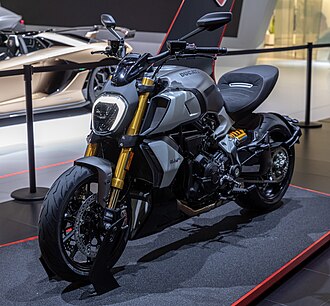
Ducati Diavel: The Bold Italian Muscle Bike That Defies Convention
The Ducati Diavel has always been a motorcycle that refuses to fit neatly into a single category. It has the muscular proportions of a power cruiser, the performance of a high-end naked motorcycle and the engineering sophistication of a Ducati superbike. Rather than choosing one established formula, Ducati combined elements from several different motorcycle genres and created something distinctly its own. The latest Diavel V4 takes that philosophy even further, replacing the previous generation’s V-twin with Ducati’s 1,158 cc V4 Granturismo engine while preserving the broad rear tire, low seat, aggressive styling and dramatic road presence that have defined the Diavel since its introduction. The current Diavel V4 produces 168 hp at 10,750 rpm and 126 Nm of torque at 7,500 rpm, figures that place it firmly in the high-performance category despite its relaxed-looking riding position.
The Diavel is fascinating because its appeal cannot be explained by performance figures alone. Plenty of motorcycles are faster, lighter or more focused, while numerous cruisers offer a more traditional relaxed riding experience. The Diavel occupies the space between those worlds. Its low 790 mm seat height suggests accessibility, but the 168-horsepower V4 suggests something much more aggressive. Its enormous 240-section rear tire looks like it belongs on a drag strip, yet the motorcycle uses a sophisticated aluminum monocoque chassis, fully adjustable suspension and Brembo Stylema brakes. Ducati has therefore created a motorcycle that is both extravagant and technically serious. It is designed to make an impression when parked outside a café, but it is equally capable of delivering astonishing acceleration when the road opens up.
The Birth of the Ducati Diavel
A Motorcycle Without a Traditional Category
When Ducati introduced the Diavel, the motorcycle immediately stood apart from conventional Ducati models. Instead of following the established superbike or naked-bike formula, the Diavel embraced a muscular silhouette, a low seat and a substantial rear tire. The proportions were dramatic, with a relatively compact upper body contrasting against a broad rear section and exposed mechanical components.
The concept was unusual for Ducati because the company had historically been associated with lightweight sporting motorcycles. The Diavel demonstrated that Ducati could apply its performance engineering to a motorcycle intended to provide a different kind of experience. Rather than requiring the rider to crouch behind a fairing, the Diavel offered a more commanding riding position and a visual sense of strength.
That original concept has survived through several generations. The Diavel evolved through increasingly sophisticated engines and chassis systems, eventually reaching the Diavel 1260 before Ducati made its most significant change yet: replacing the V-twin with the V4 Granturismo.
From V-Twin to V4
The transition from the Diavel 1260 to the Diavel V4 represented more than an increase in cylinder count. Ducati redesigned the motorcycle around the much lighter and more compact V4 Granturismo engine. When the Diavel V4 was unveiled, Ducati emphasized improvements in performance, smoothness, weight and overall riding dynamics. The V4 engine is derived from the technological family used in Ducati’s high-performance V4 motorcycles, but it has been specifically adapted for the Diavel’s muscle-cruiser character.
The result is a motorcycle that feels unmistakably Diavel while having a substantially different mechanical personality. Instead of the deep pulse and immediate character associated with a large Ducati twin, the V4 delivers a smoother and more progressive power delivery while retaining a distinctive exhaust note. Ducati’s Twin Pulse firing order and cylinder-deactivation technology also give the engine a fascinating acoustic character.
The 1,158 cc V4 Granturismo Engine
Power With Smoothness
At the heart of the Diavel V4 is Ducati’s V4 Granturismo engine. It is a 90-degree V4 with a 1,158 cc displacement, 83 mm bore and 53.5 mm stroke. The compression ratio is 14.0:1, while maximum output reaches 168 hp at 10,750 rpm and peak torque is 126 Nm at 7,500 rpm. The engine uses four valves per cylinder, liquid cooling, electronic fuel injection and ride-by-wire throttle control.
Those numbers would be impressive in almost any motorcycle, but they become particularly striking in the Diavel because of its physical appearance. This is not a small, lightweight streetfighter with aggressive bodywork. It is a substantial machine with a long wheelbase, broad rear tire and low seat. The V4 therefore gives the Diavel a fascinating dual personality: it can cruise comfortably at moderate speeds, but a twist of the throttle can transform it into an extremely rapid performance machine.
Ducati deliberately tuned the Granturismo engine for smoothness and strong torque throughout the rev range. This is important because the Diavel is not intended to be ridden exclusively at high rpm. A motorcycle of this type needs strong response when accelerating from corners, overtaking traffic or simply enjoying a short burst of acceleration on an open road.
Counter-Rotating Crankshaft
One of the technically interesting features of the V4 Granturismo is its counter-rotating crankshaft. Rather than rotating in the same direction as the wheels, the crankshaft rotates in the opposite direction. Ducati uses this arrangement to reduce gyroscopic effects and improve the motorcycle’s agility.
This is an important engineering detail because the Diavel’s visual proportions could suggest a motorcycle that is difficult to maneuver. In reality, Ducati has worked extensively to make the motorcycle more responsive than its imposing appearance might imply. The counter-rotating crankshaft is one part of that equation, working alongside the chassis geometry, suspension and weight distribution.
The result is a machine that can be leaned and turned with considerably more confidence than its cruiser-inspired appearance might suggest. It does not suddenly become a lightweight supersport, but it avoids the sluggishness sometimes associated with large muscle motorcycles.
Extended Cylinder Deactivation
Another unusual feature of the Granturismo engine is its extended cylinder-deactivation system. At low engine speeds and under reduced loads, the rear cylinder bank can be deactivated, allowing the V4 to operate effectively as a twin-cylinder engine. As demand increases, all four cylinders return to operation. Ducati says the transition is designed to be gradual and nearly imperceptible to the rider.
This technology serves several purposes. It can improve fuel efficiency and reduce emissions during low-load operation, while also changing the sound and character of the engine. When operating with only the front cylinders active, the exhaust note becomes deeper; when all four cylinders are operating, the engine develops the higher-frequency character associated with the full V4.
It is an excellent example of how modern motorcycle engineering can combine efficiency with emotional appeal. The technology is not simply about meeting regulations—it also contributes to the unusual character of the motorcycle.
Chassis and Handling
Aluminum Monocoque Construction
Despite its cruiser-inspired appearance, the Diavel V4 uses an aluminum monocoque frame. This construction method allows Ducati to integrate the engine into the structural design of the motorcycle while keeping the chassis relatively compact. The motorcycle also uses a single-sided aluminum swingarm, which contributes both to its technical sophistication and its distinctive appearance.
The Diavel V4 has a 1,593 mm wheelbase, a 26-degree rake and 112 mm of trail. These dimensions provide the stability expected from a large muscle motorcycle while retaining a reasonable degree of agility. Ducati lists the motorcycle at 223 kg in running condition without fuel, a substantial figure but notably lower than the previous generation’s weight.
The combination of low seat height and substantial chassis dimensions creates a distinctive riding experience. The rider sits relatively low in the motorcycle but maintains a commanding view of the road. The handlebars are positioned to provide leverage without forcing the rider into an extreme posture, while the central footpeg position helps keep the motorcycle’s ergonomics more sporting than those of a traditional cruiser.
Fully Adjustable Suspension
The Diavel V4 uses a fully adjustable 50 mm upside-down front fork and a fully adjustable rear monoshock. The front suspension provides 120 mm of travel, while the rear offers 145 mm.
This suspension specification demonstrates Ducati’s intentions for the motorcycle. The Diavel is not simply designed to glide along straight roads. It has been engineered to cope with aggressive acceleration, braking and cornering. Suspension adjustability also allows owners to tailor the motorcycle to different loads and riding preferences.
For a machine this powerful, suspension control is crucial. The motorcycle must remain stable when the V4 delivers its strongest torque, while also providing enough compliance to deal with imperfect roads. The Diavel’s combination of substantial suspension travel and performance-oriented components gives it a broader range of capabilities than its appearance initially suggests.
The Famous 240-Section Rear Tire
A Defining Visual Feature
Few aspects of the Diavel are more recognizable than its huge 240/45 rear tire. The massive rear rubber gives the motorcycle its distinctive stance and immediately communicates that this is not an ordinary naked bike. Ducati has retained the wide tire through the transition to the V4 because it is an important part of the Diavel’s visual identity.
The rear wheel uses a 240/45 ZR17 Pirelli Diablo Rosso III tire, while the front uses a 120/70 ZR17. The combination provides the motorcycle with a broad contact patch at the rear and contributes to its imposing proportions.
Yet the wide tire is not merely decorative. Ducati has developed the chassis geometry and suspension around it so that the motorcycle remains manageable. The Diavel therefore manages an unusual balancing act: it looks enormous from behind but can still be ridden with surprising confidence through corners.
Braking Performance
Brembo Stylema Calipers
The Diavel V4’s braking system is closer to a performance motorcycle than a traditional cruiser. At the front are two 330 mm semi-floating discs with radially mounted Brembo Stylema four-piston monobloc calipers. A 265 mm rear disc with a Brembo two-piston caliper handles rear braking duties. Cornering ABS is integrated into the electronic system.
The braking hardware is significant because the Diavel’s acceleration can quickly produce high speeds. A motorcycle capable of reaching 100 km/h from rest in less than three seconds needs equally serious braking performance. Ducati specifically highlights the motorcycle’s ability to achieve extremely high deceleration levels, aided by the sophisticated calibration of its ABS system.
This combination gives the Diavel a much sportier braking character than its cruiser styling might suggest. The rider can approach corners with confidence, apply significant braking force and then transition into the turn without the motorcycle feeling like a reluctant participant.
Electronics and Rider Assistance
Modern Ducati Technology
The Diavel V4 includes an extensive electronic package built around a six-axis inertial measurement unit. Ducati lists Cornering ABS, Ducati Traction Control, Ducati Wheelie Control, Ducati Power Launch and Ducati Quick Shift as part of the motorcycle’s technology package. Cruise control is also standard.
These systems are particularly useful on a motorcycle with 168 hp and 126 Nm of torque. Traction control can help manage rear-wheel slip during aggressive acceleration, while wheelie control helps keep the front wheel under control when the V4 produces its strongest thrust. Power Launch is designed for controlled hard acceleration from a standstill, while the quick shifter allows rapid gear changes without conventional clutch operation.
The Diavel also offers four riding modes—Sport, Touring, Urban and Wet—alongside three power modes. This gives the rider considerable flexibility in how the motorcycle responds. A relaxed touring ride can therefore feel substantially different from an aggressive sporting session.
Design: Muscular, Sporty and Elegant
The Diavel’s Visual Identity
The Diavel has always been a motorcycle that demands attention, and the V4 generation intensifies that effect. Ducati describes the design language as muscular, sporty, exaggerated and elegant, a combination that captures the motorcycle’s unusual position between naked sportbike and muscle cruiser.
The front lighting signature is particularly distinctive. The motorcycle uses an Omega-shaped daytime running light, while the rear features a matrix of LED points positioned underneath the tail. The turn signals are integrated into the handlebar area, creating a clean and futuristic appearance.
The four-exit exhaust system is another visual and acoustic highlight. Rather than hiding the exhaust beneath the motorcycle, Ducati makes it part of the design. The result is a motorcycle whose mechanical hardware remains visible and contributes directly to its identity.
A Low Seat With a Commanding Position
The Diavel V4’s 790 mm seat height is relatively low for a motorcycle with this level of performance. The low seat makes it easier for many riders to reach the ground, while the relatively upright ergonomics provide a strong sense of control. Ducati also moved the handlebar approximately 20 mm closer compared with the Diavel 1260, improving maneuverability and comfort.
This combination is central to the Diavel’s appeal. It looks aggressive but does not require an extreme riding position. The rider can sit comfortably for longer journeys while still having the leverage and body position needed to enjoy winding roads.
Touring and Everyday Practicality
More Than a Weekend Muscle Bike
Despite its performance credentials, the Diavel V4 is not limited to short blasts. Ducati has equipped it with cruise control, passenger equipment and a 20-liter fuel tank, giving the motorcycle genuine long-distance potential. The passenger seat and footrests can be integrated into the design when needed, while Ducati offers additional accessories for riders who want to emphasize touring capability.
The 5-inch TFT display provides the rider with essential information and Bluetooth connectivity, while optional turn-by-turn navigation can make longer journeys easier. These features help distinguish the Diavel from a pure performance machine.
It is therefore possible to imagine several different types of ownership. One rider might use the Diavel primarily as a dramatic weekend motorcycle, while another could use it for long-distance touring and daily riding. The motorcycle’s combination of comfort, performance and technology gives it a wider range of uses than its extreme appearance suggests.
Why the Ducati Diavel Is So Special
A Motorcycle Built Around Contrasts
The Diavel’s greatest strength is its ability to combine contradictions. It is large but agile, powerful but approachable, aggressive but comfortable, technologically advanced but visually mechanical. The motorcycle does not attempt to resolve these contradictions by becoming ordinary. Instead, Ducati makes them central to the Diavel’s identity.
The V4 engine is perhaps the clearest example. It provides the smoothness and high-rpm performance associated with a four-cylinder engine, yet the cylinder-deactivation system gives it a different sound and character at low load. The counter-rotating crankshaft contributes to agility, while the enormous rear tire preserves the muscle-bike appearance.
Even the riding position follows this philosophy. The 790 mm seat height suggests a cruiser, but the central footpegs and wide handlebar provide an athletic stance. The result is a motorcycle that can be ridden comfortably but still encourages enthusiastic riding.
Ducati Diavel V4 Technical Specifications
The following table summarizes the principal technical specifications of the current Ducati Diavel V4. Ducati notes that equipment and specifications can vary between markets, so local versions should always be checked for exact homologation details.
| Specification | Ducati Diavel V4 |
|---|---|
| Engine | V4 Granturismo, 90° V4 |
| Cooling | Liquid-cooled |
| Valve system | 4 valves per cylinder |
| Crankshaft | Counter-rotating |
| Firing order | Twin Pulse |
| Displacement | 1,158 cc |
| Bore × stroke | 83 × 53.5 mm |
| Compression ratio | 14.0:1 |
| Maximum power | 168 hp @ 10,750 rpm |
| Maximum torque | 126 Nm @ 7,500 rpm |
| Fuel system | Electronic injection, 46 mm elliptical throttle bodies |
| Throttle | Ride-by-wire |
| Transmission | 6-speed |
| Quick shifter | Ducati Quick Shift up/down |
| Clutch | Wet multiplate slipper/self-servo clutch |
| Frame | Aluminum monocoque |
| Front suspension | Fully adjustable 50 mm upside-down fork |
| Rear suspension | Fully adjustable monoshock |
| Front brakes | Twin 330 mm discs, Brembo Stylema 4-piston calipers |
| Rear brake | 265 mm disc, Brembo 2-piston caliper |
| Front tire | 120/70 ZR17 |
| Rear tire | 240/45 ZR17 |
| Wheelbase | 1,593 mm |
| Rake | 26° |
| Trail | 112 mm |
| Seat height | 790 mm |
| Fuel capacity | 20 litres |
| Weight without fuel | 223 kg |
| Display | 5-inch TFT color display |
| Riding modes | Sport, Touring, Urban, Wet |
| Power modes | 3 |
| Electronics | Cornering ABS, DTC, DWC, DPL, DQS, cruise control |
Final Verdict
The Ducati Diavel is difficult to compare directly with almost any other motorcycle because its identity is built around crossing boundaries. It looks like a muscle cruiser, accelerates like a superbike and handles with considerably more agility than its size suggests. The latest Diavel V4 makes this formula even more compelling by combining Ducati’s 1,158 cc V4 Granturismo engine with an aluminum monocoque chassis, fully adjustable suspension, Brembo Stylema brakes and an extensive electronic package.
Its 168 hp and 126 Nm are impressive, but the numbers only tell part of the story. The real magic of the Diavel comes from the way those numbers are delivered. The V4 is smooth and flexible at lower speeds, yet explosive when the throttle is opened. The counter-rotating crankshaft helps reduce gyroscopic effects, while the chassis and suspension allow the motorcycle to change direction with surprising confidence. The enormous 240-section rear tire gives the Diavel its unmistakable stance without preventing it from being a genuinely capable performance motorcycle.
The motorcycle also succeeds because Ducati has not forgotten practicality. A 790 mm seat height, 20-liter fuel tank, cruise control, passenger equipment and touring-oriented riding mode make the Diavel usable beyond short weekend rides. At the same time, the Brembo brakes, quick shifter, traction control, wheelie control and launch control ensure that the motorcycle retains a serious sporting character.
Perhaps the most important achievement of the Diavel is that it has developed a personality of its own. It is not simply a cruiser with a powerful engine, nor is it merely a naked sportbike wearing different clothes. It is a distinct Ducati category: a muscular, technologically sophisticated road motorcycle designed for riders who want performance without sacrificing comfort or individuality.
For anyone looking for a motorcycle that can turn heads while parked, deliver breathtaking acceleration when the road opens and remain comfortable enough for a long ride, the Ducati Diavel V4 is an unusually convincing proposition. It is bold by design, excessive by nature and technically sophisticated underneath the dramatic styling. Most importantly, it remains true to the fundamental Diavel idea: build a motorcycle that refuses to be defined by conventional categories.
.jpg)