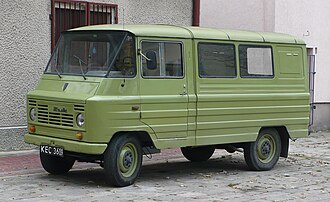
FSC Żuk: The Polish Workhorse That Became an Automotive Legend
The FSC Żuk is one of those vehicles that means far more than its technical specifications might suggest. To many people, it is not simply an old Polish delivery van but a symbol of everyday life in the Polish People’s Republic, a familiar shape from city streets, village roads, construction sites, fire stations, bakeries and state-owned enterprises. Built by Fabryka Samochodów Ciężarowych (FSC) in Lublin, the Żuk was produced from 1959 until 1998 and became one of the longest-lived Polish commercial vehicles. During its production run, hundreds of thousands of examples were manufactured, with the final vehicle leaving the factory on 13 February 1998.
What makes the Żuk particularly interesting is the way its relatively simple engineering was adapted to an extraordinary number of jobs. There were panel vans, pickups, flatbeds, crew-cab versions, minibuses and specialist fire engines, while individual vehicles could be modified even further by their operators. Its mechanical relationship with the FSO Warszawa gave the designers a practical starting point and made the vehicle relatively straightforward to maintain, while its ladder-frame construction and rear-wheel drive suited the poor roads and demanding working conditions of the period.
The Origins of the FSC Żuk
From the Warszawa to a New Commercial Vehicle
The story of the Żuk begins in the second half of the 1950s, when Poland urgently needed practical vehicles capable of transporting goods and people. FSC’s design team, led by engineers including Stanisław Tański and Roman Skwarek, developed a light commercial vehicle using many components already associated with the Warszawa passenger car. This approach was not glamorous, but it was highly logical: using existing mechanical components reduced development costs, simplified production and meant that mechanics could work with familiar technology.
The first prototype, the A03 pickup, was presented in 1958, followed by a small trial series. Series production began on 24 July 1959. From the beginning, the Żuk was conceived as a working vehicle rather than a luxury automobile. Its mission was simple: carry people, tools, food, parcels and equipment wherever they were needed. The design consequently placed durability, simplicity and versatility ahead of refinement or high-speed performance.
The early Żuk used the M-20 four-cylinder petrol engine derived from the Warszawa. This side-valve unit was already based on technology whose origins lay in the GAZ M20 Pobeda, meaning that the Żuk was technologically conservative even when new. Yet this apparent weakness became one of its strengths in real-world service. The mechanical design was relatively easy to understand, repair and adapt, which was especially valuable when replacement parts or sophisticated diagnostic equipment were not readily available.
The Evolution of the Żuk
The Important S-21 Engine
One of the most significant developments came in the 1960s with the introduction of the S-21 overhead-valve petrol engine. Producing around 70 hp, the S-21 represented a substantial improvement over the earlier M-20 and became the characteristic power unit of many later Żuks. By 1966, the S-21 had replaced the older engine in regular production, giving the vehicle better performance while retaining the straightforward mechanical philosophy that defined the model.
The additional power was particularly useful because the Żuk was expected to carry heavy loads. Some versions approached a one-ton payload, and the vehicle was frequently used well beyond the conditions that would be considered normal for a modern light commercial vehicle. A Żuk might be loaded with building materials in the morning, used to transport workers during the afternoon and then pressed into another specialist role the following day.
The A07 and the More Modern Żuk
The A07, introduced in 1970, became one of the best-known Żuk variants. It combined cargo-carrying ability with passenger accommodation and was commonly known as the “towos,” a contraction describing its combined passenger-and-cargo role. The vehicle could carry up to seven people together with approximately 350 kg of luggage or cargo.
The 1970 modernization also brought a more angular front-end design and improvements to the interior and controls. Later updates included a redesigned driver’s cabin in 1973, while a dual-circuit braking system with assistance was introduced in 1974. These changes were incremental rather than revolutionary, but they allowed the Żuk to remain useful as competitors became increasingly sophisticated.
A Żuk for Almost Every Job
Pickup and Flatbed Versions
The Żuk was never limited to one body style. The early A03 was a pickup, while later A09 and A11 models provided flatbed configurations with wooden cargo bodies. The A11, in particular, became a familiar sight among tradesmen, agricultural users and public-sector organizations. Its open cargo area made it suitable for materials that were awkward to transport inside a conventional van.
A particularly important feature of these versions was the combination of a relatively compact overall size with a useful cargo area. The Żuk was not a large truck, but its chassis allowed it to perform many duties that would otherwise have required a considerably larger vehicle.
The Fire-Fighting Żuk
Perhaps the most visually memorable specialist version was the fire engine. The A15 was developed for the domestic fire service, while related versions such as the A14 and A151 served different requirements. These vehicles could carry firefighting equipment, hoses, ladders and portable pumps, transforming the humble commercial chassis into a compact emergency vehicle.
The fire-fighting variants demonstrate one of the central qualities of the Żuk: its chassis was sufficiently adaptable to become a platform for specialist equipment. A vehicle that began life as a simple delivery van could therefore become an essential part of a rural fire brigade’s infrastructure.
Minibuses and Crew Cab Versions
The range eventually expanded beyond conventional goods transport. In 1972, the A18 minibus was introduced, providing seating for a larger group of passengers. Other configurations included extended-cab vehicles designed to transport crews while retaining a smaller cargo area. These versions made the Żuk useful for agricultural operations, repair teams, municipal services and other occupations where people and equipment needed to travel together.
The Diesel Era
Andoria 4C90
For many years, petrol power was the only realistic option for Żuk operators, but fuel economy became increasingly important as the vehicle aged and economic conditions changed. In 1988, FSC added the Andoria 4C90 diesel engine, a naturally aspirated four-cylinder unit with a displacement of 2,417 cm³ and approximately 70 hp.
The diesel did not transform the Żuk into a modern commercial vehicle, but it addressed one of the fundamental weaknesses of the petrol-powered versions: fuel consumption. Contemporary descriptions commonly put petrol Żuk consumption at around 14 litres per 100 km, although actual consumption varied considerably with engine condition, load, driving style and body configuration.
The 4C90 also gave the Żuk a final technical chapter. By the late 1980s and early 1990s, however, the underlying architecture of the vehicle was becoming increasingly difficult to disguise as modern competition improved.
Why Was the Żuk Produced for So Long?
A Vehicle That Refused to Disappear
The most remarkable aspect of the Żuk may not be any individual technical feature but its longevity. The vehicle remained in production for almost four decades. Attempts were made to find a successor or obtain foreign technology, including discussions concerning Bedford and other commercial vehicles, but these efforts did not immediately produce a replacement. Consequently, the Żuk continued to evolve through incremental modifications rather than being replaced by an entirely new design.
This longevity tells us something important about the economic environment in which the Żuk operated. In a market with limited access to new Western commercial vehicles, a familiar and repairable domestic van could remain valuable long after its engineering had ceased to be competitive internationally. Businesses, farms, municipalities and public institutions often cared more about whether a vehicle could be kept running than whether it offered the latest technology.
The Żuk Beyond Poland
The Żuk was not exclusively a Polish phenomenon. It was exported to various countries and was even assembled in Egypt beginning in 1970. There, vehicles were produced by ELTRAMCO under the name Ramzes, using components supplied from Poland. Production and adaptation continued for years, demonstrating that the basic concept could work outside the Polish market as well.
Its international career was never comparable with that of major Western manufacturers, but it illustrates the practical appeal of the design. The Żuk was relatively uncomplicated, mechanically conventional and capable of being adapted to different operating conditions. Those qualities mattered considerably in markets where simplicity and serviceability could outweigh refinement.
The Strengths and Weaknesses of the FSC Żuk
Why Owners Loved It
The Żuk’s greatest strengths were its simplicity, versatility and repairability. The use of familiar Warszawa-derived mechanical components meant that mechanics could often diagnose problems without specialized equipment. Its body styles covered an unusually broad range of applications, while the ladder-frame construction provided a sturdy basis for commercial work.
The vehicle was also surprisingly adaptable. A standard chassis could become a delivery van, pickup, passenger-carrying vehicle, fire engine or specialist utility vehicle. That flexibility helped explain why the Żuk remained useful for so many years.
Where the Design Showed Its Age
The weaknesses were equally obvious. Performance was modest, fuel consumption could be high, driving comfort was limited and the basic architecture was rooted in technology developed decades earlier. By the 1980s and especially the 1990s, Western vans offered better ergonomics, improved safety, more efficient engines, greater comfort and substantially more sophisticated chassis engineering.
Rust was another major concern for surviving examples. Decades of hard commercial use, exposure to weather and often inadequate maintenance meant that body corrosion became a defining problem for many Żuks. Consequently, a surviving vehicle with a solid body and original components can be considerably more interesting to collectors than an example that has undergone a poorly executed restoration.
The End of Production
The Żuk finally reached the end of the road on 13 February 1998. By then, the market had changed dramatically. Used Western vans were increasingly available, while FSC had already introduced the Lublin as a more modern successor from 1993. The Żuk could no longer compete effectively with newer commercial vehicles, despite its enormous historical importance.
Sources differ slightly in how they report the total production figure, with commonly cited figures around 587,500 vehicles and historical records indicating a final serial number of 587,818. In either case, the scale of production is remarkable. The Żuk was manufactured in hundreds of thousands of examples and became one of the defining commercial vehicles of post-war Poland.
FSC Żuk as a Classic Today
Today, the Żuk occupies an unusual position among classic vehicles. It was never designed to be glamorous, fast or luxurious, yet precisely because of that, it has become an important piece of industrial and social history. A restored A07 can evoke the appearance of a Polish business or cooperative from the 1970s, while an A15 fire engine recalls the equipment used by generations of local fire brigades. An A11 pickup tells a different story, connected with agriculture, construction and small-scale trade.
For collectors, originality can be especially valuable. The appeal is not merely the shape of the body but the complete atmosphere of the vehicle: the simple dashboard, thin metal bodywork, utilitarian cabin, large steering wheel and unmistakable mechanical character. Driving one today is a very different experience from driving a modern van, and that contrast is precisely what makes the Żuk fascinating.
Technical Specifications of the FSC Żuk
The following figures should be treated as representative rather than universal because the Żuk was produced in numerous configurations over almost four decades. Dimensions, payload, engine and body details varied between versions and production periods. The commonly quoted specifications for later S-21-powered vans provide a useful reference point, while the diesel and specialist models differed in important respects.
| Specification | Typical FSC Żuk specification |
|---|---|
| Manufacturer | Fabryka Samochodów Ciężarowych (FSC), Lublin |
| Production | 1959–1998 |
| Total production | Approximately 587,500–587,818 |
| Vehicle type | Light commercial vehicle |
| Main body styles | Van, pickup, flatbed, minibus, specialist/fire engine |
| Engine types | M-20 petrol, S-21 petrol, Andoria 4C90 diesel |
| S-21 engine power | Approximately 70 hp |
| 4C90 diesel displacement | 2,417 cm³ |
| 4C90 diesel power | Approximately 70 hp |
| Drivetrain | Front-mounted longitudinal engine, rear-wheel drive |
| Wheelbase | Approximately 2,700 mm |
| Typical length | Approximately 4,330–4,450 mm, depending on version |
| Typical width | Approximately 1,820–1,875 mm |
| Typical height | Approximately 2,220 mm |
| Representative curb weight | Around 1,400 kg for an S-21 van |
| Representative maximum speed | Around 100 km/h |
| Typical petrol fuel consumption | Around 14 l/100 km |
| Representative payload | Up to roughly 950–1,000 kg depending on version |
| Notable versions | A03, A05, A07, A09, A11, A15, A16, A18 |
| Successor | FSC Lublin |
Conclusion
The FSC Żuk was never the most advanced commercial vehicle of its era, and that is exactly why its story is so interesting. It succeeded not through technological sophistication but through practicality, adaptability and the ability to survive in an environment where keeping an existing vehicle operational was often more important than owning the newest design. Built around proven mechanical components, offered in an impressive variety of configurations and produced for nearly forty years, the Żuk became deeply embedded in Polish everyday life.
More than a quarter of a century after production ended, the Żuk has moved from ordinary work vehicle to historical artifact and enthusiast classic. Its shortcomings are now part of its charm, while its simple construction makes it an unusually tangible reminder of Polish automotive engineering and the realities of transport during the second half of the twentieth century. Whether remembered as the “towos” carrying workers and cargo, the flatbed hauling materials, the fire engine waiting at a rural station or simply the unmistakable little van seen everywhere on Polish roads, the FSC Żuk earned its place as one of Poland’s most recognizable automotive icons.
