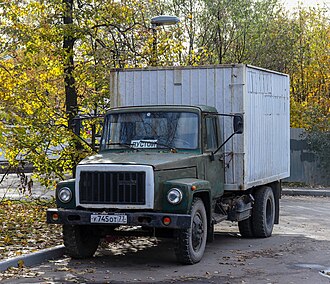
GAZ-3307: The Legendary Soviet-Era Truck That Became a Symbol of Reliability
The Story Behind the GAZ-3307
The GAZ-3307 is one of the most recognizable medium-duty trucks produced in the history of the Soviet and Russian automotive industries. Designed as a successor to the famous GAZ-53 family, the truck represented a major step forward in the development of practical commercial vehicles intended for agriculture, construction, transportation, and industrial operations. Introduced during the final years of the Soviet Union, the GAZ-3307 combined traditional Soviet engineering principles with updated technology, improved driver comfort, and greater operational efficiency. Although decades have passed since its introduction, the truck remains a familiar sight across Russia, Eastern Europe, Central Asia, and many regions where durability and simplicity are valued more than advanced electronics or luxury features.
The history of the GAZ-3307 is closely connected with the development of the Gorky Automobile Plant, commonly known as GAZ, which had already built a reputation for producing dependable trucks capable of operating under difficult conditions. Soviet transportation systems depended heavily on trucks that could perform in extreme climates, on poor roads, and with limited access to repair facilities. The GAZ-3307 was created with these realities in mind. It was not designed as a sophisticated high-performance machine but as a reliable working tool that could transport goods every day for many years.
The truck became especially important because it arrived at a time when transportation demands were changing. Soviet industries required vehicles that could offer improved fuel efficiency, better ergonomics, and higher payload capability while maintaining the mechanical simplicity that allowed repairs to be performed almost anywhere. The GAZ-3307 successfully balanced these requirements, becoming one of the most widespread medium trucks in the former Soviet sphere.
Today, the GAZ-3307 is remembered not only as a commercial vehicle but also as a symbol of an era. For many drivers and mechanics, it represents straightforward engineering: a strong frame, a reliable engine, easily accessible components, and the ability to continue working despite harsh conditions.
The Development and History of the GAZ-3307
Replacing the GAZ-53: A New Generation of Medium Trucks
The origins of the GAZ-3307 can be traced back to the need for a modern replacement for the GAZ-53, which had been produced for many years and had become one of the most common trucks in the Soviet Union. While the GAZ-53 was respected for its durability and simplicity, changing economic conditions and technological progress created demand for a more advanced design.
Engineers at GAZ began developing a new generation of trucks that would preserve the strengths of earlier models while introducing improvements. The goal was not to completely reinvent the medium-duty truck but rather to refine a proven concept. The result was the GAZ-3307, which officially entered production in 1989.
The timing of the truck’s introduction was historically significant. The Soviet Union was approaching its final years, and the automotive industry was facing major changes. Despite these challenges, production of the GAZ-3307 continued because the vehicle fulfilled an essential role in the economy. Farms, factories, government organizations, and construction companies all needed affordable and dependable transportation.
Compared with its predecessor, the GAZ-3307 featured a redesigned cab, improved suspension characteristics, updated braking systems, and a more comfortable interior. These improvements helped reduce driver fatigue, which was especially important because many truck operators spent long hours behind the wheel.
Production During the Post-Soviet Period
After the collapse of the Soviet Union in 1991, many industrial sectors experienced uncertainty, but the demand for practical commercial vehicles remained strong. The GAZ-3307 continued to be produced because it was relatively inexpensive, easy to maintain, and suitable for a wide range of applications.
During the 1990s and early 2000s, the truck became a common choice for small businesses, agricultural enterprises, municipal services, and transportation companies. Its ability to operate in remote regions made it particularly valuable in areas where modern imported trucks were expensive or difficult to repair.
Although newer models eventually replaced the GAZ-3307 in many markets, production continued for many years because the basic design remained useful. Numerous examples are still operating today, demonstrating the strength of its original engineering philosophy.
Design and Engineering Characteristics
A Simple but Strong Construction
The fundamental philosophy behind the GAZ-3307 was practicality. The truck used a traditional body-on-frame construction, which provided excellent durability and allowed the vehicle to withstand heavy workloads. The ladder-type frame was designed to handle constant stress from cargo transportation, uneven roads, and demanding working environments.
The cab design represented a major improvement compared with earlier GAZ trucks. It offered better visibility, a more organized dashboard layout, and improved protection for the driver. While the interior was still simple by modern standards, it provided a more comfortable working environment than previous generations.
The truck’s dimensions made it suitable for many different roles. It was large enough to carry significant cargo but compact enough to operate on narrow rural roads and in urban areas. This versatility contributed greatly to its popularity.
Engine Options and Performance
The original GAZ-3307 was equipped with a gasoline-powered V8 engine. The ZMZ-511 family engine was a development of earlier powerplants used in Soviet trucks, offering proven reliability and relatively simple maintenance requirements.
The engine was not designed for exceptional speed or performance. Instead, it emphasized durability, ease of repair, and the ability to function under challenging conditions. Mechanics appreciated its straightforward construction because repairs could often be performed without specialized equipment.
Over time, different versions of the truck received alternative engines, including diesel options. These modifications were introduced to improve fuel economy and meet changing transportation requirements. Diesel-powered variants became attractive for operators who needed better efficiency during long-distance hauling.
The truck’s performance characteristics reflected its intended purpose. It was built for steady work rather than rapid acceleration. With a moderate payload capacity and dependable drivetrain, it was well suited for transporting agricultural products, construction materials, equipment, and general cargo.
The Role of the GAZ-3307 in Agriculture and Industry
A Workhorse for Rural Transportation
One of the most important roles of the GAZ-3307 was in agriculture. Across the Soviet Union and later in Russia and neighboring countries, farms depended on medium trucks for transporting grain, vegetables, livestock feed, machinery parts, and other essential supplies.
The truck’s ability to operate on dirt roads and in changing weather conditions made it especially valuable in rural regions. Farmers often needed vehicles that could function far from major cities, where professional repair services were limited. The GAZ-3307’s mechanical simplicity was a major advantage in these environments.
Many agricultural operators modified the truck for specific tasks. Flatbed versions were commonly used for general cargo, while specialized bodies were installed for fuel transportation, food delivery, emergency services, and agricultural applications.
Construction and Municipal Applications
Beyond farming, the GAZ-3307 became widely used in construction. Its payload capacity allowed it to transport building materials such as bricks, cement, tools, and equipment. Construction companies valued the truck because it could continue working in difficult environments where more delicate vehicles might struggle.
Municipal organizations also relied on the GAZ-3307 for public services. Modified versions were used as utility trucks, repair vehicles, snow-removal machines, and service platforms. The truck’s flexible chassis allowed manufacturers and operators to adapt it for many specialized purposes.
Driving Experience and Everyday Operation
The Driver’s Perspective
From the driver’s point of view, the GAZ-3307 offered a traditional truck experience. The cabin was functional rather than luxurious, with controls designed for durability rather than advanced convenience. The large steering wheel, mechanical systems, and straightforward instruments reflected the design priorities of its era.
Experienced drivers often appreciated the truck’s predictable behavior. It was relatively easy to understand mechanically, and many operators could diagnose problems through sound, vibration, or performance changes. This created a strong relationship between drivers and their vehicles.
However, compared with modern trucks, the GAZ-3307 had several limitations. Noise levels were higher, fuel consumption was relatively large, and comfort features were minimal. Long-distance driving could be tiring, especially compared with newer commercial vehicles equipped with advanced suspension systems and climate control.
Despite these disadvantages, many drivers respected the truck because it rarely failed when properly maintained. Its reputation was built on years of dependable service.
Advantages and Disadvantages of the GAZ-3307
Major Strengths
The biggest advantage of the GAZ-3307 was reliability. The truck was created for demanding conditions, and its components were designed with durability in mind. It could operate in cold climates, on poor roads, and under heavy workloads.
Another major strength was maintenance simplicity. Parts were widely available, and repairs could often be completed by local mechanics. This was extremely important in regions where access to advanced service centers was limited.
The truck was also versatile. Its chassis supported many different body configurations, allowing it to perform numerous tasks. From agricultural transportation to municipal work, the GAZ-3307 could be adapted to different needs.
Common Weaknesses
Like any vehicle, the GAZ-3307 had disadvantages. Fuel consumption was one of the most frequently mentioned issues, especially with gasoline-powered versions. As fuel prices increased and environmental standards became stricter, this became a significant limitation.
The truck also lacked many modern safety and comfort features. Compared with contemporary vehicles, it offered fewer driver assistance systems, limited cabin insulation, and basic interior equipment.
Another challenge was age. Many remaining examples have spent decades in service, meaning their condition depends heavily on maintenance history. Well-maintained trucks can still perform effectively, while neglected examples may require significant restoration.
The Legacy of the GAZ-3307
The GAZ-3307 occupies an important place in automotive history because it represents a practical approach to vehicle design. It was created during a period when reliability, repairability, and affordability were more important than advanced technology.
Although it has been replaced by newer generations of trucks, the GAZ-3307 remains respected among enthusiasts, collectors, and professional users. Many examples continue working today, proving that a well-designed machine can remain valuable long after its original production period.
The truck also represents a cultural connection for many people who grew up seeing these vehicles on roads, farms, and construction sites. It became part of everyday life across many countries and remains a reminder of Soviet and post-Soviet industrial engineering.
Conclusion: Why the GAZ-3307 Still Matters
The GAZ-3307 was never intended to be a luxury vehicle or a technological showcase. Its purpose was much simpler and perhaps more important: to provide dependable transportation for people and industries that needed a truck they could trust.
Through decades of service, the GAZ-3307 demonstrated the value of durable engineering. Its strong construction, easy maintenance, and adaptability allowed it to survive changing economic conditions and evolving transportation needs. While modern trucks offer greater efficiency, comfort, and technology, the GAZ-3307 remains admired because it represents a time when vehicles were designed primarily as hardworking tools.
For many owners and operators, the GAZ-3307 is more than just a truck. It is a symbol of reliability, practicality, and engineering designed to serve real-world needs.
Technical Specifications of the GAZ-3307
| Specification | Details |
|---|---|
| Manufacturer | Gorky Automobile Plant (GAZ) |
| Production period | 1989–present in various forms (original production continued for many years) |
| Vehicle class | Medium-duty commercial truck |
| Layout | Front-engine, rear-wheel drive |
| Cab type | Two-door cab-over-engine style conventional truck cab |
| Frame construction | Ladder-type steel frame |
| Engine type | V8 gasoline engine (main early version), later diesel variants available |
| Common engine family | ZMZ-511 series |
| Engine displacement | Approximately 4.25 liters |
| Power output | Around 120–125 horsepower depending on version |
| Transmission | 5-speed manual gearbox |
| Drive system | Rear-wheel drive |
| Suspension | Leaf spring suspension front and rear |
| Brakes | Hydraulic braking system with pneumatic assistance on some versions |
| Fuel type | Gasoline or diesel depending on modification |
| Payload capacity | Approximately 4.5 tons |
| Maximum speed | Approximately 90 km/h |
| Wheelbase | About 3,770 mm |
| Length | About 6,550 mm |
| Width | About 2,380 mm |
| Height | About 2,350 mm |
| Typical applications | Agriculture, construction, cargo transport, municipal services |
| Main advantages | Reliability, simple maintenance, durability, adaptability |
| Main disadvantages | High fuel consumption, basic comfort, outdated technology |
