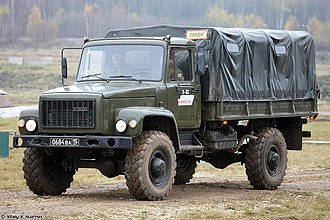
GAZ-3308 Sadko: The Russian Off-Road Truck Built for Extreme Conditions
The Story of the GAZ-3308 Sadko
The GAZ-3308 Sadko is one of the most capable and recognizable Russian off-road trucks developed for military, industrial, and civilian use. Created by the Gorky Automobile Plant (GAZ), the vehicle represents a continuation of decades of Soviet and Russian experience in designing rugged trucks capable of operating in some of the harshest environments on Earth. With its four-wheel-drive system, durable chassis, high ground clearance, and mechanical simplicity, the GAZ-3308 Sadko was designed for places where ordinary commercial trucks would quickly reach their limits.
The Sadko occupies an interesting position in the history of Russian trucks because it combines traditional Soviet engineering concepts with updated technology from the post-Soviet era. It was developed as a successor to the legendary GAZ-66, a vehicle famous for its extraordinary off-road abilities and extensive military service. While the GAZ-66 had become a symbol of Soviet reliability, changing requirements in the 1990s created the need for a newer truck that could provide improved comfort, greater payload capacity, and easier operation while maintaining the same ability to travel through difficult terrain.
Introduced in the late 1990s, the GAZ-3308 Sadko inherited many characteristics that made earlier GAZ trucks successful. It was not intended to compete with luxury commercial vehicles or high-speed highway trucks. Instead, it was created as a dependable working machine capable of transporting people, equipment, and supplies across forests, mountains, deserts, muddy roads, and remote rural regions.
The name “Sadko” comes from a legendary Russian folk hero associated with strength, adventure, and exploration. The choice of name reflected the truck’s intended purpose: a vehicle designed to go beyond ordinary roads and support operations in remote areas. Over the years, the Sadko became widely used by military organizations, emergency services, energy companies, exploration teams, and civilian operators who needed a dependable off-road platform.
Today, the GAZ-3308 Sadko remains an important example of Russian heavy vehicle engineering. Although newer generations have appeared, the original Sadko continues to be respected for its simplicity, durability, and ability to perform in conditions that challenge even modern vehicles.
The Development of the GAZ-3308 Sadko
From the GAZ-66 to a New Generation of Off-Road Trucks
The development of the GAZ-3308 Sadko was closely connected with the legacy of the GAZ-66, one of the most famous Soviet military trucks. Produced from the 1960s onward, the GAZ-66 became known worldwide for its excellent off-road performance. Its compact dimensions, four-wheel drive, central tire inflation system, and balanced design allowed it to operate successfully in difficult environments.
However, by the 1990s, the GAZ-66 design was becoming outdated. Although it remained highly capable, it lacked many features expected from newer vehicles, including improved ergonomics, greater carrying capacity, better driver comfort, and more modern mechanical systems. Operators needed a replacement that could preserve the legendary off-road performance while addressing the weaknesses of the older truck.
GAZ engineers used the experience gained from decades of producing military and commercial vehicles to create the GAZ-3308. Instead of developing a completely new truck from the ground up, they used proven components and adapted them into a modernized design. This approach reduced development costs and ensured that the new truck would maintain the reliability expected from GAZ products.
The result was a vehicle that combined the ruggedness of older Soviet trucks with improvements suitable for modern transportation needs. The Sadko retained a strong frame, four-wheel drive, and excellent ground clearance while receiving a more comfortable cab based on the GAZ-3307/3309 family.
Production and Evolution
Production of the GAZ-3308 Sadko began in 1997. The truck was initially offered primarily for military and government applications, but civilian versions soon became available. Its versatility allowed it to serve many industries, including oil and gas exploration, forestry, construction, agriculture, and emergency response.
Over time, GAZ introduced several modifications and upgrades. Different engines were used depending on market requirements, including gasoline and diesel powerplants. Some versions received improved transmissions, updated interiors, and enhanced equipment packages.
The Sadko also became popular outside Russia. Countries with large rural territories, difficult climates, or limited road infrastructure found the truck useful because it could operate where conventional transport vehicles struggled. Export versions were supplied to various regions, particularly areas requiring reliable off-road logistics.
Design Philosophy and Engineering Features
Built for Off-Road Performance
The defining characteristic of the GAZ-3308 Sadko is its off-road capability. Almost every aspect of its design was created with difficult terrain in mind. The truck uses a traditional ladder frame construction, providing the strength necessary for heavy loads and rough operating conditions.
The chassis design allows the truck to handle uneven surfaces without excessive stress. Reinforced suspension components, strong axles, and a durable drivetrain contribute to its ability to operate on mud, snow, sand, and rocky terrain.
Unlike many modern trucks that depend heavily on electronic systems, the Sadko relies on mechanical solutions. This simplicity is a major advantage in remote locations where specialized diagnostic equipment may not be available. Mechanics can often repair the vehicle using basic tools and traditional knowledge.
The truck’s high ground clearance allows it to pass obstacles that would stop ordinary commercial vehicles. Combined with four-wheel drive and low-range gearing, the Sadko can climb steep slopes and navigate challenging landscapes.
Four-Wheel Drive System
The four-wheel-drive system is one of the most important features of the GAZ-3308 Sadko. Power is delivered to both front and rear axles, providing improved traction on slippery or uneven surfaces.
The drivetrain was designed for reliability rather than maximum efficiency. The goal was to ensure that the truck could continue moving even when road conditions became extremely poor. This made the Sadko particularly valuable for military logistics, exploration missions, and emergency operations.
Many versions of the truck were equipped with features such as differential locks and systems designed to improve mobility in difficult environments. These technologies allowed the Sadko to maintain forward movement even when individual wheels experienced reduced traction.
Engine Performance and Mechanical Characteristics
Powerplants Used in the GAZ-3308
The GAZ-3308 Sadko was produced with several engine options throughout its history. Early versions often used gasoline engines from the ZMZ family, while later models increasingly adopted diesel engines to improve fuel economy and torque characteristics.
The gasoline versions provided reliable operation and straightforward maintenance. These engines were well known among Russian mechanics and shared technology with other GAZ vehicles, making spare parts widely available.
Diesel versions offered advantages for heavy-duty use, especially in off-road environments. Diesel engines generally provide stronger low-speed torque, which is valuable when climbing hills, pulling heavy loads, or moving through deep mud.
The engine selection reflected the truck’s purpose. The Sadko was not designed for high-speed transportation but for dependable performance under demanding conditions. Its engines were optimized for durability and continuous operation rather than maximum horsepower.
Transmission and Suspension
The GAZ-3308 typically uses a manual transmission designed to withstand heavy workloads. Manual gearboxes remain common in rugged vehicles because they are durable, easier to repair, and provide direct control for drivers operating in difficult terrain.
The suspension system uses traditional leaf springs, a design commonly found in heavy-duty trucks. While leaf springs may not provide the smoothest ride compared with modern independent suspension systems, they offer excellent durability and load-carrying ability.
This approach reflects the overall philosophy behind the Sadko: every component is selected for strength and reliability. The truck prioritizes functionality over luxury.
Military and Civilian Applications
Military Service and Defense Operations
The GAZ-3308 Sadko was developed partly with military requirements in mind. Armed forces require vehicles capable of transporting personnel, equipment, ammunition, and supplies across difficult terrain. A military truck must function in environments where roads may be damaged or completely absent.
The Sadko fulfilled this role by providing a reliable platform that could support many different configurations. It could be equipped with cargo bodies, communication equipment, repair systems, fuel tanks, and specialized military modules.
Its off-road capability made it suitable for remote bases and field operations. The truck’s ability to operate independently from advanced infrastructure was especially valuable in regions with extreme climates.
Civilian Uses and Industrial Applications
Although its military background is important, the GAZ-3308 Sadko has also found extensive civilian use. Companies working in remote industries often require vehicles that can reach locations far from paved roads.
Oil and gas companies use similar vehicles for exploration and maintenance operations. Forestry organizations rely on them for transporting workers and equipment into remote areas. Emergency services use off-road trucks like the Sadko for rescue missions, disaster response, and humanitarian operations.
Agricultural businesses in remote regions also benefit from the truck’s capabilities. In areas where farms are separated by poor roads and changing weather conditions, a dependable four-wheel-drive truck can be essential.
Driving Experience and Practical Operation
Life Behind the Wheel of a Sadko
Driving the GAZ-3308 Sadko provides a very different experience from operating a modern commercial truck. The cabin is functional and designed primarily for durability. Controls are straightforward, visibility is good, and the driver has direct interaction with the vehicle’s mechanical systems.
The truck’s size and elevated driving position provide excellent visibility, especially on rough terrain. Drivers can better judge obstacles and road conditions compared with smaller vehicles.
However, comfort is not the main priority. The cabin can be noisy, and long-distance travel may feel demanding compared with newer trucks equipped with advanced suspension systems and improved sound insulation.
Experienced operators often appreciate the Sadko because it feels predictable and reliable. The truck responds directly to driver input, making it easier to control in challenging environments.
Advantages and Disadvantages of the GAZ-3308 Sadko
Strengths of the Sadko
The greatest strength of the GAZ-3308 Sadko is its durability. It was designed to survive harsh conditions and heavy use. Its strong frame, reliable drivetrain, and simple mechanical design make it suitable for remote operations.
Another major advantage is repairability. In many regions, mechanics are familiar with GAZ vehicles, and spare parts are easier to obtain compared with imported alternatives.
The truck’s off-road ability is also a defining advantage. Few medium-duty trucks can match its combination of simplicity, ground clearance, and four-wheel-drive capability.
The Sadko is also versatile. Its chassis can support many specialized bodies, making it useful for different industries and applications.
Weaknesses and Limitations
Despite its strengths, the GAZ-3308 Sadko has limitations. Fuel consumption can be relatively high, particularly with gasoline-powered versions. This can increase operating costs for companies using the truck intensively.
The interior comfort level is also lower than modern trucks. Drivers accustomed to newer commercial vehicles may find the cabin basic and lacking advanced features.
Safety equipment is another area where the Sadko reflects its age. Modern trucks often include electronic stability systems, advanced braking technologies, and improved crash protection.
However, these disadvantages are partly balanced by the vehicle’s intended purpose. The Sadko was created for reliability in difficult environments, not for luxury transportation.
The Legacy of the GAZ-3308 Sadko
The GAZ-3308 Sadko represents an important chapter in the evolution of Russian off-road vehicles. It successfully carried forward the philosophy of earlier Soviet trucks while adapting to new requirements.
Its continued popularity demonstrates that simple engineering can remain valuable even in an era of advanced technology. Many operators still choose vehicles like the Sadko because they need dependable machines that can work far away from major service centers.
The truck also represents a broader tradition of Russian vehicle design: creating equipment capable of surviving extreme conditions. From military operations to industrial exploration, the Sadko has proven itself as a reliable partner in demanding environments.
Conclusion: The Enduring Importance of the GAZ-3308 Sadko
The GAZ-3308 Sadko is more than just an off-road truck. It is a continuation of a long engineering tradition focused on durability, practicality, and independence from complicated technology.
While it may not offer the comfort, efficiency, or advanced electronics of modern trucks, it provides something many operators consider more important: confidence that the vehicle will continue working when conditions become difficult.
From remote forests and mountain roads to military bases and industrial sites, the Sadko has demonstrated its ability to perform where ordinary vehicles cannot. Its combination of rugged construction, mechanical simplicity, and off-road capability has secured its place among the most respected Russian trucks of its generation.
Technical Specifications of the GAZ-3308 Sadko
| Specification | Details |
|---|---|
| Manufacturer | Gorky Automobile Plant (GAZ) |
| Model | GAZ-3308 Sadko |
| Production period | 1997–present in updated versions |
| Vehicle type | Medium-duty four-wheel-drive truck |
| Main purpose | Military, industrial, agricultural, and off-road transport |
| Configuration | Front-engine, four-wheel drive |
| Cab type | Conventional two-door truck cab |
| Frame construction | Heavy-duty ladder frame |
| Engine options | Gasoline and diesel engines depending on version |
| Common gasoline engine | ZMZ V8 series |
| Common diesel engine | GAZ/YaMZ diesel variants in later models |
| Transmission | Manual gearbox |
| Drive system | Permanent or selectable 4×4 system depending on version |
| Suspension | Leaf springs front and rear |
| Ground clearance | Approximately 315 mm |
| Payload capacity | Around 2–2.5 tons depending on configuration |
| Maximum speed | Approximately 90–95 km/h |
| Fuel type | Gasoline or diesel |
| Wheelbase | Approximately 3,770 mm |
| Length | Approximately 6,250 mm |
| Width | Approximately 2,340 mm |
| Height | Approximately 2,570 mm |
| Main advantages | Excellent off-road ability, durability, simple maintenance |
| Main disadvantages | High fuel consumption, basic comfort, outdated design features |
| Typical applications | Military transport, rescue operations, exploration, forestry, construction |
