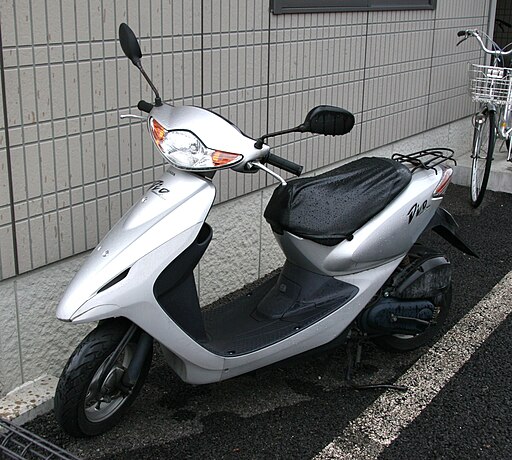
Honda Dio
Honda Dio – The Futuristic Urban Scooter with Style and Performance
The Honda Dio has been a staple in the world of urban scooters, known for its sporty styling, nimble handling, and reliable performance. Targeted primarily at the youth segment, the Dio stands out with its aggressive design language, peppy engine, and Honda’s trademark refinement. Since its debut in the Indian market in 2002, the Dio has undergone several updates to align with evolving technology, emission norms, and consumer preferences. Let’s take a deep dive into the Honda Dio’s latest iteration, exploring its design, performance, specifications, and why it remains a top pick for city commuters and first-time riders.
Design and Aesthetics
The Honda Dio is instantly recognizable thanks to its bold, edgy design and sleek bodywork. With every update, Honda has refined its aesthetic appeal without losing the aggressive stance that defines it.
- Front fascia: The LED headlamp mounted on the apron and the sharply sculpted indicators on the handlebar give it a distinctive front profile.
- Sporty graphics: Honda offers dual-tone color options and racing-inspired decals, which appeal to younger riders.
- Split grab rail and tail lamp: The rear gets an integrated tail lamp with an “X” shape design and split grab rails that enhance the sporty vibe.
The scooter also incorporates functional design aspects such as a larger seat, external fuel filler cap, and improved legroom. A digital instrument cluster (in the deluxe variant) displays information like speed, fuel level, trip meter, and a service due indicator.
Engine and Performance
At the heart of the Honda Dio lies a BS6-compliant, air-cooled, single-cylinder engine that is tuned for efficiency and reliability. While not built for outright performance, it offers enough punch for urban commuting.
Engine Specifications:
- Type: Fan-cooled, 4-stroke, SI Engine
- Displacement: 109.51 cc
- Max Power: 7.76 PS @ 8,000 rpm
- Max Torque: 9 Nm @ 4,750 rpm
- Fuel System: Programmed Fuel Injection (PGM-FI)
- Compression Ratio: 10.0:1
- Starting Mechanism: Kick and self-start
This powertrain is paired with a V-Matic transmission, ensuring seamless acceleration in stop-and-go traffic. The Honda Eco Technology (HET) further improves fuel efficiency without sacrificing performance.
Performance Highlights:
- Top Speed: ~83 km/h (claimed)
- Mileage: ~55-60 km/l (real-world)
- 0–60 km/h: ~10.5 seconds
The performance is linear and smooth, with enough low-end torque to manage quick overtakes in city conditions. The engine is also relatively refined and produces minimal vibrations, which is ideal for daily riding.
Chassis and Handling
The Dio is built on an underbone frame, giving it a lightweight yet rigid construction. Weighing in at just 105 kg (kerb), it is among the lightest scooters in its segment, contributing to its easy handling and maneuverability.
Suspension and Brakes:
- Front Suspension: Telescopic fork
- Rear Suspension: 3-step adjustable spring-loaded hydraulic
- Front Brake: Drum – 130 mm
- Rear Brake: Drum – 130 mm
- Braking System: CBS (Combi-Brake System) with equalizer
The telescopic front forks significantly improve ride quality, especially on uneven urban roads. CBS ensures both wheels slow down simultaneously when the rear brake is applied, improving stability and safety during emergency braking.
Tire & Wheel Details:
- Front Tyre: 90/90-12 tubeless
- Rear Tyre: 90/100-10 tubeless
- Wheel Type: Alloy wheels (in Deluxe variant)
The front 12-inch wheel adds to the scooter’s confident handling while maintaining a planted ride feel at moderate speeds.
Dimensions and Capacities
The Honda Dio is designed with compact urban practicality in mind.
- Overall Length: 1,808 mm
- Overall Width: 723 mm
- Overall Height: 1,150 mm
- Wheelbase: 1,260 mm
- Ground Clearance: 160 mm
- Seat Height: 650 mm (approx.)
- Fuel Tank Capacity: 5.3 liters
- Underseat Storage: 18 liters
The seat height and light weight make it beginner-friendly and accessible to riders of all sizes, while the under-seat storage is adequate for a half-face helmet or daily essentials.
Features and Variants
The Dio is available in two primary variants:
- Standard
- Deluxe
Key Features:
- LED Headlamp and Position Lamp
- Fully Digital Meter (Deluxe)
- Engine Start/Stop Switch (Deluxe)
- Side Stand Engine Cut-off (Deluxe)
- External Fuel Lid
- Silent Start with ACG Starter
- Tubeless Tyres
- Retractable Passenger Foot Pegs
The digital meter on the Deluxe variant shows real-time mileage and average mileage indicators, which are handy for mileage-conscious riders. The silent ACG starter ensures noiseless engine starts, a premium touch in this segment.
Pricing and Market Positioning
As of early 2025, the Honda Dio is priced as follows (ex-showroom, Delhi):
- Standard Variant: ₹74,200
- Deluxe Variant: ₹78,500
The Dio competes with the likes of the TVS Scooty Zest 110, Hero Pleasure+, Yamaha RayZR 125, and Hero Xoom. Despite rising competition, Honda’s brand value, widespread service network, and proven track record keep the Dio at the forefront of budget scooters.
Pros and Cons
Pros:
- Stylish and youthful design
- Excellent fuel efficiency
- Lightweight and easy to maneuver
- Reliable and refined engine
- Honda’s vast service network
Cons:
- No disc brake option
- Rear suspension can feel stiff on bad roads
- Lacks Bluetooth connectivity (now common in the segment)
Verdict
The Honda Dio continues to strike a perfect balance between practicality, performance, and aesthetics. It caters especially well to young riders and city commuters who value efficiency, reliability, and style in a single package. With the addition of modern features like LED lighting, digital instrumentation, and fuel injection, the Dio stays relevant in the ever-evolving scooter market. Whether you’re a college student, a first-time rider, or someone looking for a low-maintenance city scooter, the Honda Dio is a choice you won’t regret.
