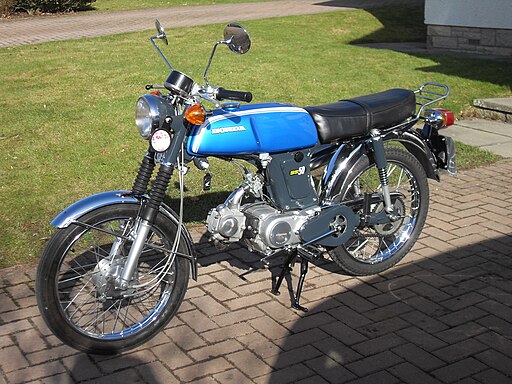
Honda SS50
The Honda SS50 is a model that has earned its place in the history of small motorcycles. Intended primarily as an urban commuter machine, this 50‑cc bike embodies a combination of minimalist engineering and robust performance. With its unpretentious styling, precise mechanical layout, and classic aesthetics, the SS50 continues to be cherished by enthusiasts and restorers alike. In this article, we explore its technical parameters, design philosophy, and enduring legacy in detail.
History and Background
Origins and Market Positioning
Introduced during the late 1960s and early 1970s, the Honda SS50 was designed to offer an accessible riding experience without compromising on reliability. During an era when compact transportation was becoming increasingly popular, Honda embraced a design that featured simplicity and durability. The SS50 was produced in several variants (often denoted with suffixes such as “SS50M”) and found a dedicated following among riders looking for an economical solution for daily commutes. Its robust design and easy maintenance made it a natural choice for a wide geographic market—from busy urban centers to suburban communities.
Evolution and Legacy
Over the years, the Honda SS50 has seen minor revisions that improved rideability, emission control, and overall ergonomics while maintaining its core character. Today, it stands as an icon among classic mini motorcycles, representing Honda’s early commitment to efficient engineering. Restorers and vintage bike enthusiasts continue to celebrate the SS50 for its straightforward mechanics and timeless design, making it a beloved model in classic motorcycle circles.
Technical Specifications
Engine and Powertrain
At the heart of the Honda SS50 lies an air‑cooled, single‑cylinder, four‑stroke engine with a Single Overhead Camshaft (SOHC). This engine is designed to provide adequate power for city riding while keeping complexity—and therefore maintenance needs—at a minimum.
- Displacement: Approximately 49 cc
- Engine Type: Air‑cooled, single‑cylinder, four‑stroke SOHC
- Bore and Stroke: Around 39 mm (bore) × 41.4 mm (stroke)
- Power Output: Approximately 2.5 bhp (or roughly 2.5 PS) at high engine speeds
- Torque: About 1.64 ft‑lb at moderate rpm, ensuring responsive throttle action
- Fuel System: Equipped with a 12‑mm Keihin carburetor that helps deliver a well‑balanced fuel–air mixture for smooth engine performance
This modest powerplant, though not designed for high speeds, provides an enjoyable riding experience with sufficient acceleration for urban maneuvering.
Transmission and Drivetrain
The Honda SS50 maintains its simplicity through a classic power delivery setup.
- Transmission: A 4‑speed manual gearbox that offers a traditional riding experience while keeping control straightforward.
- Clutch: A wet multi‑plate clutch ensures smooth engagement and reliable performance through various riding conditions.
- Final Drive: Power is transmitted via a chain‑driven system. This conventional design is not only robust but also makes maintenance and adjustments accessible to the devoted owner.
This drivetrain configuration contributes significantly to the SS50’s reputation as a practical, low‑maintenance machine suited for everyday use.
Chassis, Suspension, and Braking System
Chassis and Frame Construction
A hallmark of the Honda SS50 is its pressed‑steel frame. This construction method was widely adopted in smaller bikes of the era for its cost‑effective production and ease of maintenance. The rigid yet durable frame provides a strong platform for the vehicle’s mechanical components and contributes to its lightweight nature.
Suspension Setup
Even though designed during a time when road conditions were less forgiving than today’s standards, the SS50 features a suspension setup that ensures adequate comfort and control.
- Front Suspension: Typically consists of telescopic forks that absorb shocks and provide predictable handling on uneven surfaces.
- Rear Suspension: A simple, yet effective, dual‑shock absorber system helps maintain tire contact with the road and reduces rider fatigue.
Braking System
Safety and control are critical, especially in urban stop-and‑go traffic. The Honda SS50 usually incorporates drum brakes—a common choice in compact motorcycles of its era.
- Front Brake: A drum brake system that, while simple, offers the necessary stopping power for a lightweight bike.
- Rear Brake: Also employs a drum setup to deliver balanced braking performance.
These brake systems, though basic compared to modern disc brakes, have proven adequate for the performance envelope of the SS50.
Dimensions and Ergonomics
Overall Dimensions
The design of the Honda SS50 is focused on creating a compact and agile ride:
- Wheelbase: Though specific dimensions may vary slightly between models, the wheelbase is kept relatively short to enhance maneuverability.
- Overall Length and Width: Designed to be compact so that the bike easily navigates tight urban streets. Many vintage models measure in a range typical for mini motorcycles from that period.
- Dry Weight: The lightweight nature of the bike is one of its strongest assets—generally in the neighborhood of 80–90 kg, which contributes to its nimble handling.
Ergonomics and Rider Comfort
The ergonomics of the Honda SS50 have always been a point of praise among riders:
- Seat Height: Optimized to ensure that the bike is accessible to riders of various statures while maintaining stability.
- Handlebar Position: Set in a way that facilitates a natural riding posture, minimizing fatigue in stop‑and‑go traffic.
- Foot Pegs and Controls: Arranged intuitively to offer a classic riding feel and allowing easy adjustments for riders who enjoy a customized riding experience.
These ergonomic considerations make the SS50 not only a fun machine to ride but also a comfortable one for daily use.
Maintenance and Reliability
Ease of Servicing
One of the defining characteristics of the Honda SS50 is its simplicity. With fewer moving parts than more complex modern machines, the SS50 is straightforward to service:
- Simple Engine Design: The four‑stroke SOHC engine and carburetor system mean that routine tasks such as fuel mixture adjustment and spark plug replacement are uncomplicated.
- Accessible Components: The chain drive and pressed‑steel frame make regular inspection and maintenance tasks less daunting, even for those with moderate mechanical know‑how.
Longevity and Durability
Many owners of the Honda SS50 have found that its straightforward engineering leads to outstanding durability. The emphasis on a rugged, no‑nonsense design means that – when maintained correctly – these machines can continue to perform reliably for decades, contributing to their enduring legacy among vintage bike enthusiasts.
Conclusion
The Honda SS50 stands as a timeless example of Honda’s dedication to building reliable, efficient, and easy-to‑maintain machines. With its compact 49‑cc, air‑cooled, single‑cylinder, four‑stroke engine, 4‑speed manual transmission, and simple yet effective chassis design, the SS50 offers an engaging riding experience ideal for urban commuting. Its classic styling, modest power output, and user‑friendly design continue to endear it to new generations of riders as well as veteran enthusiasts and restorers.
From its early origins as an economical solution to urban transportation to its celebrated status today as a classic, the Honda SS50 is more than just a motorcycle—it is a testament to Honda’s engineering philosophy of simplicity, durability, and understated performance. Whether you are exploring vintage bike collections or looking to experience a slice of motorcycling history, the SS50 remains an inspiring choice that encapsulates the charm and practicality of classic Japanese design.
