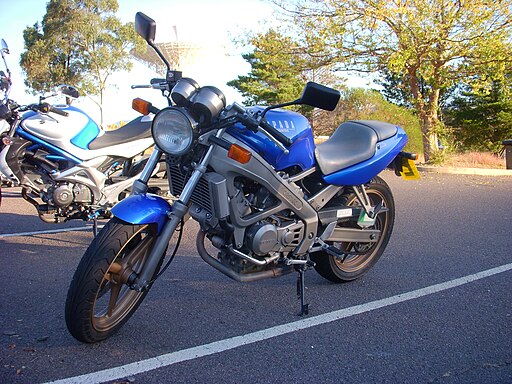
Honda VT250
The Honda VT250 arrived in the early 1980s as one of the smallest V-twin motorcycles in Honda’s lineup. It combined a high-revving, compact V-twin engine with sport-bike chassis geometry, giving riders a bike that was both approachable for daily commuting and engaging on twisty backroads. Over its production run, the VT250 spawned several variants—half-fairing, naked “Spada” and fully-fared designs—yet all shared the same spirited engine character, agile handling, and rider-friendly ergonomics. This article delves into the technical heart of the VT250: engine internals, chassis design, suspension tuning, braking, electronics, dimensions, and real-world performance.
Engine and Performance
V-Twin Engine Architecture
The VT250’s powerplant is a 249 cc liquid-cooled V-twin with a 90° cylinder layout. Each cylinder head houses dual overhead camshafts (DOHC) and four valves, for a total of eight valves. The 60 mm bore and 44 mm stroke produce a slightly oversquare geometry that favors high-rpm power. A compression ratio of 11.0 :1 rewards quality pump fuel with crisp throttle response and clean combustion.
Carburation and Ignition
Fuel is delivered through two 26 mm Keihin constant-velocity carburetors, one per cylinder. These CV carbs ensure smooth throttle transitions and predictable idle stability. Ignition is handled by a digital CDI unit that advances timing progressively as rpm climb, eliminating the need for periodic point adjustments and delivering reliable spark under all conditions.
Power Output and Exhaust
Peak power for most VT250 variants is rated around 29 PS (28.7 hp) at 10,500 rpm, with maximum torque of 21.5 Nm at 9,000 rpm. Exhaust gases exit through short 2-into-2 headers and compact mufflers, tuned to deliver a throaty note without excessive backpressure—striking a balance between performance and compliance with noise regulations.
Transmission and Final Drive
Six-Speed Gearbox
A close-ratio six-speed transmission keeps the engine in its narrow high-rpm powerband when carving corners, while the overdrive top gear provides relaxed cruising on open roads. Shifts are precise and the wet multi-plate clutch offers light lever feel, aiding smooth launches and downshifts.
Chain Final Drive
Power travels to the rear wheel via an O-ring chain and steel sprocket setup. Regular chain lubrication (every 500 km) and tension checks ensure crisp throttle response and minimize sprocket wear. A rubber chain guard shields the drive train from road debris.
Chassis and Handling
Steel Perimeter Frame
The VT250 uses a tubular steel perimeter cradle frame, with the engine serving as a semi-stressed member. This design centralizes mass low in the chassis, yielding a claimed wet weight of approximately 155 kg. The result is a compact wheelbase of 1,350 mm that promotes flickable handling without sacrificing stability in fast sweeps.
Geometry
- Rake: 25°
- Trail: 97 mm
These figures deliver a confident steering feel: stable at speed yet eager to change direction with minimal rider input.
Suspension
Front Forks
A 41 mm conventional telescopic fork provides 120 mm of travel. The internals are valved to absorb sharp bumps while maintaining composure under firm braking. No preload adjustment is offered, but the stock spring rate balances solo and two-up riding for most riders.
Rear Shock
The Pro-Link single-shock rear suspension offers 120 mm of wheel travel. A hand-adjustable preload collar lets riders fine-tune sag for solo, two-up, or light luggage runs. The rising-rate linkage smooths small bumps and stiffens progressively under heavy loads or cornering forces.
Brakes and Wheels
Braking System
- Front Brake: 276 mm disc with dual-piston caliper
- Rear Brake: 220 mm disc with single-piston caliper
The front disc delivers strong initial bite and fade resistance, while the rear disc provides balanced, progressive stopping power without sudden lock-ups.
Wheels and Tires
Cast-aluminum 17-inch wheels wear 110/70-17 front and 130/70-17 rear tires. These widths strike a balance between nimble turn-in and a sufficient contact patch for mid-corner confidence on sport-style pavement.
Electrical System and Instrumentation
Charging and Ignition
A 12 V, 250 W alternator keeps the 12 Ah battery charged and powers all lighting. The CDI ignition module ensures consistent spark at high rpm, while maintenance-free spark suppressors reduce electrical noise.
Cockpit
- Analog Tachometer (12,000 rpm redline)
- Analog Speedometer (200 km/h scale)
- Digital Odometer and Twin Trip Meters
- Indicator Lamps for Neutral, High Beam, Turn Signals, Oil Pressure
Switchgear is compact and thumb-friendly, letting riders keep both hands on the bars even in cold-weather gloves.
Dimensions and Capacities
| Specification | Measurement |
|---|---|
| Engine Displacement | 249 cc |
| Bore × Stroke | 60 mm × 44 mm |
| Compression Ratio | 11.0 :1 |
| Peak Power | 29 PS @ 10,500 rpm |
| Peak Torque | 21.5 Nm @ 9,000 rpm |
| Transmission | 6-speed, chain final drive |
| Frame Type | Steel perimeter cradle |
| Front Suspension | 41 mm telescopic fork, 120 mm travel |
| Rear Suspension | Pro-Link single shock, 120 mm travel, preload adjustable |
| Front Brake | 276 mm disc, dual-piston caliper |
| Rear Brake | 220 mm disc, single-piston caliper |
| Wheelbase | 1,350 mm |
| Seat Height | 780 mm |
| Ground Clearance | 150 mm |
| Fuel Capacity | 12 L |
| Wet Weight | 155 kg |
Ergonomics and Rider Comfort
The VT250’s riding position balances sporty intent with everyday comfort. Clip-on handlebars mounted just below the top triple clamp create a slight forward lean, while mid-set footpegs avoid extreme tuck. The seat’s 780 mm height suits shorter riders without feeling cramped for taller riders. A narrow fuel tank junction allows easy knee grip when pushing hard, and pillion footpegs fold away cleanly when unused.
Maintenance and Service Intervals
- Oil and Filter Change: every 5,000 km
- Valve Clearance Inspection: every 12,000 km
- Carburetor Synchronization and Cleaning: every 8,000 km
- Chain Lubrication and Adjustment: every 500 km
- Brake Fluid Replacement: every 24 months
- Coolant Flush: every 24 months
Routine tasks are accessible via side panels and a removable seat, making home servicing straightforward. Honda’s global parts network ensures filters, cables, and wear items remain available decades after production ended.
Riding Experience
On city streets, the VT250’s light curb weight and torquey low-rpm pull make stop-and-go traffic effortless. Open roads awaken the engine’s high-rev character: above 8,000 rpm the power delivery sharpens, encouraging smooth, precise gear changes through its six-speed box. The chassis communicates feedback through the bars and pegs, allowing confident trail braking into corners. The braking system is both strong and forgiving, and the suspension strikes a compliance-vs-control balance few modern small sportbikes match.
Conclusion
The Honda VT250 stands as a testament to compact V-twin engineering and balanced sport-bike dynamics. Its lively engine, agile chassis, and approachable ergonomics created a versatile machine equally suited to daily commuting, weekend canyon runs, or light touring. Even decades after its introduction, the VT250’s blend of mechanical simplicity, strong aftermarket support, and enduring fun factor make it a sought-after platform for riders who crave authentic two-wheeled engagement.
