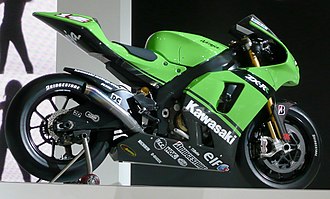
Kawasaki Ninja ZX-RR: The Story of Kawasaki’s MotoGP Grand Prix Motorcycle
The Kawasaki Ninja ZX-RR occupies a fascinating place in modern motorcycle racing history. Unlike the road-going Ninja models that made Kawasaki famous among sportbike enthusiasts, the ZX-RR was created for one purpose: to compete at the highest level of prototype motorcycle racing in the MotoGP World Championship. It represented Kawasaki’s return to the premier class of Grand Prix motorcycle racing after a long absence and became the foundation of the manufacturer’s factory MotoGP effort during the first half of the 2000s. Although the ZX-RR never achieved the championship success of some of its rivals, it played an important role in Kawasaki’s racing history and provided valuable experience that influenced the company’s approach to high-performance motorcycle engineering.
The name can sometimes cause confusion because “Ninja ZX-RR” sounds similar to Kawasaki’s road-going Ninja ZX-RR or ZX-RR-inspired motorcycles. The actual MotoGP machine was a purpose-built prototype, not a production motorcycle adapted for racing. It had a purpose-designed aluminum chassis, carbon-fiber bodywork, racing suspension and brakes, prototype electronics, and a high-revving four-cylinder engine developed specifically for Grand Prix competition. During its competitive life, the machine evolved considerably as Kawasaki learned more about MotoGP’s four-stroke prototype regulations and worked to close the gap to established manufacturers.
The ZX-RR is particularly interesting because its story reflects one of the biggest transitions in motorcycle racing history. MotoGP replaced the old 500cc two-stroke premier-class formula with four-stroke prototypes in 2002, and manufacturers were suddenly given enormous freedom to explore engine configurations and electronic technology. Kawasaki entered this new era with an ambitious project, eventually producing a distinctive four-cylinder machine that became recognizable through its green factory livery and riders such as Shinya Nakano and Alex Hofmann.
Kawasaki Returns to the MotoGP Era
From the 500cc Era to Four-Stroke MotoGP
The beginning of the 2000s represented a major turning point for Grand Prix motorcycle racing. The traditional 500cc two-stroke machines were being replaced by the new MotoGP formula, which allowed much larger four-stroke engines. Manufacturers that had extensive experience with production four-stroke motorcycles suddenly had an opportunity to use that knowledge in the premier class.
Kawasaki decided to return to the top level with a dedicated four-stroke prototype. The company had a strong history in motorcycle racing and a particularly impressive reputation in production sportbikes, but MotoGP required a completely different level of engineering. A factory prototype had to combine enormous engine performance with an extremely lightweight chassis, advanced electronics, sophisticated aerodynamics, and the ability to survive an entire race distance at racing speeds.
The ZX-RR emerged from this program as Kawasaki’s answer to the new regulations. Rather than simply enlarging an existing production engine, Kawasaki engineers developed a prototype specifically for Grand Prix competition. The motorcycle evolved rapidly over successive seasons, with changes to displacement, engine architecture, chassis construction, electronics, and aerodynamics.
The ZX-RR Engine
A High-Revving Four-Cylinder Prototype
At the heart of the ZX-RR was a liquid-cooled four-cylinder four-stroke engine. The exact specifications changed throughout the motorcycle’s development, but later versions were based around an approximately 990cc inline-four configuration, reflecting the original MotoGP capacity regulations.
The engine’s character was radically different from anything found in an ordinary road-going Ninja. MotoGP engines were designed to produce extreme power at very high engine speeds while remaining light and compact. Every component was effectively a compromise between performance, durability, weight, packaging, and controllability.
Published technical references commonly place later ZX-RR output at more than 200 horsepower, with some sources quoting figures in the region of 220 horsepower or higher depending on specification and development stage. Top speed could exceed 320 km/h under suitable conditions. Those numbers should not be interpreted as fixed factory specifications because Kawasaki’s MotoGP prototype evolved continuously, and racing teams generally did not publish every internal specification.
The important point is that the ZX-RR was an uncompromising racing engine. Unlike a street motorcycle, it was not designed to deliver smooth low-rpm operation, fuel economy, long service intervals, or everyday practicality. Its entire operating environment was the racetrack.
The Move Toward More Competitive Engine Architecture
One of the challenges Kawasaki faced was finding the right combination of power delivery and chassis behavior. Producing horsepower was only one part of the MotoGP equation. A rider needed to be able to control that power while braking, cornering, and accelerating on racing tires with extremely high levels of grip.
As the ZX-RR developed, Kawasaki engineers worked on combustion, crankshaft characteristics, electronics, intake and exhaust systems, and engine management. The goal was not simply to produce a higher peak output but to make the engine’s performance usable.
This is one reason prototype racing motorcycles can be misleading when compared solely through horsepower figures. A motorcycle with slightly less peak power can be faster around a circuit if its engine allows the rider to open the throttle earlier and more confidently. Kawasaki’s development program increasingly focused on achieving a more controllable and competitive package.
Chassis and Suspension
A Prototype Built Around the Rider
The ZX-RR used an aluminum twin-spar frame, a layout familiar from Kawasaki’s high-performance production motorcycles but developed specifically for Grand Prix competition. The frame had to balance rigidity with controlled flex, because a MotoGP chassis cannot simply be made as stiff as possible.
Modern racing motorcycles rely on carefully engineered chassis behavior. Under braking, the motorcycle must remain stable while transferring enormous loads through the front tire. During cornering, the chassis must provide predictable feedback. Under acceleration, the rear of the motorcycle must maintain traction while the engine delivers huge amounts of torque.
The ZX-RR’s suspension components were supplied by specialist racing manufacturers, including Öhlins. High-end racing forks and rear shocks allow teams to make extremely precise adjustments to damping, spring characteristics, ride height, and geometry.
Carbon-Fiber Bodywork and Aerodynamics
The motorcycle’s bodywork was constructed using lightweight composite materials, including carbon fiber. At MotoGP level, bodywork is not simply about appearance. It has to manage airflow, reduce drag, provide cooling, and contribute to stability.
Aerodynamic development became increasingly important during the ZX-RR’s competitive period. Kawasaki was working in an era before the extremely elaborate aerodynamic devices seen on modern MotoGP machines, but engineers were already paying close attention to airflow around the rider and motorcycle.
Every gram mattered. Prototype motorcycles had strict minimum-weight regulations, meaning that reducing unnecessary mass could provide benefits in acceleration, braking, and tire performance. The ZX-RR’s lightweight construction was therefore an essential part of its competitiveness.
Kawasaki’s Factory MotoGP Riders
Shinya Nakano
One of the riders most closely associated with the Kawasaki ZX-RR was Japanese rider Shinya Nakano. His involvement helped give the project credibility and provided Kawasaki with a rider capable of developing the motorcycle at the highest level.
Nakano was known for his smooth riding style and technical feedback, qualities that were particularly valuable to a developing factory project. He achieved Kawasaki’s first MotoGP podium with the ZX-RR at the 2004 Japanese Grand Prix at Motegi, finishing third.
That podium remains one of the most significant moments in the history of Kawasaki’s MotoGP project. It demonstrated that the ZX-RR could compete near the front when conditions and circumstances came together. The result also gave the factory program an important morale boost after several seasons of development.
Nakano continued to represent Kawasaki through the 2006 season before moving to other MotoGP opportunities. His association with the ZX-RR remains one of the defining chapters of Kawasaki’s premier-class racing history.
Alex Hofmann and Other Riders
Alex Hofmann was another important rider in Kawasaki’s MotoGP program. He contributed development experience and race feedback during the early years of the project. Other riders also became involved as Kawasaki worked to improve its competitiveness and expand its understanding of the premier class.
Factory racing projects are rarely the result of a motorcycle alone. Riders, engineers, technicians, tire specialists, electronics experts, and race strategists all contribute to performance. The ZX-RR’s development therefore represented a large-scale technical effort rather than simply the creation of a fast engine.
The Kawasaki Racing Identity
The Green Machine
One of the most memorable aspects of the ZX-RR was its appearance. Kawasaki’s racing green livery gave the prototype an unmistakable identity, connecting it visually with the company’s production motorcycles and long racing heritage.
The green color was more than a marketing exercise. Factory racing provides manufacturers with an opportunity to create a direct connection between competition and road-bike identity. Although the MotoGP prototype shared relatively few components with a showroom Ninja, its appearance reinforced Kawasaki’s reputation for building aggressive, high-performance motorcycles.
The ZX-RR therefore became a rolling advertisement for Kawasaki’s engineering ambitions. Even when the machine was not winning races, it communicated the message that Kawasaki was willing to compete at the highest level of prototype motorcycle racing.
Performance and Racing Characteristics
More Than Just a Top-Speed Machine
The ZX-RR’s straight-line performance was impressive, but its real challenge was producing a complete racing package. MotoGP circuits combine long straights with slow corners, fast direction changes, hard braking zones, and long high-speed turns. A motorcycle optimized for only one of those environments would struggle.
Kawasaki therefore had to develop the ZX-RR around corner entry, mid-corner stability, acceleration, and tire management. The motorcycle needed to generate strong braking performance while remaining stable, then transition smoothly onto the side of the tire and finally put its engine power onto the asphalt without excessive wheelspin.
Electronics played an increasingly important role in achieving this balance. Traction control, engine-braking management, fuel mapping, and other systems allowed the team to control the engine’s behavior more precisely. As the MotoGP era progressed, electronics became one of the most important areas of competition between manufacturers.
The 990cc MotoGP Era
A Period of Enormous Performance
The ZX-RR was developed during the original 990cc four-stroke MotoGP era. These motorcycles were among the fastest Grand Prix machines ever built at the time, with enormous engines and relatively few restrictions compared with later regulations.
The large engine capacity allowed manufacturers to pursue exceptional power output. At the same time, the motorcycles remained extremely lightweight, producing an extraordinary power-to-weight ratio.
The result was a generation of motorcycles that could accelerate brutally hard while reaching speeds well above 300 km/h. The ZX-RR was part of this technological arms race, competing against prototype machines from Honda, Yamaha, Ducati, Suzuki, and Aprilia.
For Kawasaki, simply competing in this environment was a major engineering achievement. The company had entered a highly specialized world dominated by manufacturers with extensive Grand Prix experience.
The ZX-RR’s Biggest Achievement
The 2004 Japanese Grand Prix podium at Motegi is widely regarded as the highlight of Kawasaki’s ZX-RR program. Shinya Nakano finished third, securing the manufacturer’s first MotoGP podium in the premier class.
The result was important because it showed that Kawasaki’s development work was capable of producing genuine front-running performance. A podium in MotoGP requires much more than raw speed. The motorcycle must be competitive across qualifying, race pace, tire management, braking, and acceleration, while the rider and team must execute an almost perfect race.
Although Kawasaki did not transform the podium into a sustained championship challenge, the achievement remains significant. The ZX-RR had gone from a new and developing prototype to a motorcycle capable of standing on a MotoGP podium.
The End of Kawasaki’s MotoGP Project
Kawasaki Withdraws From MotoGP
Kawasaki eventually ended its factory MotoGP participation after the 2008 season, with the withdrawal becoming effective for the 2009 championship. The decision was influenced by economic conditions and Kawasaki’s broader corporate strategy.
The withdrawal marked the end of an ambitious chapter. The ZX-RR had never achieved the race-winning success that Kawasaki would have wanted, but the project generated valuable experience in engine development, electronics, chassis engineering, aerodynamics, data analysis, and high-level race operations.
Kawasaki’s departure also meant that the distinctive green MotoGP prototype disappeared from the starting grid. The ZX-RR therefore became a historical motorcycle almost immediately, representing a particular era of MotoGP technology that would soon be replaced by new regulations and rapidly advancing electronic and aerodynamic systems.
Why the Kawasaki Ninja ZX-RR Still Matters
The ZX-RR remains important because it illustrates how difficult it is for a manufacturer to enter MotoGP and immediately compete with established factory programs. The motorcycle was developed during a period of extraordinary technological change, and Kawasaki had to learn how to integrate an entirely new generation of four-stroke racing technology into a competitive package.
Its importance also extends beyond race results. Factory racing programs often produce knowledge that eventually influences other areas of motorcycle engineering. Even when a prototype does not directly transfer components to a road motorcycle, the development process teaches engineers about combustion, materials, electronics, thermal management, chassis behavior, aerodynamics, and manufacturing.
The ZX-RR also occupies a special place in Kawasaki’s brand history. It was one of the clearest demonstrations of the company’s willingness to compete in the modern MotoGP era, and its green livery helped maintain Kawasaki’s visual identity on an international stage.
Kawasaki Ninja ZX-RR Technical Specifications
Because the ZX-RR was a continually developed factory prototype rather than a mass-produced motorcycle, specifications changed between seasons and were not always officially published in full. The following table therefore summarizes commonly reported specifications for the later-generation 990cc ZX-RR rather than presenting every figure as a single fixed specification.
| Specification | Kawasaki Ninja ZX-RR |
|---|---|
| Motorcycle type | MotoGP factory prototype |
| Manufacturer | Kawasaki Heavy Industries |
| Racing era | MotoGP, 2000s |
| Engine | Liquid-cooled four-stroke inline-four |
| Engine capacity | Approx. 990 cc in later configuration |
| Cylinder arrangement | Inline-four |
| Valve train | DOHC, pneumatic-valve technology in later development |
| Fuel system | Electronic fuel injection |
| Transmission | 6-speed racing gearbox |
| Final drive | Chain |
| Chassis | Aluminum twin-spar frame |
| Bodywork | Carbon-fiber/composite racing bodywork |
| Front suspension | Öhlins racing upside-down fork |
| Rear suspension | Öhlins racing shock |
| Front brake | Carbon-fiber racing discs with multi-piston calipers |
| Rear brake | Racing disc brake |
| Wheels | Lightweight racing alloy/magnesium-type wheels |
| Tires | Bridgestone racing slicks |
| Claimed power | 200+ hp, depending on specification |
| Approximate top speed | 320+ km/h, circuit-dependent |
| Fuel capacity | Approximately 22 liters under MotoGP regulations |
| Rider | Shinya Nakano and other factory riders |
| Notable result | 3rd place, 2004 Japanese Grand Prix |
| Racing status | Retired from MotoGP competition |
| Defining characteristic | Kawasaki’s factory four-stroke MotoGP prototype |
Final Thoughts
The Kawasaki Ninja ZX-RR may not have the trophy cabinet of the most successful MotoGP motorcycles, but reducing its legacy to race victories would miss the real significance of the machine. It represented Kawasaki’s determined attempt to establish itself in the new four-stroke premier class and forced the company to confront some of the most demanding engineering challenges in motorcycle racing.
The motorcycle was fast, technologically sophisticated, visually distinctive, and continuously evolving. Its inline-four engine produced enormous performance, while its lightweight aluminum chassis, racing suspension, carbon-fiber bodywork, prototype electronics, and advanced braking systems placed it firmly in the world of Grand Prix engineering rather than conventional production motorcycles.
Shinya Nakano’s podium at Motegi remains the standout competitive achievement, but the broader story is the development journey that made that result possible. Kawasaki entered MotoGP with an ambitious project, learned from its successes and shortcomings, and ultimately left the championship after several seasons of competition.
Today, the ZX-RR is remembered as one of the distinctive motorcycles of the early four-stroke MotoGP era. Its green bodywork, high-revving four-cylinder engine, and unmistakable factory-racing identity make it a fascinating piece of Kawasaki history. For enthusiasts, it represents more than a racing motorcycle: it is a snapshot of a period when MotoGP manufacturers were pushing four-stroke technology into a new and extraordinarily fast future.
