Kawasaki W650: The Timeless Classic Motorcycle That Revived the Spirit of Vintage Riding
The Kawasaki W650 is one of the most admired modern classic motorcycles ever produced by Kawasaki. Introduced during an era when motorcycle manufacturers were increasingly focused on performance, technology, and aggressive styling, the W650 took a completely different approach. Instead of chasing horsepower figures or futuristic designs, Kawasaki created a motorcycle that celebrated the beauty of traditional motorcycling. With its elegant appearance, air-cooled parallel-twin engine, relaxed riding character, and unmistakable vintage personality, the W650 became a favorite among riders who believed that motorcycles should be as much about emotion and craftsmanship as they are about transportation.
Although production of the Kawasaki W650 was relatively short compared with many other Kawasaki models, its influence has lasted for decades. The motorcycle successfully captured the spirit of classic British motorcycles while combining that charm with Japanese reliability and engineering precision. It appealed to riders who admired vintage motorcycles but did not want the mechanical challenges often associated with owning a genuinely old machine. The W650 offered the best of both worlds: classic aesthetics and modern dependability.
The W650 was not designed to dominate racetracks or compete against high-performance sport motorcycles. Instead, it was created for riders who appreciated the journey itself. The motorcycle encourages a slower, more thoughtful style of riding where the sound of the engine, the feel of the road, and the connection between rider and machine become central parts of the experience. It is a motorcycle that rewards smooth inputs, relaxed cruising, and exploration rather than aggressive acceleration.
Even years after its production ended, the Kawasaki W650 remains highly respected among motorcycle enthusiasts worldwide. Many owners consider it a future classic because of its timeless styling, mechanical simplicity, and strong emotional appeal. In a market filled with increasingly complex motorcycles equipped with advanced electronics and computer-controlled systems, the W650 stands as a reminder that simplicity can create a deeply satisfying riding experience.
The History and Heritage of the Kawasaki W650
The Kawasaki W650 was introduced in 1999 as part of Kawasaki’s effort to revive the spirit of its historic W series. The original Kawasaki W1, launched in the 1960s, was inspired by classic British motorcycles and became one of Japan’s early attempts to compete in the international motorcycle market. The W1 featured a large-displacement parallel-twin engine and traditional styling that reflected the design philosophy of European motorcycles from that era.
Decades later, Kawasaki revisited this heritage with the W650. The goal was not simply to recreate an old motorcycle but to reinterpret classic design principles using modern manufacturing techniques. Kawasaki engineers carefully studied the characteristics that made vintage motorcycles appealing: elegant proportions, visible mechanical components, simple controls, and a strong sense of personality. The result was a motorcycle that looked like it belonged to a different era while offering the reliability expected from a modern Japanese machine.
The timing of the W650’s introduction was significant. During the late 1990s, motorcycle enthusiasts were beginning to rediscover the appeal of classic designs. Many riders were becoming interested in motorcycles that offered character and individuality rather than simply maximum performance. The W650 arrived at the perfect moment, offering an alternative to increasingly aggressive sport bikes and highly specialized machines.
Although the W650 did not achieve the same sales numbers as some of Kawasaki’s mainstream models, it developed a passionate following. Riders appreciated its authenticity and the fact that it remained true to its purpose. It was not a retro motorcycle created solely because vintage styling had become fashionable; it was a genuine attempt to preserve the feeling of classic motorcycling.
The motorcycle was eventually replaced by the Kawasaki W800, which continued the company’s traditional twin-cylinder retro motorcycle philosophy. However, many enthusiasts still regard the W650 as a particularly special model because of its mechanical purity, kick-start capability on many versions, and balanced combination of classic styling and modern reliability.
Classic Styling Inspired by Motorcycle History
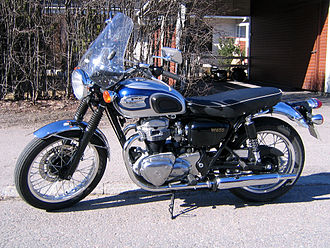
The Kawasaki W650’s design is perhaps its most recognizable and celebrated feature. From the moment it appeared, the motorcycle immediately communicated a sense of timeless elegance. Rather than using sharp angles, plastic body panels, or aggressive styling elements, Kawasaki created a motorcycle built around smooth curves, polished metal, and traditional proportions. The result was a machine that looked familiar even to people who had never seen one before.
The teardrop-shaped fuel tank is one of the W650’s defining visual elements. Carefully sculpted with flowing lines, it gives the motorcycle a graceful appearance while also paying tribute to classic British motorcycles of the 1960s. The tank’s shape creates a balanced relationship between the front and rear sections of the motorcycle, contributing to its harmonious overall silhouette.
The round headlight, chrome accents, and simple instrument cluster reinforce the vintage character. Kawasaki avoided unnecessary decoration and instead focused on authentic details. The analog speedometer and tachometer provide information in a traditional format, while the exposed mechanical components allow riders to appreciate the engineering beneath the surface. This visible connection between function and design is one of the reasons the W650 remains attractive to enthusiasts.
The engine itself serves as an important part of the motorcycle’s visual identity. Unlike many modern motorcycles where engines are hidden behind bodywork, the W650 proudly displays its air-cooled parallel-twin powerplant. The polished engine covers, cooling fins, and classic layout create a mechanical appearance that is both functional and beautiful. The motorcycle looks as though every component has been intentionally placed for both performance and aesthetic balance.
The seating position and overall proportions further enhance the classic appearance. The long, comfortable seat, upright handlebars, and relatively low stance create a relaxed visual impression. The motorcycle appears inviting rather than intimidating, suggesting that it is designed for enjoyment rather than competition.
The Parallel-Twin Engine: Character Over Competition
At the heart of the Kawasaki W650 is its 676 cc air-cooled parallel-twin engine, a powerplant designed to deliver smooth performance and strong character rather than extreme output. This engine represents one of the motorcycle’s greatest attractions because it provides a riding experience that feels mechanical, engaging, and emotionally satisfying.
The parallel-twin configuration was carefully chosen because it connects the W650 to the heritage of classic motorcycles. Historically, parallel-twin engines were common among British motorcycles due to their excellent balance of performance, simplicity, and reliability. Kawasaki’s interpretation combined this traditional layout with modern Japanese engineering standards, creating an engine that offered vintage personality without vintage reliability concerns.
The engine uses a single overhead camshaft design and air cooling, maintaining the simplicity that defines the motorcycle’s character. While liquid-cooled engines dominate many modern motorcycles because of their efficiency and performance advantages, air cooling contributes to the W650’s visual appeal and mechanical charm. The cooling fins are not merely decorative; they represent a traditional engineering approach that many enthusiasts appreciate.
Performance figures tell only part of the story. With approximately 50 horsepower, the W650 was never intended to compete with high-performance motorcycles. Instead, its strength lies in the way the power is delivered. The engine produces smooth, predictable torque that makes everyday riding enjoyable. Acceleration is satisfying without being overwhelming, allowing riders to focus on the experience rather than constantly managing excessive power.
The engine’s character is especially noticeable at lower and medium speeds. The motorcycle feels responsive and relaxed, making it ideal for city streets, countryside roads, and leisurely highway cruising. The power delivery encourages smooth gear changes and thoughtful riding techniques. Rather than demanding aggressive behavior, the W650 rewards riders who appreciate rhythm and balance.
One of the most memorable aspects of the W650 is its exhaust note. The parallel-twin engine produces a distinctive sound that combines refinement with mechanical personality. It does not have the aggressive tone of a modern sport motorcycle, but instead delivers a classic, rhythmic pulse that perfectly matches the motorcycle’s appearance and purpose.
Riding Experience: A Motorcycle Designed for Enjoyment
The Kawasaki W650 provides a riding experience that feels increasingly unique in the modern motorcycle world. Many contemporary motorcycles are designed around speed, efficiency, or specialization, but the W650 focuses on creating an emotional connection between rider and machine. From the moment the engine starts, the motorcycle communicates a sense of simplicity and authenticity.
The upright riding position immediately feels natural. The handlebars provide comfortable leverage, the seat offers excellent support, and the foot peg placement allows for relaxed ergonomics. This makes the W650 suitable for a wide range of riding situations, from daily commuting to longer weekend adventures. Riders can spend hours on the motorcycle without feeling forced into an uncomfortable position.
Handling is predictable and confidence-inspiring. The motorcycle’s chassis provides stability while remaining easy to maneuver. It does not encourage aggressive cornering like a sport bike, but instead allows riders to enjoy smooth, flowing lines through corners. The lightweight feel and balanced geometry make it surprisingly enjoyable on winding roads.
The W650 is particularly rewarding on scenic routes where speed is less important than the experience itself. Cruising through countryside roads, mountain passes, or coastal highways allows the rider to fully appreciate the motorcycle’s strengths. The steady rhythm of the engine, comfortable ergonomics, and classic appearance combine to create a riding experience that feels timeless.
This character is perhaps the W650’s greatest achievement. It demonstrates that a motorcycle does not need enormous power or advanced electronics to provide genuine excitement. Sometimes, the greatest pleasure comes from a machine that feels alive, approachable, and connected to the traditions of motorcycling.
Chassis, Suspension, and Braking Performance
The Kawasaki W650’s chassis was engineered with the same philosophy that guided every other aspect of the motorcycle: balance, simplicity, and confidence. Rather than pursuing extreme handling characteristics or racing-inspired performance, Kawasaki created a frame that would provide predictable behavior in everyday riding conditions. The result is a motorcycle that feels stable, natural, and easy to control, qualities that have contributed greatly to its reputation among riders who value comfort and connection over outright speed.
The motorcycle uses a traditional steel double-cradle frame that reflects its classic design heritage. While modern motorcycles often rely on lightweight aluminum frames and advanced composite materials, the steel construction of the W650 contributes to its distinctive riding feel. The frame offers sufficient rigidity for stability while allowing a degree of flexibility that helps the motorcycle feel comfortable and forgiving on real-world roads. This balance gives the rider confidence, particularly during relaxed cornering and longer-distance rides.
The suspension system follows a conventional layout with a telescopic front fork and twin rear shock absorbers. Although this arrangement may appear simple compared with the sophisticated electronically controlled suspension systems found on some modern motorcycles, it perfectly suits the W650’s intended purpose. The suspension provides a comfortable ride while maintaining adequate control, absorbing bumps and imperfections without making the motorcycle feel disconnected from the road.
The twin rear shocks contribute significantly to the motorcycle’s classic appearance while also providing practical benefits. Their straightforward design makes maintenance easier, and their performance remains reliable even after many years of use. Riders often appreciate the ability to adjust rear preload on many models, allowing the motorcycle to better accommodate different rider weights or occasional passenger use.
Handling is one of the areas where the W650 demonstrates excellent engineering balance. The motorcycle does not feel heavy or difficult to manage despite its substantial metal construction. Its relatively narrow profile, comfortable steering geometry, and moderate weight make it easy to maneuver through urban environments while remaining stable during faster cruising. New riders often find the W650 approachable because it responds predictably, while experienced riders appreciate its graceful and relaxed character.
The braking system reflects the motorcycle’s overall design philosophy. Depending on the market and model year, the W650 was equipped with a front disc brake and rear drum brake. While these components may appear modest compared with modern sport motorcycle braking systems, they provide adequate stopping power for the motorcycle’s performance level. The brakes deliver smooth and controllable feedback, encouraging riders to maintain a comfortable pace rather than chase aggressive riding behavior.
The W650’s chassis, suspension, and braking components work together to create a unified riding experience. Nothing about the motorcycle feels excessive or unnecessary. Every component serves the goal of creating a dependable, enjoyable, and emotionally engaging machine that remains comfortable whether navigating city streets or exploring open roads.
Comfort, Touring Ability, and Everyday Practicality
Although the Kawasaki W650 was not marketed as a dedicated touring motorcycle, its comfortable ergonomics and reliable mechanical design make it surprisingly capable for longer journeys. The motorcycle’s upright seating position reduces fatigue, while the generous seat dimensions allow riders to remain comfortable during extended periods of riding. Unlike sport-oriented motorcycles that place the rider in a forward-leaning position, the W650 encourages a relaxed posture that is ideal for exploration.
The handlebars provide excellent control without requiring the rider to stretch forward. This natural riding position is particularly beneficial during slow-speed riding and long-distance travel because it reduces strain on the shoulders, wrists, and lower back. Many owners have used the W650 for weekend trips and touring adventures, often adding accessories such as luggage racks, saddlebags, windscreens, and touring seats to increase practicality.
The motorcycle’s fuel capacity and efficient engine also contribute to its touring potential. While it may not have the massive fuel range of larger touring machines, the W650’s economical parallel-twin engine allows riders to cover significant distances between fuel stops. This makes it well suited for scenic rides where the journey matters more than covering the maximum possible distance in the shortest time.
Passenger comfort is another positive aspect of the W650. The long seat provides reasonable space for two people, and the motorcycle’s smooth power delivery makes carrying a passenger easy and predictable. Although riders seeking heavy touring capability may prefer larger motorcycles, occasional two-up trips are well within the W650’s abilities.
For daily commuting, the W650 offers several advantages. Its manageable size makes it practical in urban environments, while its classic appearance gives it a unique personality among ordinary transportation options. The motorcycle is easy to operate in traffic, simple to park, and economical enough for regular use. Unlike some specialized classic motorcycles that are better suited for occasional rides, the W650 functions well as a genuine everyday machine.
Reliability and Maintenance: The Strength of Japanese Engineering
One of the most important reasons for the Kawasaki W650’s lasting popularity is its outstanding reliability. Kawasaki designed the motorcycle with durability and ease of ownership in mind, resulting in a machine that can provide many years of dependable service when properly maintained. Its relatively simple mechanical design allows owners to enjoy the motorcycle without being overwhelmed by complicated maintenance requirements.
The air-cooled parallel-twin engine is one of the W650’s strongest features from a reliability perspective. Without a liquid-cooling system, radiator, and associated components, there are fewer parts that can potentially fail. The engine’s conservative state of tune also contributes to longevity because it is not operating under extreme stress. Many examples have accumulated significant mileage while maintaining smooth performance and excellent reliability.
Routine maintenance tasks are straightforward compared with many modern motorcycles. Regular oil changes, valve inspections, chain maintenance, and general checks are essential, but the motorcycle does not require specialized electronic diagnostic equipment for basic servicing. This simplicity appeals strongly to enthusiasts who enjoy performing their own maintenance and developing a deeper understanding of their machine.
The W650’s mechanical accessibility is another advantage. Components are logically arranged, and many service procedures can be completed by experienced home mechanics. This connection between owner and motorcycle is part of the appeal of classic machines. The rider is not simply operating a computerized vehicle but interacting with a carefully engineered mechanical system.
Owners should still consider the age of available W650 models when purchasing a used example. Because production ended years ago, condition varies significantly between motorcycles. Proper inspection is important, especially regarding corrosion, electrical components, suspension condition, brake systems, and previous maintenance history. A well-cared-for W650, however, can remain a dependable companion for many years.
The Ownership Experience and Collector Appeal
The Kawasaki W650 has developed a reputation that extends beyond ordinary transportation. For many owners, the motorcycle represents a connection to a different era of motorcycling, one where machines had visible character and mechanical personality. The ownership experience is not simply about getting from one place to another; it is about enjoying the relationship between rider and motorcycle.
The motorcycle’s timeless styling plays a major role in this emotional connection. Even decades after its introduction, the W650 continues to attract attention because its design does not rely on temporary trends. A well-maintained example can still look elegant and distinctive among newer motorcycles. Its classic appearance often encourages conversations with other riders and enthusiasts, creating a sense of community among owners.
Customization is another important part of W650 ownership. Because the motorcycle already has strong classic foundations, many owners personalize their bikes while preserving the original character. Common modifications include upgraded seats, vintage-style mirrors, luggage solutions, improved lighting, custom paintwork, and exhaust changes. The motorcycle’s simple design provides an excellent platform for personalization without requiring major structural changes.
As interest in classic motorcycles has grown, the W650 has also gained recognition as a collectible machine. While it was never produced as a limited-edition motorcycle, its combination of rarity, quality, and historical significance has increased its appeal among enthusiasts. Many riders consider it a future classic because it represents a period when manufacturers successfully combined modern reliability with traditional motorcycle values.
Kawasaki W650 Compared With Modern Retro Motorcycles
The modern motorcycle industry has embraced retro styling, and many manufacturers now produce motorcycles inspired by classic designs. However, the Kawasaki W650 remains unique because it was created before retro motorcycles became a major market category. It was not a motorcycle designed to imitate the past; it was a genuine continuation of classic motorcycle philosophy.
Compared with newer retro models, the W650 offers a more mechanical and traditional experience. Modern motorcycles often include features such as ride-by-wire throttle systems, traction control, multiple riding modes, digital displays, and advanced emissions technology. These features provide clear advantages in performance and convenience, but they can also distance the rider from the mechanical experience that many classic motorcycle enthusiasts value.
Motorcycles such as the Triumph Bonneville series, Royal Enfield Interceptor 650, and Kawasaki’s own W800 represent the modern evolution of the classic motorcycle concept. These machines provide stronger performance, improved technology, and updated engineering while maintaining vintage styling. However, the W650 holds a special place because it offers a simpler and more direct connection between rider and machine.
The W650’s moderate power output also contributes to its unique personality. While some modern retro motorcycles provide significantly more horsepower, the W650 encourages riders to enjoy accessible performance. It is not about controlling overwhelming power; it is about experiencing every aspect of the ride. This makes it especially appealing to enthusiasts who believe motorcycles should be engaging at normal road speeds.
Buying a Used Kawasaki W650
For riders interested in purchasing a Kawasaki W650 today, the used market provides the primary opportunity. Because the motorcycle was built with durability in mind, many available examples remain excellent choices for ownership. However, buyers should carefully evaluate each motorcycle because condition, maintenance history, and previous usage can vary considerably.
A complete inspection should begin with the engine. The motorcycle should start easily, idle smoothly, and produce consistent power without unusual noises or excessive smoke. The transmission should shift cleanly, and the clutch should engage smoothly. Since the engine is one of the motorcycle’s greatest strengths, maintaining its condition is essential.
The frame and bodywork should also be carefully examined. Although the W650 uses quality materials, age-related corrosion can occur, particularly on chrome components, exhaust systems, and fasteners. Checking for rust, poor repairs, or signs of neglect can help avoid future expenses.
Suspension components, wheels, tires, and brakes deserve equal attention. Original parts may have aged depending on mileage and storage conditions, so buyers should consider potential replacement costs. Electrical systems should also be checked, including lighting, indicators, and charging performance.
A properly maintained Kawasaki W650 remains one of the most enjoyable classic motorcycles available. Buyers who find a clean example with good service history are likely to own a machine that provides both practical transportation and long-term emotional satisfaction.
Final Verdict: Why the Kawasaki W650 Remains Special
The Kawasaki W650 represents a rare combination of beauty, simplicity, reliability, and character. It successfully captures the spirit of classic motorcycling while avoiding the disadvantages often associated with older machines. Its air-cooled parallel-twin engine, elegant styling, comfortable ergonomics, and approachable performance create a riding experience that remains enjoyable decades after its introduction.
In a motorcycle world increasingly focused on technology and performance statistics, the W650 reminds riders that emotional connection is equally important. It proves that a motorcycle does not need enormous power or complicated electronics to create memorable experiences. Sometimes, the most rewarding machines are those that allow riders to focus on the road, the scenery, and the simple pleasure of riding.
For enthusiasts seeking a timeless motorcycle with genuine character, the Kawasaki W650 remains an exceptional choice. It is not merely a retro-styled motorcycle; it is a motorcycle built around classic values. Its legacy continues because it represents something increasingly rare: a machine designed to be enjoyed rather than simply measured.
Kawasaki W650 Technical Specifications
| Specification | Details |
|---|---|
| Model | Kawasaki W650 |
| Production Years | 1999–2007 |
| Engine Type | Air-cooled, four-stroke, parallel-twin, SOHC |
| Engine Displacement | 676 cc |
| Bore × Stroke | 72.0 mm × 83.0 mm |
| Compression Ratio | 8.6:1 |
| Cooling System | Air-cooled |
| Fuel System | Carburetors |
| Maximum Power | Approximately 50 hp |
| Maximum Torque | Approximately 56 Nm |
| Transmission | 5-speed manual |
| Final Drive | Chain |
| Frame Type | Steel double-cradle frame |
| Front Suspension | Telescopic fork |
| Rear Suspension | Twin shock absorbers |
| Front Brake | Single disc brake |
| Rear Brake | Drum brake |
| Front Tire | 100/90-19 |
| Rear Tire | 130/80-18 |
| Wheel Type | Spoke wheels |
| Seat Height | Approximately 800 mm |
| Wheelbase | Approximately 1,450 mm |
| Fuel Tank Capacity | Approximately 15 liters |
| Curb Weight | Approximately 211 kg |
| Top Speed | Approximately 170 km/h |
| Riding Style | Classic road motorcycle / retro standard |
