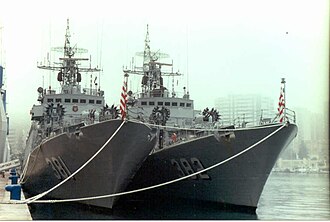
KRI Hasan Basri: History, Technical Specifications, Armament, and Role in the Indonesian Navy
KRI Hasan Basri (382) is a corvette operated by the Indonesian Navy, known nationally as Tentara Nasional Indonesia Angkatan Laut (TNI AL). The vessel belongs to the Kapitan Patimura class, a group of warships based on the Parchim-class corvettes originally developed in East Germany during the Cold War. Designed primarily for coastal anti-submarine warfare, these compact combat vessels combine diesel propulsion, naval guns, and specialized anti-submarine weapons in a relatively small hull. KRI Hasan Basri is particularly interesting because its history reflects the major political and military changes that occurred in Europe at the end of the twentieth century, when the reunification of Germany led to the transfer of former East German naval vessels to other countries. The ship began its career under the name Güstrow in the East German Volksmarine before entering Indonesian service in 1996, where it received a new name and became part of Indonesia’s efforts to maintain a capable naval presence across its extensive maritime territory.
The importance of KRI Hasan Basri extends beyond its technical specifications. Indonesia is an archipelagic nation located between the Indian and Pacific Oceans, with thousands of islands, important international shipping routes, extensive fishing grounds, and maritime resources that require continuous attention. A navy operating in such an environment needs a mixture of ships with different sizes, endurance levels, weapons, and operational specialties. Large frigates and other modern surface combatants provide capabilities that smaller ships cannot easily reproduce, but compact corvettes can contribute to regional patrols, naval training, selected escort duties, and specialized missions appropriate to their equipment and condition. KRI Hasan Basri represents this smaller category of combatant, combining a European Cold War design heritage with a subsequent career in Southeast Asia. Its development and service also illustrate the practical challenges involved in acquiring older warships, maintaining their machinery, supporting their weapons, and adapting them to the requirements of a different navy.
Another reason the vessel deserves attention is its connection to Indonesian history through its name. Hasan Basri, also commonly referred to as Hasan Basry, was an important figure in the struggle to defend Indonesian independence in South Kalimantan during the Indonesian National Revolution. His leadership became associated with the resistance movement in the region and the establishment of Indonesian authority in an area where Dutch attempts to restore colonial control remained a major political and military issue. Naming a warship after him connects the Indonesian Navy’s modern maritime responsibilities with the historical experiences of the independence movement. By examining the ship’s origins, technical characteristics, weapons, operational purpose, and namesake, readers can gain a broader understanding of how KRI Hasan Basri fits into the history and development of Indonesia’s naval forces.
The Meaning Behind the Name KRI Hasan Basri
Who Was Hasan Basri?
Hasan Basri, whose name is also commonly written as Hasan Basry, was an Indonesian independence fighter and military leader associated with South Kalimantan during the struggle against Dutch colonial rule. He is remembered particularly for his role in organizing and leading resistance in the region during the Indonesian National Revolution, the period following Indonesia’s proclamation of independence on 17 August 1945. While the revolution involved political negotiations, military campaigns, popular mobilization, and competing claims to authority across the archipelago, local leaders played essential roles in sustaining the independence movement outside the country’s principal political centers. Hasan Basri became one of the significant figures in the resistance in Kalimantan, where geography, communications, and the presence of Dutch forces created distinctive challenges for Indonesian independence supporters.
Hasan Basri’s historical significance is closely associated with the struggle to establish and defend Indonesian sovereignty in South Kalimantan. Resistance movements in Kalimantan operated across a wide geographical area and frequently depended on local networks, knowledge of the terrain, community support, and the ability to organize forces under difficult conditions. Hasan Basri became associated with the Guerrilla Division of the Indonesian Navy, commonly referred to in historical accounts as ALRI Divisi IV, and with efforts to strengthen the position of the Republic of Indonesia in the region. His leadership contributed to a wider movement that sought recognition of Indonesian independence and opposed the restoration of Dutch colonial authority. He later became recognized as a national hero of Indonesia, reflecting the lasting importance of his contribution to the country’s independence history.
Why His Name Is Significant for the Indonesian Navy
The use of Hasan Basri’s name for an Indonesian warship is an example of how military naming traditions preserve national historical memory. Indonesian naval vessels frequently carry the names of national heroes, prominent historical figures, geographic locations, and people whose lives are associated with the defense or development of the country. These names give ships an identity beyond their pennant numbers and technical classifications, linking the personnel who serve aboard them with the historical experiences of earlier generations. In this context, KRI Hasan Basri is not simply an item in a naval inventory; its name recalls a figure associated with the difficult process of establishing Indonesian sovereignty after the Second World War.
The connection between Hasan Basri and the maritime environment of Kalimantan also provides an appropriate historical context for a naval vessel. The island’s extensive coastline, river systems, and surrounding waters played important roles in transportation, communication, logistics, and the movement of forces during the independence struggle. Modern naval operations take place in a very different technological and political environment, but the basic importance of controlling and protecting maritime approaches remains a recurring theme in Indonesian history. Through its name, KRI Hasan Basri connects this historical background with the contemporary responsibilities of the Indonesian Navy, including maritime security, defense, and the maintenance of national interests at sea.
The Origins of KRI Hasan Basri
Construction in East Germany
Before becoming KRI Hasan Basri, the vessel was known as Güstrow and served in the East German Volksmarine. It was built at Peene-Werft in Wolgast, East Germany, a shipbuilding facility associated with the production of the Parchim-class corvettes. The ship was launched on 31 December 1980 and subsequently entered East German naval service in the early 1980s. The Parchim-class program was developed during the Cold War, when East Germany and other Warsaw Pact countries placed considerable emphasis on protecting coastal waters and countering potential submarine threats. The resulting design prioritized a combination of mobility, specialized weapons, and relatively compact dimensions, enabling a vessel to operate in coastal and regional maritime environments without the cost and complexity of a much larger surface combatant.
The Parchim-class corvettes were designed primarily for anti-submarine warfare, a mission that was particularly important in the Baltic Sea. During the Cold War, NATO and Warsaw Pact naval forces prepared for the possibility of a major conflict in which submarines could threaten surface vessels, military supply routes, and maritime reinforcement operations. Smaller anti-submarine ships could patrol designated areas, work alongside other naval units, and employ specialized weapons when underwater threats were detected. The class therefore reflected a specific strategic requirement rather than an attempt to create a universal warship capable of every conceivable naval mission. Its propulsion system, sensor arrangements, and weapons suite were intended to work together within the limits imposed by a relatively small hull.
The ship’s construction history also illustrates the industrial relationships that shaped East German naval procurement. Peene-Werft produced vessels for the East German Navy and was part of a wider shipbuilding network that supported the military requirements of the Warsaw Pact. The Parchim design eventually became associated with ships transferred to other operators after the end of the Cold War, demonstrating how military platforms can remain relevant beyond the political circumstances that originally shaped their development. For Indonesia, the availability of these vessels created an opportunity to obtain established combatant hulls rather than relying exclusively on the construction of entirely new ships.
From Güstrow to KRI Hasan Basri
The end of the Cold War and German reunification transformed the future of the East German Navy’s fleet. When the two German states united in 1990, the former East German naval inventory was reorganized, and many of its ships were eventually retired, transferred, or sold. Güstrow was among the vessels that passed out of its original national service and became available for transfer to Indonesia. The Indonesian Navy acquired the ship as part of a broader effort to obtain former East German naval equipment, and it entered Indonesian service on 10 May 1996 under the name KRI Hasan Basri and pennant number 382.
The transition from Güstrow to KRI Hasan Basri involved more than a simple change of name and national flag. A ship transferred between navies must be evaluated for its mechanical condition, the availability of spare parts, the compatibility of its weapons and electronics, and the training requirements associated with its operation. Systems that were familiar to the original navy may be less convenient for a new operator, particularly when ammunition, maintenance equipment, technical documentation, or specialist support are difficult to obtain. The receiving navy must therefore consider the vessel as a complete technical system rather than focusing solely on the purchase price or the published performance figures. Refurbishment and adaptation can represent substantial parts of the overall investment required to place an older ship into useful service.
For Indonesia, the acquisition of KRI Hasan Basri formed part of the post-Cold War expansion and reorganization of its naval inventory. The vessel brought with it a design intended for coastal anti-submarine operations, along with a combination of guns and specialized weapons. Its later career demonstrates how a warship developed for one geopolitical environment can become part of a very different national fleet. Although the vessel’s original design remained recognizable, its Indonesian identity was shaped by the requirements of the TNI AL, the maintenance and modernization decisions made after its transfer, and the maritime environment in which it subsequently operated.
KRI Hasan Basri and the Kapitan Patimura Class
Understanding the Parchim-Class Design
KRI Hasan Basri is commonly described as a Kapitan Patimura-class corvette in Indonesian service, while its original design belongs to the Parchim-class family, also associated with the Project 1331M designation. These classifications describe different aspects of the vessel’s identity. The Parchim designation identifies its design origins and connection to East German naval construction, whereas Kapitan Patimura class is the designation commonly used for the group in Indonesian service. Understanding this distinction is useful when researching the ship because technical references may discuss the vessel under either name, particularly when comparing its original configuration with later modifications.
The Parchim-class design was intended to provide a compact anti-submarine combatant capable of operating in coastal waters. The ship’s hull, propulsion system, and weapons arrangement were developed around the need to move quickly between patrol areas, detect underwater contacts, and employ suitable weapons when required. Although the precise equipment configuration varied according to operator and modernization history, the class was generally associated with a combination of naval guns, anti-submarine rocket launchers, sonar, and radar. This arrangement reflects a period in naval engineering when specialized mission requirements were often addressed through purpose-built platforms rather than through the highly integrated multirole combat systems found on many newer warships.
A corvette is generally smaller than a frigate and larger or more heavily armed than many ordinary patrol vessels, although naval classification practices vary across countries and historical periods. Corvettes can be useful for regional patrols, escort missions, training, and selected combat roles because they offer a compromise between capability and operating cost. Their smaller size, however, limits the fuel, weapons, crew accommodation, and equipment they can carry. For KRI Hasan Basri, these limitations are part of the design’s defining characteristics: the ship offers a particular set of capabilities rather than the broad mission flexibility expected of a modern large surface combatant.
Why Compact Corvettes Matter
The usefulness of a compact warship cannot be measured by displacement or armament alone. A navy must consider the number of vessels it can maintain, the availability of trained crews, the cost of fuel and repairs, the ability to operate from suitable ports, and the demands placed on the fleet across different maritime regions. A smaller combatant may be appropriate for some regional assignments even when a larger frigate would provide superior endurance, more advanced sensors, and a broader weapons selection. The two types of vessel are therefore better understood as complementary elements of a fleet than as direct replacements for one another.
KRI Hasan Basri’s reported full-load displacement of approximately 935 tonnes places it in the category of relatively small surface combatants. Within that displacement, the original design accommodates propulsion machinery, weapons, sensors, crew spaces, fuel, and other operational equipment. This creates an engineering balance between performance and payload: increasing the weight of weapons or electronic systems can affect stability, internal space, electrical demand, cooling, and the vessel’s overall handling. Modernizing a ship of this size therefore requires careful selection of equipment, especially when the original hull was designed several decades earlier.
The class’s history also demonstrates the long-term consequences of military procurement decisions. A ship may remain in service well beyond the period in which its design was first introduced, but its practical value depends on maintenance, upgrades, and the suitability of its equipment for changing operational requirements. KRI Hasan Basri provides a useful case study of this process because it combines an established Cold War design with a subsequent career in Indonesia, where naval planners must balance maritime requirements against the financial and technical demands of sustaining a fleet.
Technical Specifications of KRI Hasan Basri
Dimensions and Displacement
KRI Hasan Basri is commonly listed as measuring approximately 75.2 metres in length, with a beam of 9.78 metres and a draft of around 2.65 metres in commonly reproduced technical summaries. These dimensions describe a relatively long and narrow hull, a configuration that reflects the vessel’s original requirements for regional naval operations and relatively high speed. Length provides room for propulsion machinery, weapon mounts, sensors, fuel, and accommodation, while beam influences the internal width of the ship and contributes to its stability characteristics. Draft measures the vertical distance between the waterline and the lowest part of the hull under a specified loading condition, making it important when considering the water depths in which a vessel can operate safely.
The ship’s standard displacement is commonly reported as approximately 865 tonnes, increasing to around 935 tonnes at full load. Displacement expresses the weight of water displaced by the vessel and, under the relevant conditions, corresponds to the ship’s weight. The difference between standard and full-load displacement reflects the additional mass of fuel, ammunition, stores, provisions, personnel, and other supplies carried for operational use. Published values can vary according to definitions, individual ship configuration, and the reference source, so the figures should be treated as commonly reported specifications rather than exact measurements for every stage of the vessel’s career.
These measurements help explain the compromises involved in designing a small combatant. A relatively compact hull can reduce the resources required to build and operate a ship, but it also limits the amount of additional equipment that can be installed without affecting stability, internal layout, and performance. Weapons, radar systems, communications equipment, and other upgrades all add weight or require electrical power, cooling, and maintenance access. Any modernization plan must therefore consider the combined effect of new equipment rather than evaluating each proposed upgrade independently. For a vessel with KRI Hasan Basri’s dimensions, maintaining a sensible balance between combat capability and basic ship performance is essential to preserving its usefulness.
Propulsion System and Maximum Speed
KRI Hasan Basri is commonly reported to use three M-504A diesel engines, each rated at approximately 4,750 horsepower, providing a combined installed output of around 14,250 horsepower. The engines drive three fixed-pitch propellers, producing the thrust required for the vessel to move through the water. This arrangement reflects the propulsion requirements of the original Parchim-class design, which sought to provide substantial power within a compact hull. Diesel propulsion is widely used in naval vessels because it can offer a practical balance between power, fuel consumption, and mechanical complexity, although the actual efficiency and reliability of any installation depend on its condition, maintenance, operating profile, and the loads imposed upon it.
The ship’s maximum speed is commonly reported as approximately 24.5 knots, equivalent to roughly 45.4 kilometres per hour. In maritime terminology, a knot represents one nautical mile per hour, rather than one kilometre per hour. A maximum speed figure is a reference value achieved under particular conditions and does not mean that the vessel can sustain that speed throughout an entire deployment. Higher speeds generally require greater propulsion power and can increase fuel consumption, while rough seas, hull condition, engine wear, and the weight of the ship can influence practical performance.
The use of three engines and three propellers also highlights the relationship between propulsion engineering and the ship’s original mission. A naval vessel may need to move rapidly to a patrol area, change position during an operation, or coordinate its movement with other units. At the same time, the machinery must be maintained and operated within appropriate technical limits. Engine reliability, access for maintenance, fuel availability, and the condition of the propellers all contribute to operational readiness. The published power and speed figures describe the design’s intended performance, but they cannot by themselves establish the vessel’s current mechanical condition or its ability to achieve those figures today.
Operational Range and Endurance
The range of KRI Hasan Basri is commonly reported as approximately 2,100 nautical miles at a speed of 14 knots, equivalent to around 3,889 kilometres at roughly 25.9 kilometres per hour. This figure helps explain the relationship between speed and endurance. When a ship travels at a moderate speed, it will generally use less fuel per nautical mile than it would at a much higher speed, although the precise relationship depends on engine characteristics, hull resistance, weather, loading, and the condition of the machinery. A published range is therefore a reference for a specified operating condition rather than a guarantee that the vessel can travel the same distance under every combination of circumstances.
Range is especially important for a country such as Indonesia, whose maritime territory extends across a large geographical area. A ship must be able to reach its assigned operating area, perform its mission, and return to a suitable port or rendezvous point while preserving an appropriate fuel reserve. Fuel planning becomes more demanding when a vessel must maneuver frequently, travel at high speed, operate in adverse weather, or remain at sea for an extended period. Its practical deployment duration also depends on the availability of food, freshwater, spare parts, maintenance support, and the physical endurance of the crew.
It is useful to distinguish between range and endurance when evaluating a warship. Range refers primarily to the distance the vessel can travel under a stated set of conditions, whereas endurance concerns how long it can remain deployed before its supplies, maintenance requirements, or personnel needs require a return or resupply. A ship might have sufficient fuel to cover a considerable distance but still be limited by its provisions, technical condition, or the nature of its assigned task. KRI Hasan Basri’s reported range therefore represents only one part of the broader question of how effectively the vessel can sustain operations at sea.
Crew and Shipboard Organization
Published specifications commonly list a crew complement of approximately 60 to 62 personnel for KRI Hasan Basri, although exact figures can vary according to source and configuration. Operating a corvette requires cooperation between personnel responsible for navigation, engineering, communications, weapons, sensors, administration, and general shipboard duties. The crew must maintain the ship’s machinery and equipment while also ensuring safe navigation, responding to emergencies, and preparing for the operational tasks assigned by the command. The work requires both technical knowledge and coordinated procedures, since the performance of an individual system often depends on the actions of personnel in other departments.
Crew organization is particularly important on a compact combatant, where internal space is limited and many operational functions must be performed by a relatively small number of people. Personnel may need to work across demanding schedules while maintaining readiness for navigation, maintenance, training, and emergency response. Effective communication and clear procedures are therefore essential to preventing errors and ensuring that the ship can carry out its responsibilities safely. Training also allows the crew to identify technical problems early, perform routine maintenance, and understand the limits of the vessel’s equipment.
The number of people aboard should not be interpreted as a direct measure of a ship’s combat capability. Crew size reflects the vessel’s design, automation level, mission requirements, and administrative organization. A modern ship may use digital systems to reduce the personnel required for certain functions, while an older platform may depend more heavily on manual procedures and specialized maintenance knowledge. For KRI Hasan Basri, the reported crew complement provides useful context for understanding the scale of the vessel, but current manning levels would need to be confirmed separately if an exact figure is required.
Armament and Combat Capabilities of KRI Hasan Basri
The AK-725 Twin 57 mm Naval Gun
The AK-725 twin 57 mm naval gun is commonly listed among the principal weapons associated with KRI Hasan Basri. Developed during the Soviet era, the system uses two barrels in a single mount and was intended to provide naval gunfire against suitable surface and airborne targets within its engagement envelope. A gun of this type gives a warship a means of employing ammunition against appropriate targets without requiring a missile for every engagement. Its practical effectiveness depends on ammunition characteristics, fire-control equipment, target information, mechanical condition, and the circumstances in which it is used.
The presence of a 57 mm gun illustrates the weapons philosophy of the Parchim-class design, which combined conventional naval guns with specialized anti-submarine equipment. The gun can be discussed as an important part of the vessel’s historical armament, but its calibre alone does not establish the effectiveness of the ship against modern aerial or surface threats. Detection and tracking quality, reaction time, fire-control integration, ammunition availability, and the characteristics of the target all influence the outcome of an engagement. A naval gun is one component of a wider combat system rather than an independent guarantee of protection.
For a warship acquired secondhand and subsequently adapted to a new navy, it is also important to distinguish between the weapon’s original design and its present condition. The continued installation of a particular gun does not necessarily prove that every associated system remains operational or that its capabilities are identical to those available when the vessel first entered service. Reliable assessments must take account of maintenance, modernization, and the availability of supporting equipment and ammunition. In the case of KRI Hasan Basri, the AK-725 is a useful indicator of the ship’s Cold War design heritage and its original approach to surface combat.
The AK-230 Twin 30 mm Gun
Another weapon commonly associated with KRI Hasan Basri is the AK-230 twin 30 mm automatic naval gun. The system was designed to provide close-range defensive fire against suitable aerial and surface targets, complementing the larger 57 mm gun. The two weapon types have different characteristics and intended roles, illustrating how naval designers distributed defensive functions across multiple mounts rather than relying on a single gun for every situation. The AK-230’s automatic firing capability and relatively small calibre reflect its intended use as part of a close-range weapons arrangement.
Close-range naval guns remain useful in certain circumstances, but their effectiveness depends on the full chain of detection, tracking, command decisions, fire-control performance, and weapon operation. A target must be detected and assessed in sufficient time for the crew to respond, and the weapon must be capable of engaging the target under the prevailing conditions. Modern anti-ship missiles and other threats can pose difficult challenges even for ships equipped with more contemporary defensive systems, so the existence of a gun mount should not be treated as evidence that a vessel can reliably defeat every type of incoming threat.
The AK-230 also illustrates how equipment from the Cold War can remain part of the identity of a ship long after the original strategic circumstances have changed. A vessel may retain selected systems while receiving other modifications to better suit its new operator. The resulting configuration can differ from the original ship, making it important for researchers to identify whether a weapons list refers to Güstrow during its East German service or to KRI Hasan Basri after its transfer to Indonesia.
Denel GI-2 20 mm Guns
Published descriptions of the Indonesian configuration list two Denel GI-2 20 mm guns as additional armament. These weapons belong to a different design lineage from the original Soviet-associated guns and demonstrate that a transferred warship can receive equipment changes during its service with a new navy. The GI-2 is an automatic cannon associated with the South African Denel weapon family, designed for applications where a compact gun can provide useful close-range firepower. Its inclusion in the ship’s reported configuration is significant because it distinguishes the Indonesian vessel’s later armament from some historical descriptions of its original East German fit.
The adaptation of weapons systems is a common challenge when a navy inherits older ships. The original operator may have maintained a supply chain for ammunition, spare parts, and specialist technical support that is no longer readily available to the receiving country. Replacing or adapting selected systems can help align the ship with the new operator’s logistics and maintenance arrangements, although modifications introduce their own engineering requirements. Weight, mounting arrangements, electrical connections, fire-control compatibility, and crew training must all be considered before a different weapon can be integrated effectively.
For readers researching KRI Hasan Basri, the reported presence of the Denel GI-2 guns highlights the need to distinguish historical and later configurations. Published technical lists may reproduce the armament of the original Güstrow, while others attempt to describe the vessel after Indonesian modifications. Because equipment can change throughout a ship’s career, any statement about its exact present-day armament should be checked against recent, ship-specific documentation rather than assumed from the class’s original design.
The RBU-6000 Anti-Submarine Rocket Launchers
KRI Hasan Basri is commonly reported to carry two RBU-6000 anti-submarine rocket launchers. Developed in the Soviet Union, the RBU-6000 was designed to deliver anti-submarine munitions into a designated area of water, providing a means of attacking suspected underwater threats when sufficient contact information is available. Unlike a conventional torpedo that typically travels through the water toward a target, an anti-submarine rocket launcher uses a rocket-powered trajectory to deliver its payload. Its operational usefulness depends on the munition, the quality of underwater detection and tracking, the characteristics of the target, and the tactical situation.
The system is closely connected to the original purpose of the Parchim-class corvettes. Anti-submarine warfare was a central requirement of the design, and the combination of sonar and specialized weapons was intended to allow the vessel to participate in operations against underwater threats in coastal waters. Submarines can be difficult to detect because they operate beneath the surface and may exploit environmental conditions to reduce their acoustic signature. A ship carrying anti-submarine weapons must therefore rely on trained personnel, appropriate sensors, reliable communications, and effective coordination rather than treating the launcher as an independent capability.
The presence of the RBU-6000 is an important part of the vessel’s historical and technical profile, but it should not be confused with proof of a fully modern anti-submarine capability. The effectiveness of any anti-submarine system depends on the complete sensor-to-weapon process, the condition of the equipment, the availability of appropriate munitions, and the training of the crew. Modern submarine technology and underwater detection methods have evolved substantially since the Cold War, making it necessary to assess an older ship’s capability in the context of its current equipment and operational support.
Why Historical Weapons Lists Can Differ
Weapons lists for KRI Hasan Basri are not always identical across published references because some describe the ship as originally built, while others attempt to summarize its configuration after Indonesian service modifications. Historical accounts of the Parchim-class design refer to systems such as short-range surface-to-air missile positions and torpedo tubes, but not every item listed for the original vessel should automatically be treated as part of KRI Hasan Basri’s current fit. Some Indonesian ships of the class underwent changes to their close-range guns, anti-submarine equipment, and torpedo arrangements as a result of local requirements and equipment availability.
This distinction is particularly important when comparing KRI Hasan Basri with other ships in the same class. Vessels that began with similar designs can develop different configurations as a result of maintenance decisions, modernization programs, and differences in the availability of weapons and spare parts. Even when two ships retain the same principal gun, their sensors, supporting systems, and readiness may differ. A reliable technical article should therefore separate the original class design from the ship-specific equipment that has been reported for Indonesian service.
For that reason, the armament described here should be understood as a summary of commonly published information rather than a definitive inventory of everything currently installed and operational. Exact claims about the vessel’s present-day weapons, readiness, or sensor performance require a dated and authoritative source. Making that distinction helps preserve the article’s usefulness while avoiding the common mistake of presenting a historical weapons list as a confirmed current configuration.
Sensors, Radar, and Underwater Detection
Radar for Maritime Surveillance
Radar is an important part of a warship’s ability to observe its surroundings and maintain awareness of activity at sea. By transmitting electromagnetic energy and receiving reflected signals, radar systems can detect certain objects at distances beyond the range of ordinary visual observation. Depending on the equipment fitted, a ship may use radar for surface surveillance, air surveillance, navigation, and support for weapons engagement. For a corvette such as KRI Hasan Basri, these functions contribute to the crew’s ability to monitor the surrounding maritime environment, navigate safely, and build a clearer picture of nearby vessel movements.
Historical descriptions of the Parchim-class design identify radar equipment associated with Soviet-era naval technology, including the MR-302 search radar and MR-123 fire-control radar in class-level equipment lists. These designations help explain the technological background of the ship, but they should not be interpreted as a complete, independently verified inventory of the equipment installed on KRI Hasan Basri today. Individual ships may receive replacements, modifications, or upgrades during their service lives, and published references do not always distinguish clearly between original equipment and later configurations. The precise radar suite currently carried by the vessel should therefore be confirmed through ship-specific documentation before being stated as a present-day fact.
Radar effectiveness also depends on factors beyond the model of equipment installed. The condition of the antenna, the quality of maintenance, the experience of the operators, and the integration of radar information with communications and other onboard systems can influence the usefulness of the resulting data. A radar contact may indicate the presence of an object without immediately establishing its identity, intentions, or exact characteristics. Additional information and careful interpretation may be needed before the crew can make an operational decision. For this reason, radar is best understood as one component of maritime awareness rather than a system that independently answers every question about the surrounding environment.
Sonar and Anti-Submarine Warfare
Sonar is especially important to the historical mission of KRI Hasan Basri because the Parchim-class corvettes were developed primarily for anti-submarine operations. Unlike radar, which uses electromagnetic energy to detect certain objects, sonar relies on sound to collect information about the underwater environment. Depending on the system, sonar can transmit acoustic signals and analyze their returns, or listen for sounds produced by other objects. Underwater detection is a technically demanding task because sound behaves differently according to water temperature, salinity, depth, seabed characteristics, and other environmental conditions. Background noise and the acoustic characteristics of a target can also affect the quality of the information received.
The original design lineage of KRI Hasan Basri is associated with hull-mounted sonar equipment intended to support the detection and tracking of underwater contacts. Sonar information can help a ship determine whether an underwater sound source warrants further investigation, but interpreting the results requires trained personnel and an understanding of the conditions in which the measurements were obtained. An underwater contact may be difficult to classify immediately, and the process of assessing it can require repeated observations and information from other sources. Effective anti-submarine warfare consequently depends on the combined performance of sensors, operators, communications, weapons, and supporting naval units.
The age of the original design is also relevant when evaluating the vessel’s capabilities in the modern era. Underwater detection technology, digital signal processing, submarine propulsion, and acoustic signature reduction have advanced considerably since the Cold War. A ship can retain useful anti-submarine functions while facing limitations against newer underwater threats, particularly if its original sensors and combat systems have not received extensive modernization. Without a current, authoritative description of KRI Hasan Basri’s equipment, it would be inappropriate to claim a specific detection range or to make definitive statements about its ability to track particular modern submarine types.
KRI Hasan Basri’s Role in the Indonesian Navy
Indonesia’s Maritime Geography
Indonesia’s geography is one of the principal reasons its navy requires a diverse fleet of vessels. The country stretches across a vast archipelago situated between the Indian and Pacific Oceans, with thousands of islands separated by seas, straits, and channels that connect important international shipping routes. Its maritime environment supports commercial transportation, fishing, energy production, tourism, and communities whose livelihoods depend on the sea. Protecting these interests requires more than a single type of warship: naval forces must balance patrol and surveillance duties, national defense, training, logistics, and cooperation with other agencies responsible for maritime affairs.
KRI Hasan Basri represents one category of vessel within this larger maritime framework. Its compact size and original design make it useful for understanding the role of smaller surface combatants, although the ship’s actual assignments depend on its operational readiness and the tasks allocated by the Indonesian Navy. A corvette can provide a naval presence in a designated area, participate in training activities, and undertake missions suited to its equipment and endurance. It does not need to possess every capability of a modern frigate to contribute to a fleet, provided that its tasks are selected realistically and that the vessel is maintained to an appropriate standard.
The importance of naval capability also extends beyond the ships themselves. Maritime defense requires trained personnel, reliable communications, ports and maintenance facilities, fuel supplies, spare parts, and the ability to coordinate information from different sources. Even a well-armed ship cannot operate effectively without a functioning support system. KRI Hasan Basri’s history therefore offers a useful reminder that the value of a warship depends on the organization responsible for sustaining it, not simply on its published specifications or the number of weapons mounted on its deck.
Patrols and Regional Naval Presence
Naval patrols contribute to a country’s ability to maintain awareness of its maritime surroundings and demonstrate a continuing presence in areas of national interest. Depending on the tasking and the vessel’s capabilities, patrol-related activities may include monitoring maritime traffic, conducting training, participating in exercises, supporting selected escort assignments, and cooperating with other naval units. These activities differ from high-intensity combat, but they help develop the professional skills, coordination, and operational familiarity needed for more demanding missions.
A ship’s practical contribution to these duties depends heavily on its condition and availability. Theoretical speed and range figures provide a useful description of design capability, but actual operations require functioning engines, dependable navigation equipment, suitable communications, trained personnel, and the availability of necessary supplies. Maintenance periods may limit the time a vessel can spend at sea, while the need to repair aging equipment can affect the scheduling of deployments. A realistic assessment of KRI Hasan Basri must therefore distinguish its established technical characteristics from its readiness on any particular date.
The vessel has also been associated with documented Indonesian naval activities in the Java Sea. In February 2021, published accounts reported that KRI Hasan Basri participated in a live-firing exercise. In April of the same year, the ship was among the Indonesian naval vessels deployed during the search for the submarine KRI Nanggala-402, which went missing during a torpedo exercise off Bali. These events illustrate two different aspects of naval service: routine combat training and the use of naval vessels in a major search-and-rescue effort. The second operation also demonstrates that ships equipped for military missions may contribute to broader emergency responses when national circumstances require it.
Training, Exercises, and Operational Readiness
Training is essential to the effective operation of a warship because the crew must coordinate navigation, engineering, communications, weapons handling, and emergency procedures under changing conditions. Exercises allow personnel to practice their responsibilities, assess the performance of onboard systems, and improve coordination between departments. For a ship with a Cold War design heritage, regular training also helps ensure that personnel understand the characteristics and limitations of the equipment they operate, particularly where older systems require specialized maintenance knowledge or procedures that differ from those found on newer vessels.
Live-fire exercises are one form of naval training, but operational readiness involves much more than the ability to fire a weapon. Crews must maintain safe handling procedures, communicate clearly, follow established command structures, and understand the limitations of their equipment. Engineering personnel must ensure that machinery is operating correctly, while navigation and communications teams must support the ship’s movement and coordination with other units. A successful exercise therefore reflects the interaction of personnel, equipment, planning, and command rather than the performance of a single weapon system.
For KRI Hasan Basri, training and readiness should be considered within the context of its age and original design. Older vessels may require additional attention to maintenance, spare-parts planning, and the continued availability of specialist technical support. Regular exercises can help crews maintain proficiency, but they do not remove the engineering constraints associated with aging machinery or equipment that has become difficult to support. Current readiness assessments require more recent and specific information than historical descriptions alone can provide.
KRI Hasan Basri and the Search for KRI Nanggala-402
The April 2021 Submarine Emergency
One of the most widely reported events involving KRI Hasan Basri in recent years was its participation in the search for the Indonesian submarine KRI Nanggala-402 in April 2021. KRI Nanggala-402 went missing during a torpedo exercise in waters north of Bali, prompting a major search effort involving Indonesian naval vessels and other supporting resources. The disappearance attracted international attention because of the risks associated with submarine emergencies and the limited time potentially available to locate a submerged vessel and assist its crew. The incident became one of the most serious naval tragedies in Indonesia’s modern history.
KRI Hasan Basri was among the ships deployed in the search effort, demonstrating how vessels with different original purposes can contribute to a common national operation. A search for a missing submarine may require coordination among surface ships, specialized underwater search equipment, aviation assets, command authorities, and other participating organizations. The tasks involved differ from conventional surface combat, since the priority is to gather information, locate the missing vessel, and support the wider response. This type of operation highlights the importance of cooperation and the ability of a navy to coordinate available resources during an emergency.
The search for KRI Nanggala-402 ultimately ended in tragedy. Indonesian authorities confirmed that the submarine had sunk, and all 53 personnel aboard were lost. The disaster underscored the dangers associated with submarine operations and the importance of emergency preparedness, technical reliability, and effective coordination during maritime crises. KRI Hasan Basri’s involvement in the search forms part of the ship’s publicly documented history, although it should not be confused with a claim that the corvette independently located the submarine or was responsible for the overall outcome of the operation.
What the Operation Reveals About Naval Cooperation
The search for KRI Nanggala-402 demonstrates that naval capability includes humanitarian and emergency-response responsibilities alongside conventional defense missions. Warships may be called upon to search for missing vessels, transport personnel or equipment, support communications, or assist with maritime incidents that demand a coordinated response. Their ability to contribute depends on the task at hand, the systems available aboard each ship, and the command arrangements established for the operation. No single vessel necessarily possesses every tool required for a complex search, which makes coordination among participating units particularly important.
The operation also illustrates why a navy needs a variety of platforms rather than a fleet consisting exclusively of one ship type. Different vessels can provide different combinations of endurance, sensors, communications, transport capacity, and specialist equipment. A compact corvette may be able to participate in a coordinated search even though it was originally designed for anti-submarine combat. The precise role assigned to each vessel depends on the requirements of the operation and the capabilities it can contribute safely and effectively.
For readers interested in KRI Hasan Basri, this event adds an important dimension to the ship’s history. It shows that a vessel’s role within a navy can extend beyond the purpose for which its original designers intended it. Its contribution to the search effort is also a reminder that naval service is not limited to weapons and combat performance; it includes the broader responsibility to respond to emergencies at sea and support the safety of personnel operating in one of the most demanding environments.
Modernization and the Challenges of Maintaining an Older Warship
The Benefits of Acquiring Secondhand Warships
Acquiring secondhand warships can offer a navy an opportunity to increase its inventory without bearing the full cost and construction time associated with commissioning entirely new vessels. A ship that has already been built may be available relatively quickly, allowing a country to expand its fleet or replace a retiring platform while new construction programs are being considered. This approach can be especially attractive when a country needs a mixture of ship types but must allocate its defense budget across personnel, training, infrastructure, maintenance, and other competing requirements. Indonesia’s acquisition of former East German vessels after the Cold War illustrates this broader approach to fleet development.
However, the purchase price of an older warship is only one part of the financial calculation. A transferred vessel may require refurbishment, replacement of worn machinery components, repairs to electrical systems, improvements to accommodation, and modifications to meet the new operator’s standards. Weapons and sensors may depend on spare parts that are difficult to obtain, while specialized ammunition may no longer be available through the original supply chain. Technical manuals, maintenance equipment, and training resources must also be accessible if the vessel is to remain useful over an extended period. In some cases, the cost of bringing an older ship into service can be substantial relative to its initial acquisition price.
The decision to acquire a secondhand vessel must therefore be evaluated across its expected service life. A lower purchase price can be attractive, but the total cost of ownership includes maintenance, fuel, crew training, modernization, and eventual retirement. A ship may still provide value if its equipment is appropriate for the missions assigned to it and the navy can sustain it reliably. Conversely, a vessel that requires extensive repairs or depends on unsupported systems may become an expensive burden. KRI Hasan Basri’s transfer history provides a useful example of why procurement decisions should consider the entire life cycle of a warship rather than its acquisition cost alone.
Modernization: What Can and Cannot Be Changed
Modernization can extend the useful life of an older warship by improving selected systems, replacing equipment that is no longer supportable, or adapting the vessel to the requirements of its current operator. Potential areas for improvement across a warship’s service life can include navigation equipment, communications, sensors, weapons, electrical systems, and crew facilities. The precise scope of any upgrade depends on the ship’s condition, the resources available, and the operational requirements established by the navy. Not every vessel receives the same improvements, even when several ships share an original design.
The physical characteristics of the hull place important limits on modernization. Additional equipment may require more electrical power, cooling capacity, internal space, and structural support. Heavier systems can affect stability and displacement, while modifications to weapons and sensors may require new cables, interfaces, and operator training. A ship’s original design also determines how easily technicians can access machinery and how much room remains for new equipment. For a compact vessel such as KRI Hasan Basri, modernization choices must balance the potential benefits of new technology against the limitations imposed by the original hull and machinery arrangements.
It is equally important to recognize that modernization does not automatically make an older vessel equivalent to a newly built warship. A modern combatant may incorporate integrated digital systems, advanced sensors, improved electronic warfare equipment, and weapons designed to work together within a contemporary combat management architecture. Installing one newer component on an older ship does not necessarily reproduce the advantages of a fully integrated modern design. The most realistic approach is to evaluate upgrades according to the specific capabilities they improve and the missions the ship is expected to perform.
Logistics, Maintenance, and Crew Expertise
The maintenance of a warship depends on a continuous supply of parts, technical knowledge, trained personnel, and appropriate facilities. Engines must be inspected and serviced, hulls require periodic examination, electrical equipment needs testing, and weapons and sensors must be maintained according to their technical requirements. The complexity of this work increases when a vessel combines systems from different manufacturers or countries. A navy operating an older ship may need to preserve specialist knowledge of equipment that is no longer widely used, making the experience of its engineers and technicians particularly valuable.
Crew expertise is just as important as the physical condition of the ship. Personnel must understand normal operating procedures, recognize warning signs of technical problems, and respond appropriately when equipment behaves unexpectedly. They also need to maintain navigation proficiency, communicate effectively, and carry out emergency procedures under pressure. Training and experience cannot eliminate mechanical wear, but they can help personnel use equipment responsibly and identify problems before they develop into more serious failures.
The long-term usefulness of KRI Hasan Basri consequently depends on a combination of design characteristics, maintenance practices, technical support, and the operational demands placed upon it. The age of the ship is an important factor, but age alone does not establish whether a vessel is ready for service or whether it should be retired. A sound assessment requires current information about the hull, machinery, weapons, sensors, maintenance record, and planned future role. This is particularly important when comparing an older corvette with newer ships that may have very different operating costs and technical capabilities.
KRI Hasan Basri Compared with Modern Corvettes and Frigates
Differences in Size and Mission
Modern corvettes and frigates have evolved significantly from the ships designed during the Cold War. Contemporary vessels may incorporate advanced radar systems, integrated combat management software, modern communications, electronic warfare equipment, and weapons intended to address a broader range of surface, underwater, and aerial threats. Some carry anti-ship missiles, advanced air-defense missiles, modern torpedoes, and facilities for operating helicopters. These capabilities can provide considerable flexibility, although they also increase acquisition costs, maintenance demands, training requirements, and the complexity of the supporting infrastructure.
KRI Hasan Basri’s design reflects a different period in naval engineering. Its reported displacement of approximately 935 tonnes at full load, diesel propulsion system, and historically documented gun and anti-submarine armament place it within the category of relatively compact Cold War combatants. Its original mission emphasized coastal anti-submarine warfare rather than the broad multirole capabilities commonly associated with many modern frigates. This difference does not make the ship historically unimportant or automatically unsuitable for every contemporary task; instead, it demonstrates that the usefulness of a vessel depends on the requirements assigned to it and the capabilities it can reliably provide.
Comparisons between older and newer ships should therefore examine more than headline specifications. A vessel with greater speed may not necessarily have better surveillance capabilities, while a ship with more weapons may require a much larger support organization. Modern naval operations also depend increasingly on information sharing between ships, aircraft, shore facilities, and other surveillance systems. The ability to integrate information from multiple sources can be as important as an individual ship’s sensor or weapon performance. Evaluating KRI Hasan Basri in this broader context helps explain both its historical strengths and the limitations associated with its original design.
The Continuing Value of Naval History
Studying older warships provides valuable insight into the relationship between technology and military doctrine. The Parchim-class design reveals how East Germany approached coastal anti-submarine warfare during the Cold War, while the later transfer of these ships to Indonesia demonstrates how political changes can reshape naval inventories. The same physical platform can serve different countries, receive a new name, and become part of a different strategic environment without losing its underlying design heritage.
KRI Hasan Basri is therefore relevant not only as an individual ship but also as an example of the longer life cycles associated with military equipment. Its history connects East German shipbuilding, the reorganization of European naval forces after reunification, Indonesian procurement decisions, and the challenges of maintaining older vessels in a changing technological environment. These connections make the ship a useful subject for readers interested in naval history, military engineering, and the development of Southeast Asian maritime forces.
Older vessels can also help explain why modern navies require careful planning when replacing equipment. A new ship may offer substantially improved sensors and weapons, but it also requires investment in infrastructure, training, spare parts, and maintenance. A navy must decide how to balance immediate operational requirements against the long-term benefits of newer technology. The history of KRI Hasan Basri illustrates how decisions made decades earlier can continue to influence a fleet’s capabilities, operating costs, and future procurement choices.
Conclusion: The Significance of KRI Hasan Basri
KRI Hasan Basri represents an important intersection of naval engineering, Indonesian national history, and the changing requirements of maritime defense. Originally constructed in East Germany as Güstrow, the vessel was designed around the Cold War need for compact anti-submarine combatants capable of operating in coastal waters. Its transfer to Indonesia following the end of the Cold War gave the ship a new national identity and placed it within the Indonesian Navy’s broader effort to maintain maritime capabilities across a geographically extensive archipelago. The name Hasan Basri adds another layer of meaning, connecting the ship with the independence struggle in South Kalimantan and the historical figures whose contributions helped establish the Republic of Indonesia.
The vessel’s technical characteristics illustrate the strengths and limitations of its original design. Its approximately 75.2-metre hull, reported full-load displacement of 935 tonnes, three diesel engines producing a combined 14,250 horsepower, and reported maximum speed of 24.5 knots describe a relatively small but purpose-built surface combatant. Its historical weapons configuration reflects the original emphasis on anti-submarine warfare, while the reported addition of Denel GI-2 guns demonstrates how equipment can change when a ship enters service with a different navy. At the same time, the vessel’s age highlights the importance of maintenance, logistics, modernization, and realistic assessments of present-day readiness.
KRI Hasan Basri’s history also demonstrates that naval service involves more than the operation of weapons. Its reported participation in training activities and the search for KRI Nanggala-402 illustrates how naval vessels contribute to exercises, coordination, and emergency operations as well as conventional defense. These responsibilities require trained crews, functioning equipment, reliable support systems, and the ability to cooperate with other units. Ultimately, KRI Hasan Basri is best understood as one part of Indonesia’s wider maritime story: a ship whose origins lie in Cold War Europe, whose name honors an Indonesian national hero, and whose career reflects the practical challenges of maintaining naval capability across changing political and technological eras.
Summary Table of KRI Hasan Basri Technical Specifications
The following table consolidates the principal technical details commonly reported for KRI Hasan Basri. Historical sources sometimes differ in their descriptions of individual equipment systems, so specifications and weapons should be understood as reported information rather than a verified inventory of the vessel’s current operational configuration.
| Technical specification | Details |
|---|---|
| Ship name | KRI Hasan Basri |
| Pennant number | 382 |
| Country | Indonesia |
| Operator | Indonesian Navy (TNI AL) |
| Ship type | Corvette |
| Indonesian class | Kapitan Patimura class |
| Original design | Parchim class / Project 1331M |
| Original name | Güstrow |
| Original operator | East German Volksmarine |
| Shipbuilder | Peene-Werft, Wolgast, East Germany |
| Launched | 31 December 1980 |
| Original service entry | Early 1980s; sources differ on the exact commissioning date |
| Indonesian commissioning | 10 May 1996 |
| Length | Approximately 75.2 m |
| Beam | Approximately 9.78 m |
| Draft | Approximately 2.65 m in commonly reported specifications |
| Standard displacement | Approximately 865 tonnes |
| Full-load displacement | Approximately 935 tonnes |
| Main propulsion | 3 × M-504A diesel engines |
| Reported power per engine | Approximately 4,750 hp |
| Combined installed power | Approximately 14,250 hp |
| Propulsion arrangement | 3 fixed-pitch propellers |
| Maximum speed | Approximately 24.5 knots |
| Reported range | Approximately 2,100 nautical miles at 14 knots |
| Reported crew complement | Approximately 60–62 personnel |
| Main gun | 1 × twin 57 mm AK-725 |
| Secondary gun | 1 × twin 30 mm AK-230 |
| Additional guns | 2 × 20 mm Denel GI-2, as reported for the Indonesian configuration |
| Anti-submarine armament | 2 × RBU-6000 launchers, as reported |
| Original mission | Coastal anti-submarine warfare |
| Historical operational event | Participated in the search for KRI Nanggala-402 in April 2021 |
| Namesake | Hasan Basri (Hasan Basry), Indonesian national hero |
