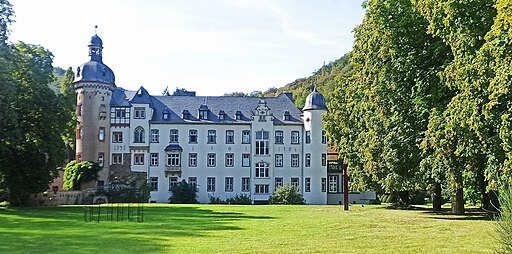
Rising with quiet authority above the broad, slow-moving waters of the Rhine, Namedy Castle stands as a monument to centuries of shifting power, evolving culture, and the subtle persistence of architectural heritage. This imposing structure, with its layered textures of stone and time, reflects more than the ambitions of its original builders; it embodies the story of a region that has repeatedly redefined itself through war, art, diplomacy, and domestic life. The castle’s silhouette, softened by age yet commanding in presence, continues to dominate the surrounding countryside, offering a visual reminder of feudal order and later aristocratic refinement. Its walls encapsulate the tension between defense and elegance, between rugged necessity and cultivated grace, creating an environment where history feels both distant and profoundly tangible.
Architectural Evolution and Design Identity
The architectural character of Namedy Castle reveals a complex narrative of expansion, destruction, and renewal that mirrors the fortunes of those who inhabited it. Originally conceived as a fortified stronghold, the castle’s earliest form prioritized strategic positioning and structural resilience. Heavy stone walls, limited points of access, and elevated vantage points were intended to repel invaders and secure control over vital trade routes and territorial boundaries. Over time, however, the harsh geometry of military construction softened into the more elaborate aesthetics of a noble residence. Decorative facades, arched windows, and landscaped courtyards gradually transformed the fortress into a stately castle that balanced defensive strength with visual sophistication, marking its transition from battlefield asset to symbol of noble prestige.
The Castle as a Stage of Social Power
Within the fortress walls, Namedy Castle functioned as more than a residence; it was a center of authority, negotiation, and cultural influence. The halls and chambers witnessed the rituals of governance, the negotiation of alliances, and the daily routines of a noble household. The presence of the castle shaped the lives of the surrounding villages, dictating economic rhythms and social hierarchies. Peasants, artisans, and merchants existed in its shadow, their labor sustaining the grandeur that defined aristocratic life. The castle thus operated as both protector and overseer, projecting stability while also reinforcing the rigid divisions that characterized feudal society.
Surviving the Currents of Conflict
The centuries exposed Namedy Castle to repeated tests of endurance as regional and continental conflicts swept through the land. From medieval skirmishes to larger military upheavals, the structure absorbed the physical and symbolic scars of warfare. Periods of decay followed episodes of destruction, yet each era of ruin brought eventual restoration, evidence of a persistent desire to preserve the castle’s identity. These cycles of damage and renewal layered history upon history, embedding within the stonework a silent record of resilience. The castle’s survival is not merely architectural but emblematic of an unbroken line of memory that refuses to be erased.
Cultural Influence and Artistic Resonance
As the role of the castle shifted away from military defense, it gradually evolved into a space associated with culture, leisure, and refined living. Art, music, and intellectual life found a welcome setting within its storied chambers, where noble patrons cultivated an atmosphere of appreciation for beauty and contemplation. The presence of gardens, carefully planned and maintained, further enhanced the castle’s role as a haven for aesthetic pleasure. Paths winding through manicured greenery connected the interior elegance of the building with the natural majesty of the surrounding landscape, reinforcing a harmonious dialogue between human creativity and the environment.
Modern Relevance and Timeless Appeal
In contemporary times, Namedy Castle continues to resonate as a powerful reminder of historical continuity in an age of rapid change. While modern infrastructure and urban expansion have transformed the region, the castle remains an anchor point of identity and tradition. Its preservation reflects a broader recognition of the importance of safeguarding heritage, not merely as visual spectacle but as a living narrative that informs present understanding. Visitors find within its grounds a space where imagination and memory intertwine, offering insight into a world shaped by honor, ambition, resilience, and artistry.
A Living Chronicle of Place and Memory
Namedy Castle endures as more than a relic of a distant past; it is a living chronicle that continues to impart lessons about permanence, change, and the human drive to leave a lasting mark upon the world. Each stone, corridor, and elevated tower contributes to a story that transcends generations, connecting the present moment with an intricate web of historical experience. Through its solemn grandeur and quiet dignity, the castle speaks not in quotations or proclamations but in the slow, eloquent language of time, reminding all who encounter it that history is not merely remembered, but felt.
