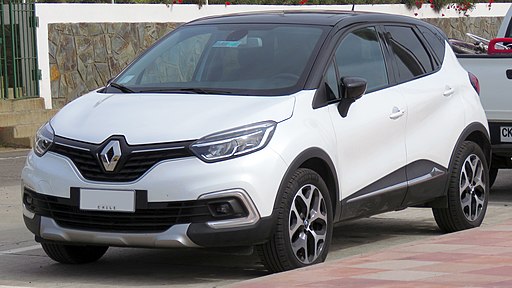
Renault Captur car battery
Renault Captur is a successful crossover with the parameters of the B segment, which has appeared in the French carmaker’s offer since 2013.
The first-generation Renault Captur can be bought with a total of two types of petrol engine (three-cylinder and four-cylinder) with a capacity of 0.9 and 1.2 liters and a power of 66 and 88 kW, as well as with a diesel of 1.5 liters and a power of 66 kW.
The second generation Renault Captur is available with gasoline engines of 1.3, 1.5, 1.6 and 2.0 liters. All engines are four-cylinder and their power is in the range of 78 – 110 kW. Also on sale is a four-cylinder diesel engine with a capacity of 1.5 liters and a power of 81 kW.
Renault Captur battery
Renault Captur cars use batteries with a capacity of 70 Ah, and start-stop technology.
.jpg)
Renault Captur first generation


The first generation of the Renault Captur was produced on site. These are the factories: Spain: Valladolid (Renault Spain) and Malaysia: Kuala Lumpur (TCMA), Brazil: São José dos Pinhais (Renault Brazil), Russia: Moscow (Renault Russia), India: Chennai (Renault Nissan India) and Kazakhstan: Kostanay (SaryarkaAvtoProm).
In the first generation, the Captur was produced in different versions for the European and global markets. The European version was built on the B platform, while the global version relied on the Renault/Dacia B0 platform, later on the Renault/Dacia B0+ platform.
The second generation of the Renault Captur is produced in factories: Spain: Valladolid (Renault Spain) and China: Wuhan (Dongfeng Renault).
Technical parameters Renault Captur
| First generation (J87) | Second generation (XJB/HJB/HJE) | |
| Width | 1,778 mm (70.0 in) | 1,797 mm (70.7 in) |
| Lenght | 4,122 mm (162.3 in) | 4,228 mm (166.5 in) |
| Wheelbase | 2,606 mm (102.6 in) | 2,639 mm (103.9 in) |
| Height | 1,567 mm (61.7 in) | 1,566 mm (61.7 in) |
| Production | 2013–2019 | 2019– |
| Layout | front-engine, front-wheel-drive | front-engine, front-wheel-drive |
| Platform | B platform | Renault–Nissan CMF-B HS platform |
| Transmission |
|
|
Replacing the car battery in a Renault Captur is a straightforward process, but it’s essential to follow the steps carefully to ensure safety and avoid damaging the vehicle’s electrical system. Here’s a detailed procedure for replacing the battery:
Tools and Materials Needed:
- New car battery (compatible with Renault Captur)
- Wrench set or socket set (typically 10mm)
- Screwdriver (if necessary for battery cover)
- Safety gloves
- Safety goggles
- Battery terminal cleaner or brush
- Cloth or towel
Procedure:
1. Preparation:
- Park the Vehicle: Ensure that the Renault Captur is parked on a flat surface, and the engine is turned off.
- Turn Off Electrical Accessories: Switch off all lights, radio, and any other electrical components to prevent electrical surges during battery replacement.
- Wear Safety Gear: Put on safety gloves and goggles to protect yourself from battery acid and corrosion.
2. Access the Battery:
- Open the Hood: Release the hood latch and lift the hood to access the engine compartment.
- Secure the Hood: Use the hood prop or stay to keep it open securely.
- Locate the Battery: The battery is typically located in the engine compartment on the driver’s side. Depending on the model year, there may be a cover that needs to be removed.
3. Disconnect the Old Battery:
- Identify Battery Terminals: The battery has two terminals—positive (+) (usually red) and negative (-) (usually black).
- Disconnect the Negative Terminal: Using a wrench, loosen the nut on the negative terminal and disconnect the cable. Always disconnect the negative terminal first to prevent short circuits.
- Disconnect the Positive Terminal: Next, loosen the nut on the positive terminal and disconnect the cable.
- Remove Any Covers: If there’s a cover over the battery, remove it by unscrewing it or unclipping it, if applicable.
4. Remove the Old Battery:
- Check for Securing Brackets: Look for any brackets or clamps holding the battery in place. Use the appropriate tool to remove these.
- Lift the Battery Out: Carefully lift the old battery out of the compartment. Batteries can be heavy, so use proper lifting techniques to avoid injury.
5. Clean the Battery Tray and Terminals:
- Clean Corrosion: Use a battery terminal cleaner or brush to clean any corrosion from the battery tray and terminals. This helps ensure a good connection with the new battery.
- Wipe the Tray: Use a cloth or towel to wipe the battery tray dry.
6. Install the New Battery:
- Position the New Battery: Place the new battery in the battery tray, ensuring it sits securely in the correct orientation (positive terminal should align with the positive cable).
- Secure the Battery: Reattach any brackets or clamps that hold the battery in place.
7. Connect the New Battery:
- Connect the Positive Terminal: Start by connecting the positive cable to the positive terminal of the new battery. Tighten the nut securely.
- Connect the Negative Terminal: Next, connect the negative cable to the negative terminal of the new battery and tighten the nut securely.
- Replace Any Covers: If there were any covers, reattach them now.
8. Test the New Battery:
- Start the Engine: Close the hood and start the engine to ensure everything is functioning properly. The dashboard should show no warning lights related to the battery or electrical system.
- Check Electrical Components: Test lights, radio, and other electrical systems to ensure they are operating correctly.
9. Dispose of the Old Battery:
- Recycling: Take the old battery to a recycling center or an auto parts store that accepts used batteries. Do not throw it in the regular trash, as car batteries contain hazardous materials.
Conclusion:
Replacing the battery in a Renault Captur can be done safely with the right tools and procedures. Always ensure you handle the battery carefully and follow all safety precautions to avoid any accidents. If you’re unsure about any step, consider consulting a professional mechanic for assistance.