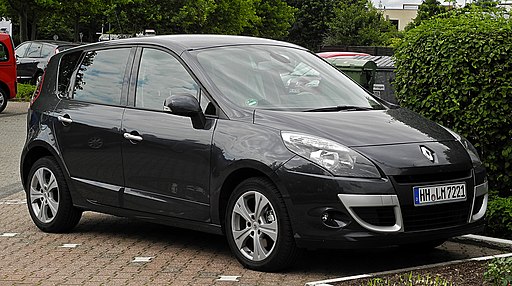
Renault Scénic faults
Engine & Fuel Delivery
- EGR valve carbon build-up Symptoms: Rough idle, loss of mid-range pull, “check engine” or turbo under-boost warning. Cause: Soot deposits sticking the valve open or closed. Fix: Remove, chemically clean or replace the EGR; fit a catch-can to reduce future clogging.
- DPF clogging (diesel models) Symptoms: Limp-home mode on motorway, poor economy, forced regen cycles. Cause: Short urban trips prevent self-regeneration; oil-diluted soot accumulates. Fix: Perform a long-run forced regeneration or remove and professionally clean the filter.
- Injector failures Symptoms: White/black smoke on startup, misfire, strong fuel smell. Cause: Carbon build-up on nozzle or deteriorating injector seals. Fix: Renew injector seals or swap in re-conditioned injectors; run periodic injector cleaner.
- Glow-plug/heater-plug faults (dCi engines) Symptoms: Hard cold starts, permanent glow-plug warning lamp. Cause: Worn heater plugs or failing relay/loom connections. Fix: Replace all glow plugs together and check relay wiring harness for corrosion.
- Turbocharger boost leaks or bearing wear Symptoms: Whistling or rattling from engine bay; loss of top-end power. Cause: Cracked intercooler hoses, failed boost-solenoid or worn turbo internals. Fix: Pressure-test boost plumbing, replace damaged hoses and solenoids; rebuild or fit new turbo.
Transmission & Drivetrain
- Automatic gearbox harsh shifting or slipping Symptoms: Lurching between gears, delayed engagement, transmission fault light. Cause: Worn clutch packs, low fluid level or degraded valve body. Fix: Change ATF and filter; if symptoms persist, overhaul valve body or replace clutch pack.
- Manual gearbox crunch on selection Symptoms: Grinding when engaging first or reverse. Cause: Worn synchros or clutch mis-adjustment. Fix: Renew synchro assemblies (or entire gearbox rebuild) and adjust/fix clutch linkage.
- Timing-chain/chain-tensioner noise (petrol turbo engines) Symptoms: Ticking from front of engine, especially at cold start. Cause: Failing hydraulic tensioner or stretched chain. Fix: Replace chain tensioner, rails and, if needed, the chain itself at around 80,000 km.
Electrical & Electronics
- Instrument-cluster or infotainment display failure Symptoms: Blank or flickering dash screens; unresponsive R-Link or MediaNav. Cause: Bad solder joints, capacitor failure or faulty ribbon‐cable connections. Fix: Reflow solder on cluster board or replace the entire cluster/module.
- Keycard reader and central-locking glitches Symptoms: Doors won’t lock/unlock; engine immobiliser error. Cause: Worn keycard reader contacts or failing RF module in the steering column. Fix: Replace the reader module or RF antenna ring around the column.
- Electric-window regulator failures Symptoms: Driver’s window sticks or won’t stay up/down. Cause: Stripped motor-gear or snapped guide rail. Fix: Swap in a new regulator unit and lubricate channels.
- Sunroof motor or seal leaks Symptoms: Sunroof jams; water in footwells or on headliner. Cause: Burnt-out motor, broken plastic clips or blocked drain tubes. Fix: Clean/clear drains, renew seal gaskets and fit a new motor assembly if seized.
Heating, Ventilation & Air Conditioning
- Blower-motor resistor pack failure Symptoms: Fan works only on highest speed or not at all. Cause: Resistor coil burnout or corroded connector. Fix: Replace resistor module and clean loom earth points.
- Air-conditioning fan noise or seizure Symptoms: Loud whine from dash; intermittent blower operation. Cause: Worn motor bearings or debris in fan cage. Fix: Remove dash fan unit, clear debris and fit a rebuilt motor.
- HVAC water leaks/fungus smell Symptoms: Damp carpet beneath glovebox, musty cabin odour. Cause: Blocked evaporator drain or mould on heat-exchanger. Fix: Flush drain tube, clean heater-box with anti-bacterial spray and change cabin filter.
Suspension & Steering
- Anti-roll-bar link and bush wear Symptoms: Clunks or squeaks over bumps; uneven tyre wear. Cause: Rubber éclairs and link joints fatigue. Fix: Renew links and replace worn bushes in matched pairs.
- Steering-column clicking or play Symptoms: Repetitive click at full lock; vague steering feedback. Cause: Broken locating clip on lower U-joint. Fix: Fit new clip and inspect the universal joint for binding.
Body & Interior
- Seat-rail binding or broken catch Symptoms: Seat sticks when sliding; rattles on rough roads. Cause: Worn plastic sliders or snapped spring clips. Fix: Swap in replacement rail sliders, renew broken clips and lubricate.
- Scuff-panel hinge and Modutop box rattle Symptoms: Buzzing from roof-liner cubbies over rough surfaces. Cause: Loose plastic retainers. Fix: Tighten or replace faulty hinge pins and clip retainers.
Renault Scénic as a used car
The Renault Scénic pioneered the compact MPV segment upon its debut in 1996, marrying hatchback agility with family-car practicality. Over four generations, it evolved from a basic people-carrier into a technology-rich all-rounder. Today’s used-car market offers Scénic models spanning mid-1990s simplicity to 2010s innovation, catering to diverse budgets and needs. This guide explores Scénic’s generational highlights, technical specifications, common issues and buying advice to help you secure a reliable pre-owned example.
Generations and Evolution
First Generation (1996–2003)
The original Scénic stood out with its high seating position, pillar-mounted rear seats and wraparound windscreen. Underpinned by the Clio platform, it offered 1.6- and 1.8-litre petrol engines plus a 1.9-litre diesel. Interior flexibility came from folding seats and under-floor storage, though early models lacked traction control and integrated navigation.
Second Generation (2003–2009)
This facelifted Scénic II introduced more pronounced styling, larger windows and improved ergonomics. Engine options expanded to include a 2.0-litre petrol, 2.0 dCi turbodiesel and the 1.6 16-valve petrol. Key upgrades were ESP stability control, hill-start assist and optional keycard keyless entry.
Third Generation (2009–2016)
Scénic III ushered in multimedia features such as the R-Link touchscreen system and adaptive cruise control. Interiors gained panoramic glass roofs and modular EasyLife sliding bench seats. Powertrains shifted toward efficiency with 1.2-litre TCe turbo-petrol units and 1.5-litre dCi diesels tuned from 90 to 130 hp.
Fourth Generation (2016–2022)
Although this generation borders on crossover styling, it retained Scénic’s MPV roots with a spacious cabin and seven-seat Grand Scénic variant. The 1.3 TCe petrol engine replaced older units, paired with a smooth 7-speed dual-clutch gearbox. Safety tech became more advanced, adding automatic emergency braking and lane-keep assist.
Technical Specifications
Engine Options and Performance
| Generation | Engine Variant | Displacement | Power (hp) | Torque (Nm) | Combined Fuel (l/100 km) |
|---|---|---|---|---|---|
| I (1996–2003) | 1.6 16V | 1,598 cc | 107 | 145 | 7.8 |
| I | 1.9 dCi | 1,870 cc | 98 | 210 | 6.2 |
| II (2003–2009) | 2.0 16V | 1,998 cc | 135 | 190 | 8.5 |
| II | 2.0 dCi | 1,997 cc | 150 | 320 | 6.1 |
| III (2009–2016) | 1.2 TCe | 1,197 cc | 115 | 190 | 5.2 |
| III | 1.5 dCi | 1,461 cc | 110 | 260 | 4.3 |
| IV (2016–2022) | 1.3 TCe | 1,332 cc | 140 | 240 | 5.4 |
| IV | 1.7 Blue dCi | 1,749 cc | 150 | 340 | 4.7 |
Transmission and Drivetrain
- 5-speed and 6-speed manual gearboxes across all generations.
- 4-speed automatic (Gen I and II), 6-speed EDC dual-clutch (Gen III), 7-speed EDC (Gen IV).
- Front-wheel drive with no all-wheel-drive option in standard Scénic models.
Dimensions and Cargo Space
| Specification | Compact Scénic | Grand Scénic (Gen IV) |
|---|---|---|
| Length | 4,280 mm (III) | 4,633 mm |
| Width | 1,828 mm | 1,828 mm |
| Height | 1,660 mm | 1,660 mm |
| Wheelbase | 2,730 mm | 2,730 mm |
| Boot Volume (seats) | 572 L (up) / 1,858 L | 572 L / 1,858 L |
Safety and Driver Assistance
Across later Scénic generations, available features include:
- Electronic Stability Program (ESP) and traction control.
- Multiple airbags: front, side curtain and knee.
- Hill-start assist and lane departure warning.
- Blind-spot monitoring and automatic emergency braking.
Infotainment and Comfort Features
Key comfort and technology highlights:
- Renault R-Link or Media Nav embedded touchscreen.
- Bluetooth connectivity, USB ports and voice control.
- Dual-zone climate control and heated front seats on select trims.
- Panoramic glass roof and hands-free power tailgate (Gen III onward).
Common Faults and Maintenance
Engine and Drivetrain Issues
Diesel models often suffer from EGR valve clogging and DPF blockages on short urban trips. Turbochargers on early dCi units may develop boost leaks or bearing wear. Petrol turbo engines (1.2 TCe) have occasional timing-chain tensioner failures around 80,000 km.
Suspension and Steering Concerns
Worn anti-roll bar links and lower control-arm bushes produce knocking noises over bumps. Power-steering pumps and electric-steer motors can develop whine or intermittent failure. Regular checks of wheel bearings and strut-top mounts prevent costly repairs.
Electrical and Electronics Glitches
Touchscreen units may freeze or lose touch response, often cured by software updates. Keycard reader faults disrupt central locking and immobilizer function; replacing the reader module typically resolves the issue. Faulty window regulators and sunroof drives appear after 100,000 km.
Buying Guide for a Used Scénic
What to Inspect
- Full service history with DPF/EGR maintenance records.
- Engine bay for oil leaks around turbo and camshaft covers.
- Underbody and suspension mounts for corrosion and play.
- Interior electronics: infotainment screen, climate controls and keycard operation.
- Seat rails and sliding benches for smooth movement without rattles.
Ownership Costs and Depreciation
Renault Scénic values stabilize around 40–50 percent of original price after five years. Insurance group ratings vary by engine size but remain moderate. Fuel consumption, particularly in diesel variants, keeps running costs competitive. Scheduled maintenance intervals of 30,000 km and reliable parts availability ensure predictable servicing budgets.
Conclusion
Whether you prioritize compact agility or family-friendly utility, the Renault Scénic holds strong appeal on the used market. Its progressive packaging, diverse engine lineup and rich feature availability allow buyers to match a model to their budget and lifestyle. Armed with knowledge of specifications, common issues and inspection checkpoints, you’ll be poised to choose a Scénic that offers years of versatile, value-driven motoring.
_%E2%80%93_Frontansicht,_2._Juli_2011,_Ratingen.jpg)