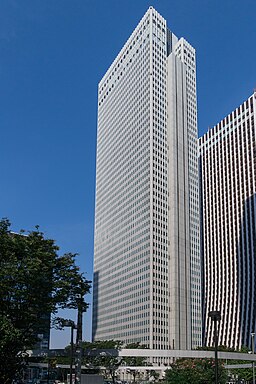
Shinjuku Nomura Building
Shinjuku Nomura Building: A Skyscraper of Modern Tokyo
Standing tall in the vibrant heart of Tokyo’s Shinjuku district, the Shinjuku Nomura Building is a striking example of Japan’s economic resurgence and architectural ambition during the postwar period. Completed in 1978, the building was one of the earliest ultra-modern skyscrapers that began to define the Shinjuku skyline and remains a key fixture in Tokyo’s urban fabric.
Owned by the Nomura Real Estate Development Co., Ltd., a subsidiary of the Nomura Group, the building is a multifunctional commercial tower that houses corporate offices, dining venues, retail shops, and various amenities. Its elegant, minimalist design and sheer verticality mirror the aesthetics of international modernism, while its functionality and engineering reflect Japan’s precision and resilience.
Historical Context
In the 1970s, Japan was in the midst of an unprecedented economic boom, known as the “Japanese economic miracle.” During this period, Tokyo’s cityscape transformed rapidly to accommodate the growing demand for office space and business infrastructure. Shinjuku, once a post-war sprawl of low-rise buildings and train stations, became the ideal area for such development, thanks to its strategic location and access to multiple railway and subway lines.
Nomura Real Estate aimed to create a flagship building that would not only reflect its corporate stature but also anchor a new business district in western Tokyo. The result was the Shinjuku Nomura Building—a towering symbol of prosperity, engineering excellence, and urban transformation.
Design and Architecture
Designed by Nikken Sekkei, one of Japan’s premier architecture and engineering firms, the building showcases a modernist aesthetic typical of the late 20th century: geometric lines, functional form, and a sleek curtain wall. Its clean facade consists of a steel-frame structure clad in reflective glass and aluminum, giving it a contemporary, almost monolithic appearance.
The building’s design prioritizes efficiency and flexibility. Its floor plates are open-plan and modular, allowing companies to customize their spaces. The vertical transportation system—featuring high-speed elevators—is engineered to minimize wait times, crucial for a building serving thousands of occupants daily.
Structural and Engineering Features
Japan is a country prone to seismic activity, and constructing tall buildings in Tokyo requires rigorous attention to earthquake resilience. The Shinjuku Nomura Building was engineered with a steel-frame structure supported by deep foundation piles and a robust core. It employs seismic isolation techniques and damping systems that allow it to withstand strong tremors.
Wind resistance was also a key consideration. Aerodynamic modeling helped shape the facade to reduce wind-induced oscillations, and the cladding materials were selected to resist the elements and minimize maintenance.
Technical Specifications
Here are the core technical specifications of the Shinjuku Nomura Building:
- Name: Shinjuku Nomura Building
- Japanese Name: 新宿野村ビルディング
- Location: 1-26-2 Nishi-Shinjuku, Shinjuku-ku, Tokyo, Japan
- Construction Start: 1975
- Completion: 1978
- Architect: Nikken Sekkei
- Structural Engineer: Nikken Sekkei
- Developer: Nomura Real Estate Development Co., Ltd.
- Height (Roof): 209.3 meters (686 feet)
- Total Floors: 50 above ground, 5 below ground
- Total Floor Area: Approximately 166,768 square meters (1,794,108 square feet)
- Structural System: Steel frame with seismic damping systems
- Elevators: 38 high-speed elevators
- Primary Uses: Office space, restaurants, shops, observation facilities
- Parking Capacity: Over 400 vehicles (underground parking)
- Facade Materials: Glass, aluminum, steel
- Earthquake Resistance: Designed according to Japan’s high seismic standards; retrofitted with modern damping technologies over time
Amenities and Features
The Shinjuku Nomura Building is more than just an office block. It features a wide array of amenities designed to attract tenants and the general public. Some highlights include:
- Restaurants: Upper floors feature a range of dining options with panoramic views of Tokyo, including Mt. Fuji on clear days.
- Retail and Services: Lower floors house various shops, banking services, convenience stores, and medical clinics.
- Observation Lounge: Though not as well-known as other Tokyo observatories, the Nomura Building includes an observation area open to visitors, offering unobstructed city views.
- Conference Facilities: The building provides meeting rooms and business lounges equipped with modern technology for corporate events.
Location and Accessibility
Situated in Nishi-Shinjuku, the building enjoys exceptional accessibility. It is directly connected via underground passages to Shinjuku Station, one of the busiest transport hubs in the world, serving JR lines, private railways, and several Tokyo Metro and Toei Subway lines. The location places it within walking distance of major hotels, department stores, government buildings, and entertainment districts.
Cultural and Urban Significance
Though the Shinjuku Nomura Building is not the tallest in Tokyo today, it played a critical role in shifting the city’s economic and spatial orientation westward. Its completion catalyzed the development of Shinjuku’s high-rise business zone, leading to the construction of other landmark buildings like the Shinjuku Mitsui Building and the Tokyo Metropolitan Government Building.
Its legacy is not only architectural but also symbolic—it marked a point in Tokyo’s history when the city confidently asserted itself as a global economic powerhouse. To this day, the Shinjuku Nomura Building remains a prestigious address for domestic and international businesses.
Modern Upgrades
Over the decades, the building has undergone several renovations to maintain competitiveness and comply with evolving safety and energy efficiency standards. These include:
- Upgraded seismic reinforcement
- Modernization of elevator systems
- Installation of LED lighting and energy-efficient HVAC systems
- Improved fire suppression and life safety infrastructure
- Enhanced IT and telecommunications infrastructure
These updates ensure the building continues to serve as a premier business environment well into the 21st century.
Conclusion
The Shinjuku Nomura Building stands as a towering icon of Tokyo’s architectural evolution and economic vitality. Its clean lines, robust engineering, and central location make it a lasting fixture of the city skyline. As Tokyo continues to expand and modernize, the Nomura Building reminds us of the moment when the city first looked to the sky—and found its reflection in glass and steel.
Would you like me to generate a labeled diagram or visual mock-up of the building’s structure or surroundings?
