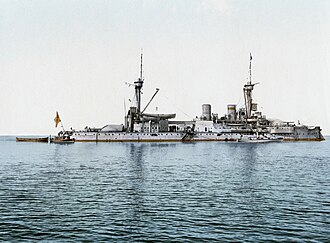
SMS Kurfürst Friedrich Wilhelm: The German Pre-Dreadnought That Became Barbaros Hayreddin
SMS Kurfürst Friedrich Wilhelm occupies a fascinating place in naval history because her career bridged two very different eras of battleship development. Built for the Imperial German Navy in the early 1890s, she was one of the four Brandenburg-class battleships, a group that represented a major step forward in Germany’s emergence as a serious naval power. At a time when Germany was still developing a modern ocean-going fleet, the Brandenburg class combined heavy armor, substantial firepower, and relatively high speed in a design that was unusual among contemporary battleships. Kurfürst Friedrich Wilhelm was laid down at the Imperial Dockyard in Wilhelmshaven in 1890, launched on 30 June 1891, and commissioned on 29 April 1894.
Her German career was relatively peaceful, consisting largely of fleet exercises, training, ceremonial duties, and overseas visits. Her most important deployment came during the Boxer Uprising in China in 1900–1901, when she sailed with the other Brandenburg-class ships as part of Germany’s expeditionary force. Yet the ship’s story did not end with her German service. In 1910, Germany sold Kurfürst Friedrich Wilhelm to the Ottoman Empire, where she was renamed Barbaros Hayreddin. Under her new identity she became an important Ottoman capital ship during the Balkan Wars and fought in the battles of Elli and Lemnos. Her long career finally ended on 8 August 1915, when a British submarine torpedoed and sank her during the First World War.
The Birth of the Brandenburg Class
Germany’s New Battleship Ambition
The origins of Kurfürst Friedrich Wilhelm can be traced to a transformation in German naval policy during the reign of Kaiser Wilhelm II. Before the late 1880s, the German fleet had concentrated heavily on coastal defense and smaller armored vessels. The new political leadership, however, increasingly wanted Germany to possess a fleet capable of operating beyond its immediate coastline. In 1888, the naval administration moved toward a program centered on larger ocean-going armored ships, ultimately producing the four Brandenburg-class vessels: Brandenburg, Kurfürst Friedrich Wilhelm, Weissenburg, and Wörth.
The design was significant because it was not simply an enlarged coastal-defense ship. The Brandenburgs were intended as genuine fleet battleships, with the endurance, protection, and offensive power necessary for operations in formation. Their six heavy guns were particularly striking. Most contemporary battleships mounted their principal armament in two twin turrets, giving them four large-caliber guns. The Brandenburg class instead carried three twin turrets, giving it six heavy guns. This arrangement gave the ships an exceptionally powerful broadside for their size.
A Distinctive Three-Turret Arrangement
The central turret was especially unusual. Its guns were of smaller caliber than those in the forward and aft turrets, allowing the designers to reduce the physical space needed for the turret and its firing arcs. Nevertheless, the arrangement meant that the ship could bring six heavy guns to bear in a broadside, a considerable advantage under the tactical assumptions of the period.
Protection was another strength. Kurfürst Friedrich Wilhelm and her sister Weissenburg received Krupp nickel-steel armor, which was more effective than the compound armor used on Brandenburg and Wörth. Contemporary descriptions emphasize the substantial protection of the class, including an armor belt reaching roughly 350–400 mm in its thickest sections according to some specifications.
The result was a battleship that looked formidable by early-1890s standards. At approximately 10,000 tons, she was compact compared with the huge battleships that would appear two decades later, yet she carried six 28 cm guns, substantial secondary artillery, torpedo tubes, and heavy armor.
Service in the Imperial German Navy
Flagship of the Fleet
Commissioned in 1894, Kurfürst Friedrich Wilhelm initially served as one of the most important ships in the Imperial German Navy. She became the fleet flagship and retained that role until 1900. Much of her early career consisted of exercises and peacetime fleet operations rather than combat. These activities might appear uneventful compared with the later careers of German battleships in the First World War, but they were important to the development of German naval doctrine. Fleet maneuvers allowed German officers and crews to practice formation movements, gunnery, signaling, navigation, damage control, and the coordination of large warships.
Germany’s naval expansion was still relatively young, and ships such as Kurfürst Friedrich Wilhelm therefore served as experimental platforms as well as instruments of national power. The navy was learning how to operate large battleships as a coordinated fleet rather than simply maintaining individual armored vessels for coastal defense.
The China Expedition of 1900–1901
The ship’s most significant German deployment came during the Boxer Uprising. In 1900, Germany joined the international military intervention in China, and the Imperial Navy dispatched the four Brandenburg-class battleships to reinforce German and allied forces in East Asia. Kurfürst Friedrich Wilhelm formed part of a substantial expeditionary force that included other warships, transports, torpedo boats, and German troops.
The operation demonstrated the increasing ability of the German Navy to deploy major warships far from European waters. The voyage itself was a considerable undertaking for a relatively young ocean-going navy, requiring long-distance navigation and reliance on overseas ports and coal supplies.
Although the battleships were prepared for action, the circumstances did not result in the kind of major fleet battle that their heavy guns had been designed to fight. The international forces had already relieved the foreign legations in Beijing by the time the German battleships reached the region. The ships subsequently participated in operations around northern Chinese ports, including reconnaissance and support activities. A landing party from Kurfürst Friedrich Wilhelm was involved in operations around Shanhaiguan, while the ship’s presence contributed to the naval pressure exerted by the international expedition.
The German battleships remained in East Asian waters for an extended period. Contemporary records from the deployment provide glimpses into the routine of life aboard ship, including coaling, drills, gunnery practice, landing exercises, and visits to ports such as Hong Kong, Aden, Port Said, and Japanese ports.
The squadron eventually returned to Germany in 1901. The expedition had demonstrated the Brandenburg class’s ocean-going capabilities, but it also highlighted the considerable logistical demands involved in keeping large coal-burning battleships supplied at such distances.
Modernization and Obsolescence
Extending the Life of an Aging Battleship
After returning from China, Kurfürst Friedrich Wilhelm underwent modifications and modernization. Among the changes were alterations to her secondary armament and increased coal capacity. The ship was also subjected to more extensive modernization around 1904–1905.
By then, however, naval technology was moving rapidly. The Brandenburg-class design dated from an era when battleship development was advancing in increments. Better armor, more efficient guns, improved fire-control equipment, and increasingly powerful propulsion systems were changing the characteristics of frontline warships.
The appearance of HMS Dreadnought in 1906 symbolized the arrival of a new generation, although the Brandenburgs had already begun to age before the British ship appeared. Their comparatively modest speed, older artillery technology, and dated protection scheme meant that they could no longer compete effectively with the newest battleships. By 1907, Kurfürst Friedrich Wilhelm had largely been relegated to the reserve fleet and training duties.
This transition illustrates one of the central characteristics of pre-dreadnought naval history: battleships could become strategically outdated remarkably quickly. A vessel considered cutting-edge in the early 1890s could become a secondary asset little more than a decade later.
Sale to the Ottoman Empire
From Kurfürst Friedrich Wilhelm to Barbaros Hayreddin
The ship’s career took a dramatic turn in 1910. Germany sold Kurfürst Friedrich Wilhelm and her sister Weissenburg to the Ottoman Empire. The Ottoman government was seeking to strengthen its navy at a time of growing strategic competition in the Aegean, particularly with Greece. The acquisition was part of a wider effort to improve Ottoman naval power.
After transfer, Kurfürst Friedrich Wilhelm was renamed Barbaros Hayreddin, honoring the famous sixteenth-century Ottoman admiral Hayreddin Barbarossa. The purchase was politically significant because it brought two large German-built battleships into Ottoman service at a moment when the balance of naval power in the eastern Mediterranean was becoming increasingly important.
The ships, however, were already old by international standards. Their machinery required careful maintenance, while their new Ottoman crews needed training to operate complex German-built warships effectively. Mechanical and logistical problems subsequently limited their effectiveness.
The Balkan Wars
Fighting Greece in the Aegean
The old German battleship became considerably more active after the outbreak of the Balkan Wars in 1912. As Barbaros Hayreddin, she was used to support Ottoman operations and to challenge the Greek naval blockade of the Dardanelles.
Her heavy artillery also proved useful against land targets. The ship participated in operations supporting Ottoman troops in Thrace, where naval gunfire could be brought against positions near the coast. This was a different role from the classic battleship fleet engagement imagined by German naval planners in the 1890s, but it demonstrated that a heavily armed ship could still possess considerable tactical value even after becoming technologically obsolete.
The Ottoman fleet nevertheless struggled to overcome the Greek Navy. Barbaros Hayreddin participated in the Battle of Elli in December 1912 and the Battle of Lemnos in January 1913, both of which ended in Greek victories. The defeats prevented the Ottoman fleet from breaking Greek control of the Aegean and demonstrated the limitations imposed by the age and condition of the Ottoman battleships.
Final Chapter in the First World War
Sinking in 1915
When the First World War reached the eastern Mediterranean, Barbaros Hayreddin was already more than two decades old. The Ottoman Empire entered the war on the side of the Central Powers, but the former German battleship had limited usefulness compared with the modern dreadnoughts and battlecruisers then dominating naval warfare.
On 8 August 1915, Barbaros Hayreddin was operating in the vicinity of the Dardanelles when she was attacked by the British submarine HMS E11. The submarine successfully torpedoed the battleship, which sank with heavy loss of life.
Her destruction marked the end of a career that had begun in the Imperial German Navy more than twenty years earlier. She had served under two flags, participated in Germany’s overseas expansion, witnessed the transformation of naval warfare, fought in the Balkan Wars, and ultimately succumbed to one of the technologies that had helped make her generation of battleships obsolete: the submarine.
Why SMS Kurfürst Friedrich Wilhelm Still Matters
Kurfürst Friedrich Wilhelm is important not because she fought a famous fleet action under the German flag, but because she represents a transitional stage in naval history. Her design captured the ambitions of the Imperial German Navy in the 1890s, when Germany was moving toward an ocean-going battle fleet. Her six-gun main battery and heavy Krupp armor made her an impressive warship for her era, while her long-range deployment to East Asia demonstrated that German battleships could operate far from home waters.
Her later career is equally revealing. The sale to the Ottoman Empire shows how older European battleships could remain strategically valuable when transferred to navies that lacked comparable modern capital ships. Yet her service also illustrates the limitations of simply acquiring old battleships. Machinery maintenance, crew training, ammunition handling, fire control, and operational doctrine were just as important as the specifications printed on a ship’s plans.
Ultimately, Kurfürst Friedrich Wilhelm was a product of one naval age that survived into another. When she entered service in 1894, battleship designers were still experimenting with turret layouts, armor materials, and the balance between speed and firepower. By the time she was sunk in 1915, dreadnoughts, submarines, wireless communications, improved torpedoes, and modern fire-control systems had transformed naval warfare. Her career therefore provides an unusually clear window into the rapid technological evolution that took place between the late nineteenth century and the First World War.
Technical Specifications
The exact figures vary somewhat among historical references because displacement, armament, crew, and other characteristics changed during the ship’s modernization. The following table summarizes commonly cited figures for the ship in her German configuration.
| Specification | SMS Kurfürst Friedrich Wilhelm |
|---|---|
| Class | Brandenburg class |
| Type | Pre-dreadnought battleship |
| Builder | Kaiserliche Werft, Wilhelmshaven |
| Laid down | 1890 |
| Launched | 30 June 1891 |
| Commissioned | 29 April 1894 |
| Length overall | 115.7 m |
| Beam | Approximately 19.5 m |
| Draft | Approximately 7.6–7.9 m |
| Normal displacement | Approximately 10,000 tonnes |
| Full-load displacement | Approximately 10,670 tonnes |
| Propulsion | 2 vertical triple-expansion steam engines |
| Boilers | 12 cylindrical Scotch marine boilers |
| Shafts | 2 |
| Power | Approximately 10,000 PS |
| Maximum speed | Approximately 16.5 knots |
| Range | Approximately 4,300 nautical miles at 10 knots |
| Main armament | 6 × 28 cm guns in 3 twin turrets |
| Secondary armament | 10.5 cm and 8.8 cm quick-firing guns, configuration altered during modernization |
| Torpedo armament | 6 × 45 cm torpedo tubes |
| Armor | Krupp nickel-steel armor; belt up to roughly 350–400 mm |
| German crew | Roughly 530–570 personnel, depending on configuration |
| Ottoman name | Barbaros Hayreddin |
| Sold to Ottoman Empire | 12 September 1910 |
| Sunk | 8 August 1915 |
| Cause of loss | Torpedoed by British submarine HMS E11 |
Conclusion
The story of SMS Kurfürst Friedrich Wilhelm is ultimately the story of a rapidly changing navy. Conceived when Germany was taking its first major steps toward a modern ocean-going battle fleet, she embodied the naval thinking of the early 1890s: heavy armor, powerful guns, and the ability to fight as part of a battle line. Her service with the German Navy was largely peaceful, but her presence in China during the Boxer Uprising showed that the Imperial Navy was acquiring the ability to project military power overseas.
Her transfer to the Ottoman Empire gave the ship a second life under the name Barbaros Hayreddin. There she became a participant in the Balkan Wars and an important symbol of Ottoman efforts to maintain naval power in the eastern Mediterranean. Her battles against Greece, however, also revealed how quickly naval technology had advanced since her launch.
When she disappeared beneath the waters in 1915, the ship was more than an old battleship lost in wartime. She was a survivor from the formative years of modern battleship construction, a vessel that had crossed political boundaries and witnessed the transformation from the pre-dreadnought era to the industrial naval warfare of the First World War. Few ships illustrate that transition as clearly as Kurfürst Friedrich Wilhelm.
