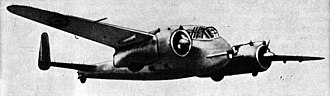
Bréguet 693: France’s Fast and Heavily Armed Ground-Attack Aircraft of 1940
The Bréguet 693 was one of the most interesting French combat aircraft to see action during the disastrous campaign of 1940. A twin-engine, two-seat ground-attack aircraft, it was developed from the Bréguet 690 family during a period when French aviation was urgently modernizing in response to the growing threat from Nazi Germany. With two 700-horsepower Gnome-Rhône radial engines, a maximum speed approaching 490 km/h, a 20 mm cannon, multiple machine guns, and the ability to carry up to 400 kg of bombs, the Bréguet 693 possessed many of the qualities required of a modern assault aircraft. Yet its operational career was tragically short. The aircraft entered frontline service only weeks before the German offensive of May 1940, leaving French crews with little time to master the type and forcing them into extremely dangerous low-level attacks against heavily defended German columns.
The Bréguet 693 belonged to a family of aircraft that had originally been conceived for a very different purpose. Bréguet’s initial Bréguet 690 design emerged from the French C3 twin-engine fighter programme, but the company saw greater potential in the basic airframe as a fast attack aircraft. The result was a compact, all-metal, twin-engine monoplane with retractable landing gear and two crew members. When the Hispano-Suiza 14AB engines selected for the earlier Bréguet 691 proved troublesome, the design was adapted to use the smaller and more reliable Gnome-Rhône 14M. This improved version became the Bréguet 693 and ultimately became the most important combat variant of the family.
Origins of the Bréguet 693
From a Fighter Programme to an Attack Aircraft
The Bréguet 693 was the product of an unusual evolution in French aircraft design. During the mid-1930s, the French Air Force was searching for a new generation of twin-engine combat aircraft. The C3 programme called for a multi-seat aircraft capable of performing several duties, and Bréguet responded with a design that eventually became the Bréguet 690. Georges Ricard was closely associated with the aircraft’s design, and the prototype was constructed as a private venture even though the competing Potez 630 ultimately won the formal programme.
Rather than abandoning the design, Bréguet recognized that its strong, compact airframe could be adapted to the emerging ground-attack role. The company developed the Bréguet 691 AB.2, a two-seat assault bomber that retained the basic twin-engine configuration but concentrated its armament and equipment around low-level attack missions. This was an important change in philosophy. The aircraft was no longer primarily expected to fight enemy aircraft in conventional aerial combat. Its principal purpose was to attack troops, vehicles, artillery, transport columns, and other battlefield targets.
The concept fitted an increasingly important French interest in low-level assault aviation. French planners had experimented with very-low-altitude bombing during the late 1930s, partly because the French Air Force lacked enough effective dive bombers and advanced bombsights for consistently accurate medium-altitude bombing. Flying close to the ground offered the possibility of greater accuracy, but it also exposed the aircraft directly to anti-aircraft weapons and fighter attack.
The Problem With the Hispano-Suiza Engines
The first production assault aircraft, the Bréguet 691, used the Hispano-Suiza 14AB engine. Unfortunately, this engine developed a poor reputation for reliability. Problems included overheating, oil leaks, component failures, and cracking of cylinder heads. These issues were serious enough that the French authorities and manufacturers sought an alternative powerplant for aircraft already ordered for production.
Bréguet therefore replaced the Hispano-Suiza engines with Gnome-Rhône 14M-6 and 14M-7 radial engines. The new engines produced roughly 700 horsepower each at takeoff and were considerably more compact in diameter than the Hispano-Suiza 14AB. The change created the Bréguet 693, which retained the basic Bréguet 691 airframe while offering a much more dependable propulsion system.
Design of the Bréguet 693
A Compact Twin-Engine Monoplane
The Bréguet 693 was a mid-wing, all-metal monoplane with retractable landing gear and a twin-tail arrangement. It measured approximately 9.4–9.7 metres in length and had a wingspan of roughly 15.36 metres. Its wing area was approximately 29 square metres. The aircraft’s relatively compact dimensions were important because the design needed to combine substantial weapons and fuel loads with enough speed and maneuverability to survive at low altitude.
The aircraft’s construction reflected the transition from the biplanes of the 1920s and early 1930s toward the modern combat aircraft of the Second World War. Its metal stressed-skin structure provided a clean aerodynamic surface and allowed the designers to produce a relatively streamlined fuselage. Retractable landing gear further reduced drag during flight.
Two engines were mounted in nacelles on the wings, with the crew seated together in a long canopy in the forward fuselage. The pilot occupied the front position, while the observer/gunner sat behind him. This arrangement allowed the aircraft to be flown by one crew member while the second concentrated on navigation, observation, bombing, and defensive fire.
The Bréguet 693 was not exceptionally large for a twin-engine aircraft, but its approximately 4.9-tonne maximum takeoff weight meant that it was carrying a substantial amount of equipment for its size. Its two engines provided redundancy as well as power, an especially valuable feature for an aircraft expected to operate at low altitude over enemy territory.
Designed for Low-Level Flying
The Bréguet 693’s entire design was closely connected to its ground-attack role. The aircraft needed to fly quickly at low altitude, approach a target, deliver its bombs and cannon fire, and escape before enemy defenses could react. That required good acceleration, strong structural construction, effective engine cooling, and a cockpit that provided useful visibility.
The aircraft was also expected to survive punishment. Unfortunately, the operational reality of 1940 exposed a major weakness: the Bréguet 693 did not have the level of armor protection that would have been desirable for sustained low-level operations against concentrated anti-aircraft fire. The aircraft was therefore fast and well armed, but it was still vulnerable when forced to fly directly into the defensive fire surrounding German columns.
Powerplant and Performance
The Gnome-Rhône 14M
The defining mechanical feature of the Bréguet 693 was its pair of Gnome-Rhône 14M-6/7 fourteen-cylinder radial engines. Each engine produced approximately 700 horsepower for takeoff, giving the aircraft a combined output of roughly 1,400 horsepower. The engines were air-cooled, avoiding the vulnerability and complexity of liquid-cooling systems while providing a compact installation.
The engine change from the Bréguet 691 to the 693 was particularly important because reliability mattered enormously to a twin-engine attack aircraft. A ground-attack aircraft might have to return from a mission after sustaining combat damage, and dependable engines increased the probability that the crew could survive an encounter with enemy fire.
The Gnome-Rhône installation also helped preserve the aerodynamic performance of the original design. Published specifications commonly give a maximum speed of approximately 490 km/h at 5,000 metres, with a cruising speed of around 400 km/h. The aircraft’s service ceiling was approximately 8,500–9,500 metres depending on the source and configuration.
Speed as a Defensive Weapon
A maximum speed approaching 490 km/h made the Bréguet 693 a respectable aircraft by the standards of 1940. It was considerably faster than many older French reconnaissance and bomber types, and its twin-engine configuration gave it a useful combination of speed and range.
For a low-level assault aircraft, however, maximum speed was not the only consideration. The Bréguet 693 often operated close to the ground, where altitude could not be exchanged for speed and where the aircraft had little room to recover from evasive maneuvers. German anti-aircraft guns could engage aircraft flying predictable attack patterns, while fighters could attack formations after they had completed their bombing runs.
The Bréguet 693 therefore depended on a combination of speed, surprise, low-level flying, and concentrated firepower. The problem was that German forces in 1940 were highly mobile and possessed increasingly effective integrated air-defense systems. The aircraft could be fast and still suffer catastrophic losses if its attack profile brought it directly into the enemy’s defensive zone.
Armament of the Bréguet 693
The 20 mm Hispano-Suiza Cannon
The Bréguet 693 carried a powerful 20 mm Hispano-Suiza HS.404 cannon in the nose. This was one of the most important weapons in the aircraft’s arsenal because the cannon could deliver explosive projectiles against lightly armored vehicles, artillery positions, trucks, troop concentrations, and aircraft.
The cannon was complemented by two fixed 7.5 mm MAC 1934 machine guns in the nose. Together, these weapons created a concentrated forward-firing battery that could be aimed at ground targets during the approach.
This arrangement was especially useful for low-level attack because the pilot could fire directly at the target while maintaining the aircraft’s flight path. The cannon and machine guns could suppress ground positions before or after the bomb release, providing the Bréguet 693 with capabilities beyond those of a conventional light bomber.
Defensive Machine Guns
The aircraft also carried defensive weapons operated by the second crew member. A flexible 7.5 mm MAC 1934 machine gun was installed in the rear cockpit, while another fixed weapon could fire from a ventral rearward position. This gave the aircraft some protection against attacks from behind and below.
The defensive arrangement was particularly significant because the Bréguet 693 was not intended to operate alone. Its crews frequently attacked as part of formations, and maintaining mutual support was essential. Rear gunners could engage enemy fighters while the pilot concentrated on maintaining formation and escaping from the target area.
The aircraft therefore combined forward offensive weapons with rear defensive guns, creating a flexible weapons system for the highly dangerous attack missions of 1940.
Bomb Load and Attack Doctrine
Eight 50-Kilogram Bombs
The Bréguet 693 could carry eight 50 kg bombs, giving it a nominal bomb load of approximately 400 kg. The bombs were carried internally, helping preserve the aircraft’s aerodynamic cleanliness compared with a design relying entirely on external stores.
The relatively modest bomb load was deliberate. The aircraft was not intended to replace a heavy bomber. Instead, it was a fast assault machine that combined bombing with cannon and machine-gun fire.
This combination made sense for battlefield targets. A German vehicle column, for example, might be attacked with bombs before the Brégués swept over it at low altitude using cannon and machine-gun fire. The aircraft could therefore deliver a concentrated burst of destructive power during a short attack rather than remaining exposed over the target for an extended period.
The Danger of Low-Level Attacks
The French doctrine of low-level assault placed enormous demands on crews. Flying at very low altitude reduced the time available to enemy gunners and could improve bombing accuracy, but it also meant that there was little opportunity to escape upward after the attack.
German ground defenses proved particularly dangerous. The Brégué 693’s crews were exposed not only to machine-gun fire but also to heavier anti-aircraft weapons. The aircraft’s limited armor protection made repeated low-level attacks extremely hazardous. The result was a painful contradiction: the very tactic that made the Brégué 693 effective against ground targets also placed it in the environment where it was most vulnerable.
Entry Into French Service
A Race Against Time
The Brégué 693 prototype first flew on 25 October 1939, and the type entered production soon afterward. This left very little time for large-scale training before Germany launched its western offensive in May 1940.
The timing was disastrous. French aviation was in the middle of a major modernization programme, but production delays, training shortages, and the rapid German offensive meant that many modern French aircraft were entering service just as the strategic situation was collapsing.
The Brégué 693 was among those caught in this transition. The design itself was promising, but there were too few aircraft, too little time for crews to become fully familiar with them, and too little opportunity to develop tactics under realistic combat conditions.
The first Brégué 693s were delivered to Groupe de Bombardement d’Assaut I/54 and II/54 in April 1940, only about a month before the German offensive. The crews had trained extensively in low-level flying, including demanding exercises over the Durance and bombing practice at very low altitude.
The Brégué 693 in the Battle of France
First Combat Missions
The Brégué 693 entered combat during one of the most intense campaigns of the Second World War. On 12 May 1940, aircraft from GBA I/54 were sent against German mechanized forces near Tongeren in Belgium. The mission immediately demonstrated the enormous dangers facing French low-level assault aviation.
The formation attacked German ground forces while flying at very low altitude. German anti-aircraft defenses responded with devastating effectiveness. Contemporary accounts and later research differ in some details, but the losses were severe: only a small proportion of the aircraft involved returned safely, with many destroyed or damaged by ground fire and subsequent events.
The episode became emblematic of the Bréguet 693’s combat career. The aircraft itself had performed the mission for which it was designed, but the tactical environment was unforgiving. German mechanized formations were protected by anti-aircraft weapons, and the French aircraft had to fly directly into that defensive screen.
Heavy Losses
During the Battle of France, Bréguet 693 units suffered extremely heavy losses. The aircraft were also vulnerable to German fighters, including the Messerschmitt Bf 109, which possessed a substantial advantage in speed and altitude performance.
The losses should not be interpreted simply as evidence that the Bréguet 693 was a poor aircraft. Instead, they reflected the difficult circumstances in which it was employed. The aircraft was new, French units were operating under severe pressure, and the German offensive moved so rapidly that carefully prepared tactical doctrine became difficult to apply.
The French assault groups nevertheless continued to fly missions despite the losses. Their crews demonstrated considerable courage, repeatedly attacking enemy columns and positions at altitudes where even small-arms fire could be lethal.
A Capable Aircraft in an Impossible Situation
Strengths of the Design
The Bréguet 693 possessed several genuinely impressive qualities. Its twin-engine arrangement provided substantial power, its speed was competitive for the period, and its armament was heavy for a light attack aircraft. Its 20 mm cannon was particularly valuable against ground targets, while the multiple machine guns provided additional offensive and defensive firepower.
The aircraft was also sturdy and relatively forgiving to fly. Its construction was designed for military service, and the twin-engine configuration gave it a degree of redundancy that could be valuable after combat damage.
The Bréguet 693’s greatest problem was therefore not that it was fundamentally unsuited to ground attack. Rather, it was introduced into a war in which French forces were forced to use it under exceptionally unfavorable conditions.
The Importance of Timing
Had the Bréguet 693 entered service several years earlier, its history might have been very different. In the mid-1930s, a fast twin-engine attack aircraft with a 20 mm cannon and multiple machine guns could have represented a significant advance.
By 1940, however, aircraft technology and air-defense systems had moved forward rapidly. German fighters were faster, communications and tactical coordination were more advanced, and anti-aircraft defenses were increasingly integrated into mobile formations.
The Bréguet 693 arrived at precisely the wrong point in this technological transition. It was modern enough to be promising but not numerous enough, protected enough, or supported enough to change the outcome of the campaign.
The Bréguet 695 and Further Development
Keeping the Family Alive
The Bréguet 693 was not the final version of the family. The Bréguet 695 replaced the Gnome-Rhône engines with American Pratt & Whitney powerplants. The prototype first flew in March 1940, but the German invasion prevented the aircraft from developing a major independent French career.
Other experimental developments included the Bréguet 697, which explored the possibility of creating a much faster and more heavily armed derivative. The broader Bréguet 690 family therefore represented an adaptable design platform rather than a single fixed aircraft.
There was even a proposed naval development, the Bréguet 810, intended for carrier operations and incorporating folding wings and the ability to carry a torpedo. The project was associated with the planned Joffre-class aircraft carriers, although those carriers were never completed.
Production and Numbers
Production of the Bréguet 693 took place during the intense French rearmament period immediately before the German invasion. Sources differ in the exact number of completed aircraft because they count production contracts, aircraft accepted, and incomplete airframes differently. One detailed French source lists 224 aircraft ordered, with Bréguet, SNCAC, and SABCA involved in the production programme, while only a portion were actually completed and accepted before the collapse of France. Other sources commonly cite approximately 128 Bréguet 693 aircraft produced or accepted.
Whatever figure is used, the important point is that the Bréguet 693 was never available in anything approaching the numbers required to equip a large modern assault force. Its production was interrupted by the German advance at precisely the moment when French aviation desperately needed additional aircraft.
Service After the Fall of France
Vichy and Axis Use
The Bréguet 693 did not disappear immediately after the French armistice. Some surviving aircraft remained associated with Vichy French aviation, while captured examples came into German possession. The type was also examined by German authorities, as happened with many French aircraft captured in 1940.
Several aircraft were subsequently operated or evaluated by other Axis powers, including Italy, although the Bréguet 693 never became a major combat type outside French service.
Its short post-1940 existence was largely overshadowed by newer aircraft. The Bréguet 693 belonged to the rapidly disappearing generation of prewar twin-engine assault aircraft that had been overtaken by more specialized wartime designs.
Legacy of the Bréguet 693
The Bréguet 693 occupies a fascinating position in the history of French aviation. It was a modern aircraft that arrived at a moment when France was struggling to translate modernization programmes into operational strength.
Technically, the aircraft was impressive. Two 700-horsepower radial engines gave it strong performance, while the combination of a 20 mm cannon, machine guns, and 400 kg of bombs made it a formidable attack platform. Its compact all-metal structure and retractable landing gear reflected the latest generation of French aircraft engineering.
Operationally, however, the aircraft became associated with sacrifice. Its crews were asked to conduct extremely dangerous low-level missions against heavily defended targets during a rapidly deteriorating campaign. The heavy losses suffered by Bréguet units during the Battle of France became one of the clearest examples of the risks associated with low-level assault doctrine when adequate fighter protection and suppression of enemy air defenses were unavailable.
The aircraft’s reputation should therefore be understood in context. The Bréguet 693 was not a technological failure. It was a capable aircraft employed in an extraordinarily difficult strategic environment.
Technical Specifications of the Bréguet 693
Published specifications vary slightly according to the source and whether figures refer to early production aircraft, later modifications, or different methods of calculating weight and performance. The following table summarizes representative Bréguet 693 AB.2 figures.
| Specification | Bréguet 693 AB.2 |
|---|---|
| Country of origin | France |
| Manufacturer | Breguet / SNCAC |
| Designer | Georges Ricard and Breguet design team |
| First flight of Bréguet 693 | 25 October 1939 |
| Family prototype first flight | 23 March 1938 |
| Type | Twin-engine ground-attack / assault aircraft |
| Crew | 2 |
| Configuration | Mid-wing, twin-engine monoplane |
| Construction | All-metal |
| Engines | 2 × Gnome-Rhône 14M-6/7 |
| Engine type | 14-cylinder, air-cooled radial |
| Power | Approximately 700 hp (522 kW) each |
| Total power | Approximately 1,400 hp |
| Length | Approximately 9.4–9.7 m |
| Wingspan | Approximately 15.36–15.37 m |
| Height | Approximately 3.19–3.20 m |
| Wing area | Approximately 29.2 m² |
| Empty weight | Approximately 3,006–3,010 kg |
| Maximum takeoff weight | Approximately 4,900 kg |
| Maximum speed | Approximately 480–490 km/h |
| Maximum-speed altitude | Approximately 4,000–5,000 m |
| Cruise speed | Approximately 400 km/h |
| Range | Approximately 1,350–1,450 km |
| Service ceiling | Approximately 8,500–9,500 m |
| Time to 4,000 m | Approximately 7–8½ minutes |
| Forward armament | 1 × 20 mm Hispano-Suiza HS.404 cannon |
| Forward machine guns | 2 × 7.5 mm MAC 1934 |
| Rear armament | 1 × flexible and 1 × fixed 7.5 mm MAC 1934 |
| Bomb load | Approximately 400 kg, commonly 8 × 50 kg bombs |
| Primary role | Low-level ground attack / assault bombing |
| Main operator | French Air Force |
| Other users | Vichy French forces; captured/evaluated by Axis powers |
| Production | Figures vary; approximately 128–224 completed/accepted depending on accounting |
Conclusion
The Bréguet 693 was one of the most promising French assault aircraft of the early Second World War, but its career was tragically compressed by the events of 1940. Developed from the Bréguet 690 family and created specifically to perform fast, low-level attacks, it combined a streamlined all-metal airframe with two powerful Gnome-Rhône radial engines and a remarkably heavy weapons installation. Its 20 mm cannon, machine guns, and 400 kg bomb load gave it considerable striking power for an aircraft of its size.
The replacement of the unreliable Hispano-Suiza engines with Gnome-Rhône 14Ms was a particularly important improvement. The resulting Bréguet 693 was fast, compact, and capable of carrying out demanding missions. In different circumstances, it could have become one of the most effective French tactical aircraft of its generation.
Instead, it entered service only shortly before the German offensive. French crews had little time to train, production remained limited, and the aircraft was thrown almost immediately into low-level attacks against German mechanized forces protected by anti-aircraft weapons and supported by modern fighters. The losses were severe, especially during the first combat operations around Tongeren and during the subsequent Battle of France.
The Bréguet 693’s story is consequently one of potential frustrated by circumstance. The aircraft itself possessed many excellent characteristics: good speed, strong engines, concentrated firepower, useful range, and a design specifically optimized for the assault mission. Its failure to have a greater impact on the 1940 campaign was not simply a matter of aircraft quality. It reflected the much larger problems facing French military aviation, including late rearmament, insufficient production, limited operational preparation, and the overwhelming speed of the German offensive.
Today, the Bréguet 693 remains an important reminder of the difficult position of French aviation on the eve of the Second World War. It represented an attempt to create a modern, specialized ground-attack aircraft at exactly the moment when aerial warfare was becoming faster and more integrated with mechanized land operations. The aircraft was good enough to deserve a much longer career, but history gave its crews only a few weeks to demonstrate what it could do.
For that reason, the Bréguet 693 should not be remembered merely as one of the many French aircraft defeated during the Battle of France. It was a sophisticated product of French prewar rearmament, a powerful assault aircraft whose development reflected serious attempts to modernize French air doctrine, and a machine whose crews continued to fly dangerous missions even when the strategic situation was rapidly collapsing. Its brief combat career makes it a poignant example of how a capable aircraft can be overwhelmed not by a single technical weakness, but by the circumstances in which it is forced to fight.
