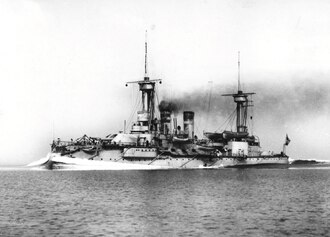
SMS Weissenburg: The German Battleship That Became Ottoman Turgut Reis
SMS Weissenburg was one of the most important early battleships of the Imperial German Navy and one of the four vessels that formed the pioneering Brandenburg class. Launched at Stettin in December 1891 and commissioned in 1894, she belonged to a generation of warships that helped Germany move away from a primarily coastal-defense fleet toward a modern ocean-going battle fleet. Her design was particularly remarkable for its unusual main battery of six 28 cm guns mounted in three twin turrets, a configuration that gave the ship an exceptionally powerful broadside for the period. Weissenburg also benefited from Krupp armor, making her and her sister Kurfürst Friedrich Wilhelm the most heavily protected ships of the class.
Her German career was largely devoted to fleet training and exercises, but she did participate in Germany’s overseas response to the Boxer Uprising in China in 1900–1901. After modernization, however, Weissenburg quickly became a victim of the extraordinary pace of battleship development. By the first decade of the twentieth century, newer German designs were substantially more capable, and the old Brandenburg-class ship was transferred to the Ottoman Empire in 1910. Renamed Turgut Reis, after the celebrated Ottoman admiral of the sixteenth century, she gained a second and considerably more active career. She fought in the Balkan Wars, participated in the battles of Elli and Lemnos against Greece, provided gunfire support to Ottoman troops, and later served in the defense of the Dardanelles during the First World War. Unlike her sister Barbaros Hayreddin, she survived the war and remained in service in various secondary roles for decades afterward.
The Birth of the Brandenburg Class
Germany Builds Its First True Ocean-Going Battleships
The story of Weissenburg begins with a fundamental change in German naval thinking during the late nineteenth century. Earlier German armored ships had been strongly influenced by coastal-defense requirements, but the Imperial Navy increasingly recognized that Germany needed large ships capable of operating with a fleet at sea. The Brandenburg class represented the first major German attempt to create a genuine ocean-going battleship force. The four ships—Brandenburg, Wörth, Kurfürst Friedrich Wilhelm, and Weissenburg—were consequently much more ambitious than their immediate predecessors.
Weissenburg was ordered as armored ship “C” and constructed by AG Vulcan at Stettin, with construction beginning in May 1890. She was launched on 14 December 1891 and entered German service in 1894. The ship was named after the Battle of Weissenburg, fought during the Franco-Prussian War of 1870, following the German naval tradition of commemorating important military events and places. Historical references differ slightly over her formal commissioning date, with some records giving 5 June and others 14 October 1894, reflecting differences between trials, provisional entry into service, and formal commissioning.
The ship’s appearance reflected the experimental nature of battleship design in the 1890s. Designers were still debating the ideal combination of main-gun caliber, armor, speed, and secondary armament. The Brandenburgs made a particularly bold choice by installing three twin gun turrets instead of the two twin turrets commonly used on contemporary battleships. This gave Weissenburg six heavy guns, although the central pair had shorter barrels than the forward and aft weapons.
A Powerful and Unusual Armament
The most distinctive feature of Weissenburg was undoubtedly her main battery. Four 28 cm guns were mounted in the forward and rear turrets, while two shorter 28 cm guns occupied the central turret. The central turret was positioned relatively low and required a shorter gun installation because of the surrounding superstructure. Although the arrangement produced a remarkable broadside, it was not without disadvantages. The central guns had poorer firing characteristics, and the low position of the turret exposed its decks to the effects of muzzle blast. The concept was ultimately abandoned in later German battleship designs.
Nevertheless, six heavy guns represented formidable firepower in the early 1890s. Weissenburg also carried a substantial battery of quick-firing weapons and torpedo tubes. Her secondary guns were intended to defend against smaller warships and torpedo boats, while the torpedoes offered another means of attacking heavily armored opponents at short range. This combination reflected the naval doctrine of the period, when battleships were expected to fight at relatively close distances and when torpedo attacks were regarded as a potentially decisive component of fleet combat.
Protection was equally impressive. Weissenburg differed from Brandenburg and Wörth in receiving Krupp nickel-steel armor, which provided superior protection. Sources describe her main belt as reaching approximately 400 mm at its thickest point, with substantial protection also provided to the barbettes, turrets, deck, and conning tower. The combination of heavy armor and powerful artillery made the ship one of the strongest German warships when she entered service.
Service With the Imperial German Navy
Fleet Exercises and Early Operations
Once commissioned, Weissenburg joined the German fleet’s I Division and participated in the intensive training program that characterized the peacetime Imperial Navy. Her early years involved fleet maneuvers, cruises, gunnery exercises, and individual training. Such exercises were essential because Germany was still developing the institutional experience needed to operate large formations of battleships effectively.
The Brandenburg-class ships were not merely expensive symbols. They represented the practical development of German naval expertise in engineering, navigation, signaling, fleet tactics, and long-range operations. Weissenburg reportedly distinguished herself in gunnery competitions, even winning the Kaiser’s shooting prize for accuracy within her division. Such achievements mattered because effective gunnery was becoming increasingly important as naval artillery technology developed.
The ship also demonstrated the limitations of the era’s designs. German battleships were powerful but relatively wet in heavy seas, and the Brandenburg class was no exception. Their handling characteristics were generally considered good, but their low freeboard and hull design could result in substantial amounts of water coming aboard during rough weather. These compromises were partly unavoidable consequences of trying to pack immense amounts of armor and weaponry into relatively compact hulls.
The Boxer Uprising
Weissenburg‘s most important overseas deployment under the German flag came in 1900, when she joined her three sister ships for the international intervention in China during the Boxer Uprising. The German government dispatched naval and military forces to East Asia as part of the multinational expedition intended to relieve the besieged foreign legations and suppress the Boxer movement.
The Brandenburg-class ships represented a substantial commitment because maintaining large battleships so far from Germany required extensive logistical support. The voyage demonstrated that the Imperial German Navy could deploy major capital ships beyond European waters and sustain them during a lengthy overseas operation. For a relatively young navy, this was strategically significant.
Yet Weissenburg did not participate in a major fleet battle during the expedition. The international forces had already relieved the foreign legations in Beijing by the time the principal crisis had passed, and the German battleships were used primarily in support and expeditionary roles. Their deployment nonetheless offered valuable experience in long-distance navigation, coaling, maintenance, communications, and coordination with multinational forces.
After returning to Germany, Weissenburg continued serving in the fleet before undergoing a substantial modernization. Her refit reflected the recognition that even comparatively young battleships were becoming outdated as naval technology accelerated.
Modernization in an Age of Rapid Change
Extending the Life of a Pre-Dreadnought
Weissenburg underwent major modernization around 1904. The work included changes to her machinery, superstructure, and armament, as German naval engineers attempted to extend the useful life of the aging Brandenburg design. Sources differ on some details of the modernization, but the general objective was clear: improve a ship whose original design had already begun to lag behind newer battleships.
The problem was that battleship development was advancing faster than traditional modernization programs could compensate for. The appearance of larger and faster ships, increasingly effective quick-firing guns, improved fire-control systems, and eventually the all-big-gun HMS Dreadnought transformed the standards by which capital ships were judged.
By the middle of the 1900s, Weissenburg was no longer a first-line battleship. The ship that had been among Germany’s most powerful warships in the 1890s was increasingly relegated to reserve and secondary duties. This was a common fate for pre-dreadnoughts. Their construction had required enormous investments, but their technological lifespan could be surprisingly short.
Transfer to the Ottoman Empire
A New Name and a New Navy
In 1910, Germany sold Weissenburg and Kurfürst Friedrich Wilhelm to the Ottoman Empire. The Ottoman government was seeking to strengthen its fleet in response to growing regional tensions and Greek naval expansion. The two German battleships were attractive because, despite their age, they represented a significant increase in heavy naval firepower for the Ottoman fleet.
After transfer, Weissenburg was renamed Turgut Reis, honoring the famous Ottoman admiral Turgut Reis. The change effectively gave the old German battleship a second identity and placed her at the center of Ottoman naval ambitions during a particularly turbulent period.
Operating the ships, however, proved difficult. The Ottoman Navy had limited experience maintaining large German-built battleships, and shortages of trained personnel and technical expertise affected their readiness. Machinery problems became a persistent issue, while maintenance standards could not always match the demands of the ships’ complicated propulsion systems. The vessels therefore often operated at significantly reduced speed.
Turgut Reis in the Balkan Wars
Fighting in the Aegean
The transformation from Weissenburg into Turgut Reis gave the ship the most active combat career of her existence. During the Balkan Wars, Ottoman naval forces sought to challenge Greek control of the Aegean and prevent the Greek fleet from imposing an effective blockade on the Dardanelles.
Turgut Reis participated in operations supporting Ottoman forces ashore as well as in major naval encounters. Her heavy guns could provide valuable artillery support against enemy positions, particularly in coastal and near-coastal operations. This role was arguably more practical for an aging pre-dreadnought than attempting to fight modern enemy warships on equal terms.
On 16 December 1912, Turgut Reis, Barbaros Hayreddin, Mesudiye, Mecidiye, and several destroyers attempted to break out of the Dardanelles and engage the Greek fleet. The resulting Battle of Elli ended in an Ottoman defeat, and the Greek Navy retained control of the Aegean approaches. The Ottoman ships returned to the Dardanelles.
The Ottoman fleet tried again at the Battle of Lemnos in January 1913. Once again, the effort failed to break Greek naval dominance. These battles demonstrated the increasingly important role of speed, fire control, tactical coordination, and modern naval communications. Turgut Reis still carried a formidable gun battery, but possessing heavy guns was no longer enough to guarantee success.
Shore Bombardment and the Black Sea
Turgut Reis also operated in support of Ottoman land forces during the Balkan Wars. On several occasions Ottoman battleships used their artillery against Bulgarian positions, demonstrating how pre-dreadnoughts could still be valuable when employed as floating artillery platforms rather than as conventional fleet units.
Her service during the period therefore illustrates an important distinction between technological obsolescence and military uselessness. Turgut Reis could not compete comfortably with the newest battleships, but her armor, large guns, and ability to remain at sea still made her useful for coastal operations and fire support.
The First World War
Defending the Dardanelles
When the Ottoman Empire entered the First World War, Turgut Reis was already an elderly battleship. Her slow speed and maintenance problems limited her usefulness as an offensive fleet unit, particularly in a war dominated by increasingly modern dreadnoughts and battlecruisers. Unlike Barbaros Hayreddin, however, she survived the conflict.
During the Dardanelles campaign, the ship was employed primarily in the defense of the straits. Her main battery could supplement the coastal fortifications, allowing her to function as a mobile artillery platform. By this stage, parts of her armament had been removed or altered to strengthen the defensive system, although her principal guns remained available for use.
Her sister ship Barbaros Hayreddin was not so fortunate. On 8 August 1915, she was torpedoed and sunk by the British submarine HMS E11 while moving toward a position from which she could support Ottoman forces at Gallipoli. Turgut Reis consequently became the surviving member of the pair.
The Long Afterlife of Turgut Reis
From Battleship to Training Ship
The end of the First World War did not immediately end Turgut Reis‘s career. By 1924 she was being used as a training ship, reflecting the continuing value of her large hull and established naval facilities even though she was no longer suitable as a modern frontline battleship. Her role had evolved from capital ship to educational and support vessel.
The ship’s main armament was progressively reduced, and eventually only part of her original heavy artillery remained. This process symbolized the final transition from warship to stationary naval asset. Instead of leading a battle squadron, the former Weissenburg now served the practical needs of a navy in peacetime.
Eventually Turgut Reis became a hulk and accommodation vessel. Accounts differ over the exact date and stages of her final disposal, but she survived astonishingly long for a battleship launched in 1891. Some sources give 1938 for the beginning of major scrapping, while others record dismantling continuing into the 1950s. The German-built warship therefore remained physically present long after the naval era that produced her had disappeared.
Why SMS Weissenburg Matters in Naval History
SMS Weissenburg deserves attention because her career illustrates several major transitions in naval history. She was one of the Imperial German Navy’s first genuine ocean-going battleships, a product of the period when Germany was beginning to think seriously about global naval power. Her unusual three-turret, six-gun main battery reflected the experimentation that characterized battleship design before the dreadnought revolution. Her Krupp armor also showed Germany’s growing expertise in heavy armor production.
Her overseas deployment during the Boxer Uprising demonstrated Germany’s ability to send capital ships thousands of miles from home. Her modernization showed an attempt to preserve the value of an aging battleship, while her eventual sale to the Ottoman Empire demonstrated how yesterday’s first-rate warships could become valuable assets to another navy.
Most importantly, her Ottoman career provides a fascinating counterpoint to her German service. Under the name Turgut Reis, she became a combat veteran, participating in the Balkan Wars and helping bombard enemy positions. She fought at Elli and Lemnos, survived the First World War, and continued serving for decades after her German career had ended.
Technical Specifications of SMS Weissenburg
The following figures describe Weissenburg principally in her German configuration. Exact specifications can vary between sources because the ship was modified during her career, particularly during her modernization and later Ottoman service. The German Digital Library records a maximum displacement of 10,670 tonnes, a length of 115.7 meters, a beam of 19.5 meters, and a maximum speed of approximately 16 knots, while other references give slightly different figures for speed and displacement.
| Specification | SMS Weissenburg |
|---|---|
| Class | Brandenburg class |
| Type | Pre-dreadnought battleship |
| Builder | AG Vulcan, Stettin |
| Yard number | 199 |
| Laid down | May 1890 |
| Launched | 14 December 1891 |
| Commissioned | 1894 |
| Length overall | 115.7 m |
| Beam | 19.5 m |
| Draft | Approximately 7.9 m |
| Normal displacement | Approximately 10,013 tonnes |
| Maximum displacement | Approximately 10,670 tonnes |
| Propulsion | 2 triple-expansion steam engines |
| Boilers | 12 Scotch marine boilers |
| Shafts | 2 |
| Power | Approximately 10,100 PS |
| Maximum speed | Approximately 16–16.5 knots |
| Range | Approximately 4,300 nautical miles at 10 knots |
| Main armament | 6 × 28 cm guns |
| Main-gun arrangement | 2 twin forward/aft turrets plus 1 central twin turret |
| Secondary armament | 6 × 10.5 cm and 8 × 8.8 cm quick-firing guns |
| Light armament | 12 × 3.7 cm revolver cannon |
| Torpedo armament | 6 × 45 cm torpedo tubes |
| Main belt armor | Approximately 300–400 mm |
| Armored deck | Approximately 60 mm |
| Barbette armor | Approximately 300 mm |
| Crew | Approximately 568–590 |
| Ottoman name | Turgut Reis |
| Transferred to Ottoman Empire | 1910 |
| Balkan Wars | 1912–1913 |
| Postwar role | Training and accommodation ship |
| Final fate | Eventually dismantled in the mid-20th century |
Conclusion
SMS Weissenburg was far more than an old battleship that happened to survive into the twentieth century. She represented a crucial stage in Germany’s emergence as a modern naval power and embodied the experimental character of pre-dreadnought design. Her six 28 cm guns, heavy Krupp armor, ocean-going capability, and substantial size made her a formidable warship when she entered service in the 1890s.
Yet her career also demonstrates how quickly technological progress could transform a first-rate battleship into an outdated vessel. Within little more than a decade, newer designs had rendered the Brandenburg class increasingly unsuitable for front-line fleet operations. Rather than disappearing immediately, however, Weissenburg found a second career under the Ottoman flag.
As Turgut Reis, she became an active participant in the turbulent naval history of the Balkans, fighting the Greek Navy at Elli and Lemnos and providing artillery support to Ottoman troops. She subsequently survived the First World War and continued into the interwar period as a training ship and later an accommodation vessel. Her exceptionally long existence meant that a battleship launched in the age of Kaiser Wilhelm I could still be physically present when the naval world had been transformed by dreadnoughts, submarines, aircraft, and modern wireless communications.
That extraordinary journey—from German pioneer to Ottoman veteran—makes SMS Weissenburg one of the more interesting pre-dreadnought battleships of the late nineteenth century. Her history captures the rise of German sea power, the decline of the pre-dreadnought battleship, the struggles of the Ottoman Navy, and the extraordinary speed with which naval warfare changed between 1890 and the First World War.
