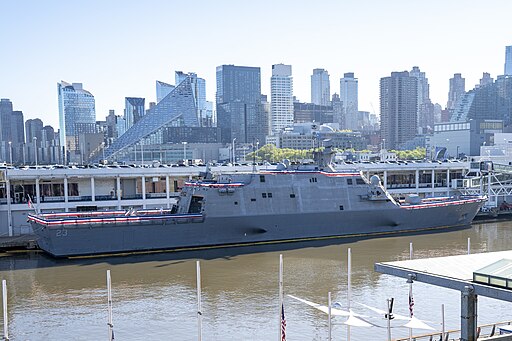
USS Cooperstown (LCS-23)
USS Cooperstown (LCS-23): Honoring America’s Legacy with Naval Excellence
The USS Cooperstown (LCS-23) is a distinguished addition to the United States Navy’s fleet of Littoral Combat Ships (LCS). Designed to operate effectively in coastal or “littoral” zones, the ship brings flexibility and advanced capabilities to a rapidly evolving maritime environment. Named after the New York village that is home to the National Baseball Hall of Fame, the USS Cooperstown honors the legacy of the more than 70 Baseball Hall of Famers who served in the U.S. military.
This article explores the history, design, mission roles, and significance of the USS Cooperstown, highlighting its contribution to the modern Navy and its connection to American heritage.
Historical Background
The USS Cooperstown (LCS-23) is part of the Freedom-class, one of two designs in the LCS program (the other being the Independence-class). The LCS program was initiated in the early 2000s to provide the Navy with fast, agile, and modular ships capable of addressing asymmetric threats and performing specialized missions.
Construction of the Cooperstown began in 2017 at the Fincantieri Marinette Marine shipyard in Marinette, Wisconsin. The ship was launched on January 19, 2020, and officially commissioned into service on May 6, 2023, in New York City. The commissioning ceremony emphasized its symbolic connection to the Hall of Fame and its role in honoring the military contributions of baseball legends.
Design and Features
The Freedom-class Littoral Combat Ships, including the USS Cooperstown, are designed for speed, maneuverability, and versatility. While compact compared to larger surface combatants, the ship is packed with advanced technology and mission-specific capabilities.
1. Physical Specifications
- Displacement: Approximately 3,900 tons
- Length: 378.3 feet
- Beam: 57.4 feet
- Draft: 13 feet
- Speed: Over 40 knots (46 mph)
- Range: About 3,500 nautical miles at 18 knots
The USS Cooperstown’s shallow draft and high speed allow it to operate in confined waters where larger ships might struggle.
2. Hull and Propulsion
The Cooperstown features a monohull design, which differentiates the Freedom-class from the trimaran hull of the Independence-class. Its propulsion system, a Combined Diesel and Gas (CODAG) configuration, includes:
- Two Rolls-Royce MT30 gas turbines
- Two Colt-Pielstick diesel engines
- Four Rolls-Royce steerable waterjets for exceptional maneuverability
3. Modularity
One of the hallmark features of the LCS program is its modular mission package system. The USS Cooperstown can be outfitted with specific modules for various missions:
- Surface Warfare (SUW): Includes advanced sensors and weapon systems for engaging fast attack craft and small boats.
- Anti-Submarine Warfare (ASW): Equipped with sonar arrays, torpedoes, and support for helicopters or drones.
- Mine Countermeasures (MCM): Incorporates unmanned underwater vehicles (UUVs) and specialized mine-hunting systems.
4. Weapons and Sensors
While the Cooperstown’s armament is tailored to its mission, standard systems include:
- A 57mm Mk 110 naval gun for engaging surface and air targets.
- Rolling Airframe Missiles (RAM) for close-in air defense.
- .50 caliber machine guns and smaller weapons for counter-piracy and other low-intensity missions.
- SeaRAM system (on some variants) to bolster missile defense.
Its sensor suite is designed for coastal operations, featuring advanced radar and electronic warfare systems.
5. Aviation Capabilities
The ship includes a flight deck and hangar, supporting the operation of an MH-60R/S Seahawk helicopter and Vertical Take-Off and Landing Unmanned Aerial Vehicles (VTOL UAVs). This enhances its reconnaissance, anti-submarine, and surface warfare capabilities.
Mission Roles
The USS Cooperstown is designed to fulfill a wide range of missions, particularly in contested littoral zones. Its capabilities are well-suited for modern naval challenges, including:
- Coastal Security and Patrols
The ship’s speed and maneuverability make it ideal for patrolling territorial waters, combating piracy, and enforcing maritime law. - Surface Warfare
With advanced weaponry, the Cooperstown can engage small, fast-moving craft often used by asymmetric threats like insurgents or pirates. - Anti-Submarine Warfare
Equipped with modular ASW systems, the ship is capable of detecting and neutralizing submarines in coastal regions. - Mine Countermeasures
The modular MCM package enables the USS Cooperstown to detect and clear naval mines, ensuring safe passage for other vessels. - Humanitarian Assistance and Disaster Relief
Its shallow draft and adaptability make it a valuable asset for delivering aid and providing support in disaster-stricken coastal areas. - Joint Operations
The Cooperstown is designed to operate seamlessly alongside larger vessels, such as guided-missile destroyers and amphibious assault ships, as part of a carrier strike group or expeditionary strike group.
Honoring America’s Military Heritage
The USS Cooperstown stands out for its unique name, celebrating the connection between American baseball and military service. During its commissioning, several Baseball Hall of Famers were recognized for their wartime contributions, including:
- Ted Williams, who served as a Marine Corps pilot in World War II and Korea.
- Bob Feller, a Navy gunner in World War II.
- Yogi Berra, who served in the Navy during D-Day.
This symbolic legacy serves as a reminder of the deep ties between America’s pastime and its military history.
Significance and Strategic Impact
The USS Cooperstown embodies the U.S. Navy’s evolving strategy to counter modern threats in coastal regions. As global maritime security challenges continue to grow, the ship’s capabilities are pivotal for ensuring freedom of navigation and projecting power in contested waters.
Despite some criticism of the LCS program for cost overruns and mission-specific limitations, the Cooperstown demonstrates the adaptability and forward-looking design that the Navy needs for 21st-century challenges.
Challenges and Future Role
While the LCS program has faced challenges, such as limited survivability in high-threat environments, the Navy continues to integrate the class into its broader strategy. The USS Cooperstown, like its sister ships, will likely benefit from ongoing modernization efforts, including:
- Enhanced weapon systems for greater lethality.
- Improved electronic warfare and cyber resilience.
- Expanded operational roles beyond the original scope of the LCS program.
Conclusion
The USS Cooperstown (LCS-23) is more than just a state-of-the-art warship; it is a floating tribute to American resilience and ingenuity. As part of the Freedom-class Littoral Combat Ships, it represents the Navy’s commitment to addressing emerging threats while maintaining a strong connection to the nation’s cultural and historical heritage. Whether patrolling contested waters, clearing mines, or engaging in humanitarian missions, the USS Cooperstown is poised to make a significant impact on the U.S. Navy’s operational capabilities.
