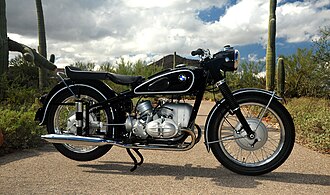
The story of the BMW R68 is not merely a chapter in motorcycle history—it is a carefully engineered declaration of technological ambition, a post-war statement that performance, precision, and engineering excellence could coexist in a production motorcycle. Introduced in the early 1950s, the R68 represented a decisive shift for BMW Motorrad: away from purely utilitarian touring machines and toward high-performance sport motorcycles capable of rivaling the best British machines of the era. It was a rare machine then, and it remains one today—not only because of its limited production numbers but because of its technical sophistication and cultural significance.
Historical Context: Rebuilding Performance After War
Post-War Industry and BMW’s Strategic Pivot
In the aftermath of World War II, German industry faced immense restrictions and restructuring. BMW, once heavily involved in aircraft engine production, had to redefine itself. Motorcycles became a central focus, beginning with models like the R51/3 and R67. These machines emphasized reliability, durability, and conservative engineering.
However, by the early 1950s, the global motorcycle market was evolving rapidly. British manufacturers such as Triumph and Norton dominated the high-performance segment. BMW, known for its engineering rigor, found itself lagging in outright speed and sportiness.
The answer came in 1951, when BMW unveiled the R68 at the Frankfurt International Motorcycle Show—a machine marketed as the company’s first “100 mph motorcycle.” (Wikipedia)
A Motorcycle for the Elite
The R68 was not intended for the mass market. With a price of nearly 4,000 Deutsche Marks, it was positioned as an exclusive product for enthusiasts seeking both performance and prestige.
Only 1,452 units were produced between 1952 and 1954, making it one of the rarest post-war BMW motorcycles ever built.
Engineering Philosophy: Precision Meets Performance
The Boxer Engine Tradition
At the heart of the BMW R68 lies a defining feature of the brand: the horizontally opposed flat-twin, or “boxer,” engine. This configuration, first introduced in the 1923 R32, offered several inherent advantages:
- Low center of gravity
- Excellent thermal balance due to air cooling
- Smooth operation with reduced vibration
For the R68, BMW engineers took the existing 600cc touring engine platform and transformed it into a high-performance unit.
Engine Architecture and Internal Design
The R68’s engine, internally designated as type 268/1, featured:
- Displacement: 594 cc
- Configuration: Air-cooled, OHV (overhead valve) flat twin
- Bore x stroke: approximately 72 mm × 73 mm
- Compression ratio: 8.0:1
- Carburetion: Twin Bing carburetors
The engine was tuned extensively with a revised camshaft, larger valves, and improved carburetion, allowing it to produce 35 horsepower at 7,000 rpm—a remarkable figure for the era.
This output positioned the R68 among the fastest production motorcycles of its time.
Performance Capabilities: The “100 MPH” Benchmark
Top Speed and Real-World Performance
BMW advertised the R68 as capable of reaching 160 km/h (approximately 100 mph), a symbolic milestone in the early 1950s. (bmwgroup-classic.com)
In real-world conditions, well-maintained examples could exceed this figure, reaching speeds up to 169 km/h.
Aerodynamic Considerations
Unlike modern sport motorcycles, the R68 relied heavily on rider positioning to achieve maximum speed. The design included:
- A narrow front fender to reduce drag
- A dual-seat arrangement enabling the rider to slide backward
- Rear foot pegs for a crouched riding position
These features allowed riders to adopt a more aerodynamic posture, effectively reducing wind resistance at high speeds.
Chassis and Suspension: Stability Through Simplicity
Frame Design
The R68 utilized a double-loop steel tubular frame, engineered for rigidity and durability. This design provided:
- Excellent structural integrity
- Predictable handling characteristics
- Compatibility with shaft drive systems
Suspension System
The suspension setup reflected BMW’s engineering priorities:
- Front: Telescopic fork
- Rear: Plunger suspension
While the plunger system lacked the sophistication of modern swingarm designs, it offered adequate comfort and stability for the period.
Shaft Drive Advantage
Unlike many competitors that used chain drive systems, the R68 employed a shaft drive—a hallmark of BMW motorcycles. Benefits included:
- Reduced maintenance
- Increased durability
- Cleaner operation
This feature contributed significantly to the bike’s reputation for reliability.
Braking System: Early High-Performance Engineering
Drum Brakes and Innovation
The R68 featured 200 mm drum brakes on both wheels:
- Front: Duplex (twin leading shoe) drum brake
- Rear: Simplex drum brake
In 1954, BMW introduced full-width drum brakes, improving braking performance and heat dissipation.
For its time, the braking system was considered advanced, particularly the twin leading shoe front brake, which provided enhanced stopping power compared to conventional designs.
Transmission and Drivetrain
Gearbox and Clutch
The R68 was equipped with a:
- 4-speed manual gearbox
- Foot-operated shift mechanism
- Auxiliary hand shifter (often referred to as a “mechanic’s shifter”)
The clutch system consisted of a dry single-plate design, delivering reliable power transfer.
Gear Ratios and Final Drive
The drivetrain was optimized for both acceleration and high-speed cruising:
- Final drive ratio: approximately 3.89:1
- Shaft-driven rear wheel
This setup ensured efficient power delivery while maintaining durability.
Design and Aesthetics: Form Follows Function
Visual Identity
The R68’s design was understated yet purposeful:
- Black paint with white pinstriping
- Chrome accents
- Narrow fenders emphasizing sportiness
The minimalist aesthetic reflected BMW’s philosophy of engineering-first design.
Ergonomics
The motorcycle featured:
- A sprung solo saddle
- Optional dual-seat configuration
- Upright yet adaptable riding position
The ability to shift body position for high-speed riding was a unique ergonomic feature.
Rarity and Collectibility
Limited Production
With only 1,452 units produced, the R68 is among the rarest BMW motorcycles ever manufactured.
Collector Value
Today, the R68 is highly sought after by collectors due to:
- Its historical significance
- Limited production
- Engineering uniqueness
Restored examples frequently appear in prestigious auctions and concours events, highlighting their enduring appeal.
Riding Experience: Then and Now
Period Experience
Riding the R68 in the 1950s required skill and mechanical awareness:
- High-speed stability demanded precise control
- Drum brakes required anticipation
- Suspension limitations required careful handling
Modern Perspective
By today’s standards, the R68 may seem primitive, but its charm lies in:
- Mechanical purity
- Direct rider-machine connection
- Authentic analog experience
It represents a time when performance was achieved through engineering ingenuity rather than electronic assistance.
Technological Legacy
Influence on Future BMW Models
The R68 laid the groundwork for subsequent high-performance BMW motorcycles, including:
- R69
- R69S
These models built upon the R68’s engineering principles, refining performance and comfort.
Engineering Lessons
The R68 demonstrated that:
- Precision engineering could compete with raw power
- Reliability and performance were not mutually exclusive
- Innovation could emerge from refinement rather than reinvention
Cultural and Historical Impact
The R68 is more than a motorcycle—it is a symbol of post-war recovery and technological ambition. It represents:
- Germany’s industrial resurgence
- BMW’s commitment to engineering excellence
- The evolution of sport motorcycles
Its designation as the “first 100 mph BMW” remains a defining milestone.
Technical Specifications Table
| Parameter | Specification |
|---|---|
| Production Years | 1952–1954 |
| Units Produced | 1,452 |
| Engine Type | Air-cooled OHV flat-twin (boxer) |
| Displacement | 594 cc |
| Bore x Stroke | 72 mm × 73 mm |
| Compression Ratio | 8.0:1 |
| Power Output | 35 hp @ 7,000 rpm |
| Carburetion | 2 × Bing carburetors |
| Transmission | 4-speed manual |
| Final Drive | Shaft drive |
| Frame | Double-loop steel tubular |
| Front Suspension | Telescopic fork |
| Rear Suspension | Plunger type |
| Front Brake | 200 mm duplex drum |
| Rear Brake | 200 mm simplex drum |
| Top Speed | 160–169 km/h |
| Fuel Capacity | 17 liters |
| Fuel Consumption | ~4.6 L/100 km |
| Weight (wet) | ~190 kg |
| Wheelbase | 1,400 mm |
| Dimensions (L×W×H) | 2130 × 725 × 985 mm |
Conclusion: A Machine Ahead of Its Time
The BMW R68 stands as a remarkable achievement in early 1950s motorcycle engineering. It bridged the gap between conservative touring machines and modern sport motorcycles, proving that performance could be engineered with precision rather than brute force.
Its rarity, technical sophistication, and historical importance ensure that it remains one of the most revered motorcycles in BMW’s lineage. Even decades later, the R68 continues to captivate enthusiasts—not just as a collector’s item, but as a testament to an era when engineering excellence defined the limits of speed.
