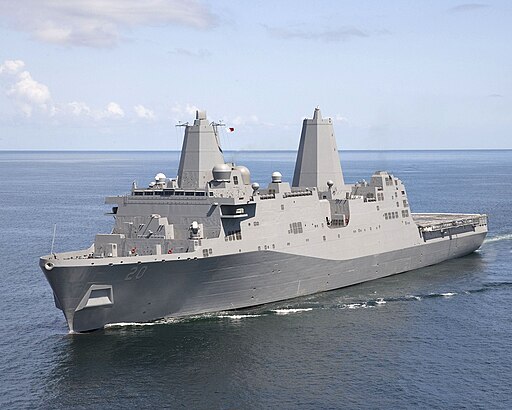
USS Green Bay (LPD-20)
The USS Green Bay (LPD-20) is a modern marvel of naval engineering and a vital asset to the United States Navy. As a San Antonio-class amphibious transport dock, she is designed to support a broad spectrum of missions—from deploying Marines and their equipment during amphibious assaults to providing humanitarian assistance during natural disasters. With state-of-the-art command and control capabilities, a versatile well deck for launching landing craft, and advanced communications systems, the USS Green Bay stands ready to operate in today’s dynamic maritime environment.
Historical Background and Naming
The Legacy of Amphibious Warfare
The history of amphibious warfare has evolved significantly since World War II, when naval forces first mastered the art of landing troops on hostile shores. Over the decades, the U.S. Navy has continuously refined its amphibious capabilities to meet emerging threats and operational challenges. The San Antonio-class, to which the USS Green Bay belongs, represents the culmination of years of research, design innovation, and operational experience. These ships are engineered to provide rapid response and flexible support to Marine Expeditionary Forces in a wide range of scenarios.
Evolution from Traditional Landing Ships
Traditional amphibious landing ships of the past were often limited by their older designs and technology. In contrast, the San Antonio-class incorporates modern design philosophies that emphasize survivability, versatility, and network-centric warfare. The USS Green Bay embodies these advancements, merging robust engineering with advanced digital systems to create a platform capable of executing complex missions across the globe.
Naming and Symbolism
The USS Green Bay is named after the city of Green Bay, Wisconsin, a community known for its strong maritime heritage and industrial prowess. The name reflects a tradition of honoring American cities that have contributed to the nation’s economic and cultural development. It also symbolizes the Navy’s commitment to protecting American interests at home and abroad, uniting the spirit of a vibrant community with the resilience and strength of the United States Navy.
A Tribute to Community and Service
By carrying the name of Green Bay, the ship serves as a floating ambassador of the values and traditions of its namesake. Sailors on board are reminded daily of the community they represent, fostering a strong sense of pride and responsibility. This connection between the ship and its namesake highlights the symbiotic relationship between the U.S. Navy and the American people.
Design and Capabilities
Advanced Hull and Structural Integrity
The USS Green Bay features a robust yet agile hull, designed with modern composite materials and steel alloys that provide both durability and reduced radar signature. This design not only enhances the ship’s survivability in contested environments but also contributes to its overall efficiency during high-speed operations.
Stealth and Survivability
Key design features, such as angular hull lines and radar-absorbent materials, minimize the vessel’s detectability by adversary sensors. These stealth characteristics are critical for missions that require a low profile in hostile or congested maritime environments. The structural integrity of the ship ensures that it can withstand the stresses of both high-speed maneuvers and the impact of adverse weather conditions.
Propulsion and Power Systems
The propulsion system of the USS Green Bay is engineered for both speed and fuel efficiency. Utilizing high-performance gas turbine engines, the ship can rapidly accelerate and maintain high speeds when needed, while advanced propulsion technology also ensures quieter operations to reduce acoustic signatures during sensitive missions.
Efficiency and Maneuverability
The combination of modern propulsion systems and cutting-edge control systems allows the USS Green Bay to execute complex maneuvers with precision. This level of control is essential during amphibious operations, where precise positioning can mean the difference between a successful landing and a compromised mission.
Amphibious Capabilities and Well Deck Operations
One of the most defining features of the USS Green Bay is her well deck—a versatile area designed to house and launch a variety of landing craft and amphibious vehicles. This capability is at the core of the ship’s mission, enabling rapid deployment of Marines and their equipment onto a hostile or austere shoreline.
Versatile Launch and Recovery Systems
The well deck can accommodate multiple types of landing craft, including high-speed amphibious assault vehicles and traditional landing craft. These systems are supported by advanced launch and recovery mechanisms that ensure swift and safe operations. The integration of these systems with the ship’s overall command and control architecture allows for coordinated amphibious assaults and efficient logistics support.
Flight Deck and Aviation Support
Complementing its well deck, the USS Green Bay is equipped with a modern flight deck capable of supporting rotary-wing aircraft operations. Helicopters play a critical role in amphibious missions, providing rapid troop insertion, medical evacuation, and close air support.
Integrated Aviation Operations
The flight deck is designed for seamless integration with both fixed-wing and rotary-wing aircraft. It features advanced safety systems and state-of-the-art communication networks that allow for real-time coordination between the ship and its embarked air assets. This integration greatly enhances the overall mission capability, ensuring that the USS Green Bay can provide comprehensive air and sea support during operations.
Operational Role and Missions
Amphibious Assault and Expeditionary Operations
As an amphibious transport dock, the USS Green Bay is primarily tasked with supporting Marine Expeditionary Units (MEUs) during amphibious assaults. Her design facilitates the rapid movement of troops, vehicles, and equipment from sea to shore, ensuring that landing operations are executed swiftly and effectively.
Rapid Deployment and Mobility
The combination of a versatile well deck and a capable flight deck makes the USS Green Bay a linchpin in amphibious operations. The ship’s ability to rapidly deploy Marines and their gear enables quick responses to emerging threats or humanitarian crises. This agility is crucial in today’s fast-paced operational environments, where the ability to adapt quickly can determine mission success.
Humanitarian Assistance and Disaster Relief
Beyond her combat roles, the USS Green Bay also plays a vital part in humanitarian assistance and disaster relief (HADR) operations. Her versatile design, ample storage capacity, and robust medical facilities allow her to provide critical aid during natural disasters or humanitarian crises around the world.
Multifaceted Support Capabilities
During HADR missions, the ship can serve as a mobile base of operations, offering shelter, medical care, and logistical support to affected populations. The well deck can be used to launch supply craft and other vehicles, ensuring that aid reaches even the most remote and hard-to-access areas. This humanitarian role underscores the versatility of the USS Green Bay and highlights the Navy’s broader commitment to global stability and humanitarian values.
Joint and Multinational Operations
The USS Green Bay frequently participates in joint exercises and multinational operations, working closely with allied navies and international partners. These operations are essential for fostering interoperability, sharing tactical knowledge, and building a united front against common threats.
Enhancing Global Partnerships
By engaging in multinational exercises, the USS Green Bay helps strengthen the bonds between the U.S. Navy and its allies. These cooperative efforts enhance the collective capability to respond to regional crises, combat piracy, and maintain the freedom of navigation in international waters.
Crew, Training, and Life Aboard
A Dedicated and Skilled Crew
The operational success of the USS Green Bay is driven by its highly trained and dedicated crew. Every member, from the commanding officer to the enlisted personnel, plays a crucial role in ensuring that the ship meets its mission objectives with excellence and professionalism.
Rigorous Training and Professional Development
Crew members undergo extensive training that encompasses both technical expertise and tactical proficiency. Simulation exercises, at-sea training, and joint operations ensure that each sailor is well-prepared to handle the complex systems aboard the ship and respond effectively to any situation that may arise.
Life Aboard an Amphibious Transport Dock
Life aboard the USS Green Bay is characterized by a strong sense of camaraderie, rigorous discipline, and a shared commitment to service. Despite the challenges of long deployments and demanding operational tempos, the ship’s design ensures that crew members have access to modern amenities and quality living conditions.
Onboard Facilities and Quality of Life
The ship features well-appointed berthing areas, recreational facilities, and comprehensive medical services, all designed to support the physical and mental well-being of the crew. These facilities, combined with structured daily routines and community-building activities, help maintain high morale and a strong esprit de corps among the crew.
Technological Innovations and Modernization
Continuous Upgrades for Enhanced Performance
The USS Green Bay is built on a foundation of advanced technology, and the Navy is committed to ensuring that she remains at the forefront of modern naval capabilities. Continuous upgrades to her systems and equipment ensure that the ship can adapt to emerging threats and evolving mission requirements.
Modular Design and Future-Proofing
One of the key features of the San Antonio-class design is its modularity. This allows for the seamless integration of new technologies as they become available, without the need for extensive retrofitting. Future upgrades may include enhancements to the ship’s communication systems, sensor suites, and propulsion technologies, ensuring that the USS Green Bay remains a cutting-edge asset throughout her service life.
Cybersecurity and Network-Centric Warfare
In today’s digital age, cybersecurity is a critical aspect of naval operations. The USS Green Bay is equipped with robust cybersecurity measures that protect her networked systems from potential cyber threats. This ensures secure communication and data exchange, both within the ship and with allied forces.
Advanced Communication and Data Systems
The ship’s state-of-the-art communication infrastructure enables real-time information sharing and network-centric operations. This capability is essential for coordinating complex missions, integrating air and sea assets, and maintaining situational awareness in rapidly evolving environments.
Strategic Importance and Global Impact
Enhancing National Security
The USS Green Bay plays a crucial role in maintaining national security by ensuring the rapid deployment and support of Marine forces in critical regions. Her versatile design and advanced capabilities make her an indispensable asset in both combat and humanitarian operations, reinforcing the United States’ ability to project power and protect its interests worldwide.
Deterrence and Power Projection
By serving as a platform for rapid amphibious operations, the USS Green Bay enhances the Navy’s deterrence posture. Her presence in key maritime regions sends a clear message that the United States is prepared to defend its allies and counter any potential threats to regional stability.
Strengthening International Partnerships
The ship’s involvement in multinational exercises and joint operations contributes to a robust network of international partnerships. Through these collaborations, the USS Green Bay helps to foster a unified approach to maritime security and promotes the shared values of freedom and stability across the globe.
A Model for Modern Naval Operations
The operational successes and technological innovations demonstrated by the USS Green Bay serve as a model for future naval platforms. Her design and capabilities influence broader naval strategies, ensuring that the U.S. Navy continues to evolve and meet the challenges of the 21st century.
Conclusion
The USS Green Bay (LPD-20) stands as a testament to the United States Navy’s commitment to innovation, versatility, and excellence in amphibious warfare. With her advanced design, cutting-edge technology, and a crew dedicated to operational readiness, she is well-equipped to support a wide range of missions—from combat operations and humanitarian relief to multinational exercises and joint operations. As the demands of modern maritime security continue to evolve, the USS Green Bay will remain a critical asset, ensuring that the U.S. Navy can project power, maintain global stability, and uphold the values of freedom and service for generations to come.
_near_New_Orleans.jpg)