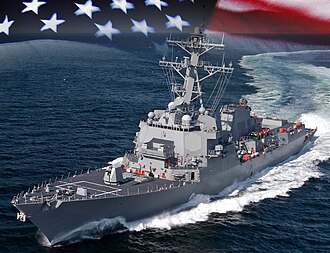
USS Louis H. Wilson Jr. (DDG-126): The Next Generation of American Naval Power Honoring a Marine Corps Legend
The United States Navy has a long tradition of naming its ships after individuals whose courage, leadership, and service have shaped the nation’s military history. These names serve as more than simple designations; they represent legacies that inspire the sailors who serve aboard them and remind future generations of the values these ships defend. Among the newest warships carrying such a legacy is USS Louis H. Wilson Jr. (DDG-126), a Flight III Arleigh Burke-class guided-missile destroyer named in honor of General Louis Hugh Wilson Jr., a Medal of Honor recipient and the 26th Commandant of the United States Marine Corps.
As one of the most advanced surface combatants ever built for the U.S. Navy, USS Louis H. Wilson Jr. represents the future of naval warfare. The destroyer combines powerful sensors, advanced missile systems, integrated air and missile defense capabilities, and networked combat technology designed to operate in increasingly complex maritime environments. As the first Flight III Arleigh Burke-class destroyer constructed by General Dynamics Bath Iron Works, the ship marks an important milestone in the evolution of one of the most successful warship designs in modern history.
While aircraft carriers often symbolize naval power, ships like USS Louis H. Wilson Jr. provide the defensive shield, intelligence capability, and striking power that allow carrier strike groups and naval forces to operate effectively. Designed to fight simultaneously in air, surface, and undersea environments, the destroyer will serve as a highly flexible platform capable of performing missions ranging from ballistic missile defense to maritime security operations.
The Hero Behind the Name: General Louis H. Wilson Jr.
USS Louis H. Wilson Jr. honors a Marine whose career reflected extraordinary courage and dedication to service. General Louis Hugh Wilson Jr. was born in Brandon, Mississippi, in 1920 and joined the United States Marine Corps during World War II. After receiving his commission as a Marine officer, he eventually commanded Company F, 2nd Battalion, 9th Marines, during the Battle of Guam in 1944.
During the assault on Guam, then-Captain Wilson led his Marines in a fierce engagement against heavily defended Japanese positions on Fonte Plateau. Facing intense enemy fire, Wilson personally directed attacks, reorganized his unit under difficult conditions, and continued leading despite being wounded multiple times. His actions demonstrated extraordinary bravery and tactical leadership, earning him the Medal of Honor, the highest military decoration awarded by the United States government for valor in combat.
Following World War II, Wilson continued his Marine Corps career and served in numerous leadership positions, including combat service during the Vietnam War. In 1975, he became the 26th Commandant of the Marine Corps, leading the service during a period of significant transformation following the Vietnam conflict. He retired in 1979 after decades of distinguished service.
By naming DDG-126 after General Wilson, the Navy preserves the memory of a leader whose career embodied courage, discipline, and commitment. The destroyer that carries his name reflects those same qualities through its advanced technology, resilience, and mission capabilities.
The Arleigh Burke-Class Legacy
A Proven Design for Modern Naval Warfare
USS Louis H. Wilson Jr. belongs to the Arleigh Burke class, a family of guided-missile destroyers that has served as the backbone of the U.S. Navy’s surface combatant fleet since the commissioning of USS Arleigh Burke (DDG-51) in 1991. Over more than three decades, the class has continuously evolved through multiple upgrades, allowing it to remain one of the most capable destroyer platforms in the world.
Unlike ships designed for a single purpose, Arleigh Burke-class destroyers are built as true multi-mission combatants. They can defend aircraft carriers from enemy aircraft and missiles, conduct ballistic missile defense, hunt submarines, attack surface vessels, launch precision strikes against land targets, and support humanitarian operations.
The longevity of the Arleigh Burke design demonstrates the value of adaptability. Rather than replacing the class entirely, the Navy has continuously improved the platform by introducing new sensors, weapons, software, and electronic systems. USS Louis H. Wilson Jr. represents the latest stage in this evolution through the Flight III configuration.
Construction and Development
The First Flight III Destroyer Built at Bath Iron Works
Construction of USS Louis H. Wilson Jr. began at General Dynamics Bath Iron Works in Maine, one of America’s leading naval shipbuilders. The ship represents a significant milestone because it is the first Flight III Arleigh Burke-class destroyer constructed at the Bath Iron Works facility.
The construction of a modern guided-missile destroyer requires thousands of skilled workers and extensive coordination among engineers, designers, welders, electricians, software specialists, and shipyard technicians. Every section of the ship must be precisely assembled to integrate propulsion systems, combat electronics, weapons, communications equipment, and survivability features.
The keel for the future USS Louis H. Wilson Jr. was ceremonially laid on May 16, 2023, marking an important stage in the shipbuilding process. The vessel was later christened on September 27, 2025, at Bath Iron Works, continuing the long naval tradition of formally naming and celebrating new ships before they enter service.
Flight III Improvements: A New Era of Destroyer Capability
AN/SPY-6 Air and Missile Defense Radar
The defining feature of Flight III Arleigh Burke-class destroyers is the introduction of the AN/SPY-6(V)1 Air and Missile Defense Radar. This advanced radar system represents one of the most significant improvements ever introduced to the Arleigh Burke design.
SPY-6 provides greatly enhanced detection, tracking, and discrimination capabilities compared with earlier radar systems. It allows the ship to identify smaller and more distant threats while simultaneously managing large numbers of airborne targets. This capability is increasingly important as potential adversaries develop advanced cruise missiles, ballistic missiles, unmanned systems, and hypersonic weapons.
For USS Louis H. Wilson Jr., SPY-6 transforms the destroyer into a more powerful defensive platform capable of protecting naval forces against increasingly sophisticated attacks.
Aegis Combat System
The radar operates as part of the Navy’s advanced Aegis Combat System, which integrates sensors, computers, weapons, and communications into a single combat network. Aegis allows the ship to rapidly process information, evaluate threats, and coordinate defensive responses.
This integrated approach gives the destroyer the ability to operate effectively as part of a carrier strike group, amphibious ready group, or multinational naval force. The ship can share information with other platforms, creating a broader picture of the battlespace.
Weapons and Combat Systems
Mk 41 Vertical Launch System
USS Louis H. Wilson Jr. will be equipped with a 96-cell Mk 41 Vertical Launch System (VLS), providing the ship with exceptional flexibility. The VLS allows missiles to be stored and launched vertically, reducing reaction time while supporting multiple weapon types.
Depending on mission requirements, the destroyer can carry:
- Standard Missile variants for air defense and ballistic missile interception.
- Tomahawk cruise missiles for long-range precision strikes.
- Evolved Sea Sparrow Missiles for defense against aircraft and missiles.
- Vertical Launch Anti-Submarine Rockets for underwater warfare missions.
This flexibility allows commanders to configure the ship according to operational needs.
Naval Gun and Defensive Systems
The destroyer also carries a 5-inch Mk 45 naval gun capable of engaging surface targets, supporting amphibious operations, and providing naval gunfire support. Although missiles dominate modern naval warfare, the naval gun remains valuable because of its reliability, versatility, and ability to provide sustained fire.
For close-range protection, USS Louis H. Wilson Jr. employs the Phalanx Close-In Weapon System, electronic warfare equipment, decoys, and other defensive technologies designed to defeat incoming threats.
Anti-Submarine Warfare Capability
Modern naval operations require the ability to detect and counter enemy submarines, which remain among the most dangerous threats facing surface forces. USS Louis H. Wilson Jr. incorporates advanced sonar systems and underwater warfare technology to perform anti-submarine missions.
The destroyer can operate MH-60R Seahawk helicopters equipped with dipping sonar, sonobuoys, and lightweight torpedoes. These aircraft extend the ship’s detection range far beyond its own sensors and allow rapid response to submarine contacts.
By combining ship-based sonar, helicopters, and networked information from other naval platforms, the destroyer contributes to a layered approach to undersea security.
Ballistic Missile Defense Mission
One of the most important roles of Flight III destroyers is ballistic missile defense. USS Louis H. Wilson Jr. is designed to protect naval forces and allied partners from missile threats by combining advanced radar detection with interceptor missiles.
As nations continue developing longer-range and more sophisticated missile systems, the ability to detect and defeat these weapons has become a central requirement for modern navies. Flight III destroyers provide improved defensive capability while remaining flexible enough to perform traditional naval missions.
Networked Naval Warfare
Future conflicts will depend heavily on information sharing and coordination between different military platforms. USS Louis H. Wilson Jr. is designed to operate within this connected environment, exchanging information with aircraft, submarines, satellites, allied ships, and command centers.
This network-centric approach allows naval forces to distribute capabilities across multiple platforms while maintaining a unified operational picture. The destroyer becomes more than an individual warship; it becomes a critical node within a larger maritime defense system.
Life Aboard a Modern Destroyer
Operating an Arleigh Burke-class destroyer requires a highly trained crew of approximately 300 sailors. Every member plays a role in maintaining propulsion systems, radar equipment, weapons, communications, navigation, engineering systems, and damage-control readiness.
Life aboard a destroyer is demanding. Sailors work around the clock during deployments, conduct continuous training exercises, and maintain readiness for unexpected missions. The close working environment creates strong teamwork and a shared commitment to the ship’s success.
The crew of USS Louis H. Wilson Jr. will carry forward the legacy of its namesake through professionalism, discipline, and dedication.
Strategic Importance for the Future Navy
USS Louis H. Wilson Jr. enters service during a period of significant change in global maritime security. Advances in missile technology, cyber warfare, unmanned systems, and electronic warfare are transforming naval operations.
Flight III destroyers provide the Navy with the capability to operate in these contested environments. Their combination of advanced sensors, powerful weapons, and networked systems allows them to defend allies, deter potential adversaries, and support operations around the world.
Whether protecting aircraft carriers, conducting missile defense patrols, supporting freedom of navigation operations, or responding to crises, USS Louis H. Wilson Jr. will serve as a highly adaptable component of American naval power.
Conclusion
USS Louis H. Wilson Jr. (DDG-126) represents the meeting point between history and technological innovation. Named after a Marine Corps legend whose courage earned him the Medal of Honor, the destroyer carries forward a legacy built on bravery, leadership, and service.
As a Flight III Arleigh Burke-class guided-missile destroyer, the ship introduces some of the most advanced naval technologies ever installed aboard a surface combatant. With its SPY-6 radar, Aegis combat system, powerful missile battery, and multi-domain capabilities, USS Louis H. Wilson Jr. is designed to meet the challenges of modern maritime warfare.
The destroyer’s future service will honor General Wilson’s memory while strengthening the Navy’s ability to protect American interests and maintain security across the world’s oceans.
Technical Specifications
| Specification | Details |
|---|---|
| Ship Name | USS Louis H. Wilson Jr. (DDG-126) |
| Class | Arleigh Burke-class guided-missile destroyer |
| Flight | Flight III |
| Hull Number | DDG-126 |
| Builder | General Dynamics Bath Iron Works, Maine |
| Construction Began | March 2020 |
| Keel Laid | May 16, 2023 |
| Christened | September 27, 2025 |
| Expected Commissioning | Late 2020s (planned) |
| Length | 509.5 ft (155.3 m) |
| Beam | Approximately 66 ft (20.1 m) |
| Draft | Approximately 31 ft (9.4 m) |
| Full-Load Displacement | Approximately 9,700–9,900 tons |
| Propulsion | 4 × General Electric LM2500 gas turbines |
| Propulsion Output | Approximately 100,000 shaft horsepower |
| Maximum Speed | Over 30 knots |
| Range | Approximately 4,400 nautical miles at 20 knots |
| Crew | Approximately 330 officers and enlisted sailors |
| Radar | AN/SPY-6(V)1 Air and Missile Defense Radar |
| Combat System | Aegis Combat System (Flight III configuration) |
| Vertical Launch System | 96-cell Mk 41 VLS |
| Main Gun | 1 × 5-inch Mk 45 Mod 4 naval gun |
| Close-In Defense | Phalanx CIWS, electronic warfare systems, decoys |
| Aviation Capability | MH-60R Seahawk helicopter support |
| Primary Missions | Air defense, ballistic missile defense, anti-submarine warfare, anti-surface warfare, land attack, maritime security |
| Expected Service Life | Approximately 35–40 years |
.jpg)