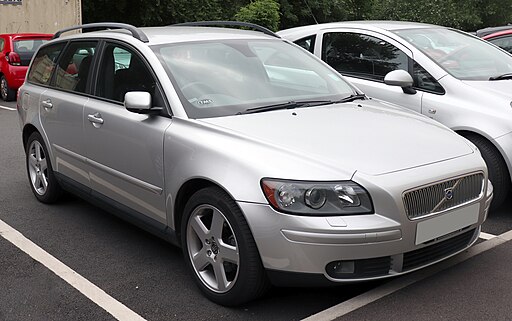
Volvo V50 faults
Central Electronic Module (CEM) and Electrical Faults
Symptoms:
-
Random warning lights on the dashboard.
-
Indicators, wipers, or headlights behaving erratically.
-
Immobilizer or central locking malfunction.
Cause:
The CEM (Central Electronic Module), located behind the glove box, is sensitive to moisture and heat. Over time, corrosion or poor connections can cause communication errors between vehicle systems.
Solution:
-
Clean and reseat connectors with electrical contact cleaner.
-
Check for water ingress near the windscreen and fix any leaks.
-
Replace or refurbish the CEM if corrosion is severe.
Severity: High
Repair cost: $400–$1,000 depending on repair or replacement.
Diesel EGR Valve and DPF Blockage
Symptoms:
-
Rough idle or stalling.
-
“Engine system service required” message.
-
Excessive smoke or limp mode.
Cause:
Diesel engines (especially the 1.6D and 2.0D) suffer from soot buildup in the EGR valve (Exhaust Gas Recirculation) and DPF (Diesel Particulate Filter). Cars mainly used for short trips can’t complete DPF regeneration cycles.
Solution:
-
Perform a forced regeneration using Volvo VIDA diagnostics.
-
Clean or replace the EGR valve.
-
Use high-quality diesel and drive the car regularly at motorway speeds to allow self-regeneration.
Severity: Medium
Repair cost: $300–$900 depending on component.
Dual-Mass Flywheel (DMF) Wear
Symptoms:
-
Rattling noise from the engine at idle.
-
Vibrations through the clutch pedal.
-
Difficult gear engagement.
Cause:
The dual-mass flywheel absorbs drivetrain vibrations but deteriorates over time, especially in diesel manual models with high torque output.
Solution:
-
Replace the DMF along with the clutch kit.
-
Always inspect the crankshaft seal during replacement.
Severity: High
Repair cost: $800–$1,500.
Geartronic Automatic Transmission Problems
Symptoms:
-
Jerky gear shifts or hesitation.
-
Delayed engagement when selecting drive or reverse.
-
“Transmission service required” message.
Cause:
The Aisin 5-speed Geartronic automatic transmission can develop valve body wear or fluid degradation. Volvo originally claimed it was “sealed for life,” but neglected fluid changes lead to internal wear.
Solution:
-
Replace transmission fluid every 60,000–80,000 km.
-
Update transmission control software.
-
Rebuild or replace valve body if shifting remains harsh.
Severity: High
Repair cost: $400–$1,800 depending on fix.
Suspension Wear (Bushes, Drop Links, and Top Mounts)
Symptoms:
-
Clunking or knocking over bumps.
-
Uneven tire wear.
-
Steering vibration at higher speeds.
Cause:
The front control arm bushes, drop links, and top mounts are wear-prone, especially on rough roads or with larger alloy wheels.
Solution:
-
Replace worn bushes or complete control arms.
-
Check wheel alignment afterward.
Severity: Medium
Repair cost: $200–$600.
Water Leaks and Damp Footwells
Symptoms:
-
Wet carpets or condensation on windows.
-
Musty smell inside the cabin.
-
Corroded connectors near the passenger footwell.
Cause:
Blocked sunroof drains, deteriorated door seals, or improperly fitted pollen filters can allow rainwater to enter.
Solution:
-
Clear sunroof drain tubes using compressed air.
-
Replace door membrane or seal if damaged.
-
Inspect pollen filter housing for cracks.
Severity: Medium
Repair cost: $100–$400 depending on location.
Steering Lock or Ignition Barrel Failure
Symptoms:
-
Key won’t turn in the ignition.
-
Steering remains locked after inserting key.
-
Intermittent start failures.
Cause:
Mechanical wear inside the ignition barrel or steering lock mechanism, particularly on early production models.
Solution:
-
Lubricate barrel with graphite (never oil).
-
Replace ignition barrel or lock module if worn.
Severity: Medium
Repair cost: $250–$600.
Air Conditioning Failure (Evaporator or Compressor)
Symptoms:
-
No cold air despite system being charged.
-
Clicking sound from AC compressor.
-
AC cuts out intermittently.
Cause:
Leaks from the evaporator core or a worn compressor clutch. The evaporator is prone to corrosion due to moisture accumulation inside the cabin ventilation system.
Solution:
-
Test system for leaks with UV dye.
-
Replace faulty compressor or evaporator.
-
Clean drainage system to prevent moisture buildup.
Severity: Medium to high
Repair cost: $600–$1,200.
Parking Sensor and ABS Sensor Faults
Symptoms:
-
Rear sensors constantly beep or show “Parking sensor service required.”
-
ABS or traction control light stays on.
Cause:
Moisture infiltration into sensor connectors, especially near the wheels or bumper. Corrosion and road salt accelerate this problem.
Solution:
-
Clean connectors and apply dielectric grease.
-
Replace faulty sensor if resistance is out of range.
Severity: Low
Repair cost: $80–$250 per sensor.
Timing Belt Neglect (Diesel and Petrol 1.8/2.0 Engines)
Symptoms:
-
Ticking noise from the timing area.
-
Oil leaks around camshaft seals.
-
Complete engine failure if belt breaks.
Cause:
Skipped timing belt replacement intervals (typically every 160,000 km or 10 years) or contamination by oil leaks.
Solution:
-
Replace timing belt, tensioners, and water pump together.
-
Inspect for oil leaks that could damage the new belt.
Severity: High (can cause total engine failure).
Repair cost: $500–$900.
Headlight Level Sensors and Xenon Light Failure
Symptoms:
-
“Headlight system service required.”
-
Lights flicker or point too low.
Cause:
Broken headlight leveling sensor arms (on suspension) or failed xenon ballast units. Common on cars with factory HID lights.
Solution:
-
Replace sensor arm or ballast unit.
-
Recalibrate headlight level using VIDA.
Severity: Medium
Repair cost: $200–$600.
Door Lock Actuator Failure
Symptoms:
-
Door doesn’t unlock or open from outside.
-
Central locking intermittently fails.
Cause:
Worn or seized micro-motors in the door lock actuator.
Solution:
-
Replace affected actuator.
-
Clean and lubricate door latches regularly.
Severity: Low
Repair cost: $150–$350.
Faulty Thermostat or Temperature Sensor
Symptoms:
-
Engine temperature fluctuates or runs cool.
-
Poor cabin heating.
-
Engine warning light.
Cause:
Stuck thermostat or failing coolant temperature sensor.
Solution:
-
Replace thermostat housing and sensor.
-
Refill and bleed cooling system properly.
Severity: Low
Repair cost: $150–$300.
Fuel Injector Leaks (Diesel Models)
Symptoms:
-
Strong diesel smell in the cabin.
-
Chuffing sound from engine bay.
-
Black soot buildup around injectors.
Cause:
Leaking copper sealing washers under injectors or carbon buildup around injector seats.
Solution:
-
Replace copper washers and stretch bolts.
-
Clean injector seating area thoroughly.
Severity: Medium
Repair cost: $200–$400.
Summary Table
| Fault Area | Common Symptom | Severity | Typical Repair Cost (USD) |
|---|---|---|---|
| CEM electrical faults | Random warnings | High | $400–$1000 |
| EGR/DPF issues | Power loss | Medium | $300–$900 |
| Dual-mass flywheel | Vibration/rattle | High | $800–$1500 |
| Geartronic gearbox | Jerky shifting | High | $400–$1800 |
| Suspension wear | Knocking noise | Medium | $200–$600 |
| Water leaks | Damp carpets | Medium | $100–$400 |
| Ignition/steering lock | Key won’t turn | Medium | $250–$600 |
| A/C leaks | No cold air | Medium | $600–$1200 |
| Parking/ABS sensors | Warning lights | Low | $80–$250 |
| Timing belt | Engine failure risk | High | $500–$900 |
| Headlight leveling | Beam too low | Medium | $200–$600 |
| Door actuator | Lock failure | Low | $150–$350 |
| Fuel injector leak | Diesel smell | Medium | $200–$400 |
Final Thoughts
The Volvo V50 remains a well-built and safe compact estate, and most of its known issues are age-related rather than fundamental design flaws. Cars that have been regularly serviced — particularly with transmission fluid, timing belt, and EGR maintenance — tend to be highly reliable even past 200,000 km.
Volvo V50 as a used car
The Volvo V50 is a compact executive estate car that combines Swedish practicality, understated design, and solid engineering. Produced from 2004 to 2012, the V50 shared its platform with the Ford Focus and Mazda 3, yet maintained a distinctive Volvo identity through superior safety, comfort, and durability. Positioned as the estate counterpart to the Volvo S40 sedan, the V50 offered a versatile balance of family usability and premium refinement.
As a used car, the Volvo V50 appeals to buyers who value build quality, a smooth ride, and strong reliability over flashy styling or high performance. It’s an ideal choice for small families, commuters, or anyone looking for a compact yet capable estate with a long lifespan and a reputation for safety.
Engine Range and Technical Specifications
The Volvo V50 featured a diverse range of petrol and diesel engines during its production run, covering a wide spectrum from economical to sporty performance. The earlier models (2004–2007) used mainly Ford and PSA-sourced engines, while later years (2008–2012) saw refinement and improved fuel efficiency.
Petrol Engines:
-
1.6i – 100 hp, 4-cylinder, suitable for city driving but underpowered for long trips.
-
1.8i – 125 hp, smooth and reliable, one of the most common engines.
-
2.0i – 145 hp, a solid performer with decent acceleration.
-
2.4i (5-cylinder) – 170 hp, naturally aspirated, offers silky power delivery and a refined sound.
-
T5 (2.5L turbocharged 5-cylinder) – 220 hp, performance-oriented, shared with the Focus ST and Volvo C30.
Diesel Engines:
-
1.6D / DRIVe – 110 hp, low emissions, capable of up to 4.5 L/100 km.
-
2.0D – 136 hp, PSA-sourced unit known for torque and reliability.
-
D5 (2.4L 5-cylinder) – 180 hp, smooth and powerful, ideal for motorway driving.
Transmissions:
-
5-speed manual (base models).
-
6-speed manual (mid and upper trims).
-
5-speed Geartronic automatic (on 2.4i, T5, and D5 models).
Performance and Efficiency:
-
0–100 km/h: 6.9–12.0 seconds depending on engine.
-
Top speed: 180–240 km/h.
-
Fuel consumption: 4.5–8.5 L/100 km.
-
CO₂ emissions: 115–190 g/km.
Driving Experience and Ride Quality
The Volvo V50 is built on the Ford C1 platform, which provides excellent chassis balance and handling characteristics. The steering is light but precise, making it easy to drive in both urban and motorway settings. Suspension tuning prioritizes comfort, though sportier versions like the T5 and D5 feel noticeably firmer.
On the road, the V50 feels composed and stable. The five-cylinder engines (2.4i, D5, and T5) deliver effortless torque and a distinctive, smooth sound. The brakes are responsive, and the car remains well-controlled even under heavy loads. Noise insulation is impressive for its class, reducing wind and road noise significantly compared to its contemporaries.
Interior Design and Comfort
Inside the Volvo V50, the cabin reflects Volvo’s minimalist Scandinavian design philosophy. The most distinctive feature is the floating center console — a slim, elegant panel that houses climate controls and stereo functions, giving the dashboard a clean and open look.
Materials are generally high quality, with soft-touch plastics and sturdy switchgear. The seating comfort is exceptional — one of Volvo’s strong points — offering excellent lumbar support and long-distance comfort.
Space is adequate for a compact estate:
-
Front passengers enjoy generous leg and headroom.
-
Rear seats comfortably fit two adults (three in short trips).
-
The boot offers 417 liters of space, expanding to 1,307 liters with seats folded.
Many models also came with optional leather upholstery, dual-zone climate control, and a high-end audio system from Premium Sound by Dynaudio.
Safety Equipment and Ratings
True to Volvo’s reputation, the Volvo V50 offers outstanding safety credentials. It earned a five-star Euro NCAP rating during its production years and incorporated several advanced safety systems for its time.
Standard features include:
-
Front, side, and curtain airbags.
-
Volvo’s Side Impact Protection System (SIPS).
-
Whiplash Protection System (WHIPS).
-
ABS with Electronic Brake Distribution (EBD).
-
Traction and stability control (DSTC).
-
Optional blind spot monitoring (on later models).
The robust body shell, combined with intelligent crash energy distribution, ensures strong protection in collisions.
Reliability and Common Issues
While the Volvo V50 is known for its durability, certain components are more prone to wear or failure, especially as the cars age. Here are the most common known issues:
-
Electrical faults – Central locking, ABS sensors, and dashboard warning lights can act up due to wiring corrosion or faulty modules.
-
EGR and DPF issues (diesel) – Soot buildup may cause limp mode, especially on cars used mainly for short trips.
-
Dual-mass flywheel wear (diesel manuals) – Common around 150,000 km; symptoms include rattling noises and vibrations.
-
Geartronic automatic hesitation – Requires periodic fluid changes every 60,000–80,000 km for smooth shifting.
-
Suspension bush wear – Lower wishbone bushes and drop links often need replacement around 100,000 km.
-
Water leaks into cabin – Blocked sunroof drains can allow water into footwells.
-
Timing belt neglect – Some owners miss replacements; all timing belts (except 2.4i) should be replaced every 160,000 km or 10 years.
Despite these issues, most are predictable and easily managed with routine maintenance. Properly serviced examples of the V50 can exceed 300,000 km without major problems.
Running Costs and Maintenance
Running costs for the Volvo V50 are moderate for its class. The smaller petrol and diesel engines deliver excellent fuel efficiency, while parts availability remains strong thanks to its shared platform with Ford.
Service intervals: Every 20,000 km or annually.
Timing belt replacement: Every 160,000 km / 10 years (except 2.4i and T5, which use timing chains).
Insurance group: Typically between 16–27 depending on model.
The 1.6D and 2.0D engines are particularly cheap to run, while the T5 and D5 provide strong performance at the cost of higher fuel and maintenance expenses.
Market Prices and Buying Tips
As of 2025, used Volvo V50 models remain great value on the second-hand market:
-
Early 2004–2007 petrol models: $3,000–$5,000.
-
2008–2011 diesel DRIVe models: $5,000–$8,000.
-
Late-model T5 or D5 versions: $7,000–$10,000, depending on mileage and condition.
When buying used, check for:
-
Complete service history, especially for timing belt and transmission fluid changes.
-
Smooth idle and consistent acceleration (avoid cars with hesitation or smoke).
-
Dry cabin floors (no signs of water ingress).
-
Functioning electronics and warning-free dashboard.
A well-maintained V50 still feels tight, quiet, and premium even after a decade of use.
Final Verdict
The Volvo V50 remains an excellent used car choice for those who value quality, comfort, and practicality. It offers a unique blend of Scandinavian design, dependable mechanics, and safety features that still stand out years after production ended. While not the most exciting to drive, its refined ride, efficient engines, and robust build make it a trustworthy long-term companion.
