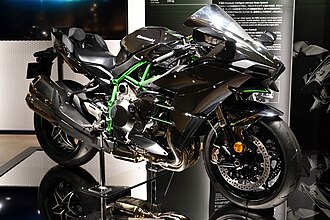
Kawasaki Ninja H2: The Supercharged Motorcycle That Redefined Performance
A New Era of Motorcycle Engineering
The Kawasaki Ninja H2 represents one of the most ambitious engineering projects ever created in the world of production motorcycles. Introduced as a machine designed to push the limits of speed, technology, and mechanical innovation, the Ninja H2 quickly became a symbol of extreme performance. Unlike conventional superbikes that rely on naturally aspirated engines, the Ninja H2 introduced a factory-developed supercharged powerplant, giving riders an experience unlike almost anything else available on two wheels. It was created not simply to compete in the superbike market but to demonstrate what was possible when engineers were given the freedom to pursue maximum performance.
From its aggressive styling to its advanced electronics and aerospace-inspired engineering, the Ninja H2 is a motorcycle built around the idea of excess. Every component, from the aerodynamic bodywork to the carefully engineered engine system, reflects a focus on achieving exceptional performance while maintaining the reliability expected from a modern production motorcycle. It stands as a reminder that motorcycles can be more than transportation; they can be examples of technological artistry and mechanical passion.
The Birth of the Kawasaki Ninja H2
Inspired by Racing and Aerospace Technology
The development of the Ninja H2 was closely connected to Kawasaki’s broader engineering expertise. The company used knowledge from different areas of its business, including aerospace technology, to create a motorcycle unlike any previous model. The goal was to develop a supercharged motorcycle that could deliver incredible acceleration while remaining suitable for real-world riding.
The result was a machine powered by a 998cc inline-four engine equipped with a centrifugal supercharger. Unlike turbocharged systems that depend heavily on exhaust gases, the supercharger is mechanically driven, allowing engineers to create immediate and predictable power delivery. This design choice gave the Ninja H2 a distinctive character, combining strong low-end response with explosive acceleration at higher speeds.
The motorcycle’s design also reflected its performance ambitions. Its sharp bodywork, large aerodynamic surfaces, and metallic paint finish gave it a futuristic appearance. The styling was not only created for visual impact but also designed to support stability and airflow management at high speeds.
A Motorcycle Built Without Compromise
Many high-performance motorcycles focus primarily on track capability, but the Ninja H2 was designed with a broader vision. Kawasaki wanted to create an extreme machine that could be ridden on public roads while offering technology derived from racing and advanced engineering. This balance made the Ninja H2 unique because it combined everyday usability with performance levels approaching competition machinery.
The motorcycle became known for its dramatic acceleration, distinctive engine sound, and intense riding experience. It was not designed to be a beginner-friendly motorcycle or a practical commuter; instead, it appealed to experienced riders who wanted access to one of the most powerful production motorcycles ever created.
Supercharged Performance: The Heart of the Ninja H2
The Revolutionary Supercharged Engine
The defining feature of the Ninja H2 is its supercharged engine. The 998cc four-cylinder motor uses a custom-designed supercharger developed specifically for motorcycle use. This system forces more air into the combustion chamber, allowing the engine to generate significantly more power than a naturally aspirated engine of similar size.
The supercharger’s design provides strong and consistent performance throughout the rev range. Riders experience rapid throttle response and a powerful surge of acceleration as engine speed increases. The sensation is different from many traditional superbikes because the power delivery feels almost limitless, especially when the motorcycle moves into higher speeds.
The engine also demonstrates Kawasaki’s focus on durability. Because forced induction creates additional stress and heat, engineers developed specialized components, cooling systems, and engine materials to ensure reliability under demanding conditions.
Acceleration and Riding Experience
The Ninja H2’s performance is defined not only by its horsepower figures but also by the way it delivers power. The motorcycle accelerates with remarkable intensity, creating a riding experience that feels closer to a race machine than a conventional road bike. The supercharged engine provides a unique combination of smoothness and aggression, allowing experienced riders to control the motorcycle while enjoying its enormous performance potential.
The riding experience is supported by advanced electronics that help manage the motorcycle’s power. Features such as traction control, launch control, riding modes, and intelligent braking systems allow riders to adapt the motorcycle’s behavior according to conditions and personal preferences.
Advanced Technology and Electronics
Intelligent Rider Assistance Systems
A motorcycle producing extreme levels of power requires advanced technology to help riders use that performance safely. The Ninja H2 includes a sophisticated electronics package designed to improve control and confidence.
The motorcycle uses an inertial measurement unit that monitors movement across multiple axes. This information allows the electronic systems to adjust traction control, braking assistance, and other functions based on the motorcycle’s position and riding conditions. These systems work continuously in the background, helping maintain stability during acceleration, cornering, and braking.
The addition of multiple riding modes also allows riders to customize the motorcycle’s behavior. A more aggressive setting provides maximum performance, while softer settings offer smoother responses for everyday riding situations.
Premium Suspension and Braking Components
The Ninja H2 is equipped with high-quality suspension components designed to handle its performance capabilities. Adjustable suspension allows riders to fine-tune the motorcycle for different riding styles, whether focusing on comfort, spirited road riding, or track performance.
Braking performance is equally important on a motorcycle capable of reaching extreme speeds. High-performance brakes provide strong stopping power and precise control, giving riders confidence when managing the motorcycle’s acceleration and speed.
Design and Aerodynamics
A Futuristic Appearance
The Kawasaki Ninja H2’s appearance is one of its most recognizable characteristics. The motorcycle features sharp lines, aggressive angles, and a distinctive metallic paint finish that changes appearance under different lighting conditions. Its design communicates speed even when the motorcycle is standing still.
The aerodynamic bodywork was developed to improve stability and airflow management. Every surface contributes to the motorcycle’s high-speed performance, from the front fairing to the tail section. The design is a combination of function and visual drama, making the Ninja H2 instantly recognizable.
Engineering Behind the Bodywork
At extreme speeds, aerodynamics become a critical factor. The Ninja H2 uses carefully shaped panels and aerodynamic elements to help maintain stability. The motorcycle’s design reduces unnecessary turbulence while allowing efficient airflow around the engine and rider.
This attention to aerodynamic detail demonstrates the level of engineering involved in creating a machine like the Ninja H2. It is not simply a powerful engine placed inside attractive bodywork; it is a complete performance system where every element works together.
The Ninja H2’s Legacy in the Motorcycle World
Since its introduction, the Ninja H2 has become an important milestone in motorcycle history. It challenged traditional ideas about what a production motorcycle could achieve and showed that advanced technologies such as supercharging could successfully move from concept to showroom.
The motorcycle also influenced discussions about performance motorcycles and encouraged manufacturers and enthusiasts to think differently about speed and engineering. While many motorcycles compete through lightweight design or racing technology, the Ninja H2 created its own category by focusing on forced-induction performance and technological innovation.
Beyond numbers and specifications, the Ninja H2 represents a philosophy: motorcycles can be emotional, exciting, and technically fascinating machines. It appeals to riders who appreciate engineering excellence as much as raw performance.
Conclusion: A Motorcycle Like No Other
The Kawasaki Ninja H2 remains one of the most extraordinary motorcycles ever produced. Its supercharged engine, advanced electronics, futuristic design, and uncompromising performance make it a standout achievement in modern motorcycle engineering.
Rather than simply being another high-powered sportbike, the Ninja H2 represents innovation and ambition. It demonstrates what happens when engineers combine creativity, technology, and a desire to explore new possibilities. For enthusiasts who value cutting-edge design and unforgettable performance, the Ninja H2 continues to represent the ultimate expression of motorcycle engineering.
Kawasaki Ninja H2 Technical Specifications
| Specification | Details |
|---|---|
| Engine Type | Liquid-cooled, four-stroke, DOHC, 16-valve inline-four |
| Engine Displacement | 998cc |
| Induction System | Centrifugal supercharger |
| Cooling System | Liquid cooling |
| Transmission | 6-speed return shift transmission |
| Final Drive | Sealed chain |
| Frame Type | High-tensile steel trellis frame |
| Front Suspension | Inverted telescopic fork |
| Rear Suspension | Uni-Trak rear suspension with gas-charged shock |
| Front Brakes | Dual hydraulic disc brakes with advanced ABS |
| Rear Brake | Single hydraulic disc brake |
| Fuel Capacity | Approximately 17 liters |
| Seat Height | Approximately 825 mm |
| Wheelbase | Approximately 1,455 mm |
| Curb Weight | Approximately 238 kg |
| Engine Character | Supercharged high-performance inline-four |
| Key Electronics | Traction control, riding modes, launch control, quick shifter, intelligent braking assistance |
| Primary Purpose | High-performance road motorcycle with advanced engineering technology |
