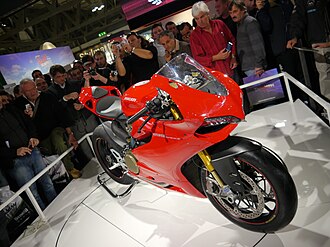
Ducati Panigale: The Ultimate Guide to Ducati’s Iconic Superbike Family
The Ducati Panigale is one of the most recognizable names in modern superbike history. Built around Ducati’s long tradition of high-performance V-twin and V4 motorcycles, the Panigale family represents the company’s relentless pursuit of speed, lightweight construction, advanced electronics, and unmistakable Italian design. More than simply a fast road motorcycle, the Panigale is a direct connection between Ducati’s production motorcycles and its experience in international racing. Over several generations, the family has evolved from the V-twin-powered 1199 Panigale into increasingly sophisticated V4 machines, with each generation pushing engine performance, chassis technology, aerodynamics, electronics, and braking to new levels.
The Panigale name itself comes from Borgo Panigale, the Bologna district in Italy where Ducati is based. That connection is significant because the motorcycle represents the technological and emotional identity of Ducati’s factory. A Panigale is immediately recognizable through its compact proportions, aggressive fairing, sculpted fuel tank, exposed engineering details, and racing-inspired ergonomics. Yet the motorcycle’s appeal goes deeper than appearance. It is designed around the idea that a production superbike should deliver an experience as close as possible to a competition machine while remaining usable on public roads.
The Birth of the Panigale
Replacing the Legendary 1198
The Ducati Panigale arrived for the 2012 model year as the successor to the 1198 family. Ducati had spent decades developing high-performance motorcycles around its characteristic L-twin engine, and the Panigale represented a major departure from that established formula.
The original 1199 Panigale introduced a 1,198cc Superquadro L-twin engine and a radically different chassis architecture. Instead of using the traditional trellis frame that had been one of Ducati’s most recognizable engineering signatures, Ducati integrated the engine into the structure of the motorcycle. The engine became a stressed member of the chassis, while the front frame connected the steering head to the engine.
This approach reduced structural mass and allowed Ducati to create a very compact motorcycle. It also represented a philosophical shift: Ducati was no longer simply refining its traditional superbike formula but rethinking the architecture from the ground up.
A New Era of Ducati Superbikes
The 1199 Panigale was immediately notable for its styling. The bodywork was extremely compact, the exhaust system was tucked beneath the engine, and the front fairing incorporated aggressive air intakes and integrated lighting. The result looked more like a prototype racing motorcycle than a conventional road bike.
Ducati also introduced extensive electronic assistance. Depending on specification, the original Panigale could feature riding modes, traction control, ABS, quickshifter technology, and electronically adjustable suspension. These systems represented a major step forward from the relatively mechanical character of earlier Ducati superbikes.
The Panigale therefore arrived as both an aesthetic revolution and an engineering revolution.
The Superquadro Engine
A High-Performance V-Twin
The original Panigale’s Superquadro engine was one of its defining features. Ducati designed the engine around extremely large bore dimensions and relatively short stroke characteristics, allowing it to produce substantial power at high engine speeds.
The 1199 version displaced 1,198cc and used a 90-degree L-twin configuration. It employed liquid cooling, four valves per cylinder, desmodromic valve actuation, and electronic fuel injection. Ducati’s published figures for the original 1199 Panigale placed peak output at around 195 horsepower, an extraordinary figure for a production road motorcycle at the time.
The engine’s character was very different from that of older Ducati twins. While traditional Ducati V-twins were famous for strong torque and distinctive mechanical feel, the Superquadro was designed to behave more like a racing engine. It produced enormous top-end performance and demanded more precise throttle control.
Panigale 1299
Ducati later increased the displacement of the platform with the Panigale 1299. The larger engine retained the basic Superquadro concept but increased capacity to 1,285cc. Ducati claimed approximately 205 horsepower for the standard 1299, with even higher output available from the 1299 Panigale S and other performance-focused versions.
The 1299 represented the ultimate development of Ducati’s large-capacity production V-twin superbike philosophy. It combined enormous power with sophisticated electronics and a lightweight chassis.
However, the changing technical regulations surrounding superbike racing eventually made the V4 configuration increasingly attractive for Ducati.
The Arrival of the Panigale V4
Four Cylinders Change Everything
The Panigale V4 represented one of the most important changes in Ducati’s modern history. Introduced for the 2018 model year, it replaced the traditional large V-twin configuration with a 1,103cc 90-degree V4 derived conceptually from Ducati’s MotoGP racing technology.
The engine, known as Desmosedici Stradale, was heavily influenced by Ducati’s racing experience. Unlike the earlier Superquadro V-twin, the V4 could produce higher peak power while offering a broader performance envelope.
The standard Panigale V4 initially produced around 211 horsepower, placing it firmly among the most powerful production superbikes in the world. Later generations increased output further through engine development, improved electronics, reduced weight, and aerodynamic refinement.
Why the V4 Was So Important
The move to four cylinders was not simply about adding two cylinders. A V4 configuration allows Ducati to pursue extremely high performance while maintaining a relatively compact engine package. The architecture also produces a distinctive combination of high-rpm power and usable mid-range torque.
For Ducati, the V4 also created closer technical alignment between its road-going superbike and MotoGP program. While a production Panigale V4 is obviously not a MotoGP motorcycle, the relationship between the two platforms is part of the bike’s appeal.
The V4 also changed the sound and character of the Panigale. The deep pulse of the traditional Ducati twin was replaced by a higher-pitched, intensely mechanical exhaust note that became one of the defining characteristics of the new generation.
The Panigale V4 S
Premium Suspension and Lightweight Components
The Panigale V4 S occupies an important position in the family because it adds higher-end components to the standard motorcycle. Depending on generation, S versions have featured electronically controlled Öhlins suspension, forged or lightweight wheels, and other premium components designed to reduce weight and improve track performance.
The philosophy behind the S is simple: the standard Panigale V4 is already an extremely capable superbike, but the S is aimed at riders who want a more advanced chassis and greater adjustability.
For road riders, the benefits may not always be immediately obvious because public roads rarely provide the conditions necessary to exploit every advantage. On a racetrack, however, the ability to adjust suspension behavior electronically can provide significant benefits when tire grip, braking loads, and cornering speeds are pushed to the limit.
Aerodynamics and the Modern Panigale
Winglets and Downforce
Modern Panigale V4 models have increasingly incorporated aerodynamic technology. Winglets integrated into the fairing generate additional aerodynamic load at high speed, helping to keep the front wheel planted during hard acceleration and improving stability under certain conditions.
Aerodynamics have become a central part of superbike development because modern engines produce so much power that keeping the motorcycle stable under acceleration is almost as important as producing the power itself.
The Panigale’s aerodynamic design also reflects Ducati’s experience in MotoGP. Racing motorcycles use increasingly sophisticated airflow management, and the knowledge gained through competition has influenced the development of production superbikes.
The Fairing Is Part of the Engineering
The Panigale’s fairing is therefore much more than styling. Air intakes supply the engine, cooling systems require controlled airflow, and the shape of the bodywork influences stability and drag.
This integration between aesthetics and engineering is a defining Ducati characteristic. The motorcycle looks dramatic because its design is being driven by functional requirements as well as visual considerations.
Chassis and Lightweight Construction
The Engine as a Structural Component
One of the most important features of the original Panigale architecture was the use of the engine as a structural component. The frame was dramatically smaller than the traditional trellis structures associated with earlier Ducati superbikes.
The modern Panigale continues to use an architecture that emphasizes low mass and centralized weight. Reducing unnecessary structural material can improve acceleration, braking, and direction changes, all of which are crucial on a racetrack.
Weight distribution is equally important. A superbike must provide enough stability to withstand extreme braking while remaining agile enough to change direction quickly. Ducati’s chassis engineers therefore have to balance rigidity, flexibility, geometry, suspension setup, and mass centralization.
Suspension and Brakes
Panigale motorcycles use high-performance suspension systems and powerful Brembo braking components. Depending on the model, braking systems have included radial-mount calipers, large dual front discs, and advanced ABS systems capable of operating during cornering.
These components are essential because enormous engine performance creates enormous braking requirements. A motorcycle capable of accelerating to very high speeds needs a braking system that can repeatedly convert that kinetic energy into heat without losing consistency.
The braking system also works closely with the electronics. Modern Panigale models can adjust ABS intervention according to riding mode and lean angle, allowing riders to exploit braking performance while maintaining an appropriate safety margin.
Ducati Panigale Electronics
Riding Modes
Modern Panigale motorcycles are among the most electronically sophisticated road-legal motorcycles available. Riding modes allow the rider to change throttle response, power delivery, traction control, wheelie control, engine braking, and ABS behavior.
This technology has transformed the usability of extremely powerful motorcycles. A rider does not necessarily need to experience the motorcycle’s maximum aggression every time the throttle is opened. Different settings can make the bike more predictable on the road and more aggressive on a racetrack.
The electronics are also continuously processing information from sensors throughout the motorcycle. Wheel speeds, lean angle, acceleration, braking force, and other parameters can be used to determine how much intervention is appropriate.
Quickshifter and Engine-Braking Management
A quickshifter allows riders to change gears without using the clutch during acceleration and, on advanced systems, during downshifts as well. This is particularly useful on a racetrack because it reduces the time spent shifting and allows the rider to keep greater attention on braking points and corner entry.
Engine-braking control is another important feature. A high-performance engine can generate significant deceleration when the throttle is closed, particularly during aggressive downshifts. Electronic management helps prevent the rear wheel from becoming unstable during hard braking.
These technologies do not replace rider skill. Instead, they allow skilled riders to operate closer to the motorcycle’s limits with greater consistency.
Riding the Ducati Panigale
On the Road
The Panigale is unmistakably a superbike, and its riding position reflects that purpose. The rider leans forward over the fuel tank, the footpegs are relatively high, and the handlebars encourage a committed riding position.
On a smooth road, this can be exhilarating. Steering is precise, the engine responds immediately to throttle inputs, and the chassis feels highly controlled. However, the same characteristics can make long-distance riding demanding. Wind protection is good compared with a naked motorcycle, but the riding position places more load on the wrists and upper body than a sport-touring machine.
The Panigale therefore makes the most sense for riders who genuinely enjoy performance riding and are willing to accept the compromises that come with a dedicated superbike.
On the Track
The racetrack is where the Panigale’s design philosophy becomes most obvious. High engine speeds, powerful brakes, sophisticated electronics, aerodynamic stability, and a lightweight chassis all work together in an environment where their advantages can be fully exploited.
The motorcycle is capable of extremely high cornering speeds, hard braking, and rapid acceleration. At the same time, the electronics allow riders to customize the machine’s behavior as their skills improve.
For serious track riders, this is where versions such as the Panigale V4 S and special R models become particularly interesting.
Special Editions and the Panigale V4 R
Built for Racing
The Panigale V4 R represents Ducati’s most direct connection between production superbike and World Superbike racing. The V4 R uses a smaller engine capacity than the standard road-going V4 in order to comply with racing regulations, while incorporating extensive high-performance technology.
The V4 R has historically featured a 998cc Desmosedici Stradale R engine, racing-oriented components, lightweight construction, aerodynamic elements, and a much more aggressive specification than the standard Panigale V4.
It is not simply a more powerful version of the standard motorcycle. The V4 R is designed around the requirements of competition, making it an exceptionally specialized machine.
Maintenance and Ownership
A Serious Performance Motorcycle
Owning a Panigale requires an understanding of what the motorcycle is designed to do. These are high-performance machines with sophisticated engines, electronics, suspension, and braking systems. Regular servicing is therefore essential.
Maintenance requirements vary by generation and engine, so owners should follow the service schedule for their specific motorcycle. Oil changes, valve inspections, timing components where applicable, cooling systems, brake fluid, tires, chain maintenance, and electronic diagnostics all deserve attention.
Used buyers should also inspect motorcycles carefully for evidence of track use. Track riding is not automatically a negative, because a professionally maintained track bike may be in excellent condition, but the maintenance history becomes even more important when a motorcycle has been subjected to repeated high-temperature and high-load operation.
The Legacy of the Ducati Panigale
The Panigale has become one of Ducati’s most important motorcycles because it successfully combines several aspects of the company’s identity. It is technically sophisticated, visually dramatic, closely connected to racing, and unmistakably Italian.
The transition from the 1199 and 1299 V-twins to the V4 was a major historical moment. It demonstrated Ducati’s willingness to abandon a deeply established engine architecture in pursuit of greater performance and closer alignment with racing technology.
Yet the Panigale name survived the change because its identity was never dependent solely on the number of cylinders. The essential philosophy remained: build a lightweight, aggressive, technologically advanced superbike that provides the rider with an intense connection to Ducati’s racing heritage.
Final Thoughts
The Ducati Panigale represents the modern interpretation of the pure superbike. From the groundbreaking 1199 Panigale to the current V4 generation, the family has continually pushed the limits of engine performance, chassis design, electronics, braking, and aerodynamics.
Its appeal is not simply the extraordinary horsepower figures. The real achievement is the way Ducati combines that performance into a motorcycle that remains compact, visually coherent, and emotionally engaging. The engine is central to the experience, but so are the brakes, suspension, electronics, aerodynamics, and rider interface.
For road riders, the Panigale offers the excitement of owning a genuine superbike, although its aggressive ergonomics and enormous performance mean that it demands respect. For track enthusiasts, the motorcycle provides an increasingly sophisticated platform that can be adapted to a wide range of riding styles and skill levels.
Perhaps the most important thing about the Panigale is that it continues Ducati’s long tradition of making motorcycles that are as visually compelling as they are technically impressive. The fairings, aerodynamic surfaces, compact chassis, exposed mechanical details, and unmistakable Ducati character combine to make the Panigale more than a collection of performance statistics.
It is a motorcycle built around emotion, engineering, and speed. Whether powered by the final generation of Ducati’s legendary Superquadro V-twin or the modern Desmosedici Stradale V4, the Panigale remains one of the defining superbike names of the twenty-first century.
Ducati Panigale Technical Specifications
Because the Panigale family includes several generations and major variants, including the 1199, 1299, V4, V4 S, V4 R, and special editions, there is no single specification sheet that accurately represents every model. The table below uses the current-generation Ducati Panigale V4 as the primary technical reference.
| Specification | Ducati Panigale V4 |
|---|---|
| Motorcycle type | Superbike |
| Engine | 90° V4, four-stroke |
| Displacement | 1,103 cc |
| Valve system | Desmodromic, 4 valves per cylinder |
| Cooling | Liquid-cooled |
| Fuel system | Electronic fuel injection |
| Maximum power | Approx. 215 hp, depending on model year/market |
| Maximum torque | Approx. 120 Nm, depending on model year |
| Transmission | 6-speed |
| Final drive | Chain |
| Frame | Aluminum Front Frame |
| Front suspension | Fully adjustable upside-down fork |
| Rear suspension | Fully adjustable monoshock |
| Front brakes | Twin Brembo radial-mount discs/calipers |
| Rear brake | Single disc |
| Wheels | 17-inch lightweight alloy wheels |
| Front tire | 120/70 ZR17 |
| Rear tire | 200/60 ZR17 |
| Fuel capacity | Approx. 17 L |
| Seat height | Approx. 850 mm |
| Wheelbase | Approx. 1,469 mm |
| Electronics | Riding modes, power modes, traction control, wheelie control, engine-brake control |
| ABS | Cornering ABS |
| Quickshifter | Ducati Quick Shift |
| Instrumentation | Full-color TFT display |
| Aerodynamics | Integrated racing-inspired winglets/airflow management |
| Main character | High-performance road and track superbike |
| Racing connection | Strong MotoGP and World Superbike influence |
