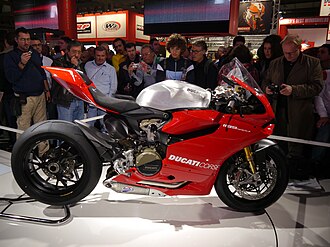
Ducati 1199 Panigale: The Revolutionary Superbike That Changed Ducati
The Ducati 1199 Panigale is one of the most significant superbikes in Ducati’s modern history. Introduced for the 2012 model year, it represented a dramatic departure from the company’s traditional approach to high-performance motorcycles. The 1199 replaced the legendary 1198 and brought with it a completely new engine, a radically revised chassis, advanced electronics, and styling that immediately established the Panigale as one of the most distinctive superbikes of its era. It was not simply an evolution of an existing Ducati formula; it was an ambitious attempt to rethink what a production V-twin superbike could be.
At the center of the motorcycle was the 1,198cc Superquadro L-twin engine, a highly oversquare powerplant designed for exceptionally high engine speeds and impressive peak power. Ducati claimed approximately 195 horsepower from the standard 1199, an extraordinary figure for a production V-twin at the time. Yet the engine was only one part of the story. The Panigale introduced a new monocoque-style chassis architecture, made the engine a major structural component, reduced conventional frame material, and incorporated sophisticated electronic rider aids. The result was a motorcycle that was lighter, more compact, and more technologically advanced than the Ducati superbikes that came before it.
The 1199 Panigale also marked an important transition in Ducati’s engineering philosophy. For decades, the company had become famous for its tubular trellis frames and powerful desmodromic V-twin engines. With the 1199, Ducati was willing to abandon one of its most recognizable design elements in favor of a new architecture optimized around mass centralization and performance. That decision was controversial among some enthusiasts, but it helped establish the technical direction that would define Ducati’s superbikes for years to come.
The Birth of the Ducati 1199 Panigale
Replacing the 1198
The Ducati 1198 had been the final major development of Ducati’s traditional large-capacity V-twin superbike architecture. When Ducati introduced the 1199 Panigale, almost every major aspect of the motorcycle was reconsidered.
The new model retained the 90-degree L-twin layout and desmodromic valve actuation, but the engine became a stressed component of the chassis. Instead of relying on a large trellis frame, Ducati developed a compact aluminum monocoque structure around the front of the motorcycle. This allowed the company to reduce weight while creating a tightly integrated package.
The name Panigale came from Borgo Panigale, the district of Bologna in Italy where Ducati is headquartered. The name therefore represented more than a new model designation. It connected the motorcycle directly to Ducati’s factory and its Italian engineering identity.
The styling was equally revolutionary. The 1199 featured a narrow front profile, aggressive aerodynamic fairing, compact tail section, under-engine exhaust system, and a sculpted fuel tank that emphasized the motorcycle’s muscular proportions. It looked unmistakably like a racing machine adapted for the road.
A New Superbike Philosophy
The 1199 was designed around the idea that performance should come from minimizing mass as much as increasing engine output. Ducati therefore focused heavily on weight reduction and centralization.
The engine was compact, the frame was minimized, and many components were positioned close to the motorcycle’s center of gravity. The result was a motorcycle that could change direction quickly and respond immediately to rider inputs.
This philosophy was particularly important because the 1199’s engine produced enormous power. Ducati needed a chassis capable of managing that output without becoming excessively heavy.
The Superquadro Engine
A New Generation of Ducati V-Twin
The 1199’s Superquadro engine is arguably the most important mechanical feature of the motorcycle. The name refers to its extremely oversquare dimensions, with a large bore and comparatively short stroke.
The engine has a displacement of 1,198cc, a 112mm bore, and a 60.8mm stroke. This geometry allows the engine to operate at very high rotational speeds while providing the airflow capacity needed to generate substantial power.
Ducati claimed approximately 195 horsepower at 10,750 rpm for the original standard 1199. Torque output was approximately 132 Nm at 9,000 rpm. These figures were remarkable for a V-twin and demonstrated how far Ducati had developed its large-capacity engine technology.
The engine also incorporated liquid cooling, electronic fuel injection, four valves per cylinder, and desmodromic valve actuation. It was a thoroughly modern interpretation of Ducati’s traditional L-twin formula.
The Character of the Superquadro
Despite its enormous peak output, the Superquadro was not simply about top-end horsepower. Its torque delivery and engine braking were major parts of the motorcycle’s character.
A 90-degree V-twin produces substantial torque pulses, and Ducati used this characteristic to create strong acceleration and a distinctive riding experience. The engine feels mechanical and immediate in a way that differs from the smoother character of many inline-four superbikes.
At higher rpm, the Superquadro becomes increasingly aggressive. The engine’s short-stroke design allows it to rev rapidly, producing the kind of top-end performance more commonly associated with smaller racing engines.
The result is an engine that combines traditional Ducati character with modern high-rpm performance.
The Revolutionary Chassis
Goodbye to the Traditional Trellis Frame
Perhaps the most controversial aspect of the 1199 was its chassis. Ducati had built an enormous reputation around its steel trellis frame, which had become almost inseparable from the visual identity of the brand.
The 1199 abandoned that traditional arrangement.
Instead, Ducati used a compact aluminum monocoque front frame that incorporated the airbox and attached directly to the steering head and engine. The engine itself became a structural component of the chassis.
This allowed Ducati to remove substantial amounts of conventional frame material and concentrate the motorcycle’s mass around the engine.
For some traditional Ducati enthusiasts, the change was difficult to accept. The trellis frame had been a defining part of Ducati motorcycles for decades. However, from an engineering perspective, the new approach gave Ducati greater freedom to optimize weight and rigidity around the demands of a modern superbike.
Mass Centralization
The benefits of the new architecture became especially apparent when the motorcycle was ridden aggressively. Centralizing mass reduces the effort required to change direction and can make a motorcycle feel more responsive.
The 1199’s relatively low weight was therefore as important as its enormous engine output. Ducati effectively created a motorcycle in which power and agility were designed together.
This was particularly useful on a racetrack, where rapid transitions between left and right corners require a motorcycle to respond instantly to steering inputs.
Suspension and Braking
High-Performance Chassis Components
The standard 1199 was equipped with high-performance suspension and braking components designed to handle its extraordinary acceleration and speed. At the front, a fully adjustable upside-down fork provided the ability to tune compression, rebound, and preload according to riding conditions.
The rear suspension used a fully adjustable monoshock mounted in a configuration designed around the compact chassis architecture.
The suspension was designed to provide a combination of stability and responsiveness. A superbike must remain controlled under heavy braking while also allowing the tires to maintain grip over changing surfaces.
Brembo Brakes
Braking performance was equally important. The 1199 used Brembo radial-mount front calipers and large dual front discs. The system provided the powerful, progressive braking required for a motorcycle capable of reaching extremely high speeds.
ABS was available as part of Ducati’s electronic package, and later developments in the Panigale family introduced increasingly sophisticated cornering-aware braking systems.
The combination of high-performance brakes and relatively low weight meant the 1199 could shed speed extremely quickly. On a racetrack, this allowed riders to brake later and carry more speed into corners.
Electronics and Rider Aids
A New Level of Electronic Assistance
The 1199 arrived during a period when electronic rider aids were rapidly transforming superbikes. Ducati equipped the motorcycle with an advanced electronics package that included riding modes, traction control, ABS, electronic throttle management, and engine-braking control.
These systems were particularly important because the motorcycle’s performance was far beyond what most riders could comfortably manage without assistance.
Riding modes allowed the character of the motorcycle to be adjusted according to conditions. A road-focused mode could provide smoother throttle response and greater electronic intervention, while a race-oriented setting allowed the rider to exploit more of the motorcycle’s performance.
Traction Control
Ducati Traction Control was designed to monitor rear-wheel behavior and reduce excessive wheelspin during acceleration. The system was particularly useful when the rider opened the throttle aggressively while leaned over.
On a motorcycle with nearly 200 horsepower, traction management is not simply a convenience. It can make the difference between controlled acceleration and a sudden loss of rear-wheel grip.
The system could be adjusted according to rider preference and riding conditions, making it possible for experienced riders to gradually reduce intervention as their confidence increased.
Engine-Braking Management
The 1199’s engine could generate substantial deceleration when the throttle was closed and the rider downshifted aggressively. Ducati’s electronic engine-braking management system helped control this behavior.
This was particularly important during track riding. A rider approaching a corner at high speed may brake heavily while rapidly shifting down several gears. Without appropriate engine-braking control, the rear wheel can become unstable.
Electronic management therefore helped keep the motorcycle composed during one of the most demanding phases of a lap.
Riding the Ducati 1199 Panigale
On the Road
The 1199 is a serious superbike, and its ergonomics reflect that purpose. The rider sits in a forward-leaning position, with rear-set foot controls and relatively low handlebars.
On winding roads, the motorcycle feels exceptionally responsive. The steering is precise, the engine delivers explosive acceleration, and the brakes provide enormous stopping power.
However, the motorcycle’s performance also means that public-road riding requires considerable discipline. The 1199 can reach very high speeds extremely quickly, and its capabilities are far beyond what can safely be explored on ordinary roads.
The riding position can also become tiring over long distances. The motorcycle was designed primarily for performance rather than touring comfort.
On the Track
The racetrack reveals the true purpose of the 1199. Its high-revving engine, lightweight construction, powerful brakes, sophisticated electronics, and aerodynamic bodywork all work together in an environment where the motorcycle can be pushed harder.
The rider can brake later, accelerate earlier, and exploit the chassis more aggressively. The electronics provide a degree of assistance while the lightweight construction makes rapid direction changes relatively effortless.
For experienced riders, the 1199 can be an exceptionally rewarding track motorcycle. It requires respect, but it also offers enormous potential for development.
Ducati 1199 Panigale S
Premium Components
The 1199 Panigale S represented a higher-specification version of the motorcycle. It incorporated premium components intended to improve both performance and adjustability.
Among its notable features were electronically controlled Öhlins suspension and lightweight forged wheels. The S version also benefited from additional electronic features and premium equipment.
The result was a motorcycle more directly aimed at enthusiasts who wanted to extract maximum performance from the Panigale platform.
On the road, the advantages of the S specification may be subtle. On a racetrack, however, the ability to adjust suspension behavior and reduce unsprung mass can become much more significant.
Ducati 1199 Panigale R
The Racing Connection
The 1199 Panigale R represented the most competition-focused version of the platform. It was developed with racing regulations in mind and featured extensive lightweight construction and performance upgrades.
The R used a 1,198cc engine but incorporated specialized components designed for high-performance use. Titanium components, lightweight parts, and race-oriented equipment helped reduce mass and increase performance.
The motorcycle also demonstrated Ducati’s commitment to connecting production motorcycles with its World Superbike racing program.
The Panigale R was considerably more specialized than the standard motorcycle and consequently became a highly desirable machine among Ducati collectors and serious track enthusiasts.
Ducati 1199 Superleggera
Extreme Lightweight Engineering
One of the most extraordinary versions of the 1199 was the 1199 Superleggera. The name translates roughly to “super light,” and Ducati used extensive lightweight materials to reduce the motorcycle’s mass dramatically.
The Superleggera incorporated carbon-fiber components, magnesium parts, titanium hardware, and other weight-saving measures. It was designed as an ultra-exclusive, track-focused derivative rather than an ordinary road motorcycle.
The Superleggera demonstrated Ducati’s philosophy that reducing weight can be just as powerful as increasing engine output. Instead of simply pursuing more horsepower, Ducati pursued a motorcycle in which almost every component contributed to the goal of minimizing mass.
Maintenance and Ownership
Servicing a High-Performance Ducati
The 1199 is now an older superbike, but it remains a sophisticated and expensive performance machine. Prospective owners should therefore pay close attention to maintenance history.
Valve-clearance inspection is particularly important because the engine uses Ducati’s desmodromic valve system. Timing-belt replacement must also be performed according to Ducati’s recommended schedule for the motorcycle’s specific market and service requirements.
Oil, coolant, brake fluid, tires, chain, battery, suspension seals, and electrical systems should also be inspected carefully.
A complete service history can significantly increase the confidence of a prospective buyer.
What to Look for on a Used 1199
The motorcycle’s track capability means that some used examples will have been ridden extensively on circuits. Track use does not automatically mean that a motorcycle has been abused, but it does make inspection more important.
Potential buyers should look for crash damage, replacement fairings, scratched engine covers, altered wiring, aftermarket components, worn steering bearings, suspension leaks, and brake wear.
It is also important to check that the electronics operate correctly. Modern superbikes contain numerous sensors and control systems, and diagnosing electrical problems can be considerably more expensive than servicing a conventional motorcycle.
The Legacy of the Ducati 1199
The Ducati 1199 Panigale changed the direction of Ducati’s superbike development. It abandoned the traditional trellis frame, introduced the Superquadro engine, and demonstrated how far electronic rider aids could be integrated into a production motorcycle.
It also created the foundation for subsequent models such as the 1299 Panigale and, eventually, the Panigale V4. The 1199 was therefore more than a successful model; it was the beginning of a new Ducati superbike generation.
Its styling has also aged remarkably well. The narrow front profile, sculpted tank, compact tail, and integrated exhaust system still make the motorcycle look modern more than a decade after its introduction.
Perhaps its greatest legacy, however, is its philosophy. Ducati demonstrated that a production superbike could become dramatically lighter and more compact by making the engine a structural component and abandoning conventional frame architecture.
Final Thoughts on the Ducati 1199 Panigale
The Ducati 1199 Panigale remains one of the most fascinating superbikes of the modern era. It combined an extraordinary 1,198cc Superquadro V-twin with a revolutionary chassis, sophisticated electronics, high-performance Brembo brakes, and unmistakable Italian styling.
Its importance extends beyond its impressive specification sheet. The 1199 represented a fundamental change in Ducati’s engineering philosophy. The traditional trellis frame was replaced with a lightweight monocoque-style architecture, the engine became an integral structural component, and electronic systems became essential tools for managing the motorcycle’s performance.
The result was a motorcycle that felt radically different from the 1198 it replaced. It was lighter, more compact, more technologically advanced, and substantially more powerful.
For riders, the 1199 offers an experience that remains difficult to replicate. Its V-twin engine provides strong torque and distinctive character, while its high-revving Superquadro design delivers remarkable top-end performance. The chassis feels focused and responsive, and the electronics allow the rider to tailor the motorcycle’s behavior to different conditions.
The 1199 is not an easy motorcycle in the conventional sense. It demands respect, particularly because its performance is far beyond what can safely be explored on ordinary public roads. Its riding position is aggressive, its engine is powerful, and its maintenance requirements demand attention.
Yet those characteristics are also what make the motorcycle special. The 1199 was built without compromise, and its purpose is immediately obvious whenever the engine starts and the motorcycle begins moving.
As a used motorcycle and modern Ducati classic, the 1199 remains highly desirable. It represents the final era of Ducati’s large-capacity V-twin superbikes before the company transitioned toward the V4-powered Panigale. For enthusiasts who appreciate Italian engineering, distinctive engine character, innovative chassis design, and racing-inspired technology, the Ducati 1199 Panigale remains one of the defining motorcycles of its generation.
Ducati 1199 Panigale Technical Specifications
The following table summarizes commonly published specifications for the standard Ducati 1199 Panigale. Specifications for the 1199 S, R, and Superleggera variants differ, and figures can vary slightly by market and model year.
| Specification | Ducati 1199 Panigale |
|---|---|
| Motorcycle type | Superbike |
| Production period | 2012–2014 |
| Engine | Liquid-cooled 90° L-twin |
| Displacement | 1,198 cc |
| Bore × stroke | 112 × 60.8 mm |
| Compression ratio | Approx. 12.5:1 |
| Valve system | Desmodromic, 4 valves per cylinder |
| Cooling | Liquid-cooled |
| Fuel system | Electronic fuel injection |
| Maximum power | Approx. 195 hp @ 10,750 rpm |
| Maximum torque | Approx. 132 Nm @ 9,000 rpm |
| Transmission | 6-speed |
| Final drive | Chain |
| Frame | Aluminum monocoque-style front structure |
| Front suspension | Fully adjustable upside-down fork |
| Rear suspension | Fully adjustable monoshock |
| Front brakes | Twin Brembo radial-mount discs |
| Rear brake | Single disc |
| Front wheel | 17-inch |
| Rear wheel | 17-inch |
| Front tire | 120/70 ZR17 |
| Rear tire | 200/55 ZR17 |
| Wheelbase | Approx. 1,437 mm |
| Seat height | Approx. 825 mm |
| Dry weight | Approx. 164 kg |
| Fuel capacity | Approx. 17 L |
| Electronics | Riding modes, traction control, ABS, engine-brake management |
| Quickshifter | Ducati Quick Shift |
| Instrumentation | Full-color TFT display |
| Engine family | Superquadro |
| Main character | High-performance V-twin superbike |
| Successor | Ducati 1299 Panigale |
